

Minimalist design isn’t about having less for the sake of it. It’s about keeping only what earns its place, so the room feels calm instead of empty. A well-done minimalist living room still feels warm and lived in. It just gets there through restraint instead of excess. Here are 18 ideas to help you build that kind of space.
1. Start With a Neutral Base
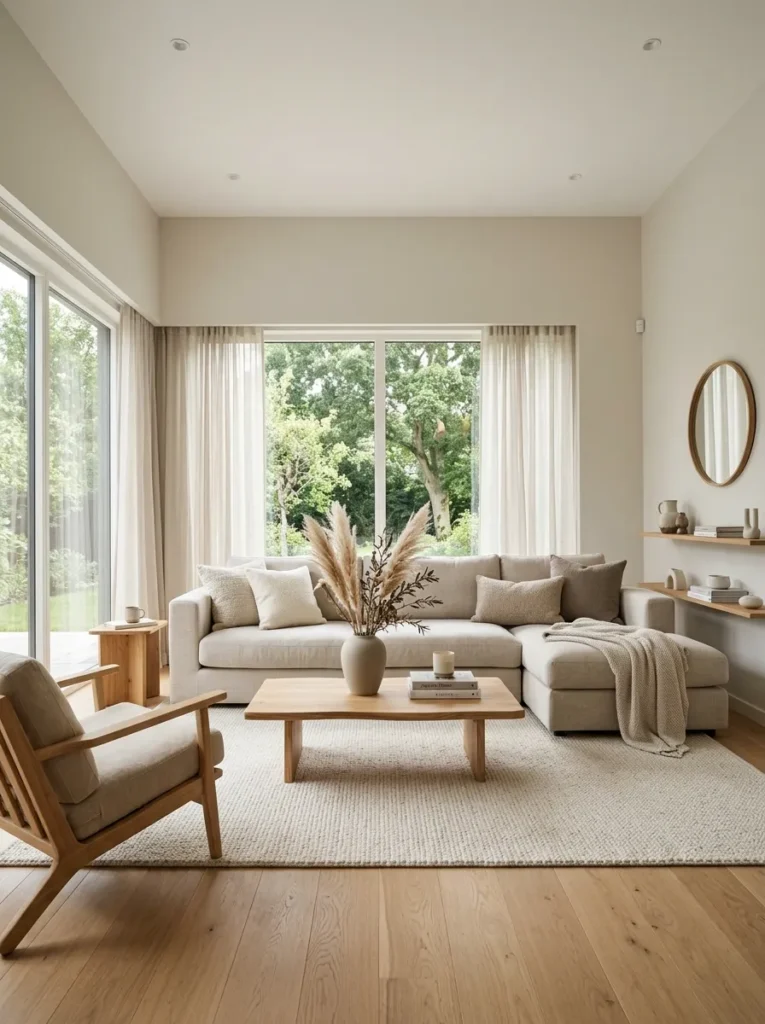
Whites, soft grays, and warm beiges give a minimalist room its quiet foundation. These tones don’t compete for attention, which lets the shape and texture of your furniture do the talking instead. Stick to one dominant neutral across your walls and larger furniture pieces, then bring in variation through texture rather than more color.
If you want a bit more warmth than stark white, try a soft greige or oatmeal tone. It keeps the calm feeling of a neutral palette while avoiding the cold, clinical look that pure white can sometimes create in a living space.
2. Choose Furniture With Clean Lines
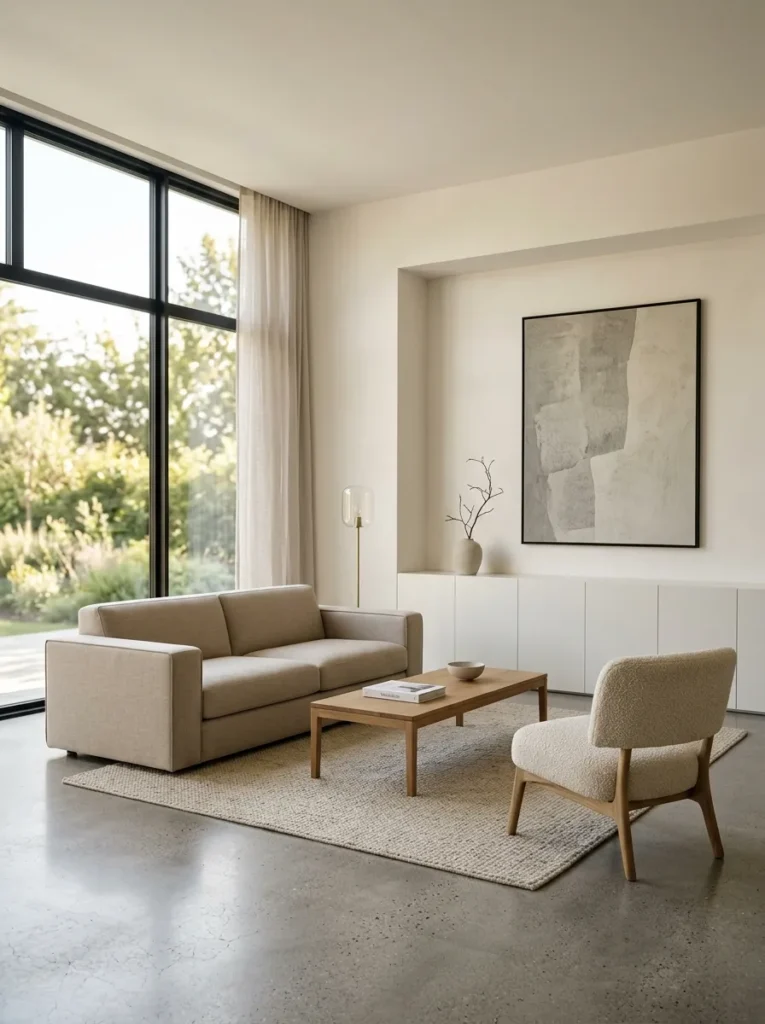
Minimalist rooms favor simple, straight-edged furniture over ornate or heavily detailed pieces. A sofa with a low profile and squared arms, or a coffee table with simple legs and no extra trim, fits the aesthetic far better than anything with carved details or busy upholstery.
3. Limit Your Color Palette
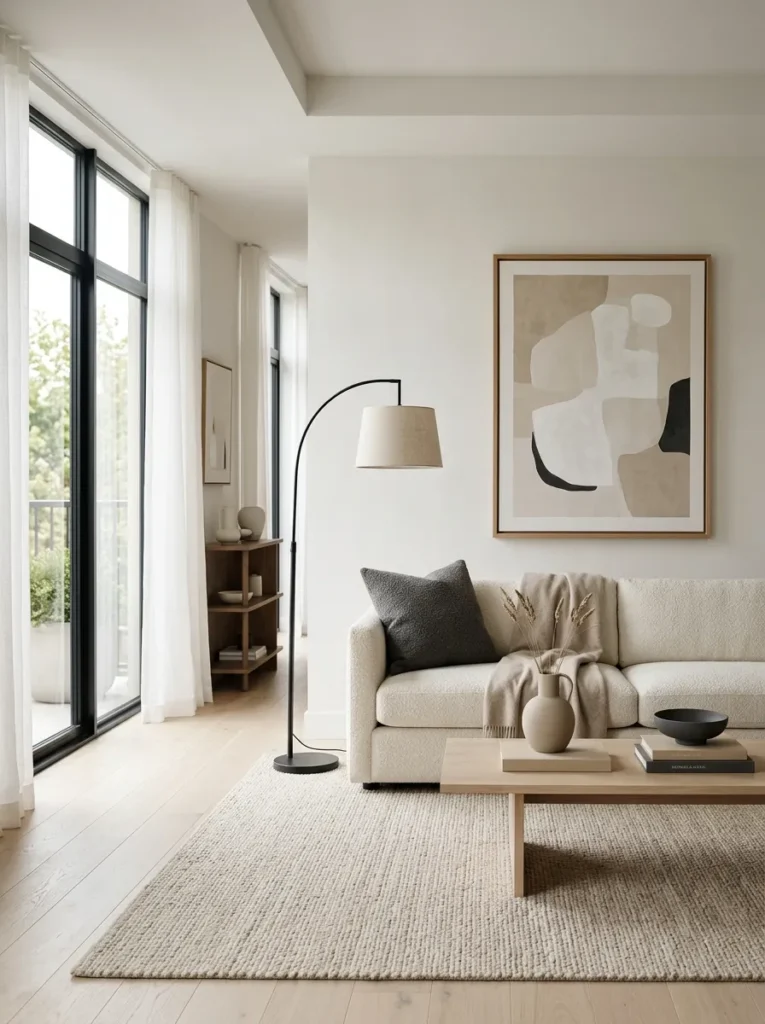
Pick two or three colors total and repeat them throughout the room. A common approach is one neutral base, one slightly darker accent, and one small pop of color used sparingly, such as in a single pillow or vase. Keeping the palette tight is what makes a minimalist room feel put together rather than empty.
4. Let Negative Space Do Its Job
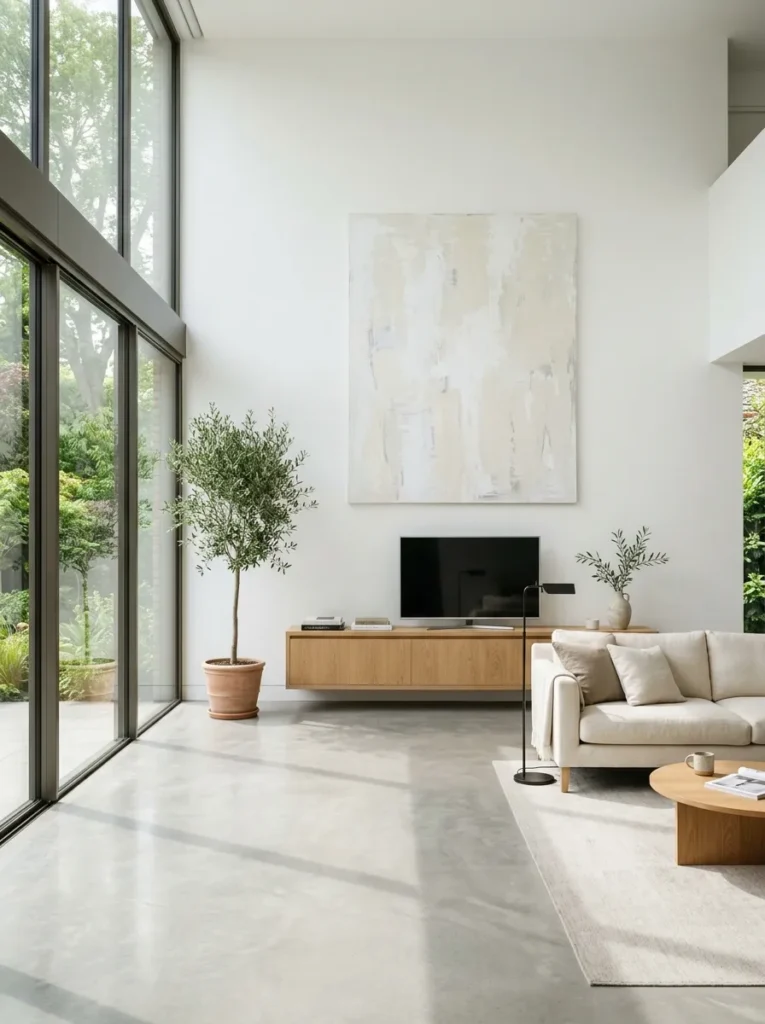
Empty space is not wasted space in minimalist design; it’s part of the design itself. Resist the urge to fill every wall and surface. A single piece of art on an otherwise bare wall often has more impact than a full gallery arrangement would.
5. Choose One Statement Piece per Room
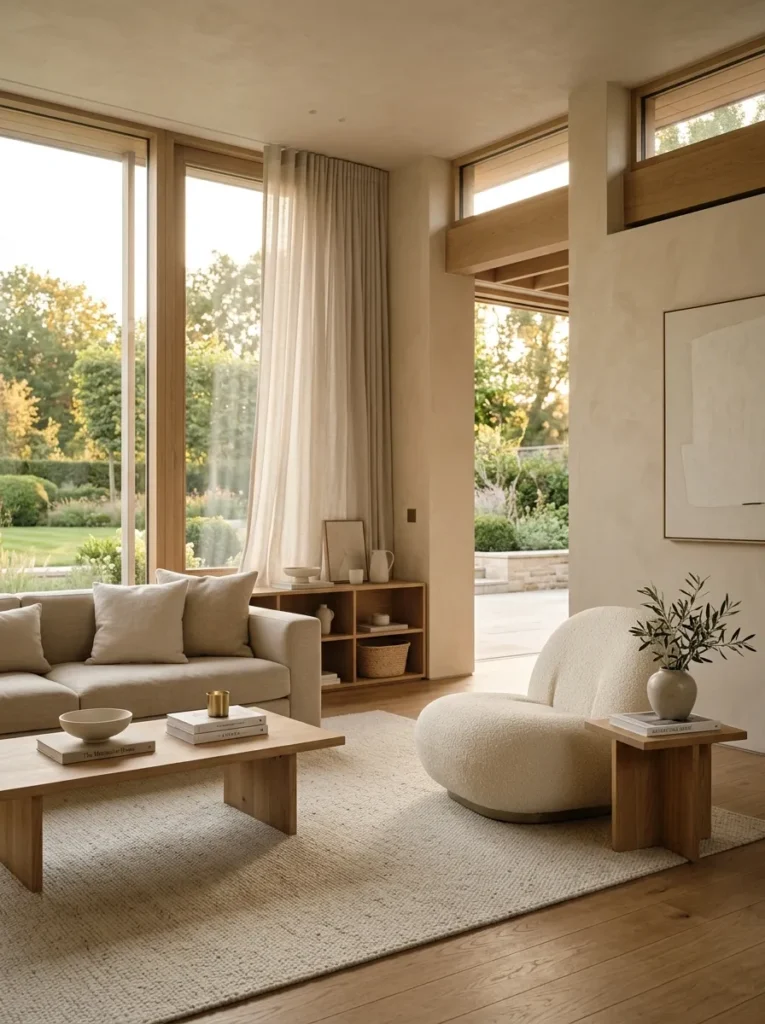
Rather than several competing decor items, pick a single piece that carries the visual weight of the room, whether that’s a sculptural chair, a bold piece of art, or a striking light fixture. Let everything else stay quiet around it.
6. Use Hidden Storage
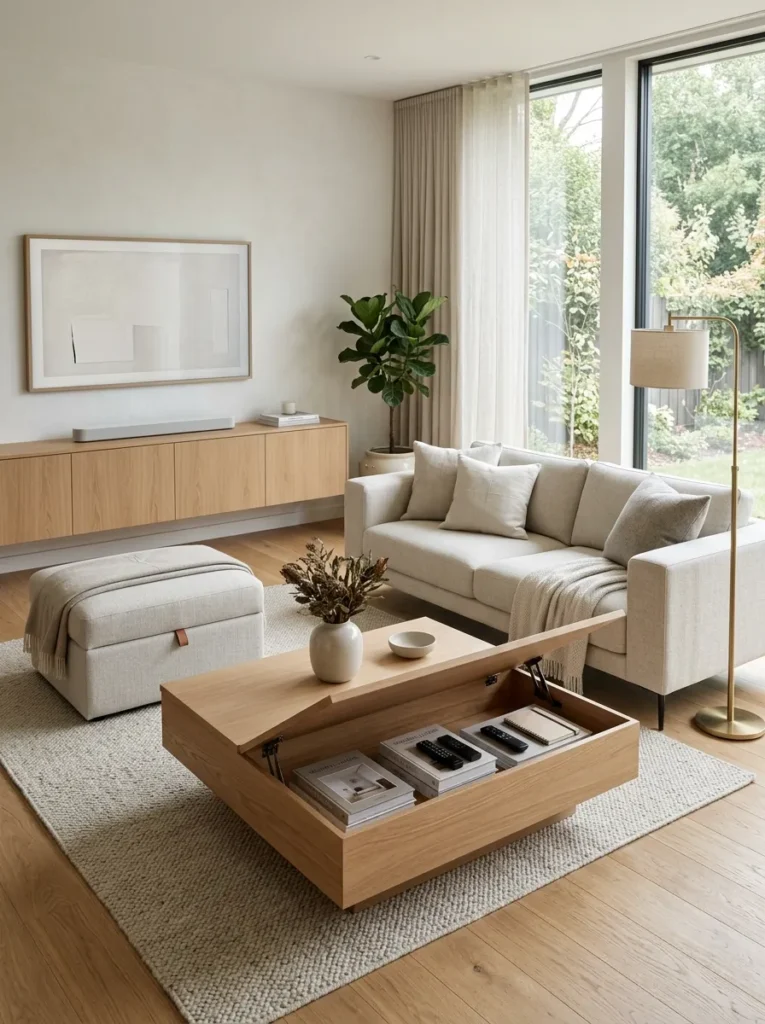
Clutter is the fastest way to break a minimalist look. Furniture with built-in storage keeps everyday items out of sight without needing extra cabinets or shelving units taking up visual space.
- An ottoman with a lift-up lid for blankets or remotes
- A coffee table with a closed lower shelf instead of an open one
- A media console with doors rather than open cubbies
- Built-in wall storage that sits flush instead of protruding into the room
7. Keep Surfaces Mostly Clear
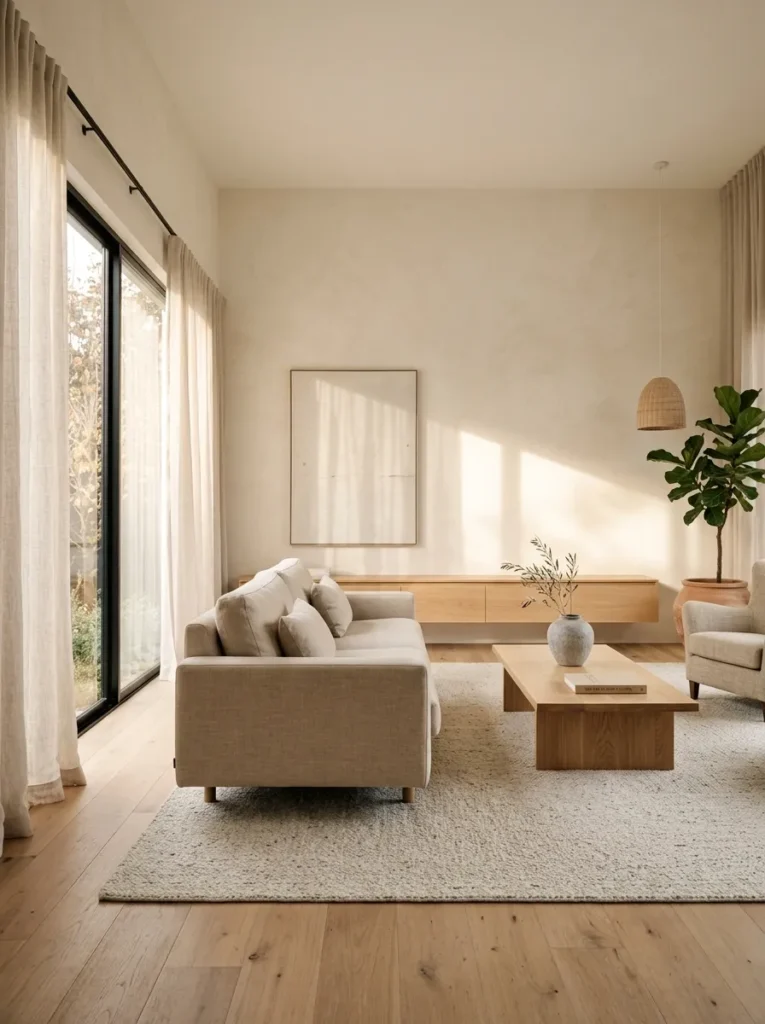
Coffee tables, console tables, and shelves should have breathing room. A single tray with one or two objects looks intentional, while a cluttered surface undercuts the calm feeling minimalist design is going for. If you’re not sure whether something belongs, it usually doesn’t.
8. Choose Natural Materials
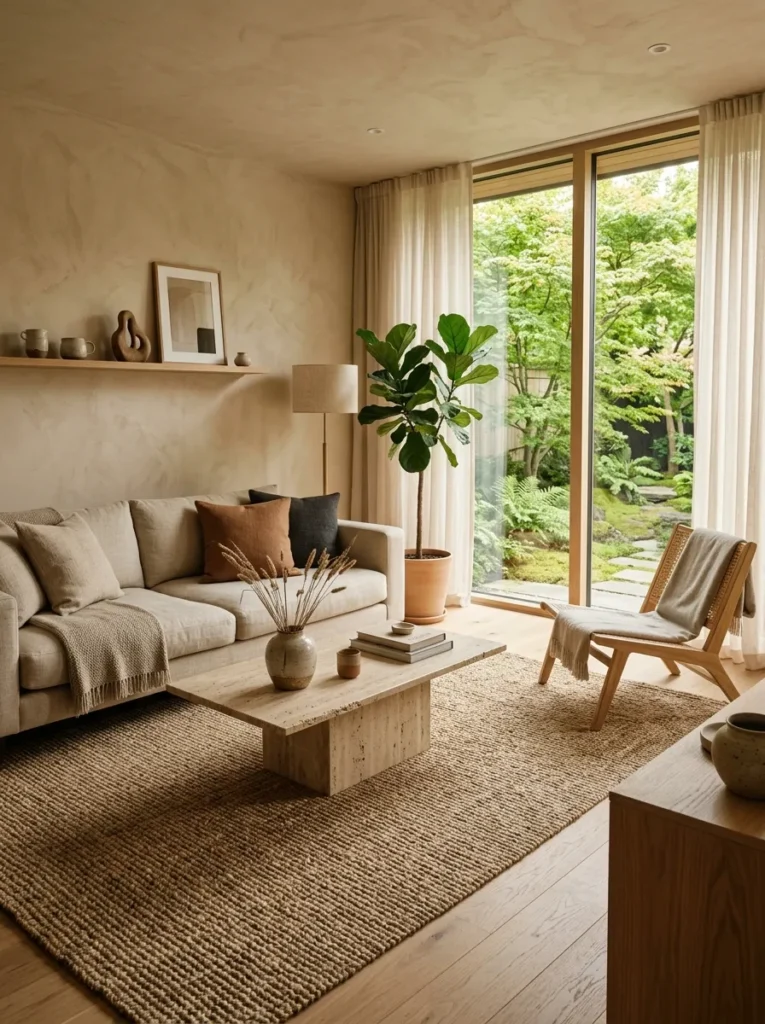
Wood, stone, linen, and other natural materials add warmth and texture without adding visual noise the way patterns or bright colors would. A wood coffee table or a linen sofa brings depth to a neutral room while still keeping things simple.
9. Use One Type of Wood Tone
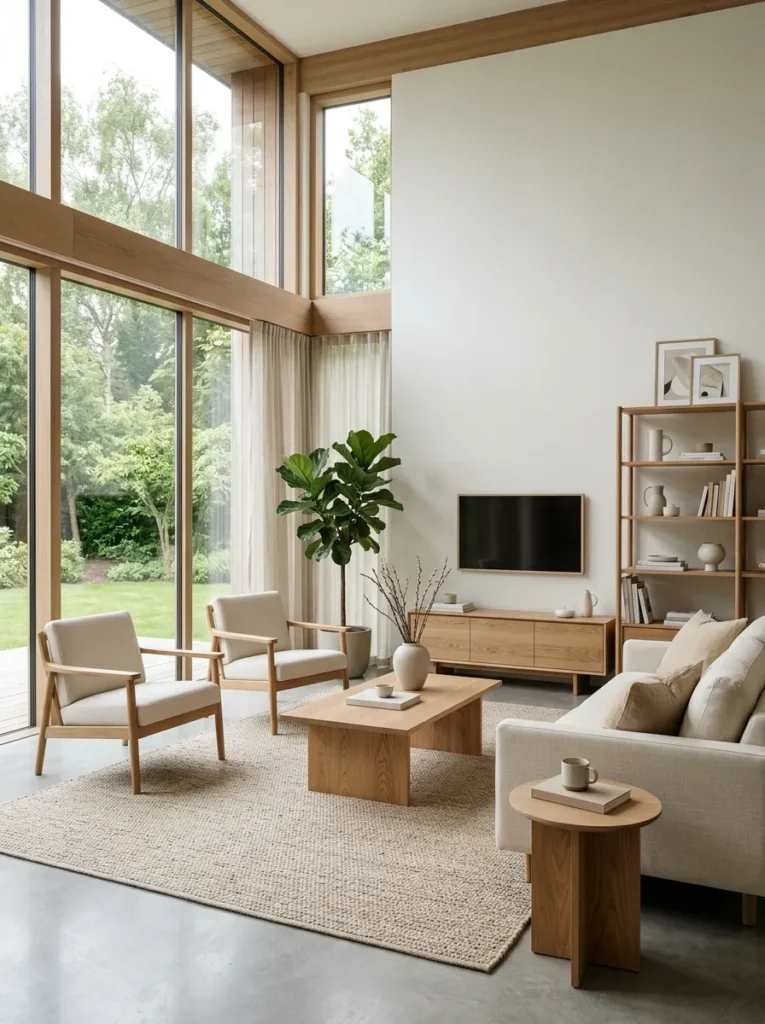
Mixing several different wood tones can make a room feel busy even if everything else is simple. Stick to one wood finish across your furniture, whether that’s a warm walnut or a lighter oak, so the pieces read as a set rather than a mismatched collection.
10. Add Texture Instead of Pattern
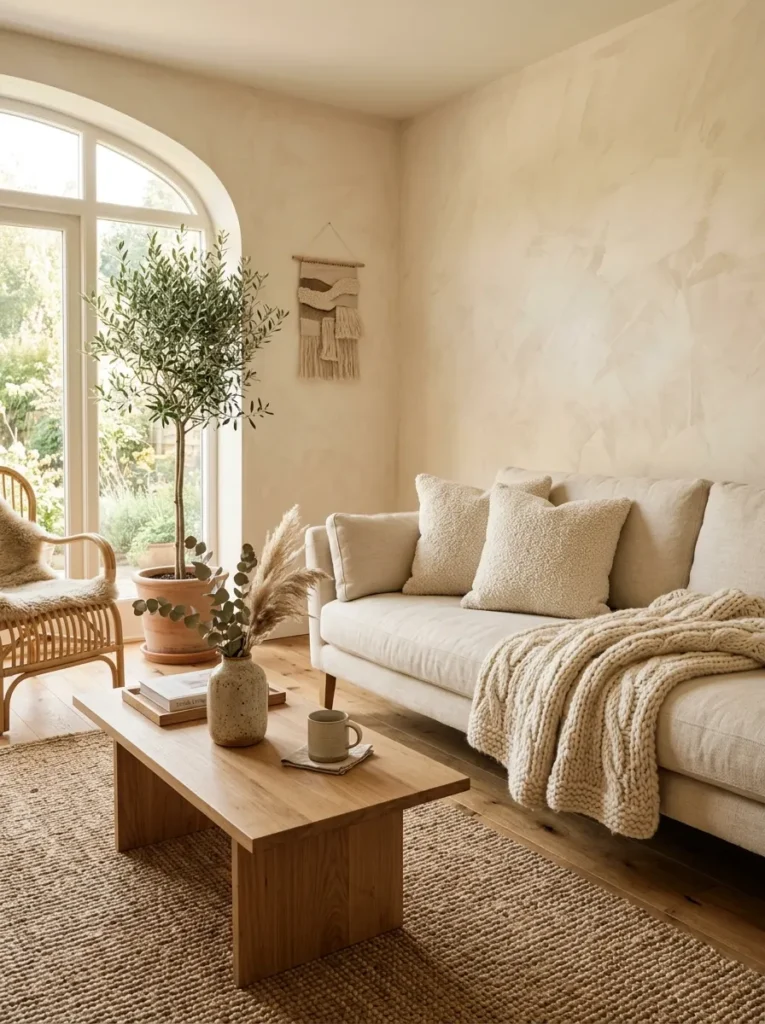
Since minimalist rooms avoid busy patterns, texture becomes the main way to add interest. A boucle throw pillow, a woven jute rug, or a linen curtain panel all bring tactile depth to a room without disrupting its clean, quiet look.
11. Choose a Low Profile Sofa
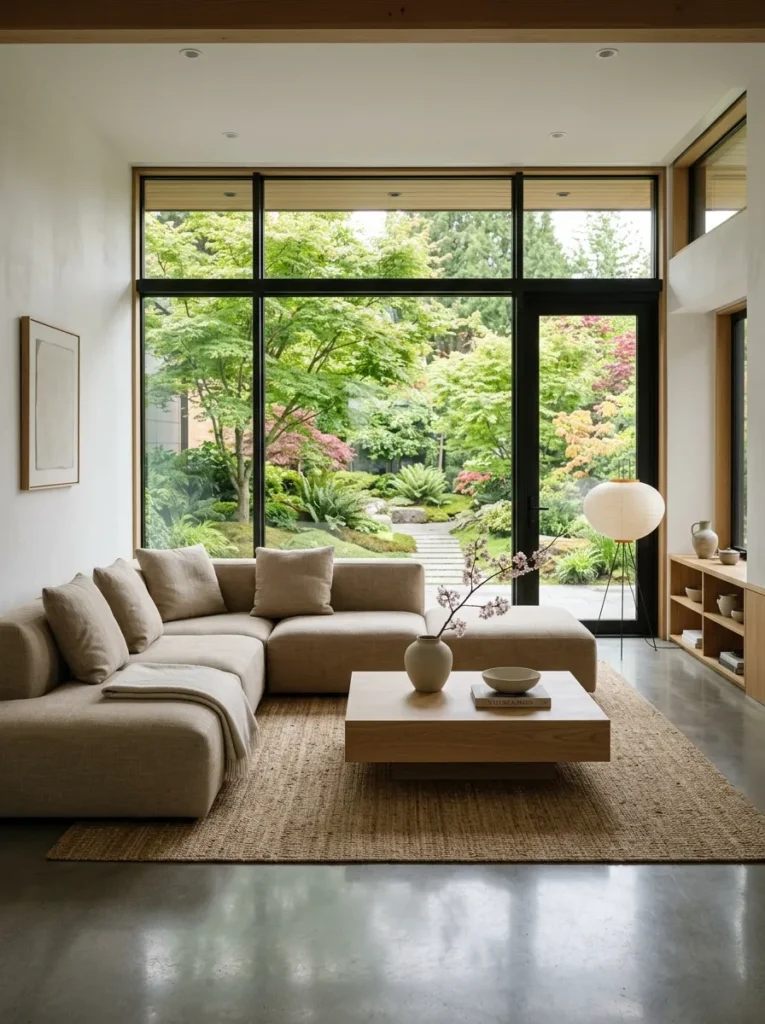
Furniture that sits closer to the ground tends to read as more modern and minimal than taller, boxier pieces. A low profile sofa also opens up sightlines across the room, which makes the space feel larger and airier overall.
12. Skip the Area Rug or Choose a Simple One
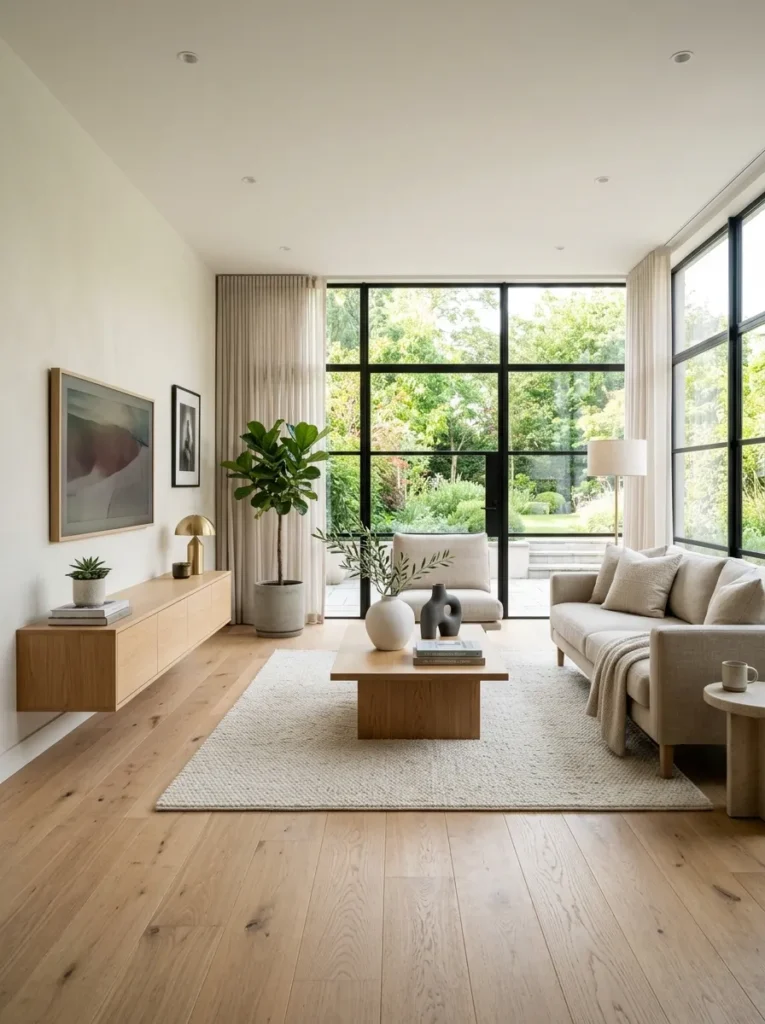
Minimalist rooms often work well with hardwood or polished concrete left bare, letting the floor itself be part of the quiet palette. If you do want a rug, choose a solid color or a very subtle texture rather than anything with a bold pattern.
13. Use Sculptural Lighting as Decor
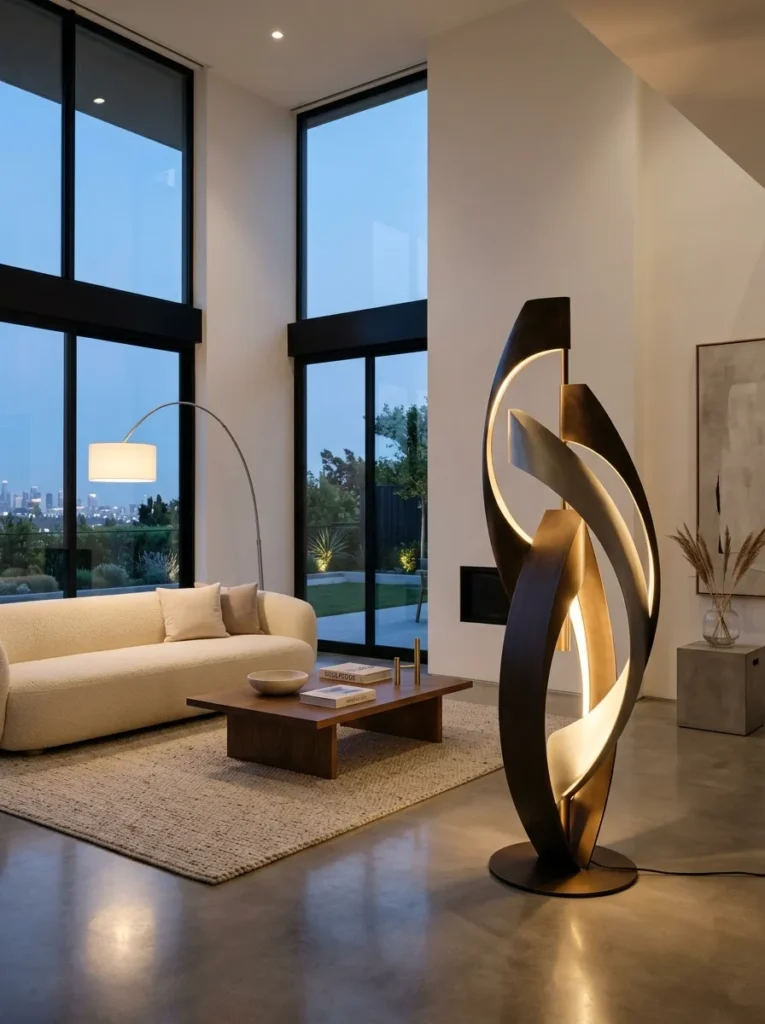
In a room with few decorative objects, your light fixtures can carry more visual weight than usual. A single sculptural floor lamp or pendant light can act almost like a piece of art, giving the room a focal point without adding clutter.
14. Limit Wall Decor to One or Two Pieces
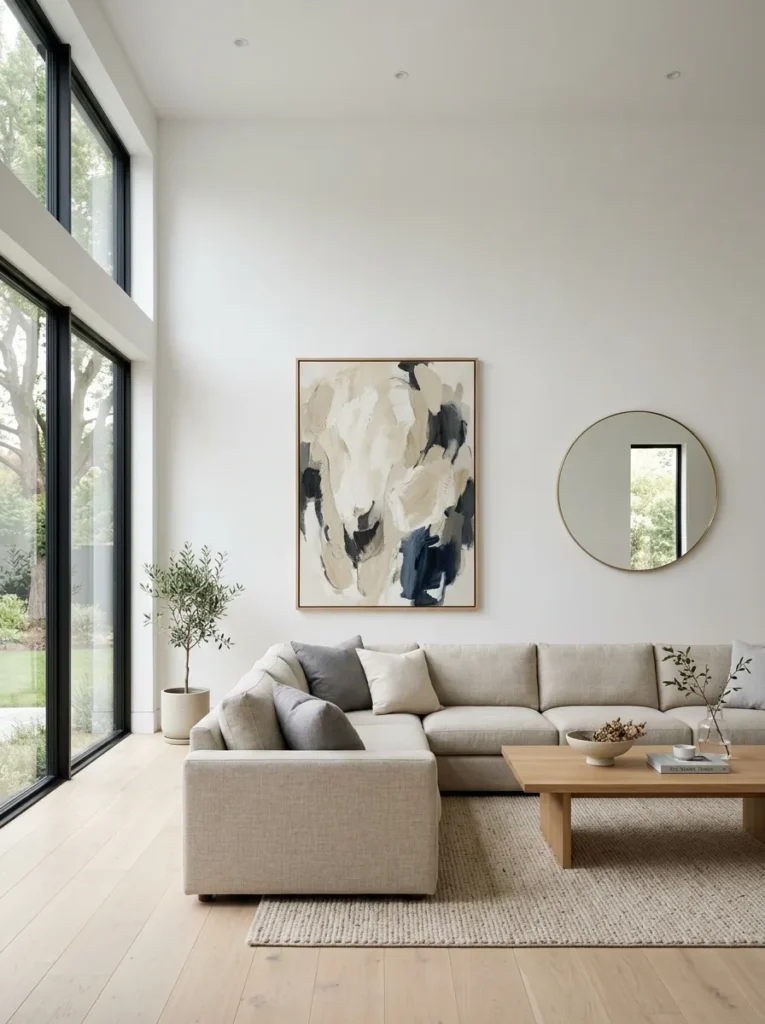
Bare walls are a defining feature of minimalist spaces. Instead of filling every wall, choose one or two pieces of art or a single mirror, and give them plenty of open space around them so they stand out clearly.
15. Choose Curtains in a Single Solid Tone
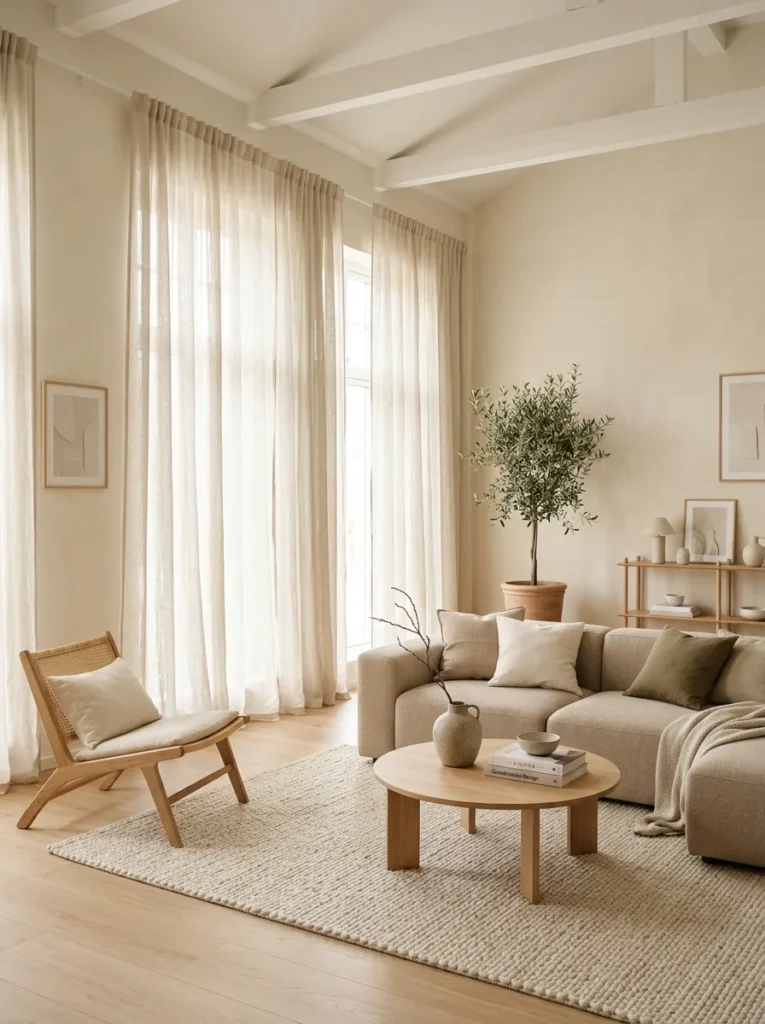
Patterned curtains can quickly clash with the simplicity of a minimalist room. Solid linen or cotton panels in a tone close to your wall color keep windows looking clean and let natural light take center stage.
16. Keep Cords and Electronics Out of Sight
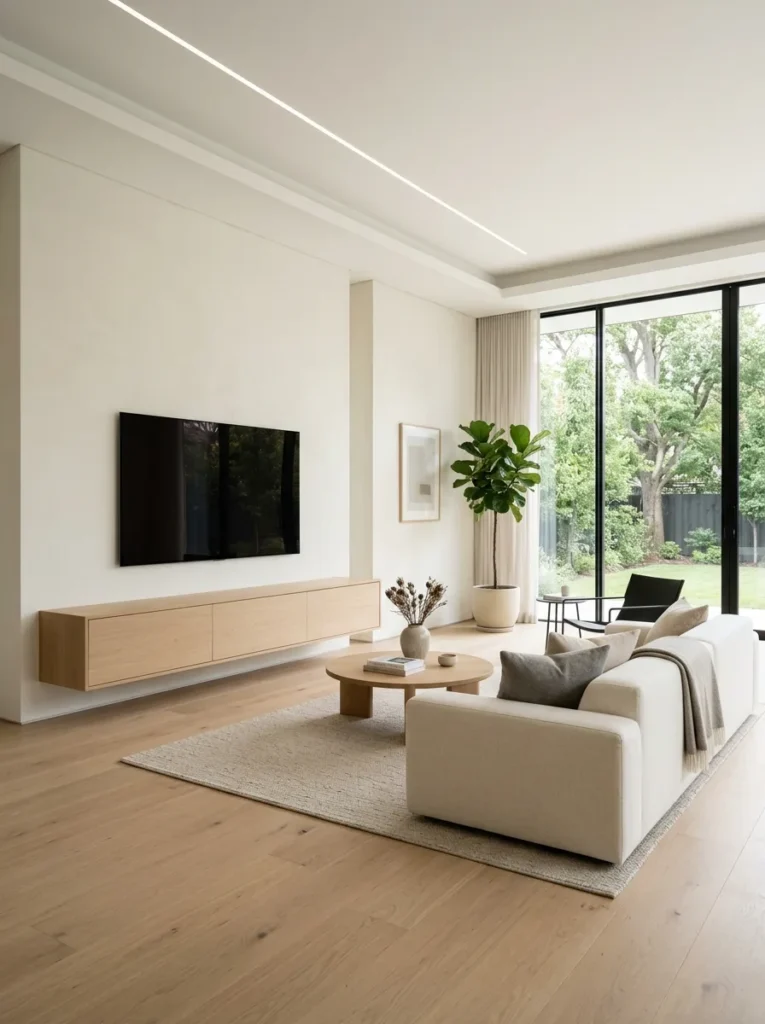
Visible cables and cords undercut a minimalist look fast. Route cords behind furniture, use a cord cover along the baseboard, or tuck a power strip inside a console with a back panel so your clean lines stay uninterrupted.
17. Add Just One Plant
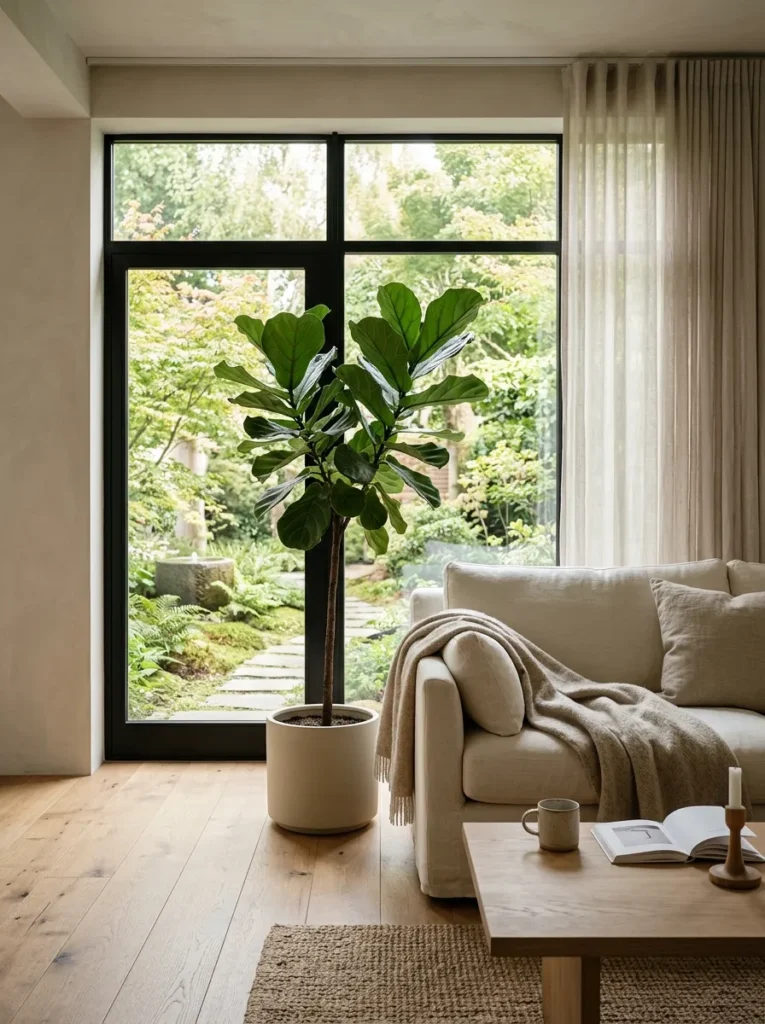
A single well-chosen plant, like a fiddle leaf fig or a simple snake plant in a plain pot, brings life into the room without crowding it. One plant, placed with intention, does more for a minimalist space than several scattered around the room.
18. Choose Function Over Decoration
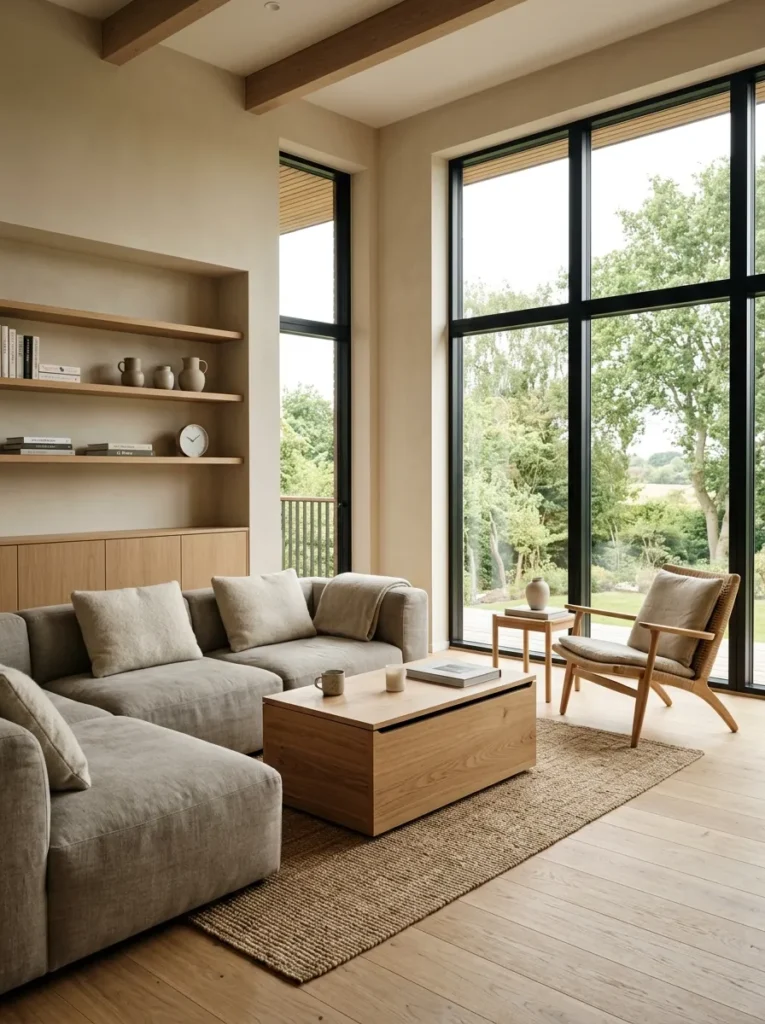
Every piece in a minimalist living room should serve a clear purpose. Before adding anything new, ask whether it’s something you’ll actually use regularly, not just something that looks nice sitting there. This single habit, applied consistently, is really what separates a minimalist room from one that just happens to be sparsely furnished.
A minimalist living room comes together slowly, through editing more than adding. Start by removing what you don’t need, then bring back only the pieces that genuinely support how you actually use the room.