

The walls in a bedroom carry more visual weight than almost any other surface in the room, since you’re looking at them every time you lie down or wake up. Here are 26 ideas for filling that space in a way that actually feels intentional, not just decorated for the sake of it.
1. Hang One Large Piece of Art Above the Bed
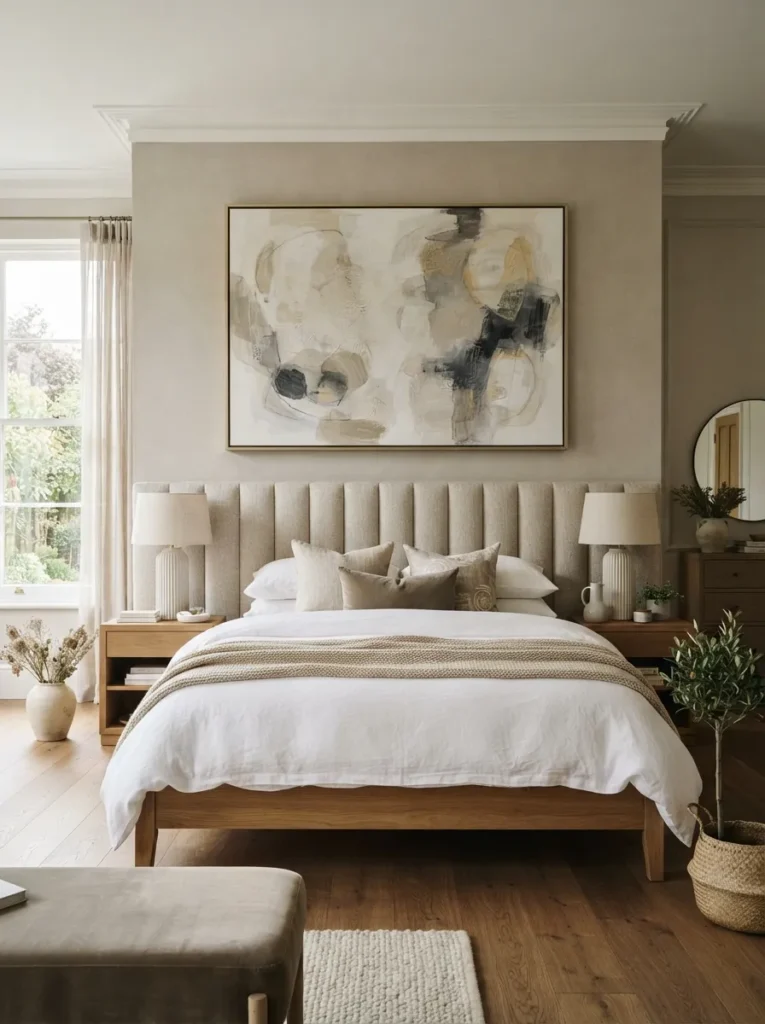
A single oversized piece centered above the headboard reads as more considered than several small pieces scattered around it. As a general rule, aim for art that spans at least two thirds the width of your headboard so it doesn’t look undersized once it’s hung.
Hanging height matters just as much as size. The center of the piece should sit roughly six to eight inches above the top of the headboard, close enough to feel connected to the bed but with enough breathing room that it doesn’t look crowded.
If you’re unsure about committing to one large piece, cut a piece of craft paper to the size you’re considering and tape it to the wall for a few days. Living with the scale before buying anything saves you from a piece that ends up feeling too big or too small once it’s actually hanging.
2. Build a Gallery Wall With Mixed Frames
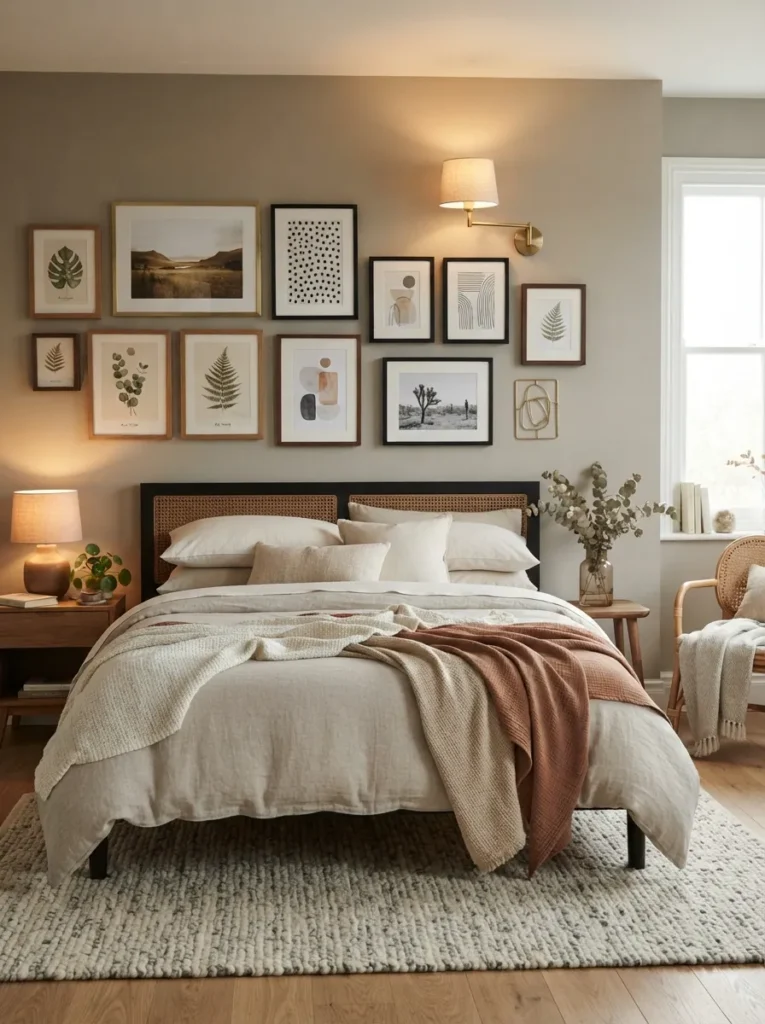
Combining different frame sizes, and even different finishes, creates a layered, collected look that feels personal rather than store bought. Lay everything out on the floor first in your preferred arrangement before committing to any nail holes.
- Start with your largest piece as the anchor
- Work outward with medium and small frames
- Leave two to three inches of space between pieces
- Mix in one mirror or shelf for added dimension
Once you’re happy with the floor layout, trace each frame onto craft paper and tape the outlines to the wall in the exact arrangement. This extra step takes a bit more time upfront but makes the actual hanging process far less stressful, since you’re working from a tested plan rather than guessing as you go.
3. Add a Woven Tapestry for Texture
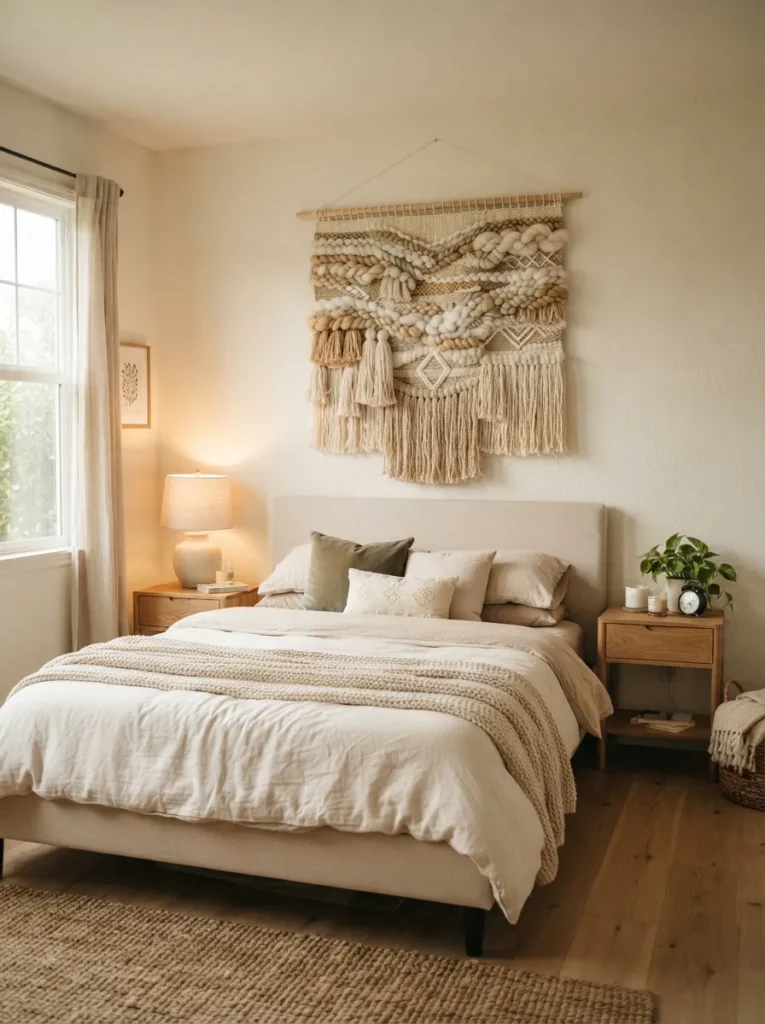
A large woven or macrame tapestry brings texture to a wall in a softer, more tactile way than framed art alone. This works especially well behind a bed that doesn’t already have a strong headboard to anchor that wall.
Choose a tapestry with some dimension to its weave rather than a flat printed textile if texture is your main goal, since the shadows created by a genuinely woven piece add depth that a printed pattern alone can’t replicate.
4. Use a Statement Mirror as Wall Art
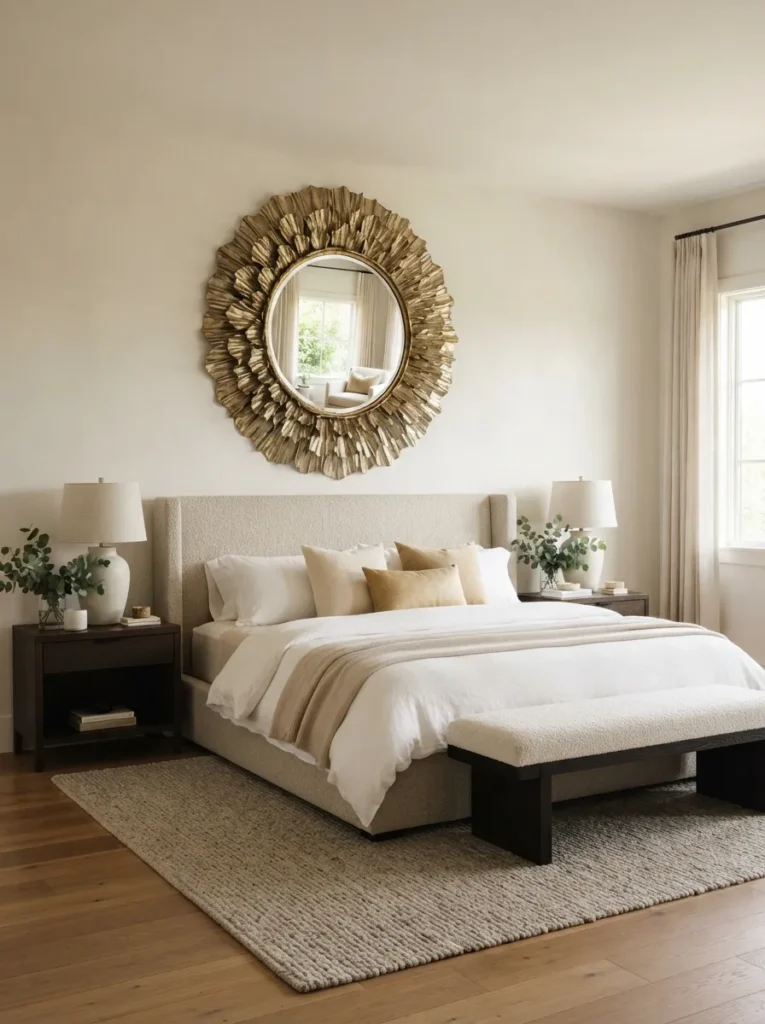
An oversized mirror, whether round, arched, or an unusual shape, functions as both art and a practical addition that helps bounce light around the room. Placing it across from a window maximizes the light reflecting benefit.
5. Try Wallpaper on One Accent Wall
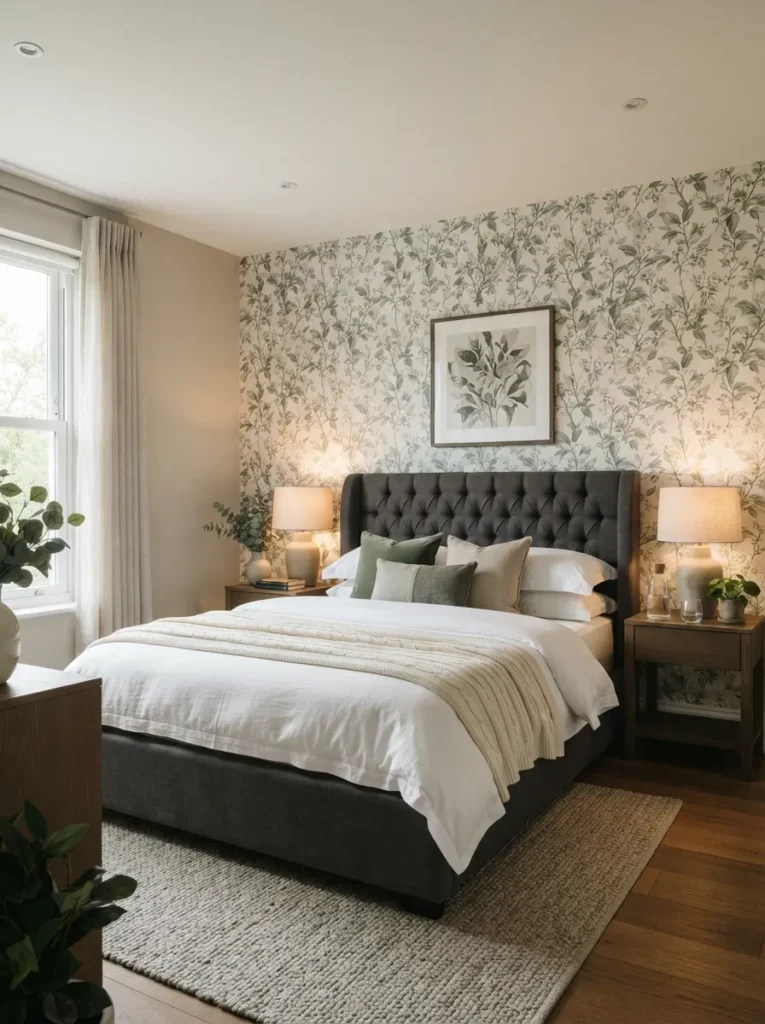
A bold wallpaper pattern on a single wall, often the one behind the headboard, adds serious visual impact without needing to commit the whole room to the same pattern. Peel and stick versions make this a lower risk option if you’re not fully sure about a specific print.
Order a sample swatch before committing to a full roll whenever possible. Wallpaper patterns can read very differently at full scale on a wall compared to a small image on a screen, and a physical sample avoids an expensive surprise.
6. Add Floating Shelves for Layered Display
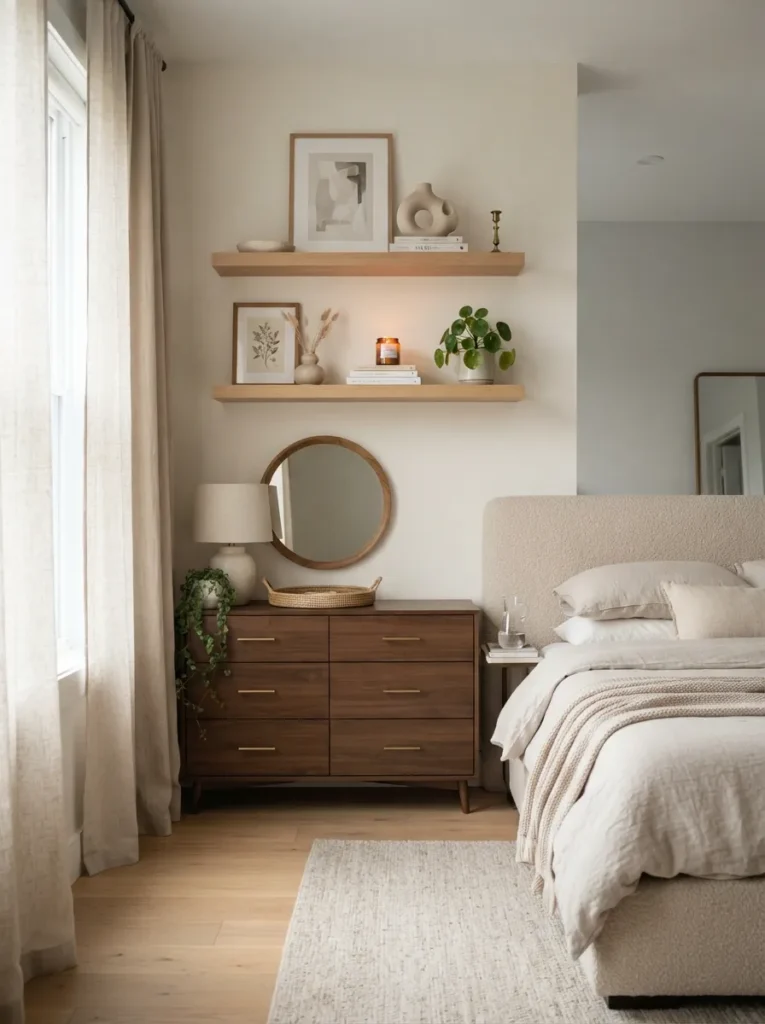
Floating shelves let you style a wall with books, small art, and personal objects in a way that’s easy to rearrange over time. Unlike a single fixed piece of art, this kind of display can evolve as your collection of favorite objects grows.
Keep the styling loose rather than symmetrical for a more natural look, and leave some open space on each shelf so the display doesn’t feel overcrowded.
Restyle these shelves every few months rather than treating the arrangement as permanent. Since the whole point of floating shelves is flexibility, revisiting the display periodically keeps the wall feeling current instead of just becoming another fixed, unchanging element in the room.
7. Hang a Collection of Small Mirrors
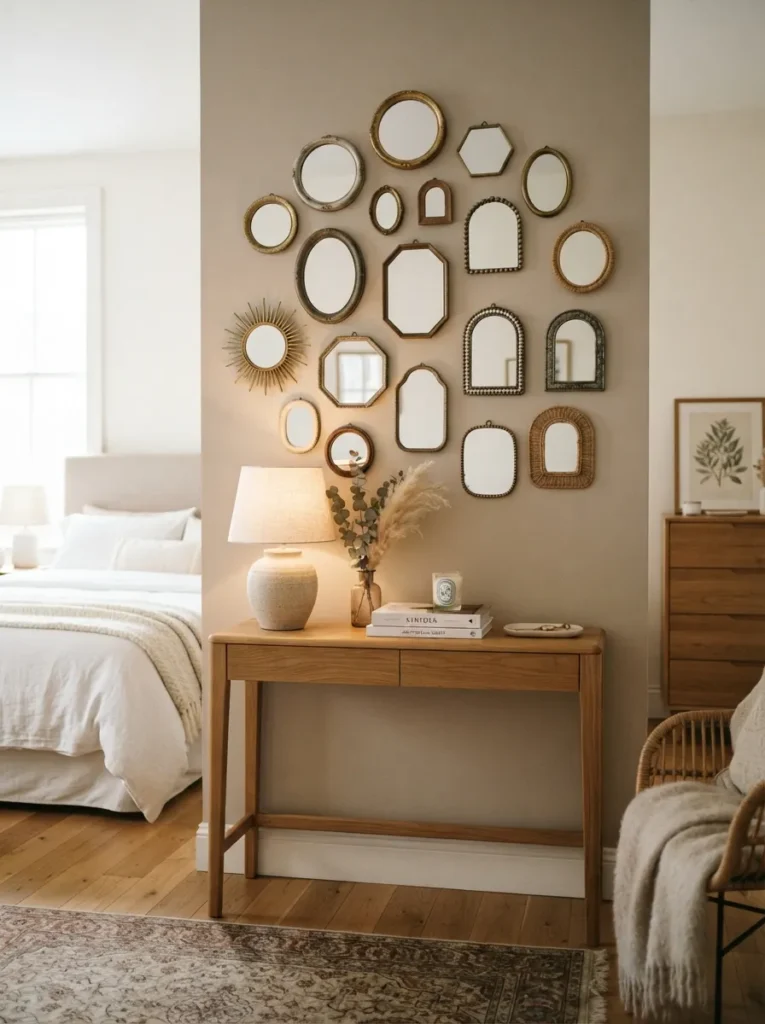
Instead of one large mirror, a cluster of smaller mirrors in varied shapes and frames creates an interesting focal point while still delivering the light reflecting benefits of mirrored surfaces.
8. Use Wall Mounted Sconces as Functional Decor
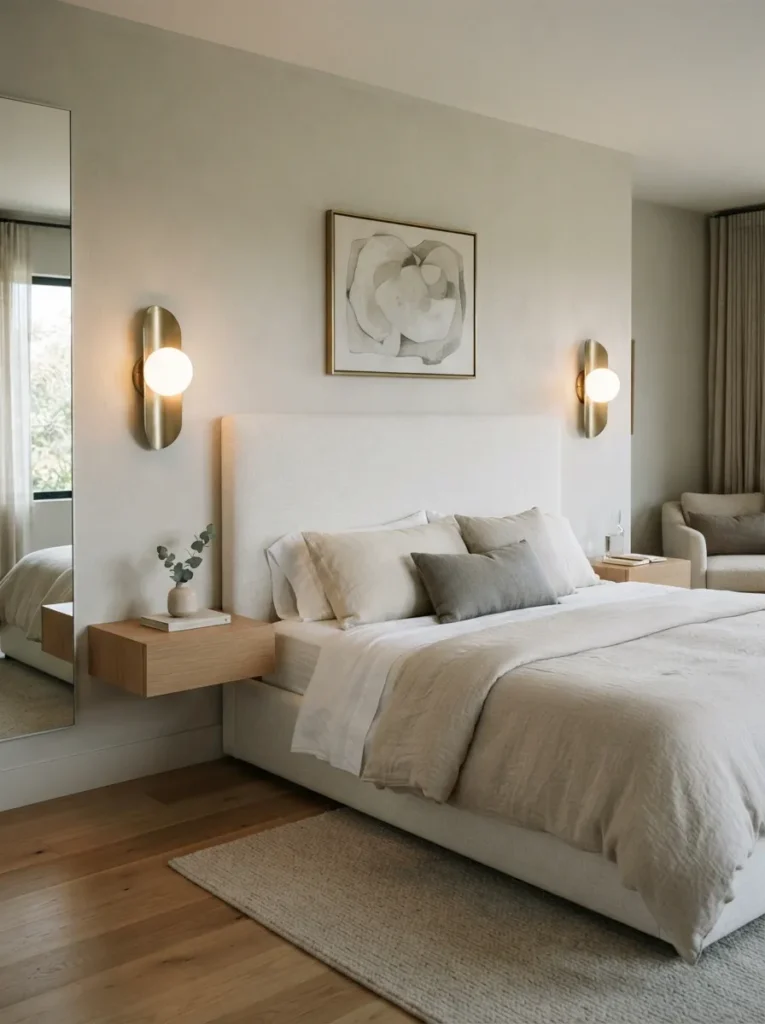
Sconces mounted on either side of the bed do double duty, providing bedside lighting while also acting as a decorative element on an otherwise plain wall. This also frees up nightstand surface space that a table lamp would otherwise take up.
Choose a sconce style that reads as decor even when the light is off, since it will spend more hours of the day unlit than lit, and its shape and finish contribute to the wall’s look throughout the day regardless.
9. Add a Line Drawing or Minimalist Print
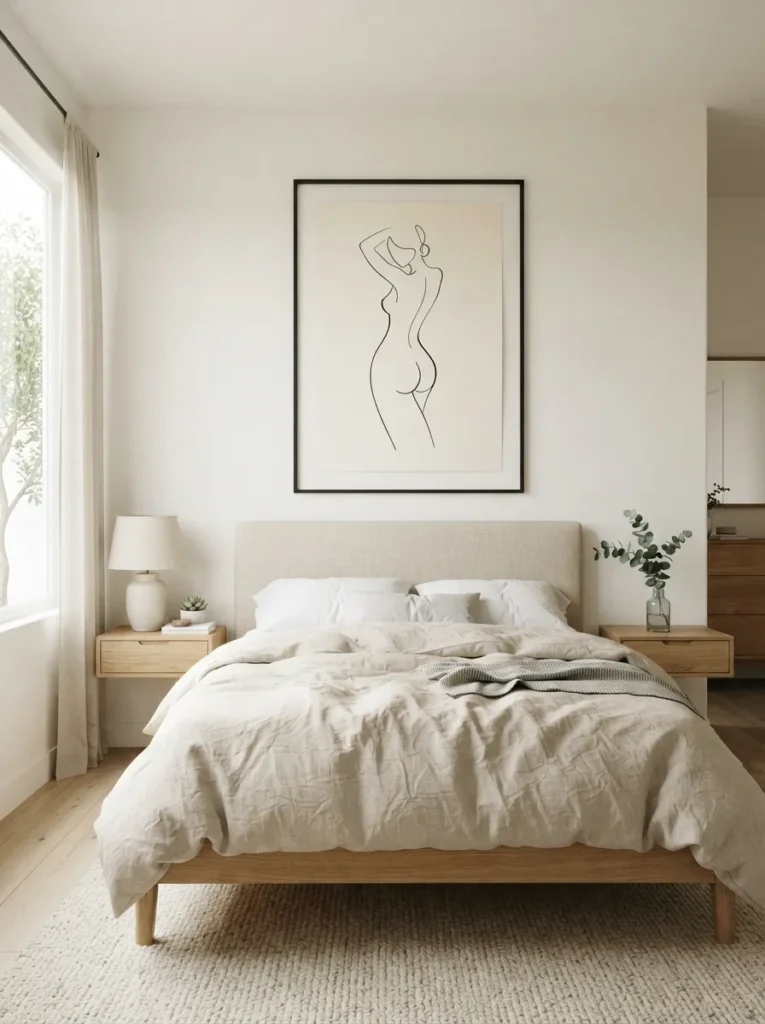
A simple line drawing or a minimalist black and white print suits a wall that doesn’t need to carry a lot of visual weight, especially in a room where the rest of the decor is already fairly busy or textured.
10. Try a Large Scale Botanical Print
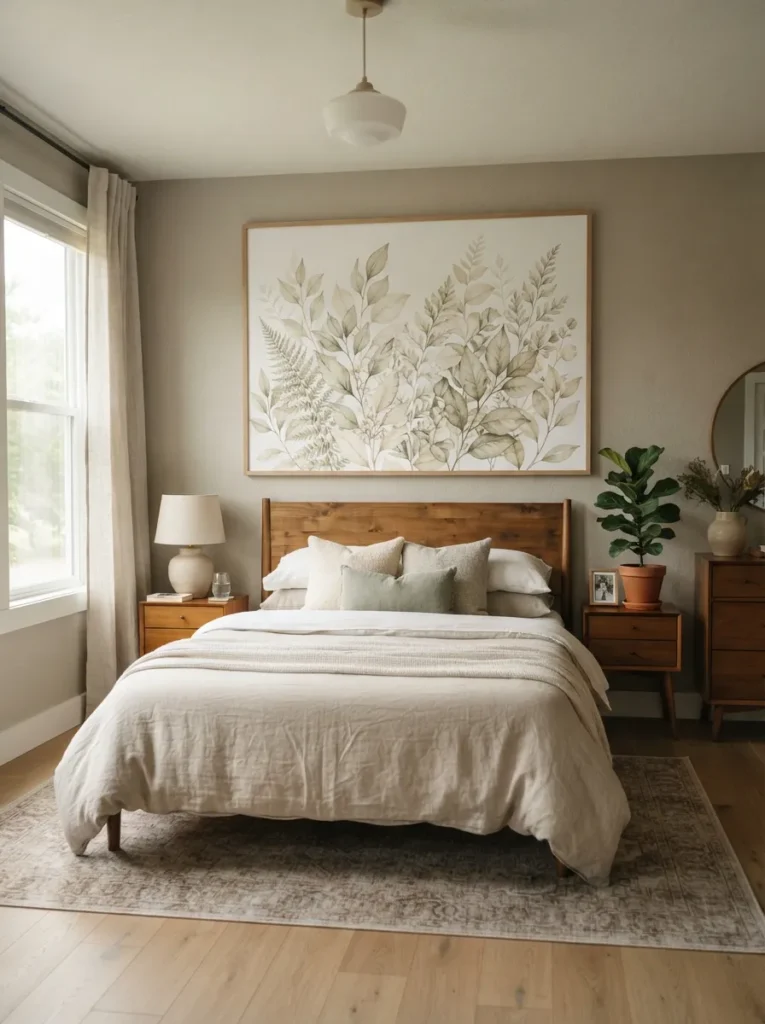
A big, detailed botanical illustration or photograph brings natural elements into the room without needing actual plants. This works particularly well in rooms with a neutral or earthy color palette.
11. Use Fabric or Textile Wall Hangings
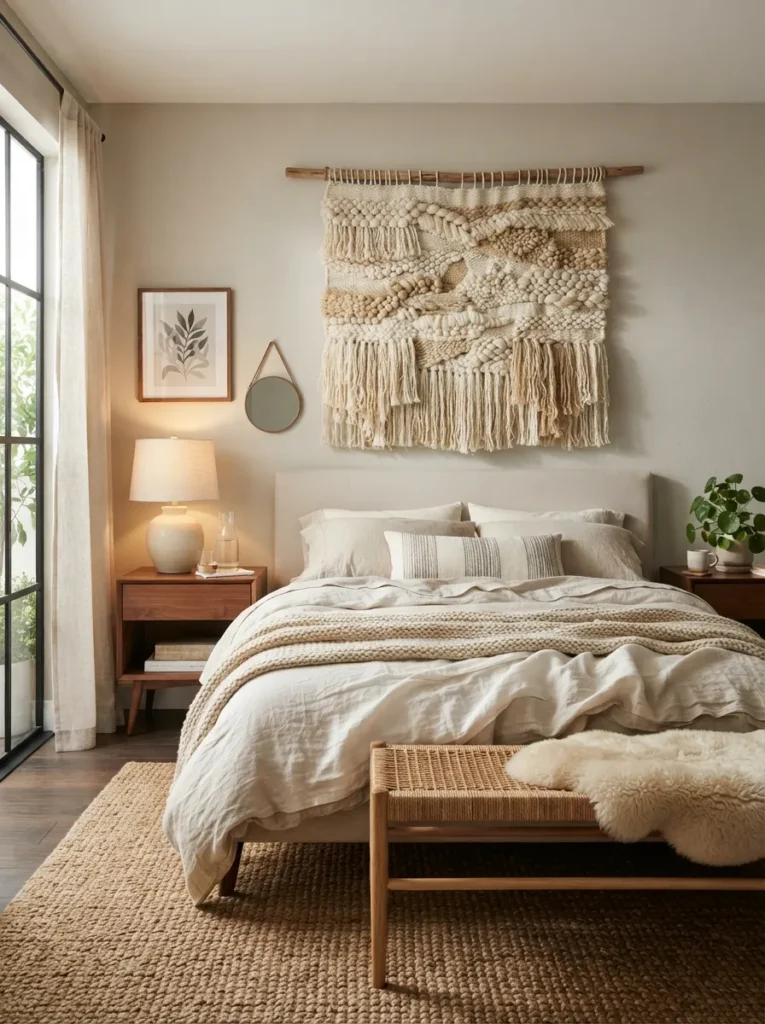
A framed textile, quilt square, or piece of fabric art adds color and pattern to a wall in a softer, less formal way than traditional framed art. This is also a good option for displaying a sentimental piece of fabric, like a family quilt.
Mounting the fabric on a simple wood dowel rather than framing it under glass keeps the texture visible and tactile, which tends to suit this kind of piece better than a flat, glass covered presentation.
12. Add a Wood Accent Wall
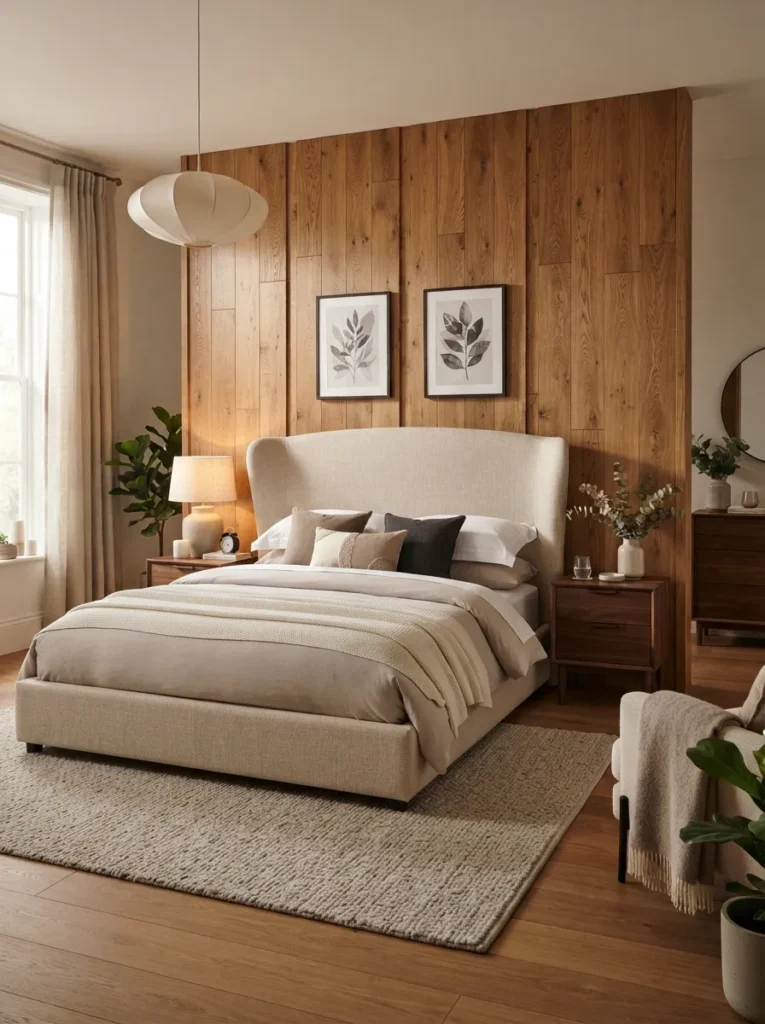
Wood paneling, shiplap, or individual wood slats installed vertically bring texture and warmth to a bedroom wall without needing any actual art or decor layered on top. This works especially well as a headboard wall treatment.