

Apartment living rooms come with their own set of rules. You’re often working with limited square footage, rental restrictions, and furniture that needs to serve more than one purpose. The good news is that some of the best decor ideas for apartments don’t require permanent changes or a big budget at all.
Here are 22 of the best living room decor ideas that actually work:
1. Choose Furniture Sized for Your Space
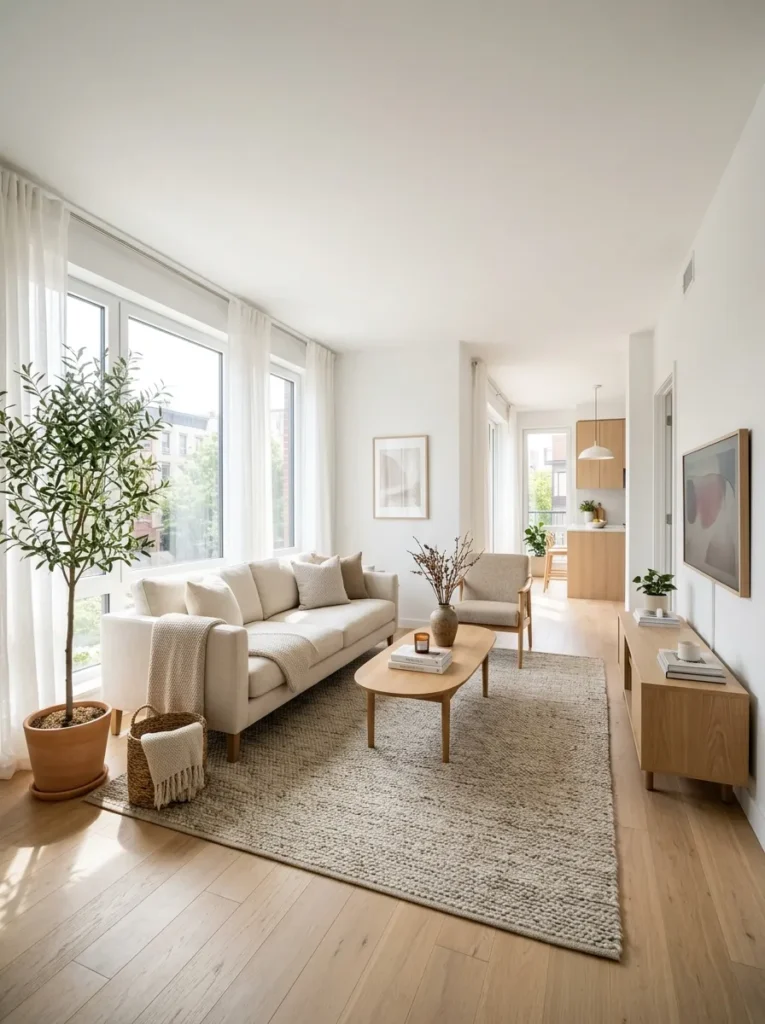
Before buying anything, measure your room and compare it against the actual dimensions of the furniture you’re considering. A sofa or sectional that looks great in a showroom can easily overwhelm a smaller apartment living room, so scale matters more here than almost anywhere else.
It also helps to measure your doorways, hallways, and elevator if you have one, not just the room itself. A sofa that fits the floor plan perfectly is still a problem if it can’t actually make it through the front door.
Once you know your real constraints, make a simple floor plan sketch or use painter’s tape on the floor to map out furniture placement before you buy. It takes a few extra minutes but saves you from returns and awkward layouts later.
2. Use Removable Wallpaper for Personality
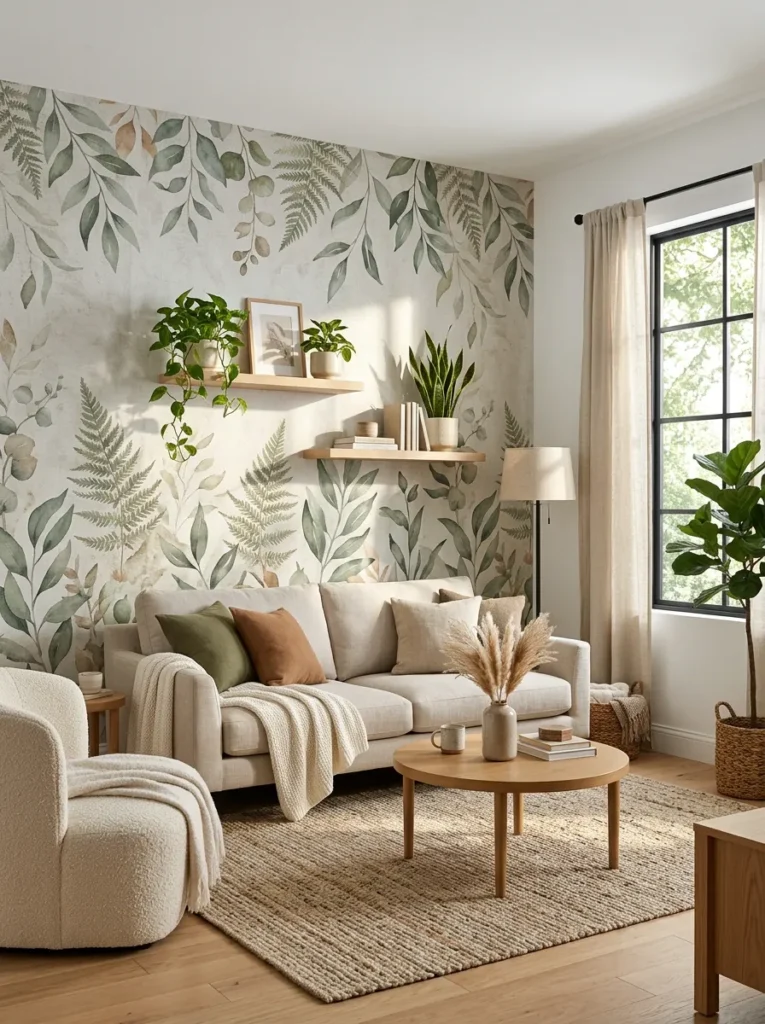
Peel and stick wallpaper is one of the easiest ways to add pattern or color to a rental without breaking your lease agreement. It goes up and comes down cleanly, which makes it a low-risk way to try a bold look you might not commit to permanently.
Start with a single accent wall rather than the whole room if you’re unsure about a pattern. This lets you test how the color or print feels in the space without a large upfront investment of time or material.
3. Add Tension Rod Curtains Without Drilling
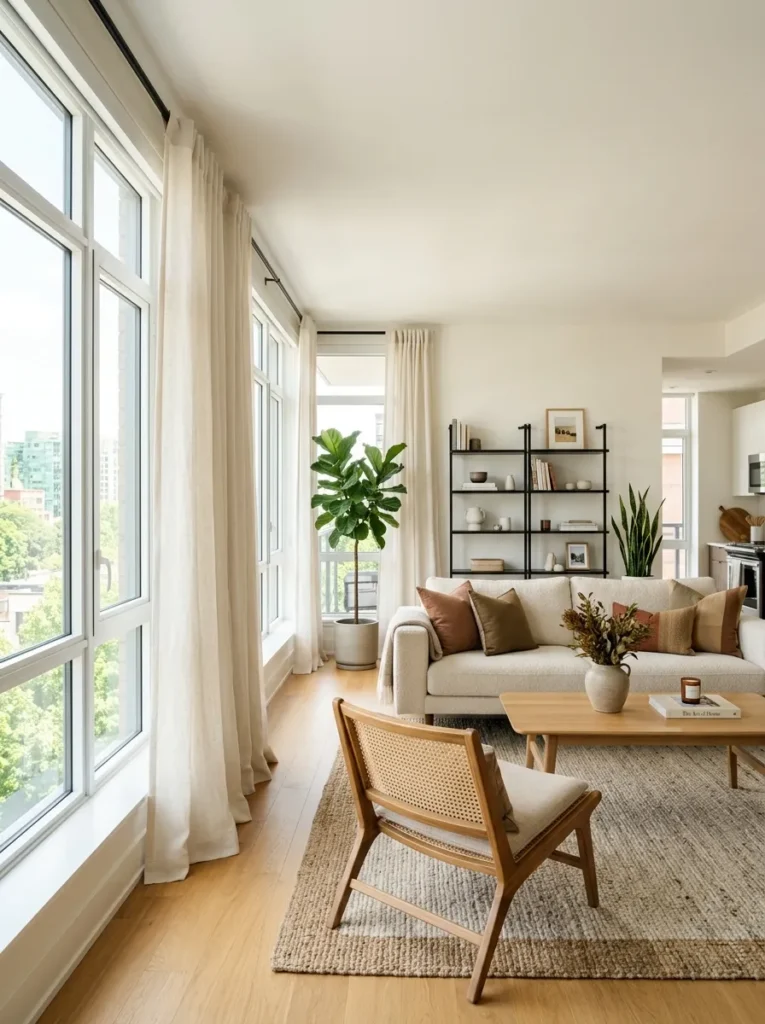
Tension rods let you hang curtains, room dividers, or even light fabric panels without putting a single hole in the wall. This is especially useful for apartments where you want privacy or a softer look at the windows without needing landlord approval for hardware.
Look for tension rods rated for the width of your window plus a little extra, since an undersized rod can bow or slip over time, especially with heavier curtain fabric.
4. Choose Multi-Functional Furniture
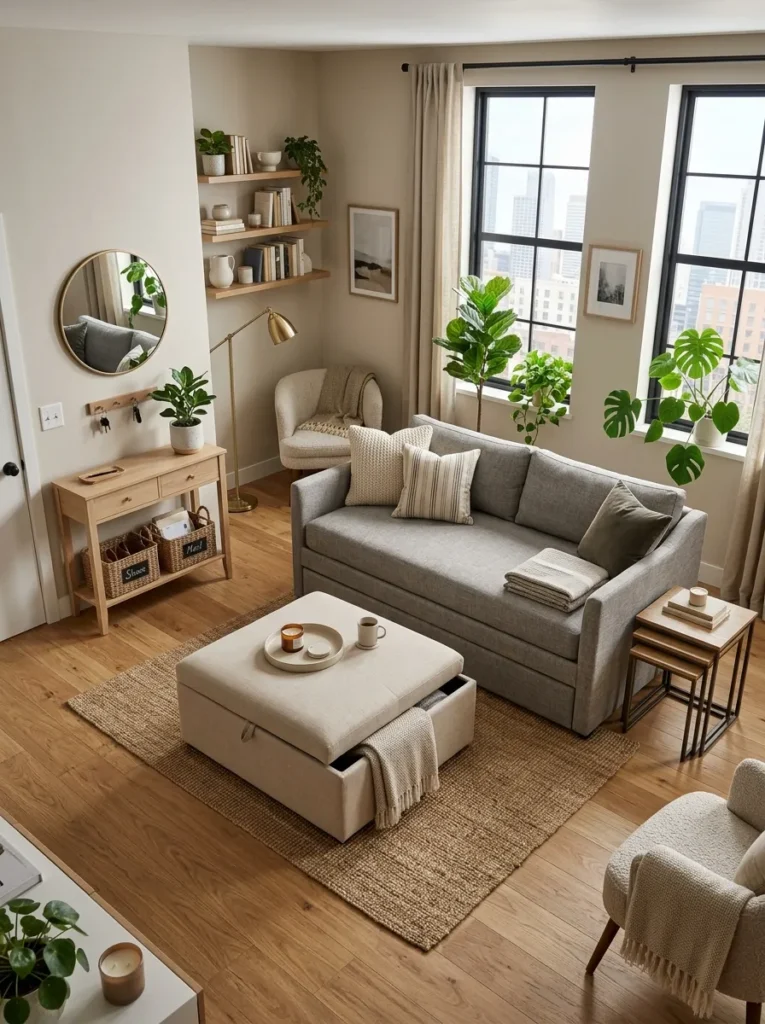
Every piece in a small apartment should do more than one job.
- A storage ottoman that works as a coffee table and extra seating
- A daybed that doubles as both a sofa and a guest bed
- A console table that also holds shoes or mail near the entry
- Nesting tables that expand only when you actually need them
Before buying any new piece, ask yourself how many separate purposes it can serve. In a small apartment, a single multifunctional piece can often replace two or three single-purpose ones, which frees up real floor space.
5. Use Command Strips and Hooks for Decor
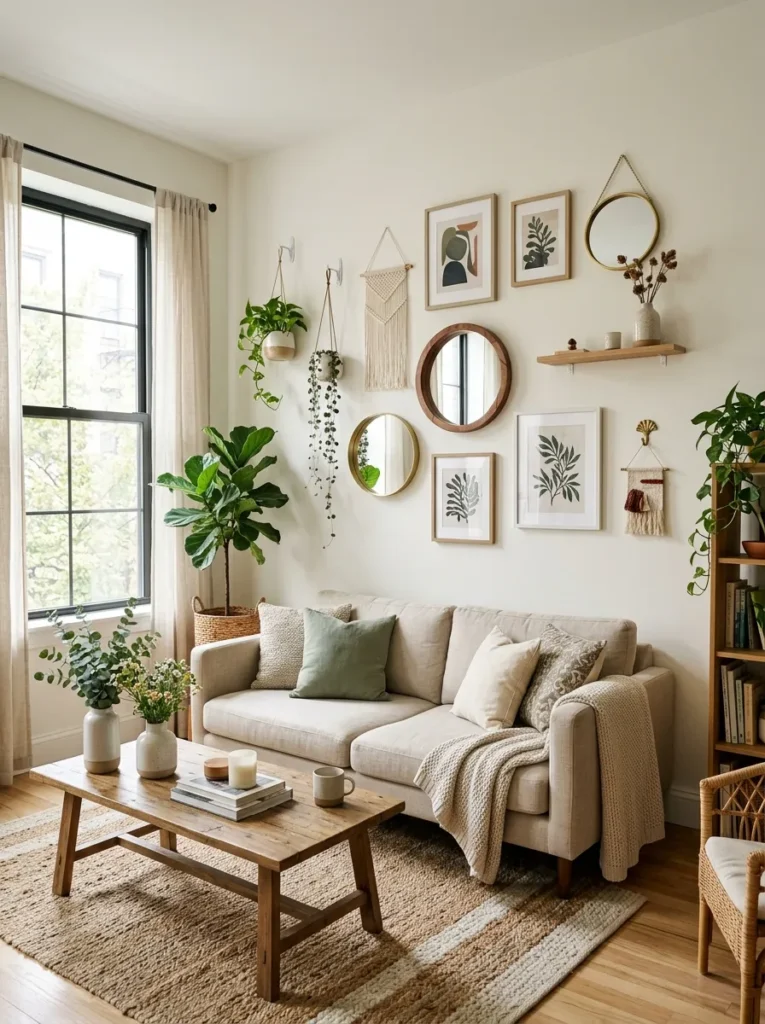
Command Strips and adhesive hooks let you hang art, mirrors, and light fixtures without nails or drilling. They hold surprisingly well for their weight rating and come off cleanly, which makes them a go-to option for renters who want their security deposit back.
Always check the listed weight limit before hanging anything heavier than a small frame, and give the adhesive a full hour to set before hanging your item for the strongest hold.
6. Add a Large Mirror to Open Up the Room
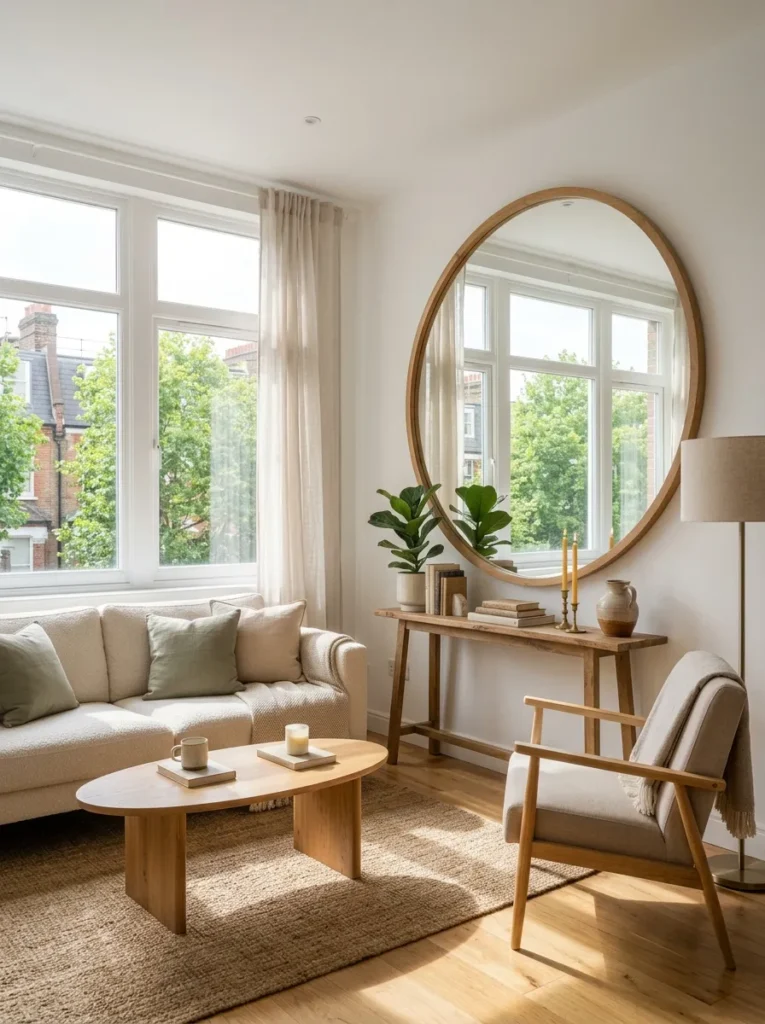
A big mirror does double duty in an apartment. It reflects natural light to make the room feel brighter, and it creates the illusion of more space in a way that few other decor pieces can match.
For the biggest visual impact, place your mirror directly across from a window rather than perpendicular to it. This positioning bounces the most daylight back into the room throughout the day.
7. Bring In Plants for Life and Color
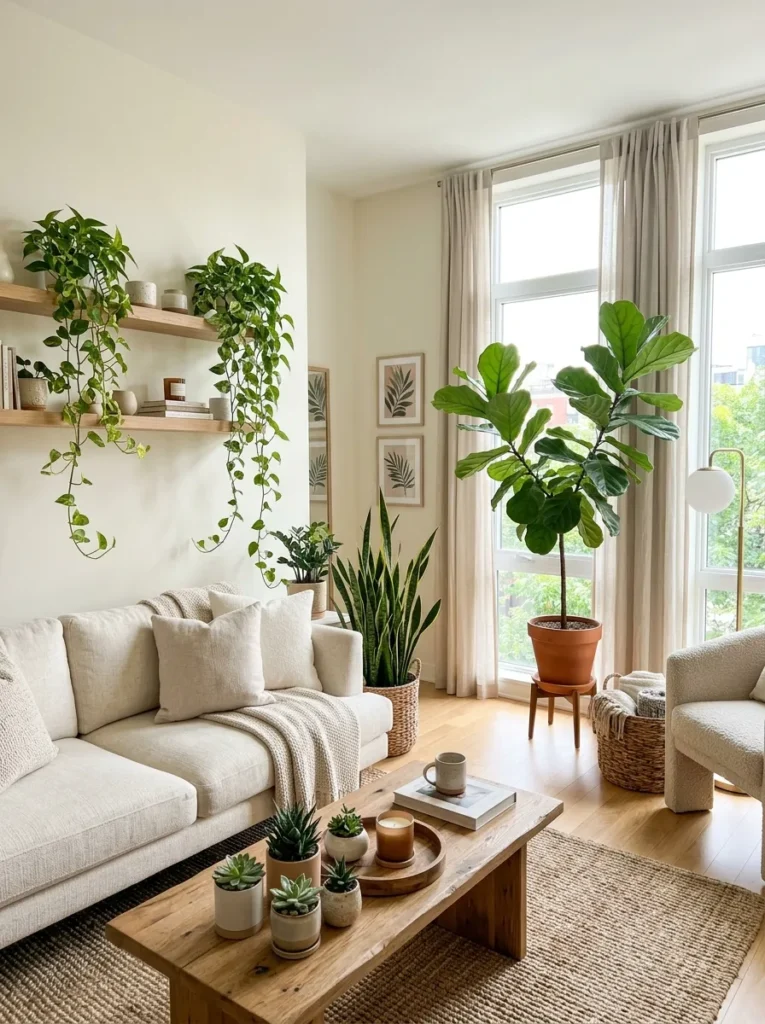
Plants add warmth and personality to a rented space without any permanent commitment. Low maintenance options like pothos, snake plants, or ZZ plants are especially forgiving if natural light in your apartment is limited.
If your space gets very little natural light, consider a small grow light disguised as a regular lamp, or simply lean on faux plants in the darkest corners while keeping real ones near your brightest window.
8. Use a Rug to Cover Unwanted Flooring
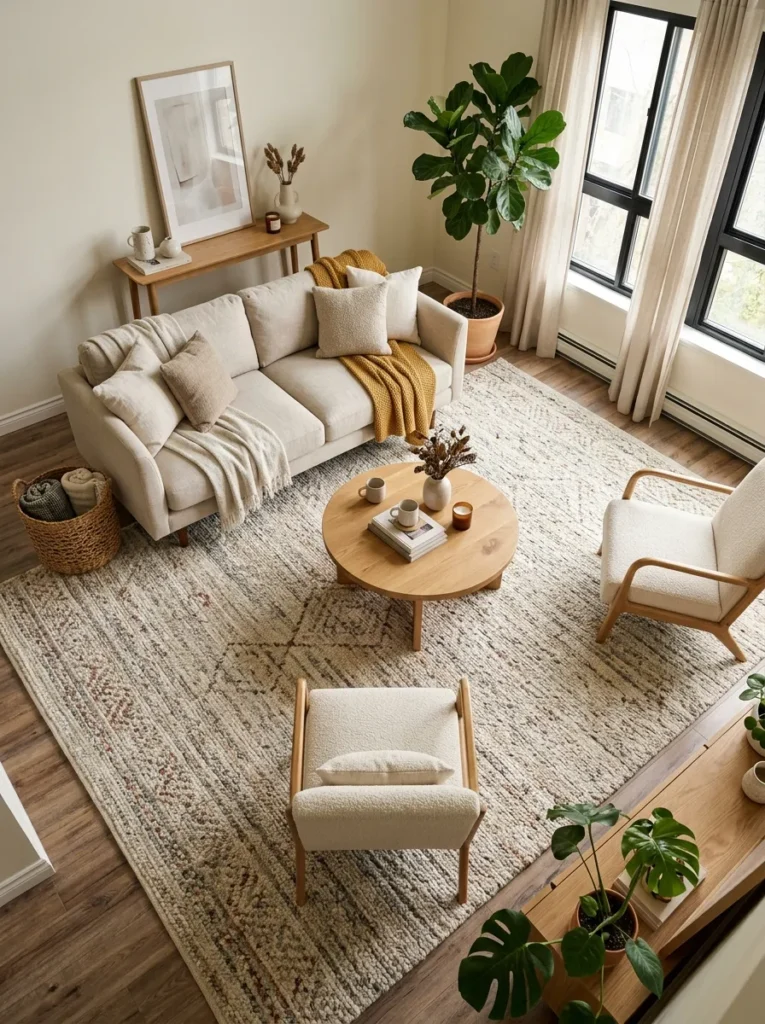
If your apartment has flooring you’re not thrilled with, a large area rug can hide most of it while adding warmth and softness underfoot at the same time. Choose one big enough to sit under at least the front legs of your main furniture pieces.
A rug pad underneath also protects rental flooring from scuffs and keeps the rug itself from sliding around, which matters even more on hardwood or laminate floors common in apartments.
9. Add Floating Shelves for Extra Storage
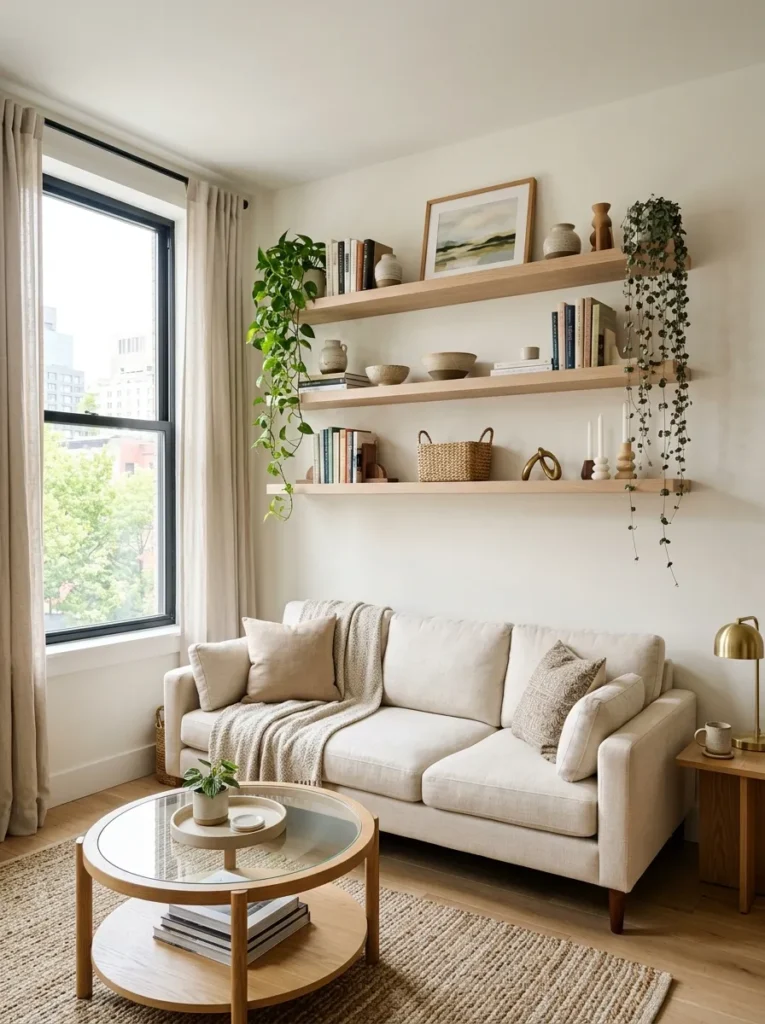
Floating shelves give you a place to display books, plants, and decor without eating into your floor space. Since most floating shelf brackets only require a couple of small holes, they’re a fairly landlord-friendly upgrade compared to full cabinetry.
Keep a small tube of matching wall paint on hand so you can patch and touch up the holes easily when it’s time to move out.
10. Use Curtains to Hide Storage or Awkward Areas
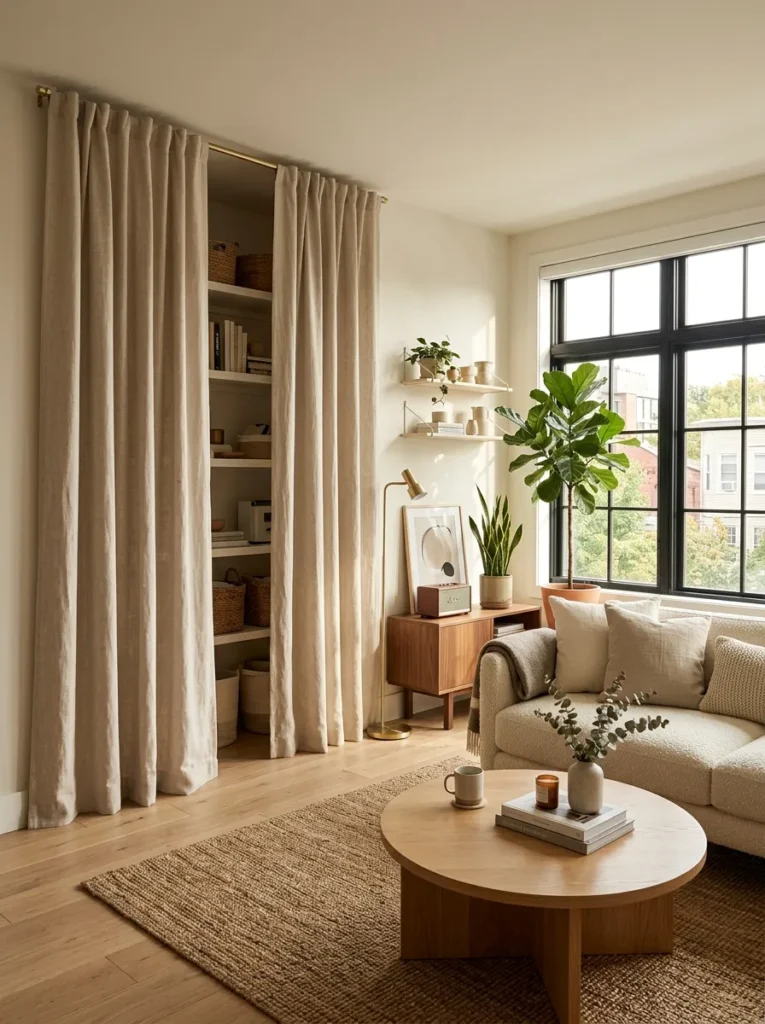
A simple curtain panel can hide open shelving, an awkward nook, or even a window unit air conditioner. It’s a soft, easy fix that adds a finished look to areas that would otherwise stand out for the wrong reasons.
This trick works especially well in older apartments with exposed pipes, radiators, or built-ins that don’t quite match your style but can’t be removed.
11. Choose a Neutral Base With Removable Color
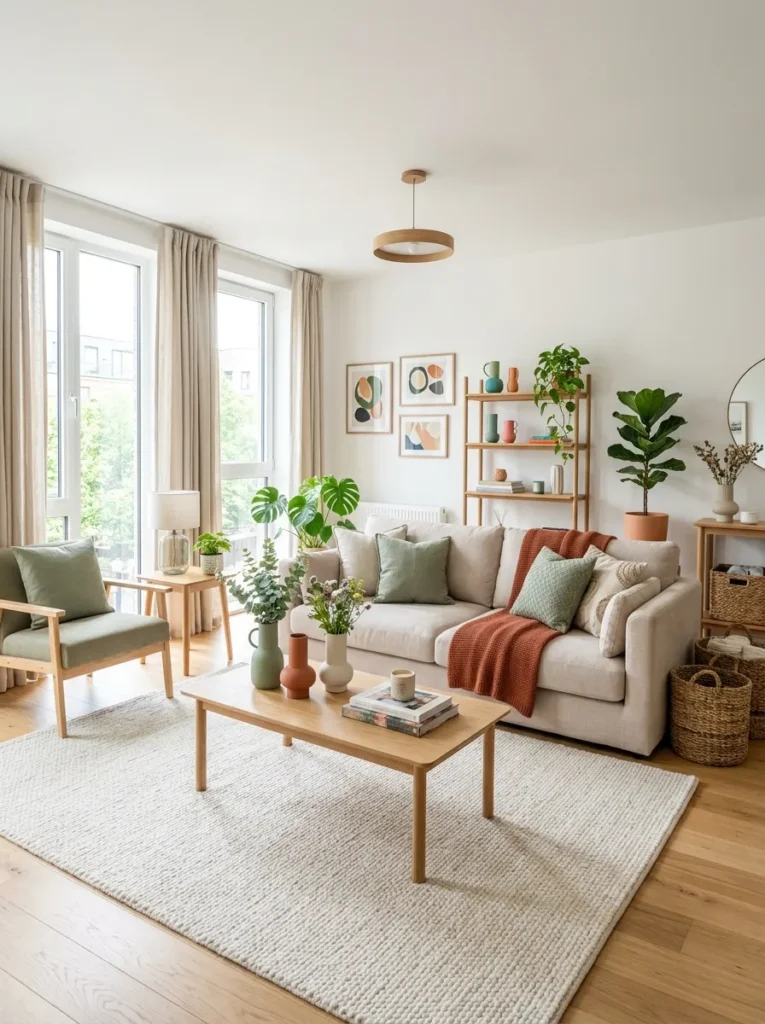
Stick to neutral tones for your larger, harder-to-replace pieces like sofas and rugs, then bring in color through pillows, throws, and art that you can swap out easily whenever your taste changes or you move to a new place.
This approach also protects your budget long term, since you’re only replacing small, inexpensive accessories instead of major furniture every time you want a refresh.
12. Add Battery-Powered or Plug-In Sconces
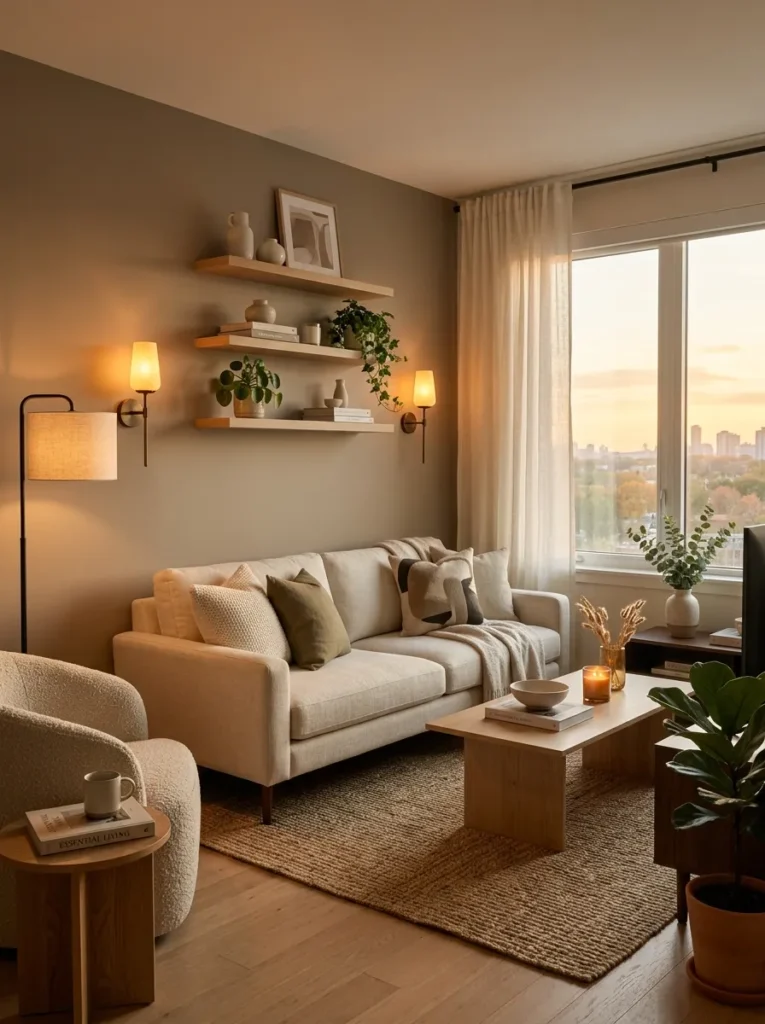
Wall sconces that don’t require hardwiring let you add layered, ambient lighting without an electrician or landlord approval. Many modern versions look nearly identical to hardwired fixtures once they’re mounted.
Battery-powered options are especially useful in hallways or corners far from an outlet, while plug-in versions with a cord cover can look just as clean near existing wiring.
13. Use a Room Divider for Studio Apartments
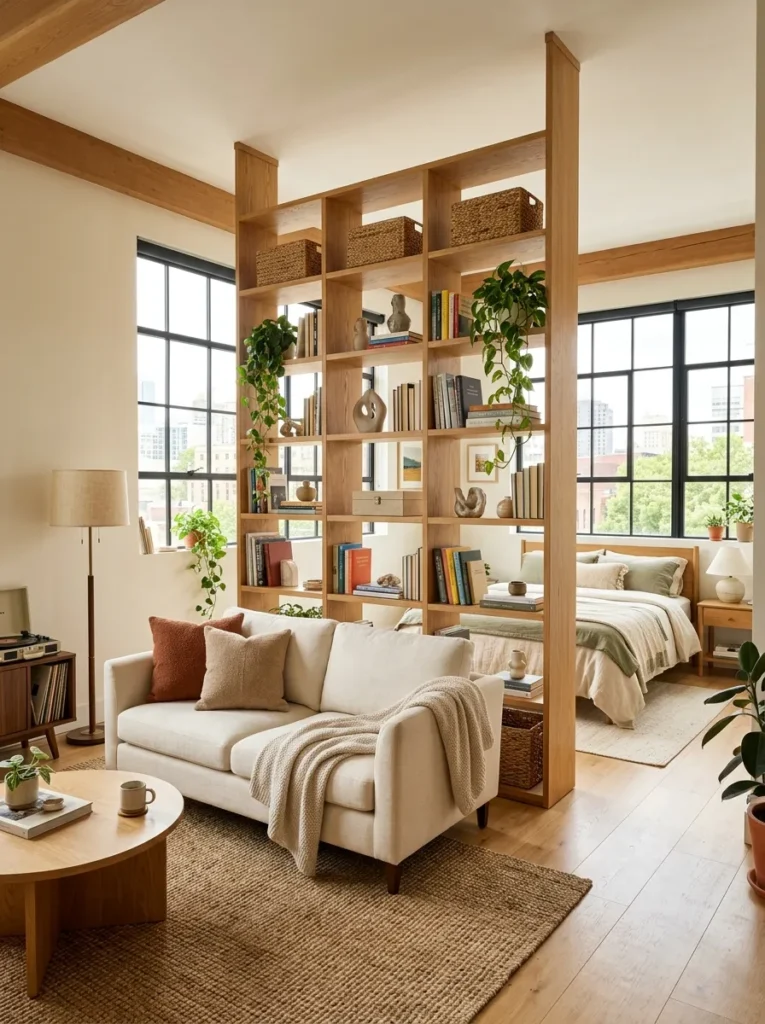
If you’re working with a studio layout, a folding screen or an open-backed bookshelf can visually separate your living area from your sleeping space without needing a permanent wall.
An open-backed shelf tends to work better than a solid screen in smaller studios, since it still lets light and air move freely between the two zones while giving each area its own visual identity.
14. Hang Curtains Higher Than the Window Frame
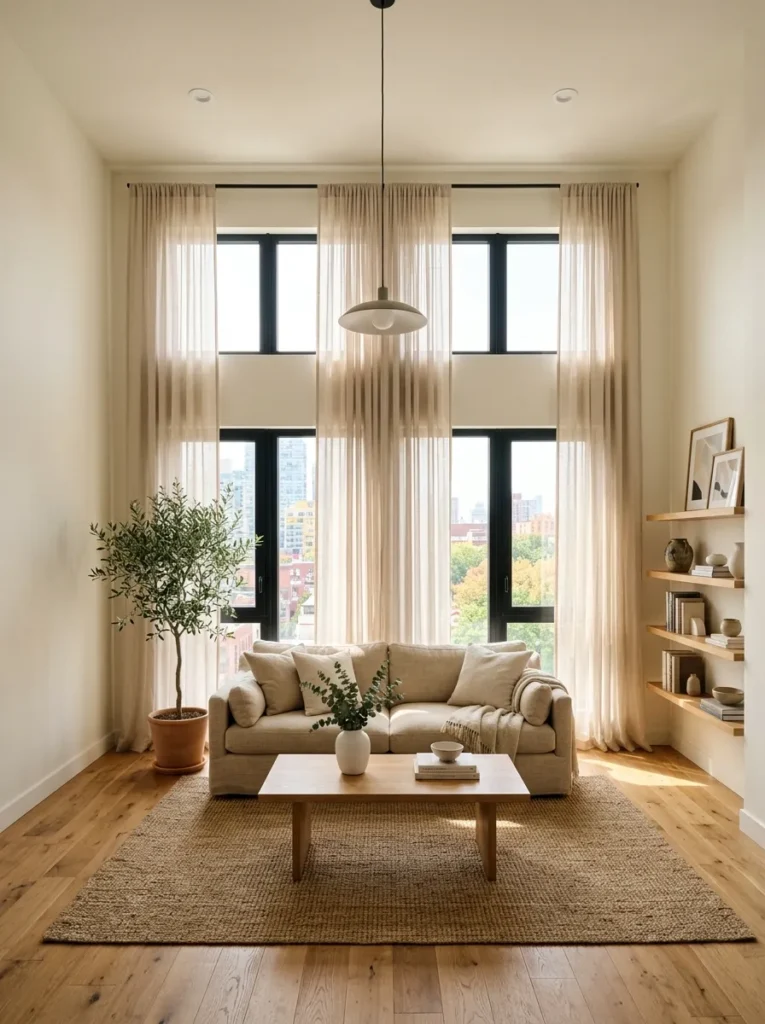
Mounting your curtain rod a few inches above the actual window frame makes ceilings look taller, and windows look larger, which is a simple trick that works in almost any apartment regardless of its actual size.
Extend the rod a little past the sides of the window too, so the curtains can fully open without blocking any of the actual glass and natural light.
15. Add a Gallery Wall With Removable Hooks
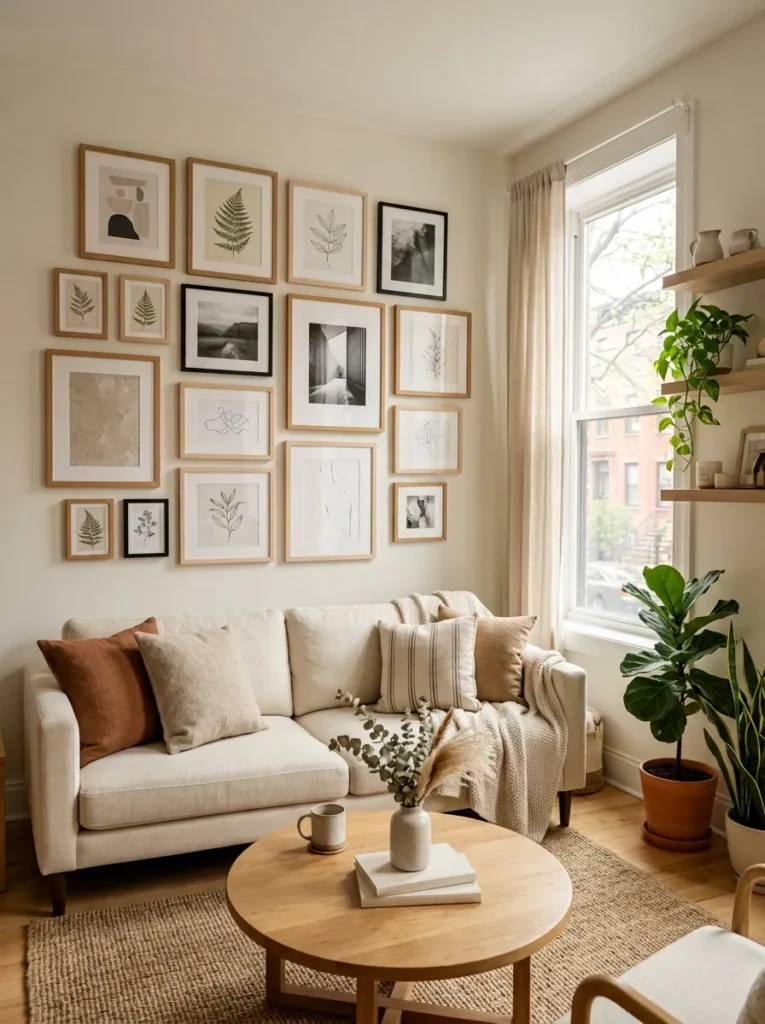
A gallery wall doesn’t need to be permanent to look intentional. Use adhesive strips or small removable hooks to build a curated wall of art and photos that you can rearrange or take down entirely without any wall damage.
Lay your frames out on the floor first in the arrangement you want, then transfer that layout to the wall piece by piece. It’s much easier to adjust spacing on the floor than after everything is already hanging.
16. Choose a Slipcovered Sofa
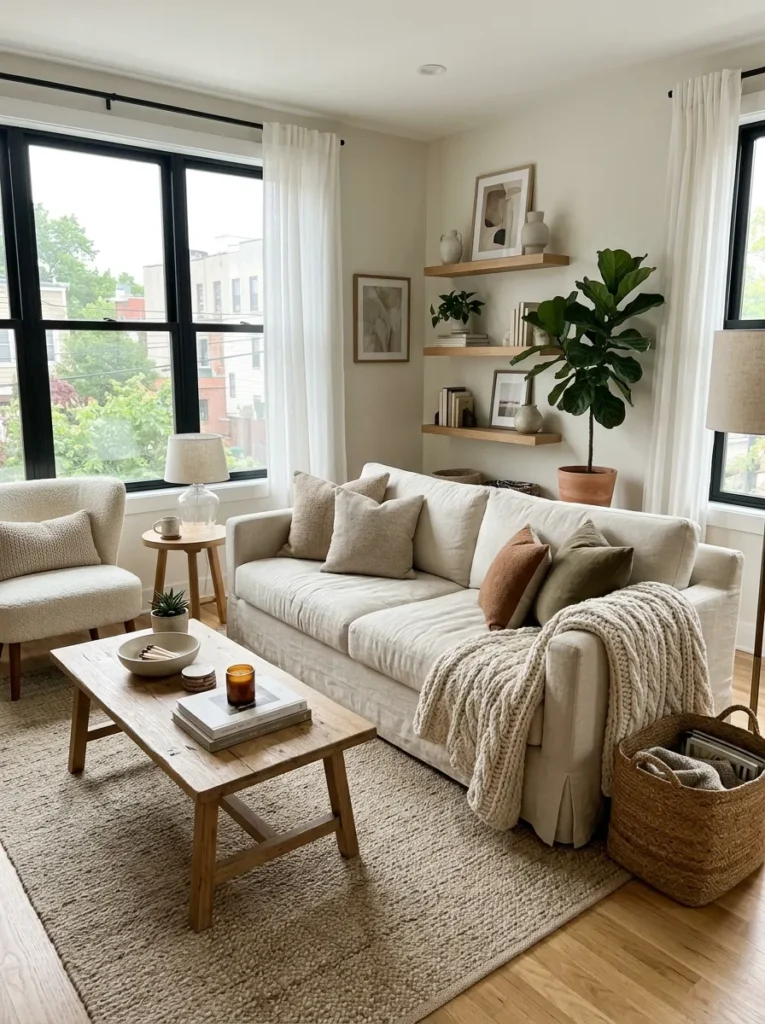
Slipcovers are especially practical in apartments, since they’re easy to wash, easy to swap for a new look, and forgiving if you ever need to move the piece through narrow hallways or stairwells.
A removable slipcover also means you’re not stuck with permanent stains or wear from everyday apartment living, which matters a lot if the sofa needs to last through more than one move.
17. Use Baskets to Corral Clutter
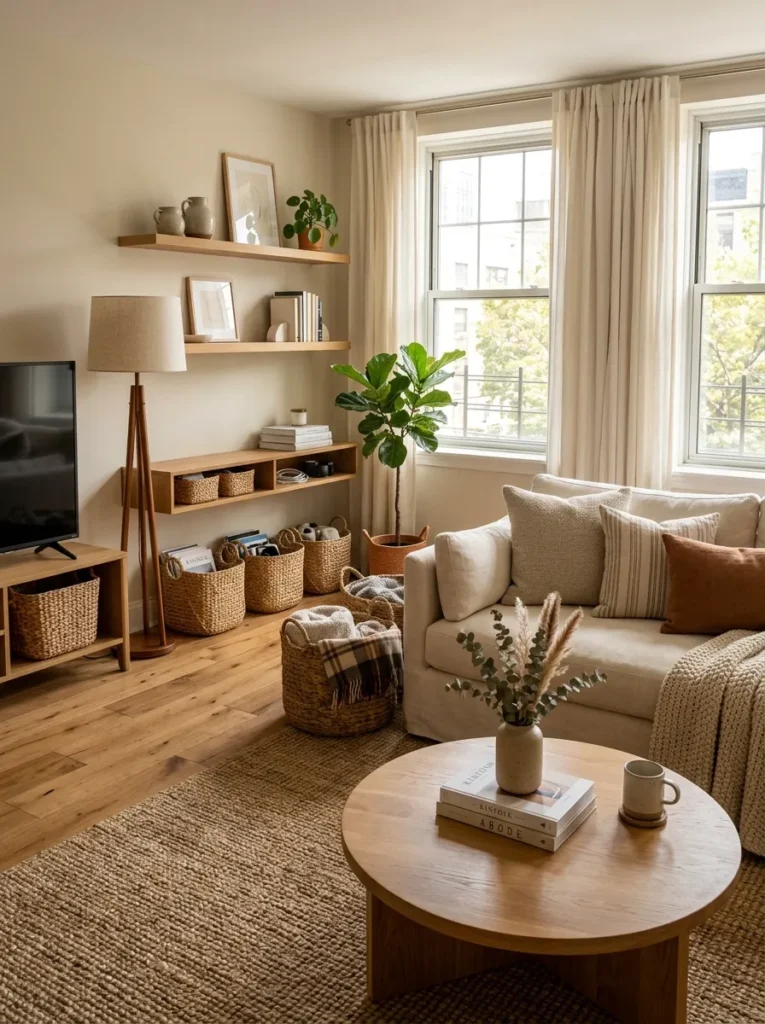
A couple of woven baskets near your sofa or entryway give you a quick place to stash blankets, shoes, or mail. In a smaller apartment, a few well-placed baskets can prevent everyday clutter from taking over the whole room.
Choose baskets in two or three coordinating sizes so they can be grouped or nested when not in use, keeping the overall look tidy even when you’re storing a lot in a small footprint.
18. Add String Lights or Plug-In Lamps for Ambiance
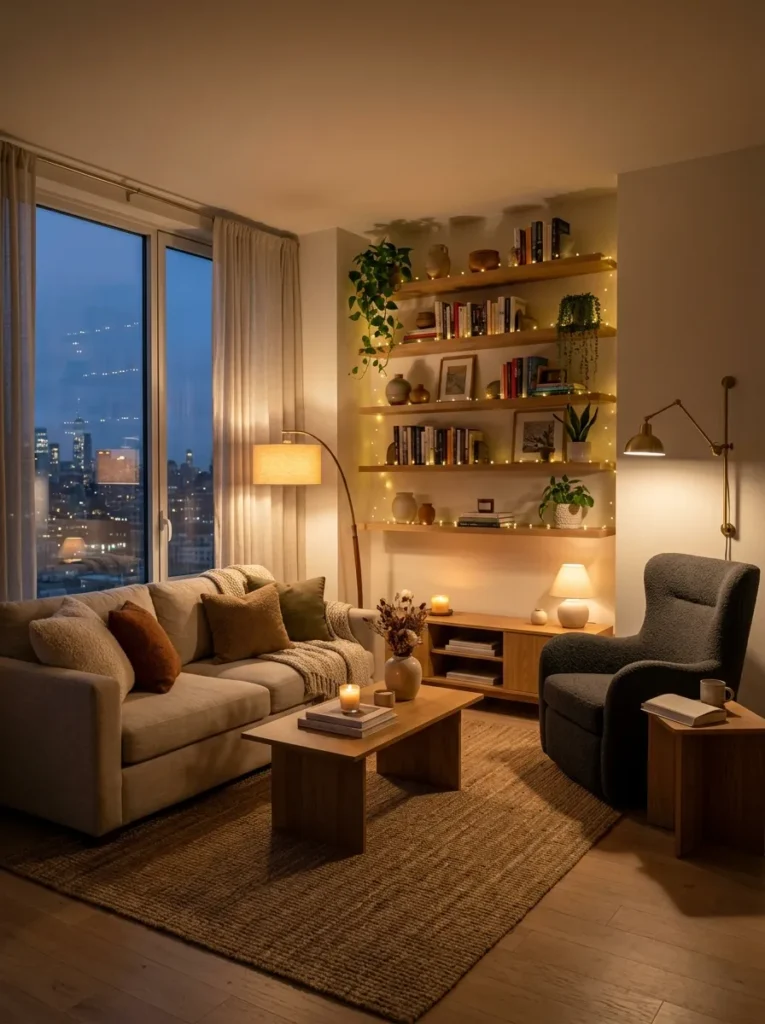
- String lights along a shelf or window frame for a soft evening glow
- A plug-in wall lamp where hardwired sconces aren’t an option
- A dimmable floor lamp for easy mood lighting adjustments
- Warm-toned bulbs throughout, instead of harsh white light
Layering a few of these options together, rather than relying on a single overhead fixture, makes a rented living room feel considerably warmer and more finished in the evening.
19. Choose a Small Scale Media Console
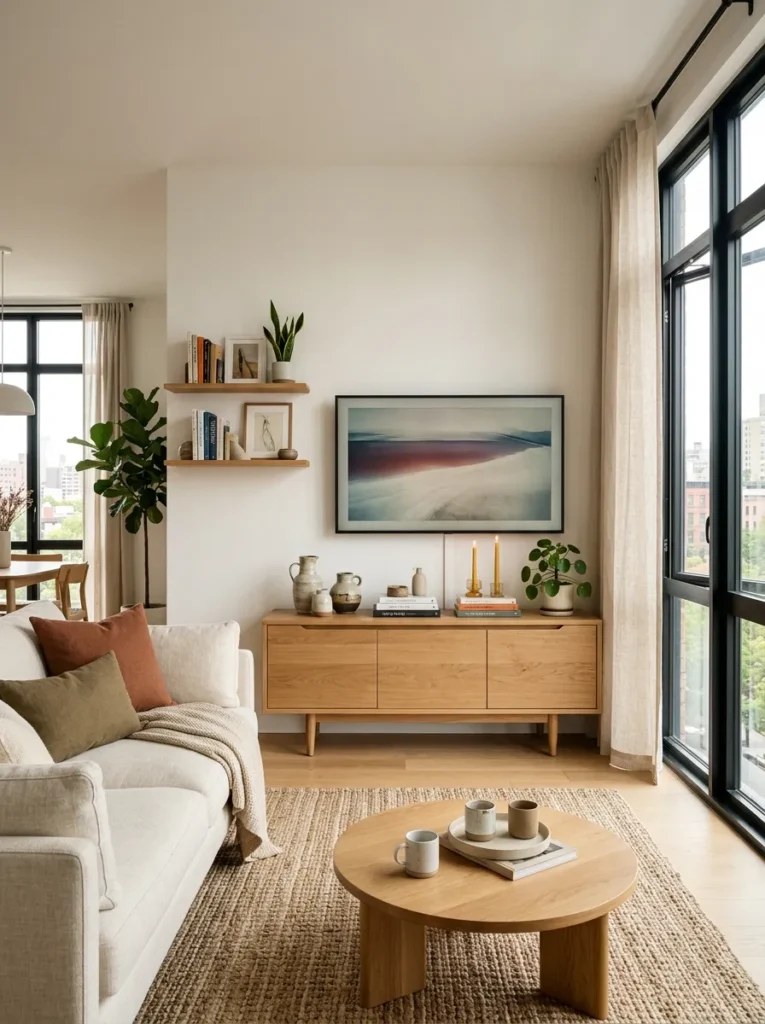
A slim, low media console keeps your TV area functional without dominating the room. Look for one with closed storage to keep remotes, cords, and media equipment out of sight in a compact footprint.
A console on slim legs, rather than one that sits flush to the floor, also helps the piece feel lighter visually in a room where every inch of open floor space counts.
20. Use Peel and Stick Tile for a Quick Fireplace or Accent Update
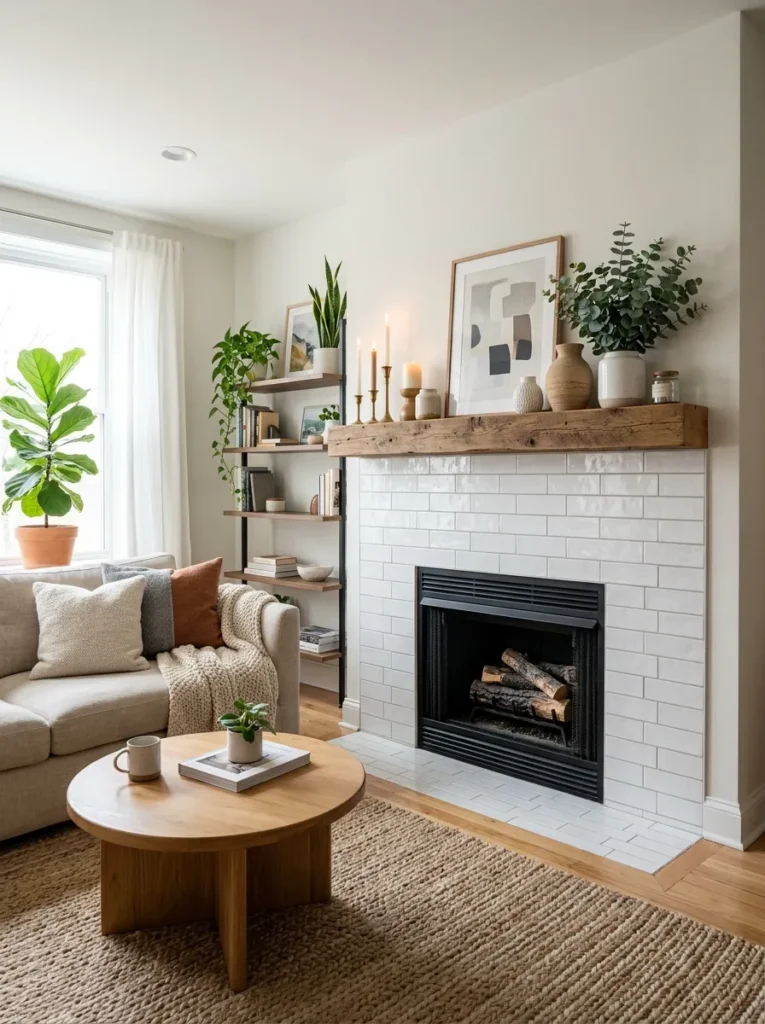
If your apartment has a fireplace surround or accent area you’d like to update, peel and stick tile designed to mimic stone or subway tile can transform the look without any demolition or permanent installation.
Most of these tiles can be removed cleanly at move-out, but it’s worth testing a small hidden section first to confirm they won’t damage the existing surface underneath.
21. Add a Statement Rug Instead of Statement Walls
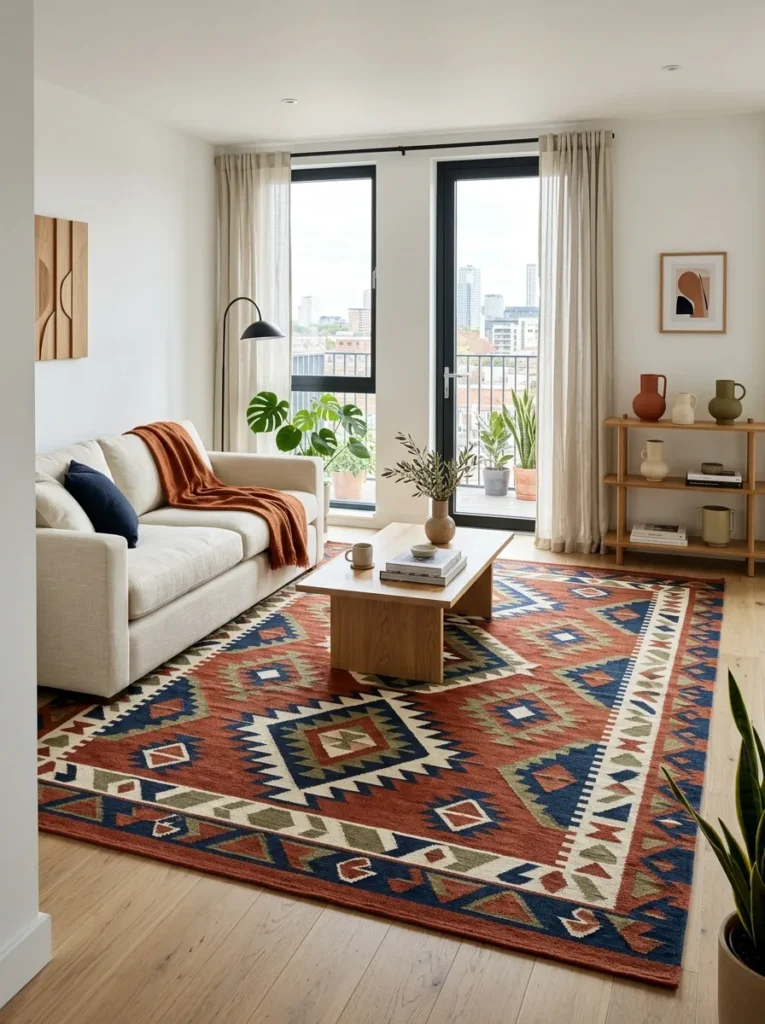
Since painting is often restricted in apartments, a bold patterned rug can carry the personality that an accent wall would in a house you own. It’s fully reversible and travels with you whenever you move.
Because a rug this bold becomes the visual anchor of the room, keep your furniture and walls simple around it so the two don’t end up competing for attention.
22. Personalize With What You Already Own
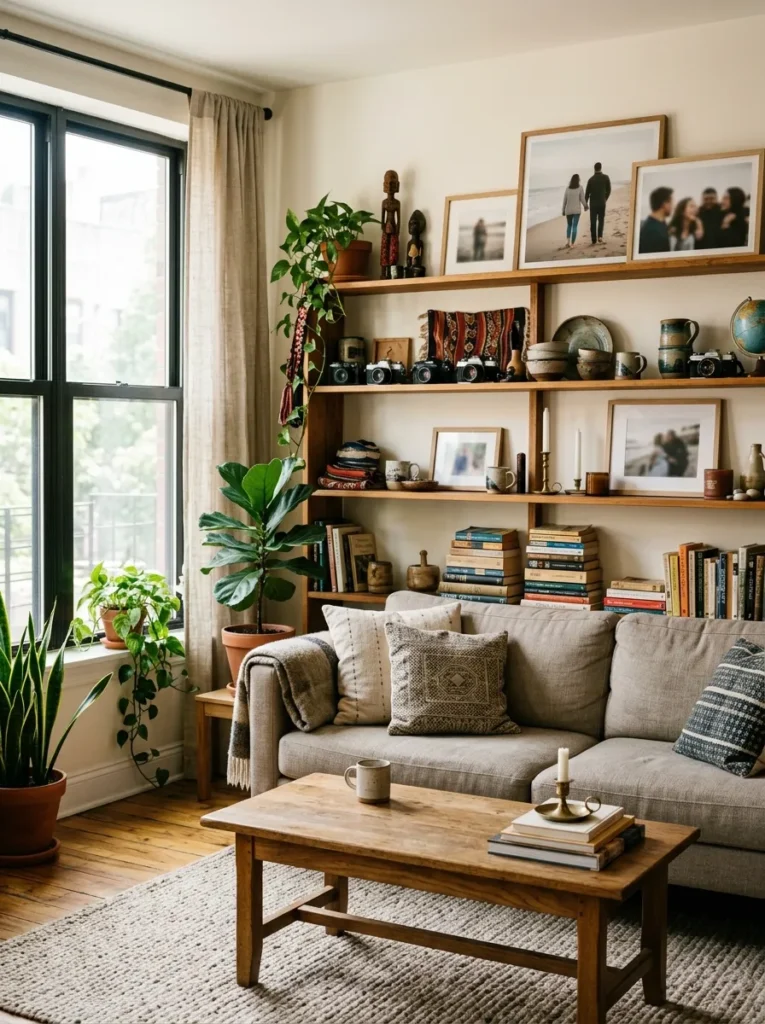
Photos, travel souvenirs, and small collected objects make an apartment feel like home far more than anything bought specifically for the room. Mix these personal pieces in with your furniture and decor so the space reflects you, not just a catalog page.
These are also the easiest items to pack up and bring with you to your next place, which makes them one of the best investments you can make in a rented space you know won’t be permanent.
Apartment decorating is really about working within real constraints while still making the space feel fully yours. Focus on the changes you can make without damaging the unit, lean on furniture that pulls double duty, and let a few personal touches do the rest.