

A small bedroom doesn’t have to feel cramped. The real problem in most tight bedrooms isn’t the square footage, it’s furniture that’s too large, storage that’s poorly placed, and a layout that was never actually planned around the room’s real limits.
Here are the best 25 ideas that address those root causes directly:
1. Measure Before You Buy Anything
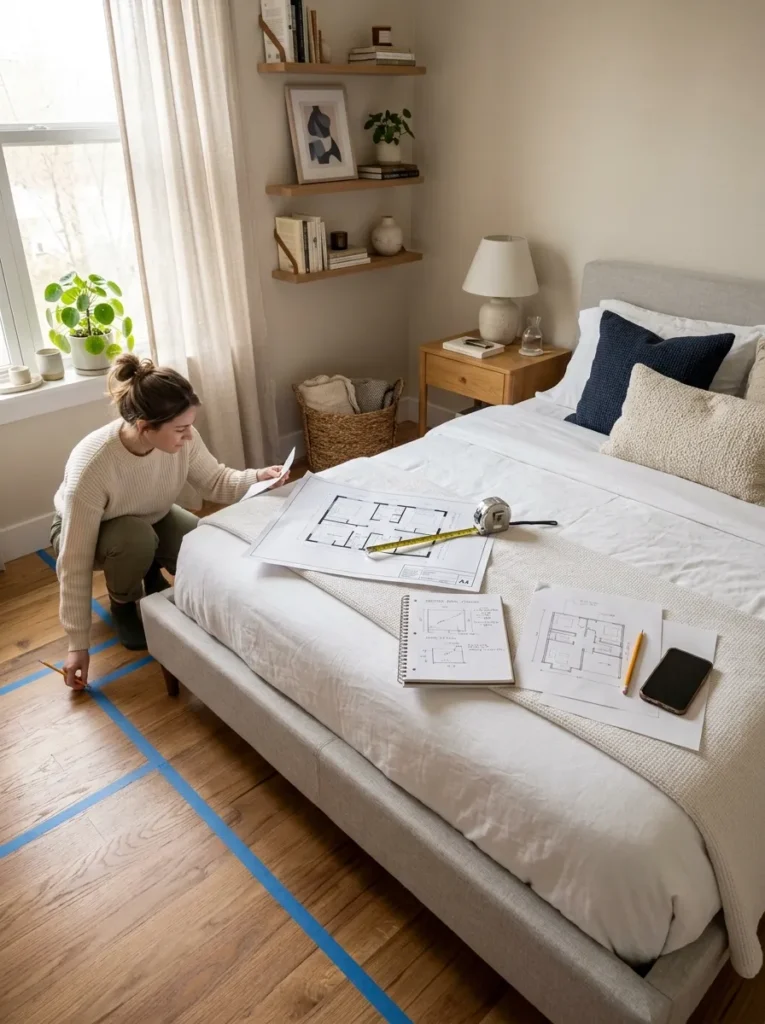
The single most common mistake in small bedrooms is furniture bought without measuring first. Before shopping, measure your room’s full dimensions, plus the width of your doorway, and map out where your bed, dresser, and any other major piece will actually sit, including the clearance needed to open drawers and closet doors.
2. Choose a Bed Size That Fits the Room, Not Just the Mattress You Want
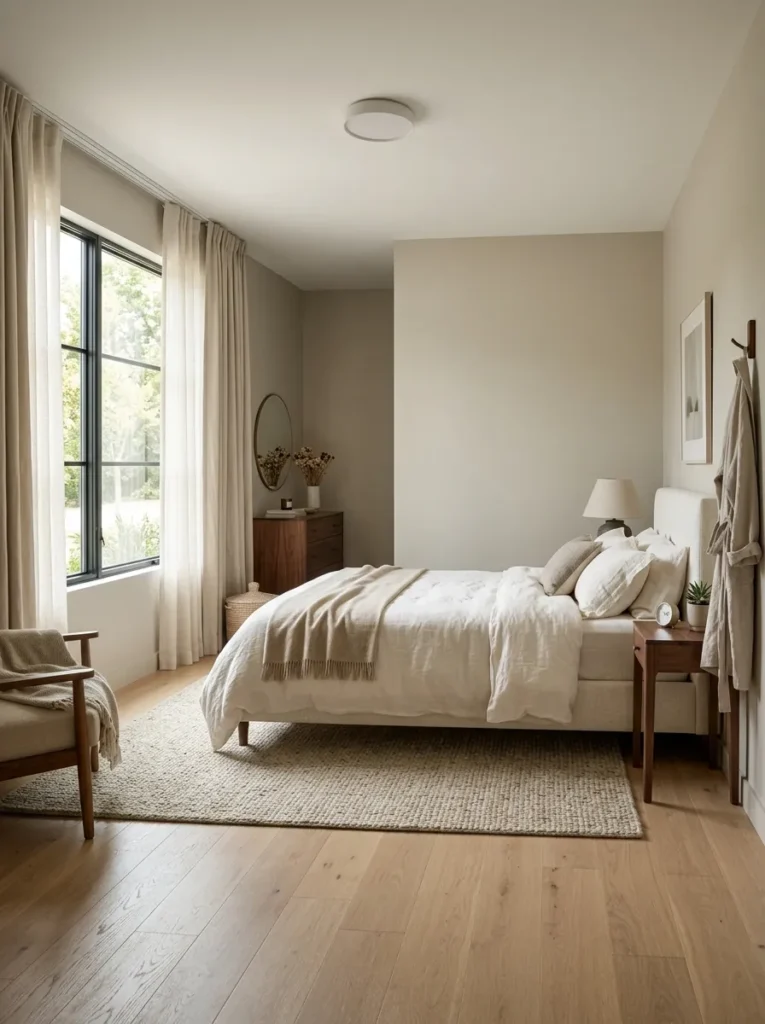
A queen bed can technically fit in a small room and still leave almost no usable floor space around it. As a general guide, leave at least 24 inches of clearance on the sides you walk around regularly, and consider a full or even a well-chosen twin XL if the room is genuinely tight.
3. Use the Space Under the Bed
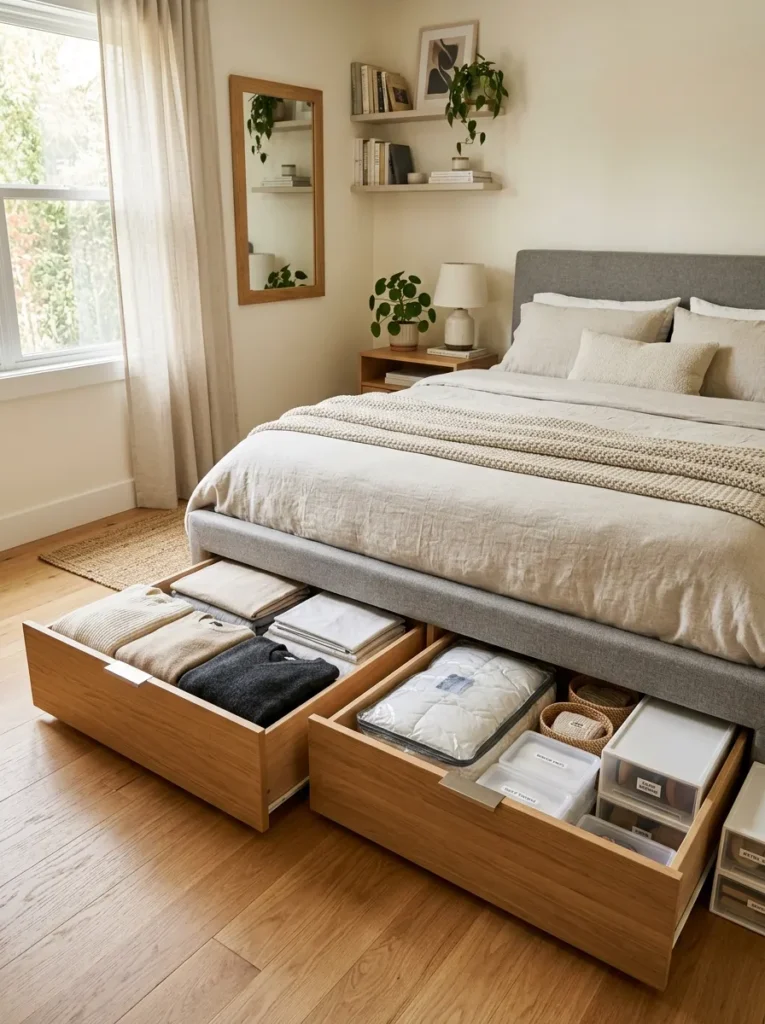
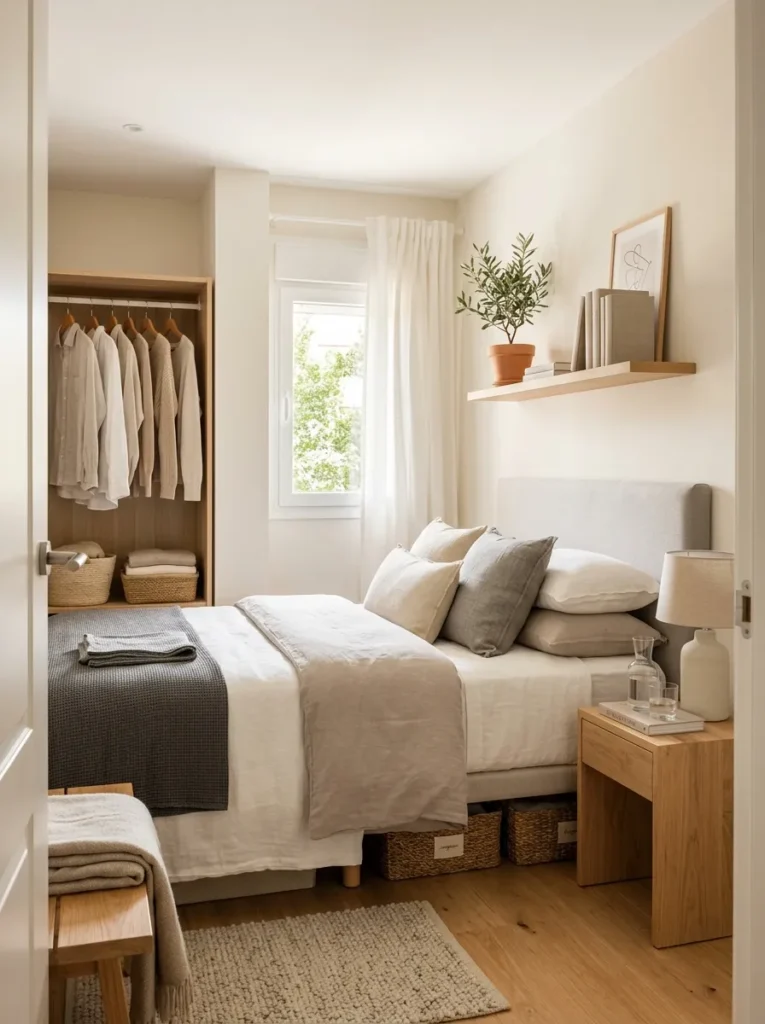
A bed frame with built-in drawers, or simply enough clearance underneath for flat storage bins, turns unused space into real storage. This is often the single largest block of wasted square footage in a small bedroom.
- Under-bed storage bins for off-season clothing
- A platform bed with built-in drawers
- Bed risers paired with flat, low-profile containers
- Vacuum sealed bags for bulky items like comforters
4. Choose a Nightstand With a Small Footprint
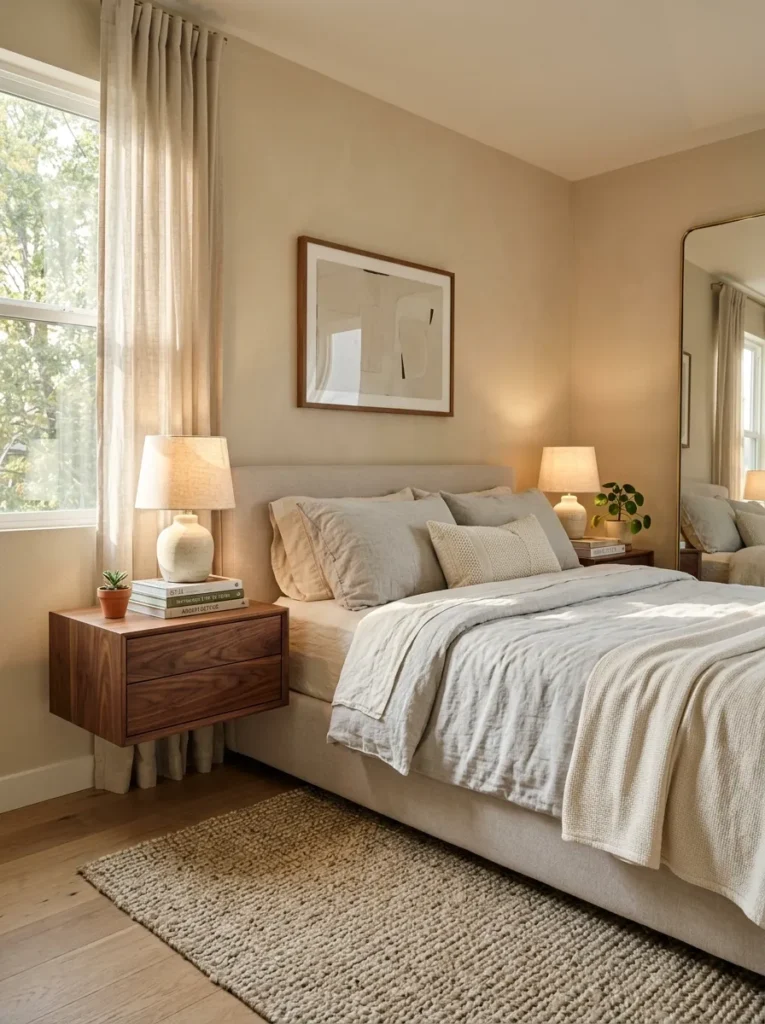
A floating wall-mounted shelf or a slim nightstand under 16 inches wide takes up far less visual and physical space than a full-sized bedside table, while still giving you a spot for a lamp and a book.
5. Mount Your Lighting on the Wall
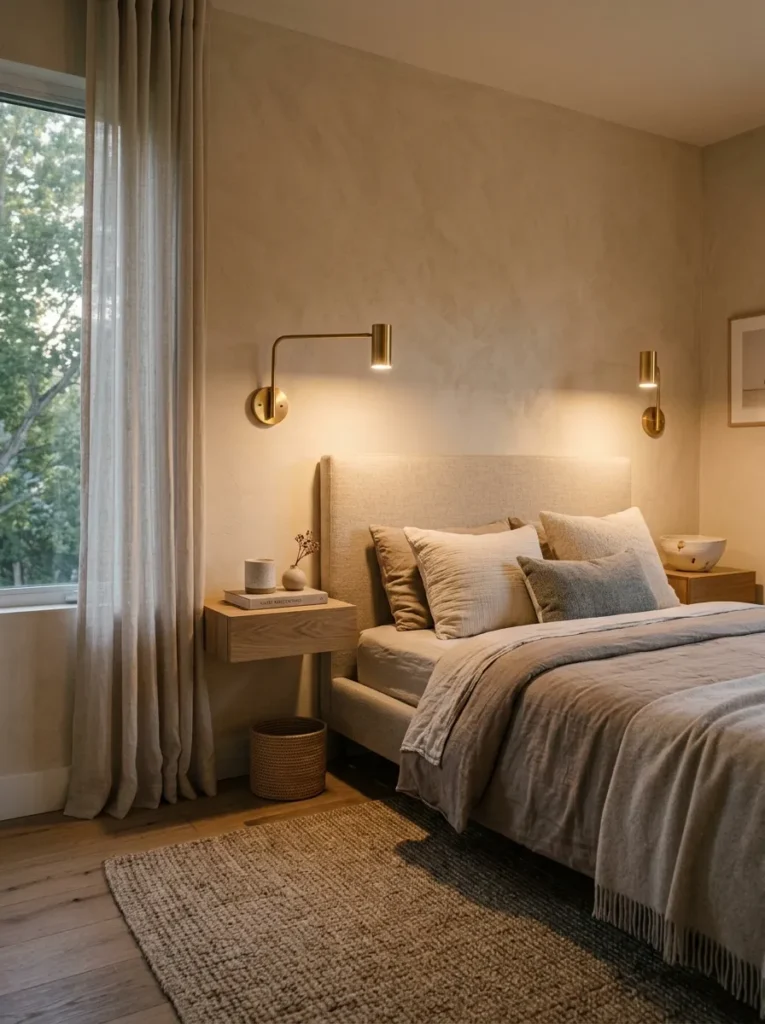
Wall sconces installed on either side of the bed free up your nightstand surface entirely and remove the need for a lamp base taking up space. This is especially useful if your nightstand is small enough that a lamp would otherwise dominate it.
6. Use a Mirror to Visually Double the Room
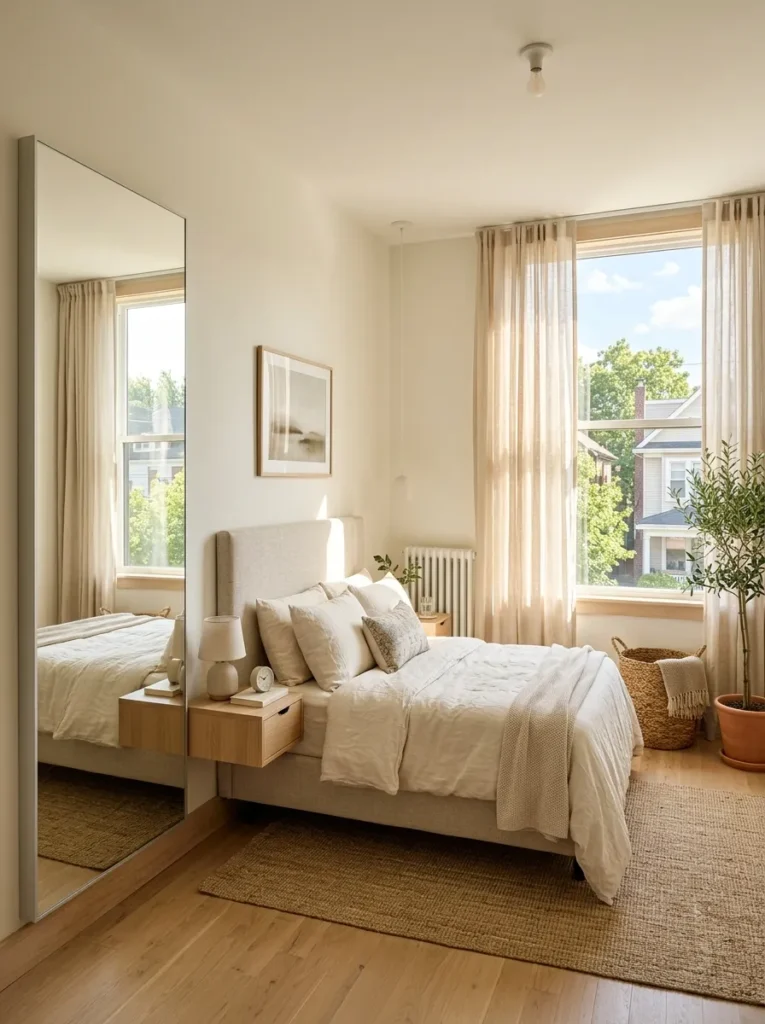
A large mirror placed across from your window bounces natural light back into the room and creates the illusion of a second window, which reads as noticeably more open space than the room actually has.
7. Choose Furniture With Legs Instead of Skirted Bases
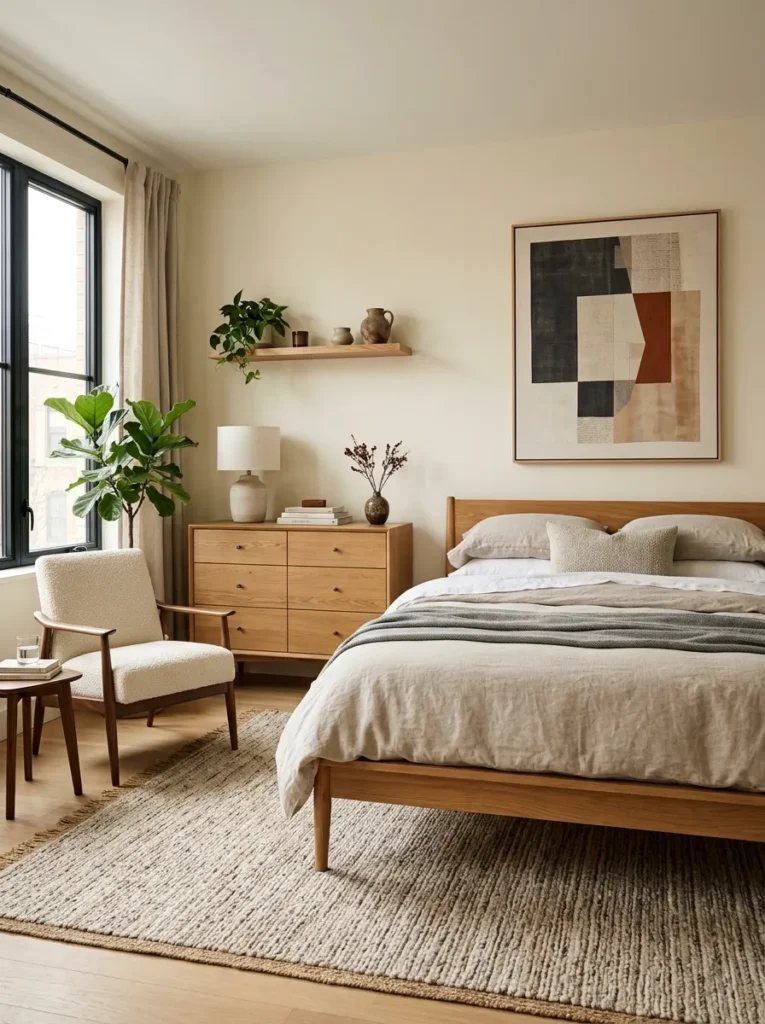
Furniture that sits directly on the floor blocks sightlines and makes a room feel heavier. A bed frame, dresser, or chair with visible legs lets your eye travel underneath, which keeps the room feeling more open even with the same amount of furniture in it.
8. Go Vertical With Storage
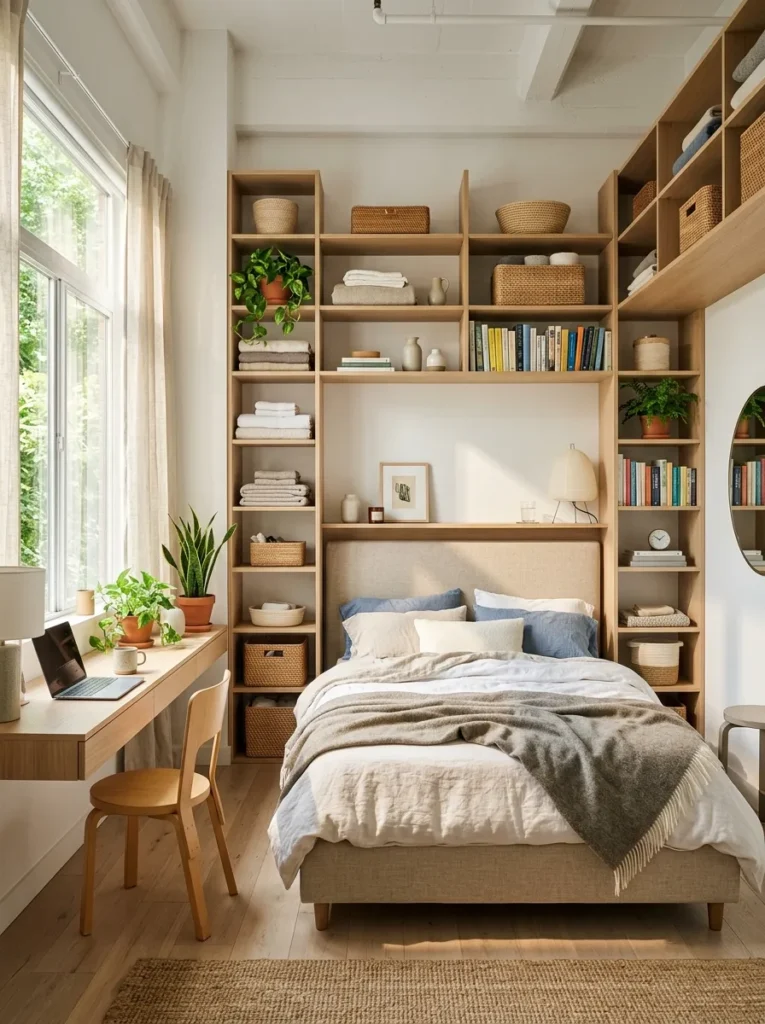
When floor space runs out, build up. Tall, narrow shelving units or a floor-to-ceiling closet organizer make use of vertical space that’s almost always underused in small bedrooms.
Look specifically for shelving units under 12 inches deep, since anything deeper starts to eat noticeably into your walking space even though it looks fine on paper.
9. Use a Slim Wardrobe Instead of a Full Dresser
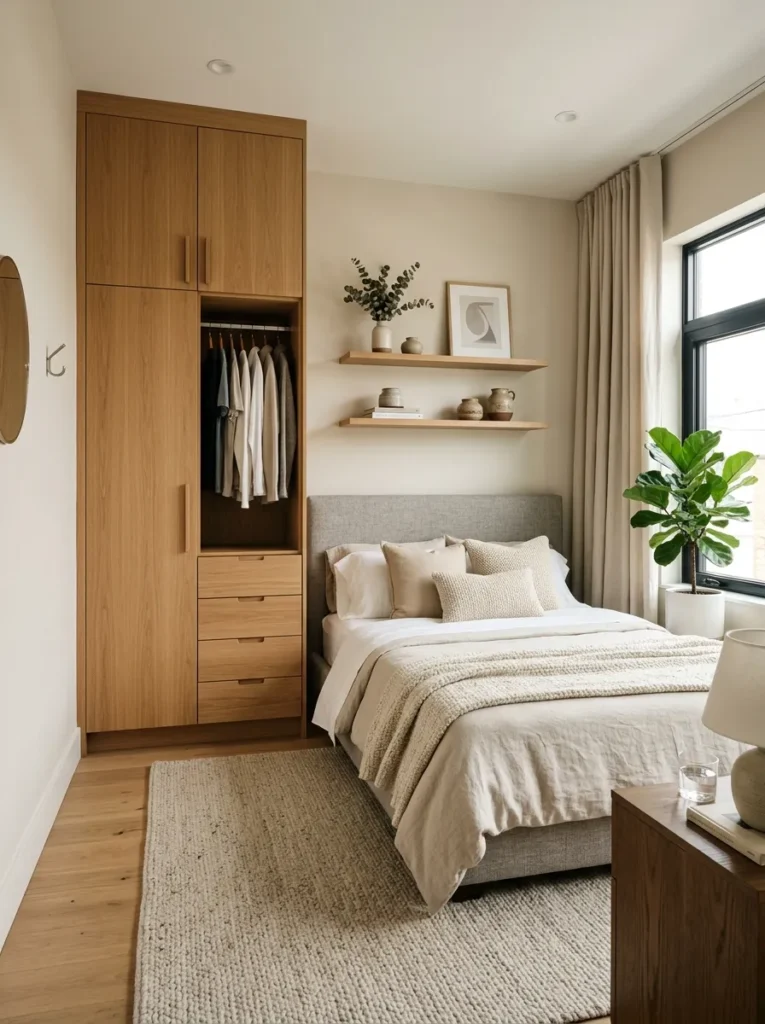
If closet space is limited, a narrow wardrobe with hanging space and a few drawers can often replace both a dresser and extra hanging storage in a single, more space-efficient footprint.
10. Keep Your Color Palette Light and Consistent
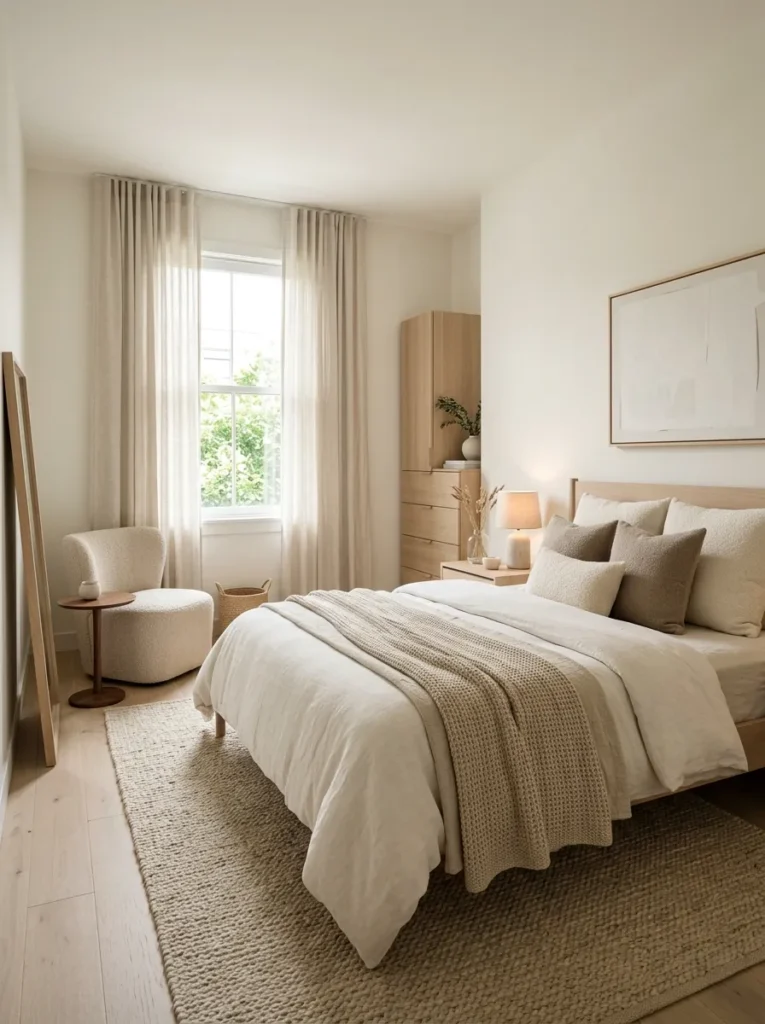
Soft whites, light grays, and warm neutrals reflect more light and create fewer visual breaks than a room with several contrasting colors. A consistent, light palette across walls, bedding, and furniture makes a small room read as calm and open rather than busy.
11. Use Sheer or Light Curtains
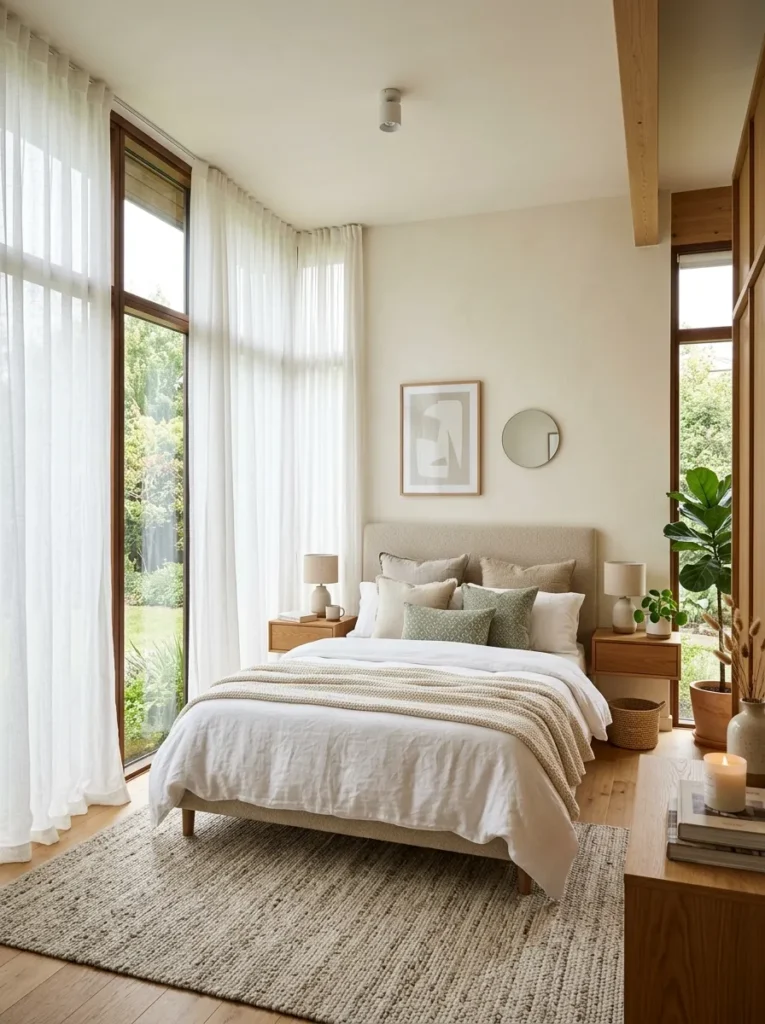
Heavy, dark drapes can shrink a small bedroom both visually and literally by blocking natural light. Light, sheer curtains let daylight in while still offering privacy, and they weigh far less visually than thick fabric panels.
12. Hang Curtains High and Wide
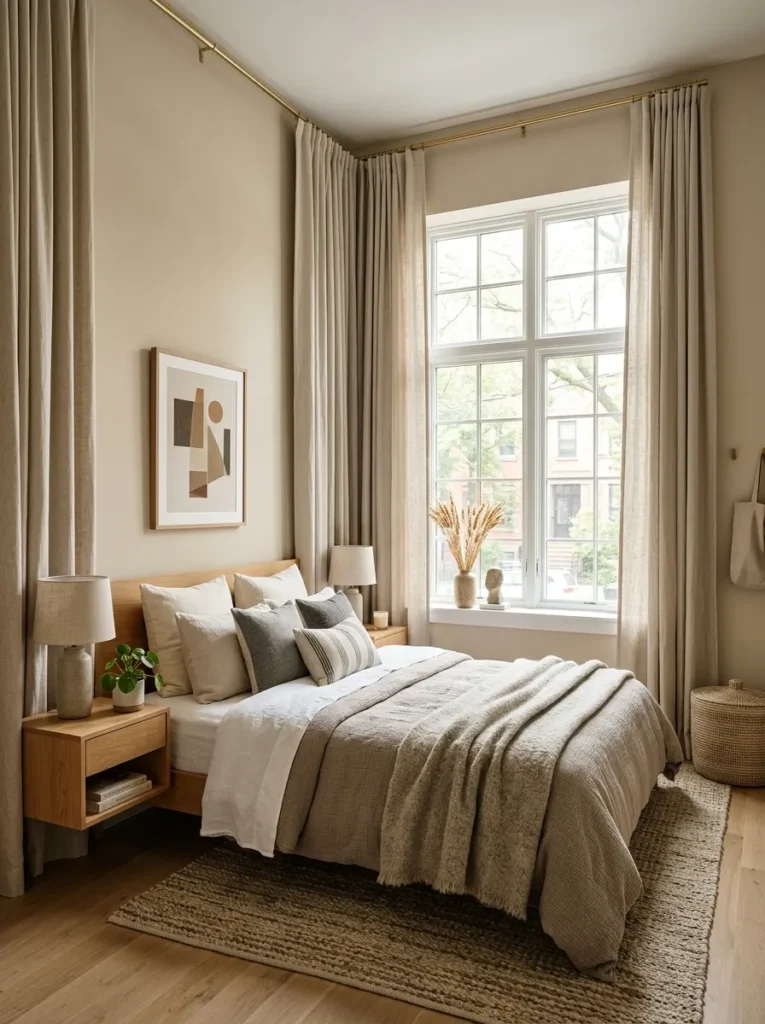
Mounting your curtain rod a few inches above the window frame and extending it past the sides makes the window look larger, and the ceiling look taller, a simple trick that costs nothing beyond where you place the hardware.
13. Choose a Headboard That Doubles as Storage
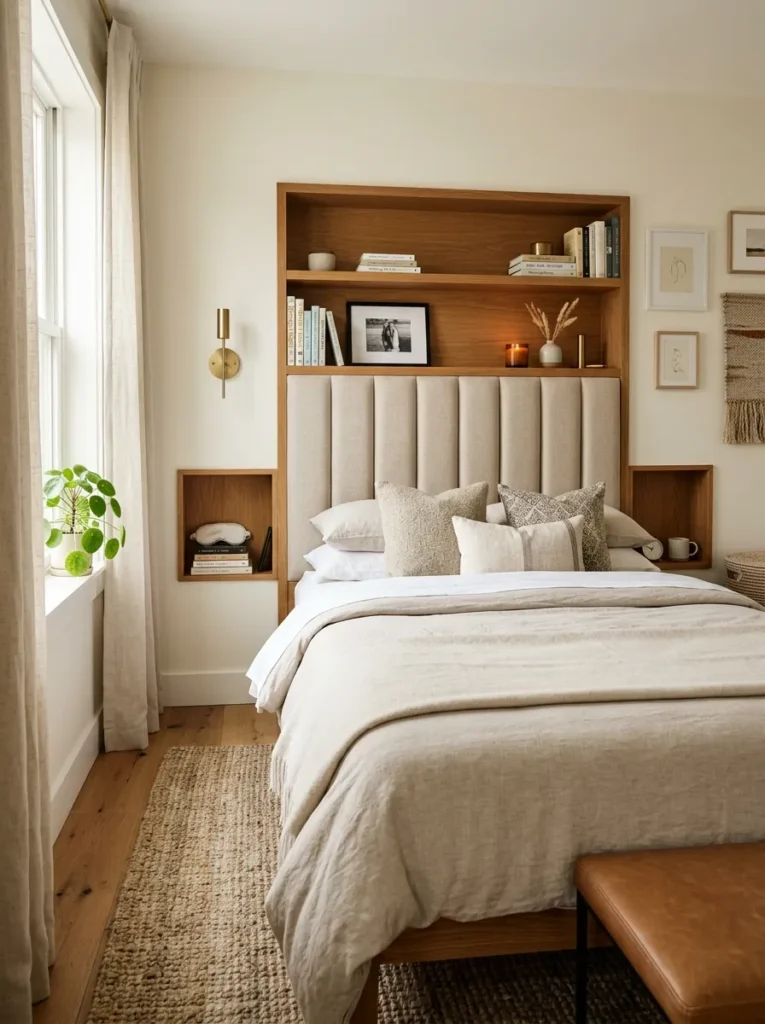
Some headboards include built-in shelving or small cubbies, giving you a spot for books, a phone charger, or small decor items without needing a separate nightstand at all.
14. Use Over-the-Door Storage
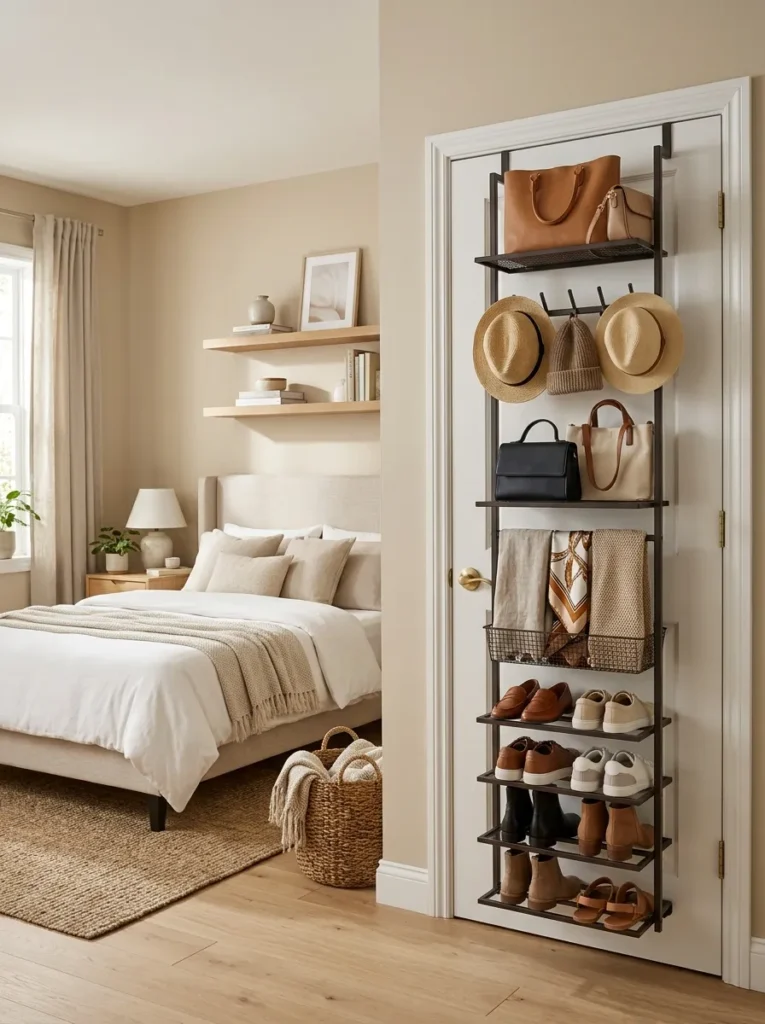
Hooks or hanging organizers on the back of your bedroom or closet door add storage in a spot that would otherwise go completely unused. This works especially well for shoes, bags, or accessories that don’t need to be in a drawer.
15. Choose a Desk That Folds Away
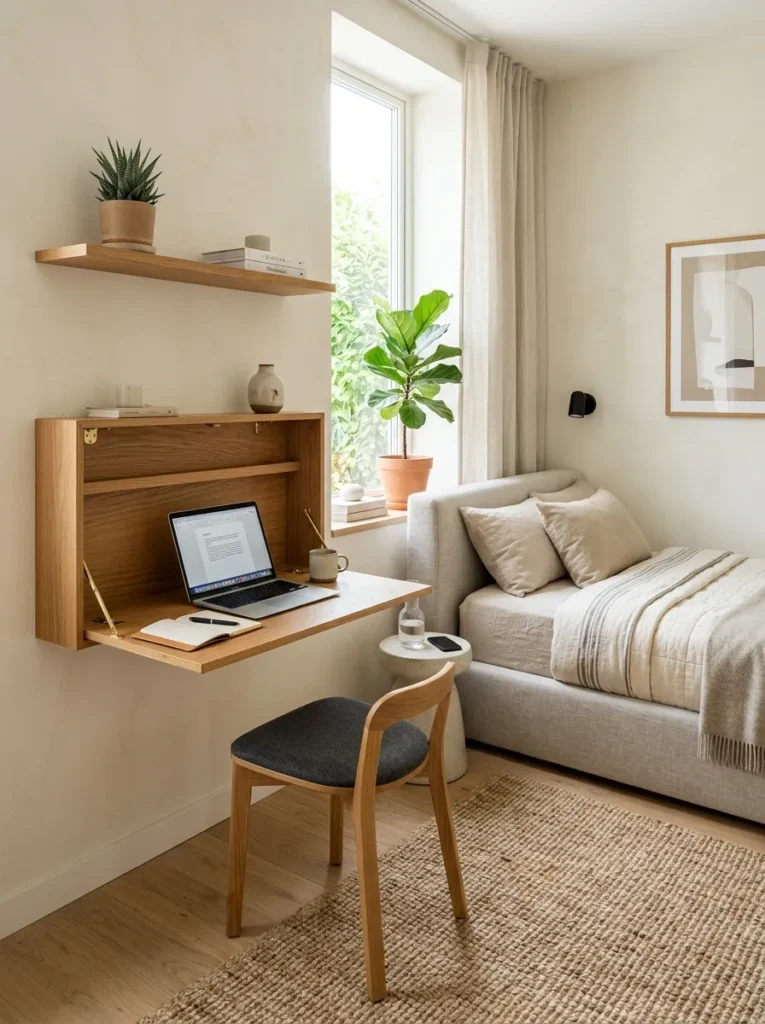
If your small bedroom needs to double as a workspace, a fold-down wall desk or a slim drop leaf table gives you a work surface when needed and disappears against the wall the rest of the time.
16. Use Baskets for Loose Item Storage
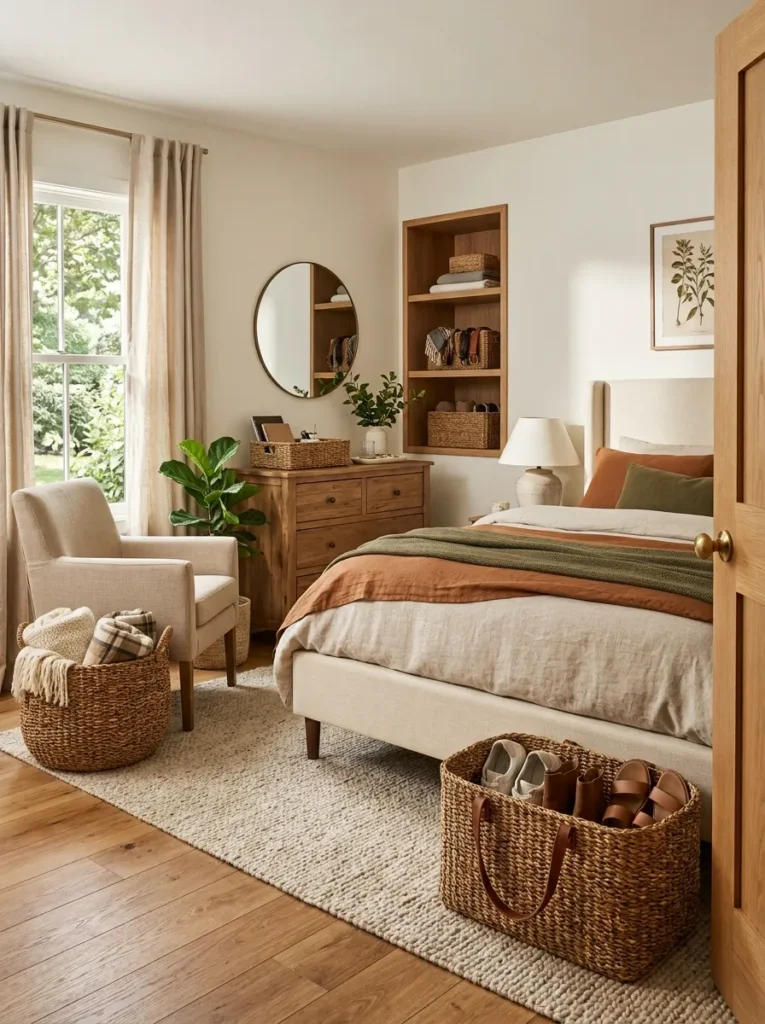
- A basket on a closet shelf for accessories
- A basket under a chair for extra blankets
- A basket by the door for shoes or bags
- A small basket on top of a dresser for daily items
Baskets keep loose items contained and out of sight without requiring any additional furniture, which matters a lot in a room where every new piece takes up space you don’t have to spare.
17. Choose a Round or Oval Accent Table if You Add One
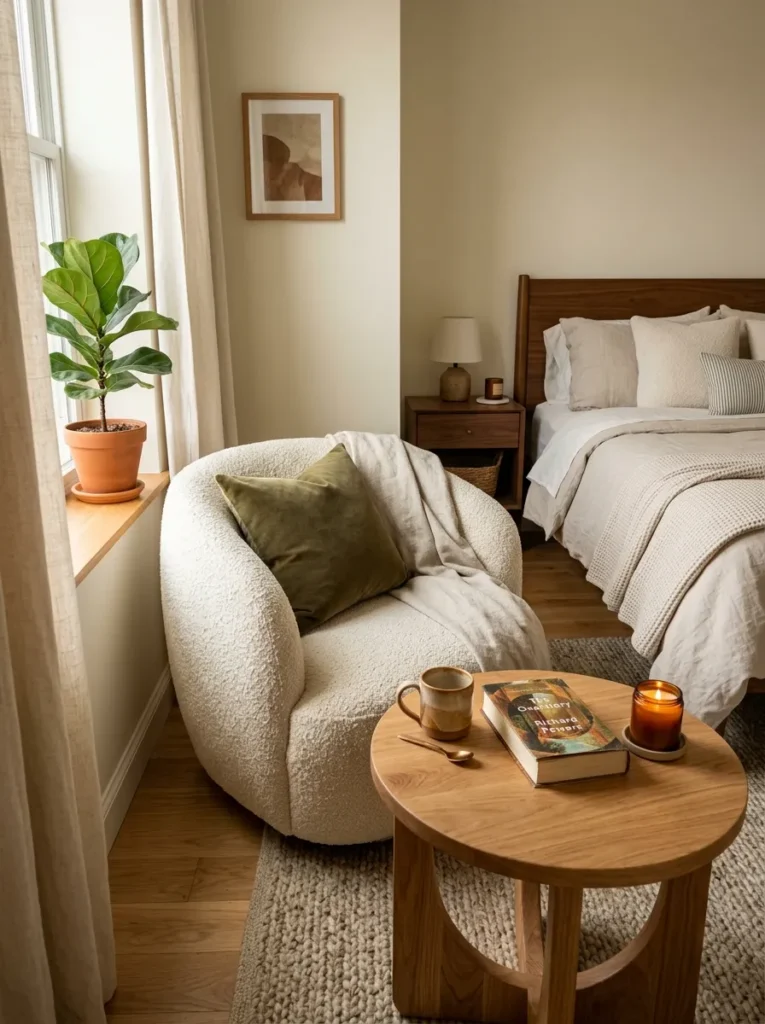
Sharp corners on rectangular furniture can make a small room feel tighter than it is, especially in a tight walkway. A round side table softens those pinch points if you do have room for one additional surface.
18. Keep Decor Minimal and Intentional
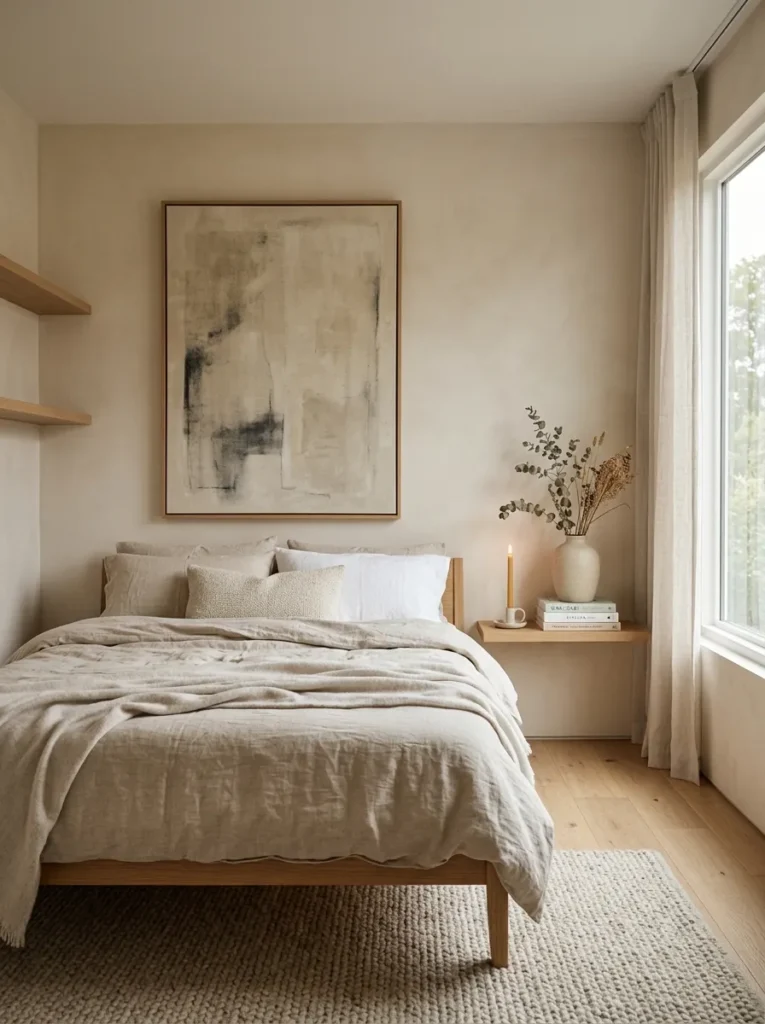
A small bedroom can only handle so many decorative objects before it starts to feel cluttered rather than cozy. Choose a handful of meaningful pieces and give them space, rather than filling every surface with small items.
19. Use a Daybed if the Room Serves Double Duty
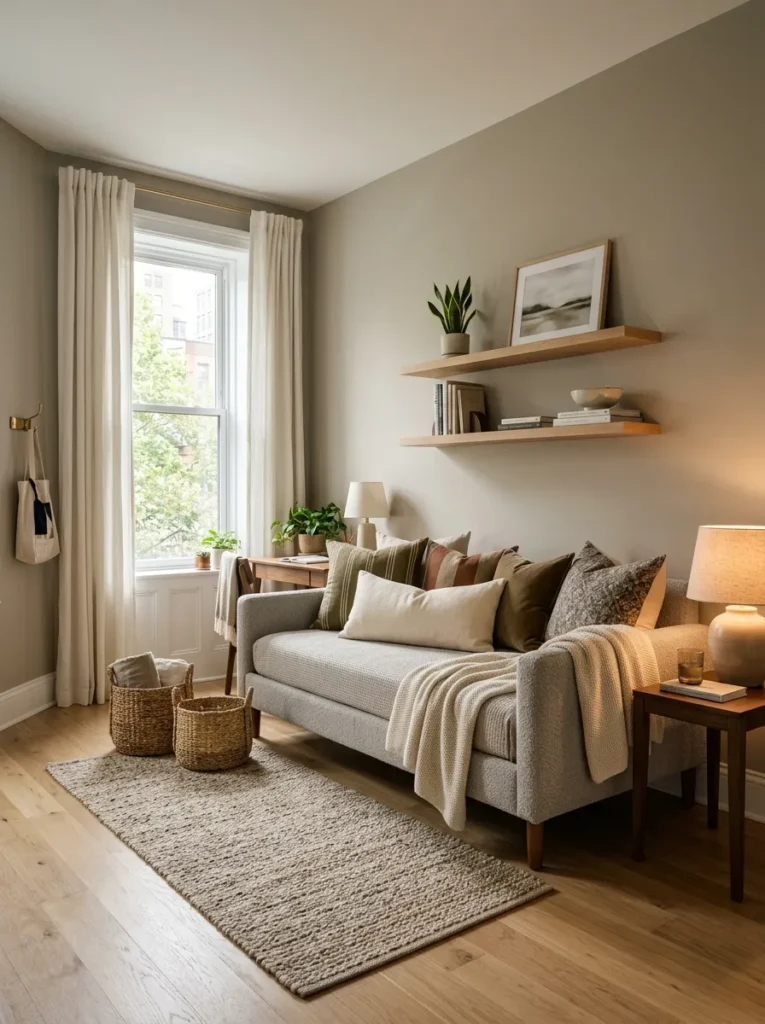
If your small bedroom occasionally needs to function as a sitting area or guest space, a daybed against the wall reads as a sofa during the day while still giving you a full bed at night.
20. Add a Slim Bench at the Foot of the Bed
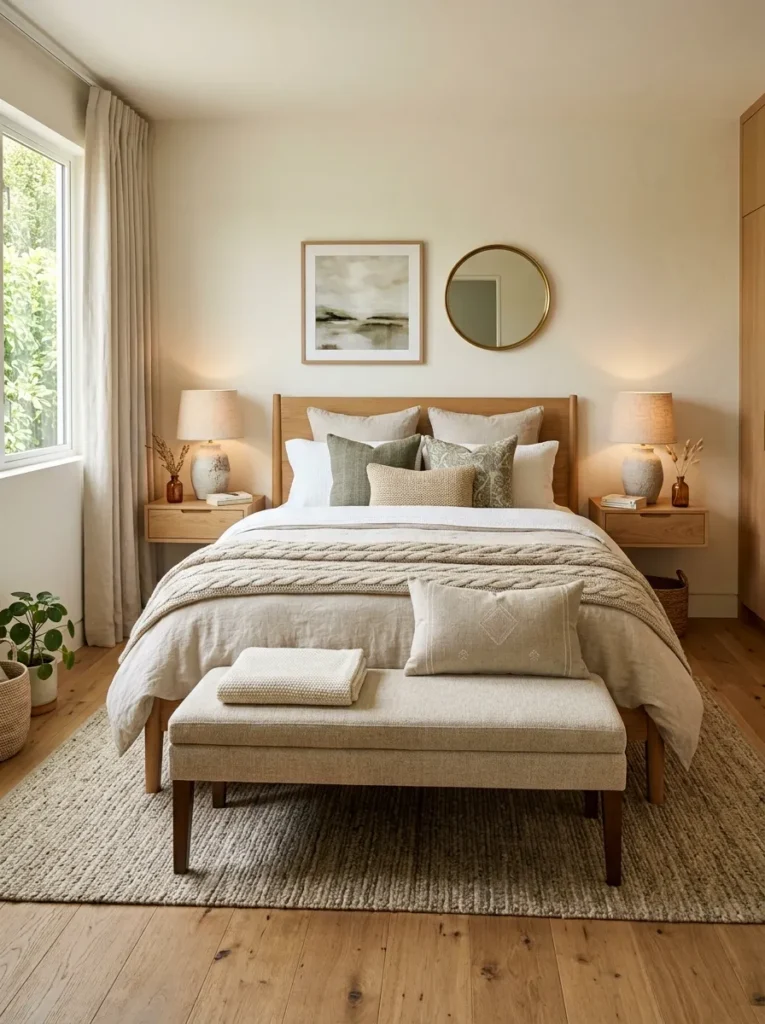
A bench under 16 inches deep gives you a spot to sit while getting dressed without eating into your walking space the way a wider bench or chair would.
21. Choose a Ceiling Mounted Light Instead of Floor or Table Lamps
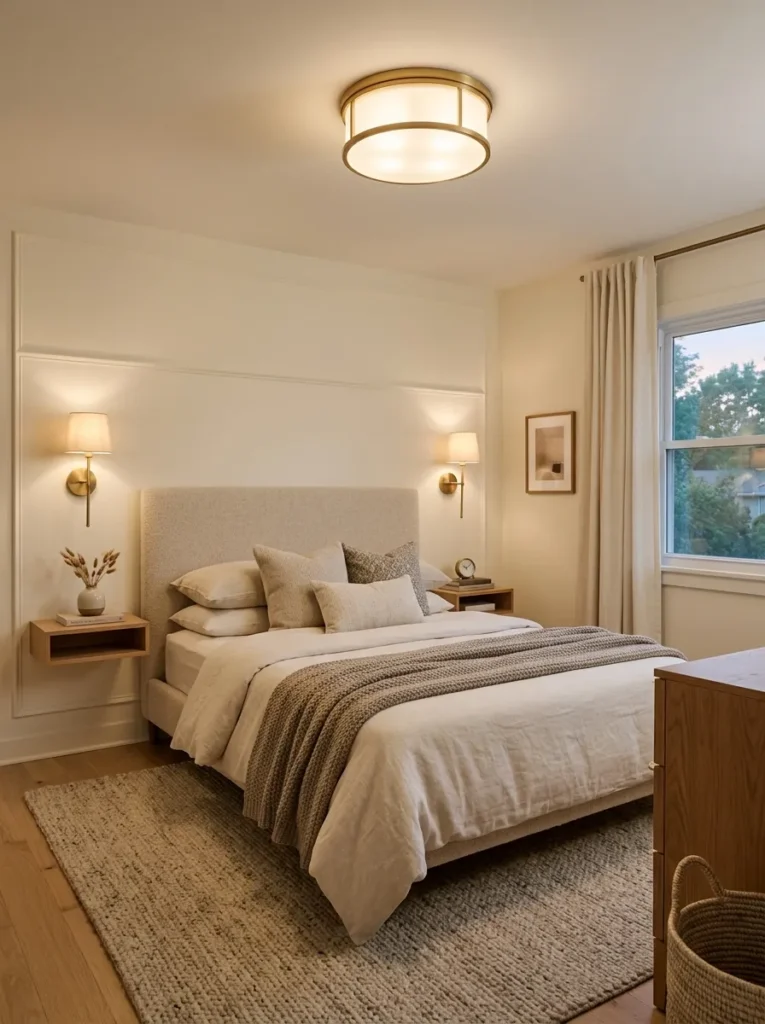
A flush mount or semi-flush ceiling fixture provides ambient light without needing a lamp taking up surface or floor space. Pair it with the wall sconces mentioned earlier for a layered lighting setup that never touches a single tabletop.
22. Use Removable Wallpaper on One Wall Only
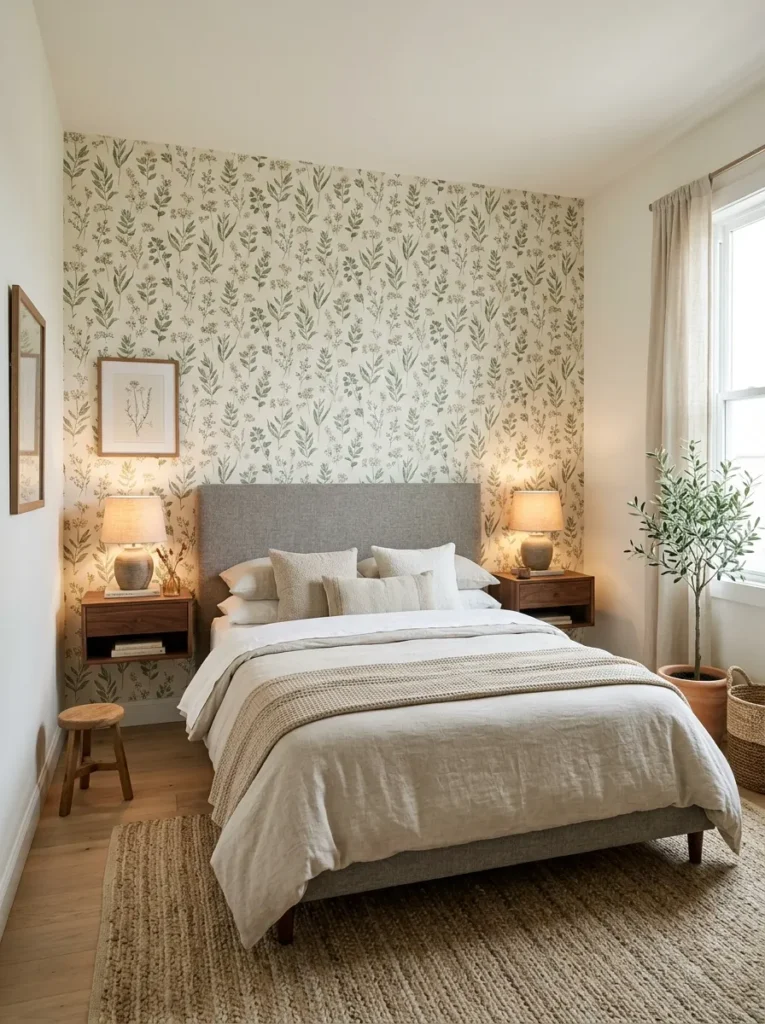
A single accent wall in a bold peel-and-stick pattern adds personality without visually shrinking the room the way wallpaper on all four walls sometimes can. Keep the remaining walls in a lighter, complementary tone.
23. Choose a Slim Profile Rug
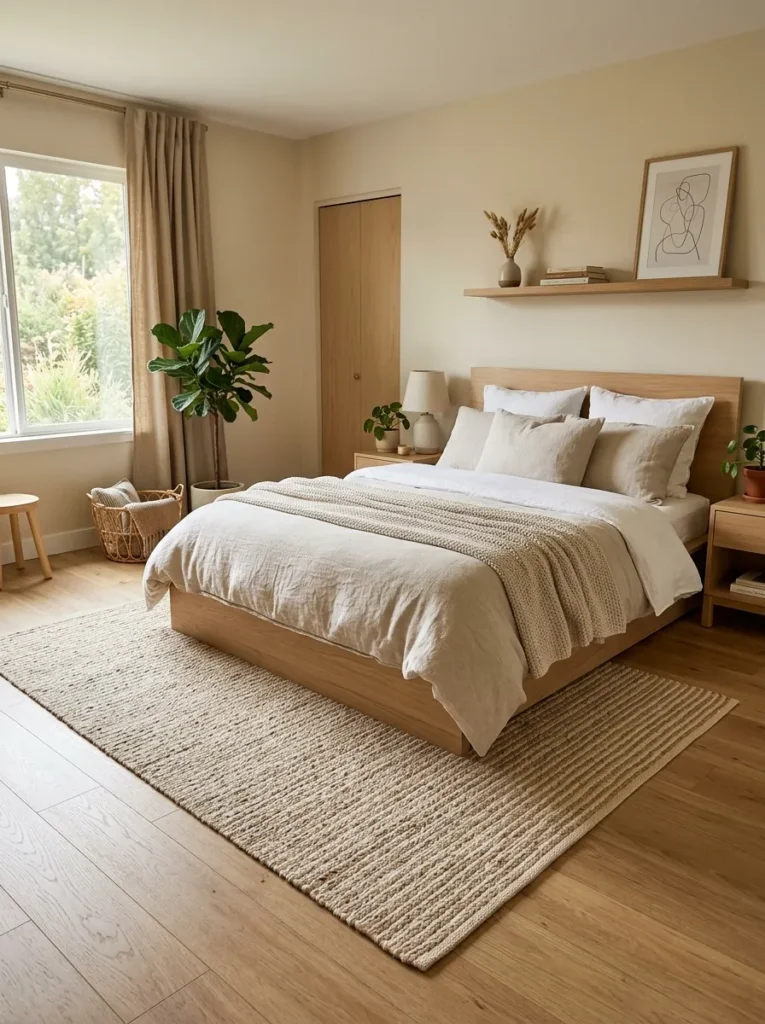
A rug with a low pile sits flatter against the floor and doesn’t create a raised edge that eats into a tight walking path the way a thick, plush rug can in a very small room.
24. Use Corner Space for a Reading Nook
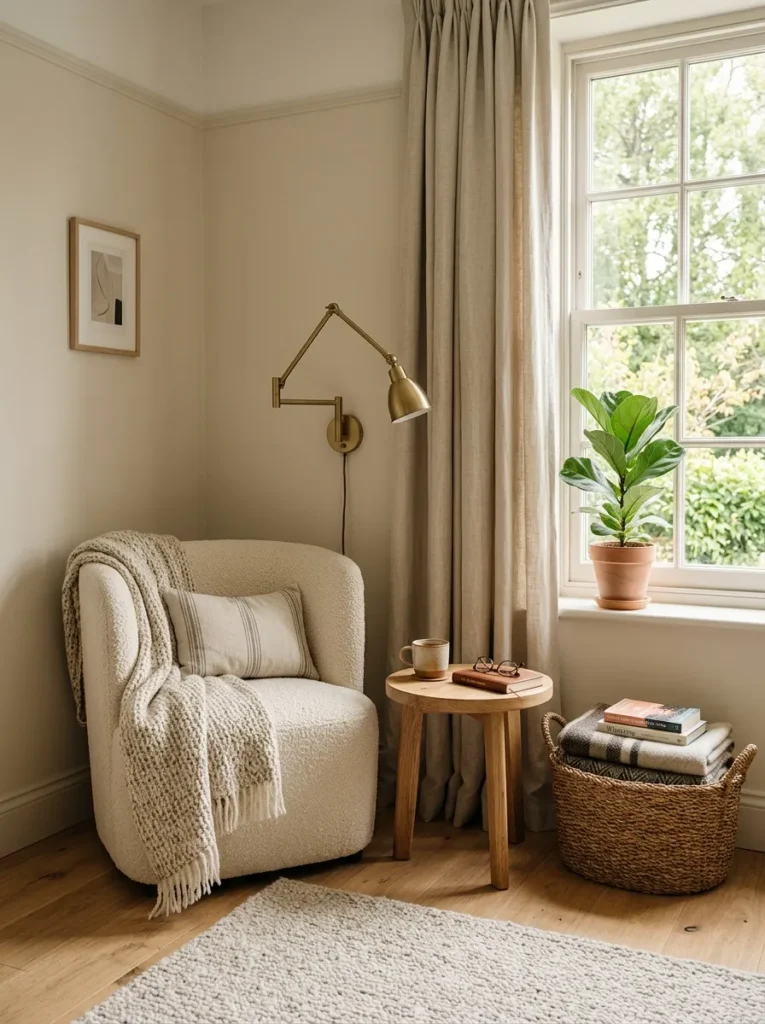
A small corner chair with a compact side table and a wall-mounted light turns an often wasted corner into a functional, cozy spot, without needing a dedicated section of open floor.
25. Edit Regularly, Not Just Once
A small bedroom that felt spacious when you first set it up can slowly fill with extra items over time. Go through the room every few months and remove anything that’s accumulated without a clear place or purpose, since ongoing editing matters just as much as the original layout.
Small bedrooms respond best to a combination of smart furniture choices and consistent upkeep rather than any single big fix. Start with your bed size and storage layout first, since those two decisions affect the entire room, then layer in the smaller details once the foundation is right.