

A minimalist bedroom isn’t about having as little as possible. It’s about keeping only what genuinely earns its place, so the room feels calm and restful rather than empty or unfinished. Here are 24 ideas for building that kind of space, along with the thinking behind each one.
1. Start With a Quiet Color Palette
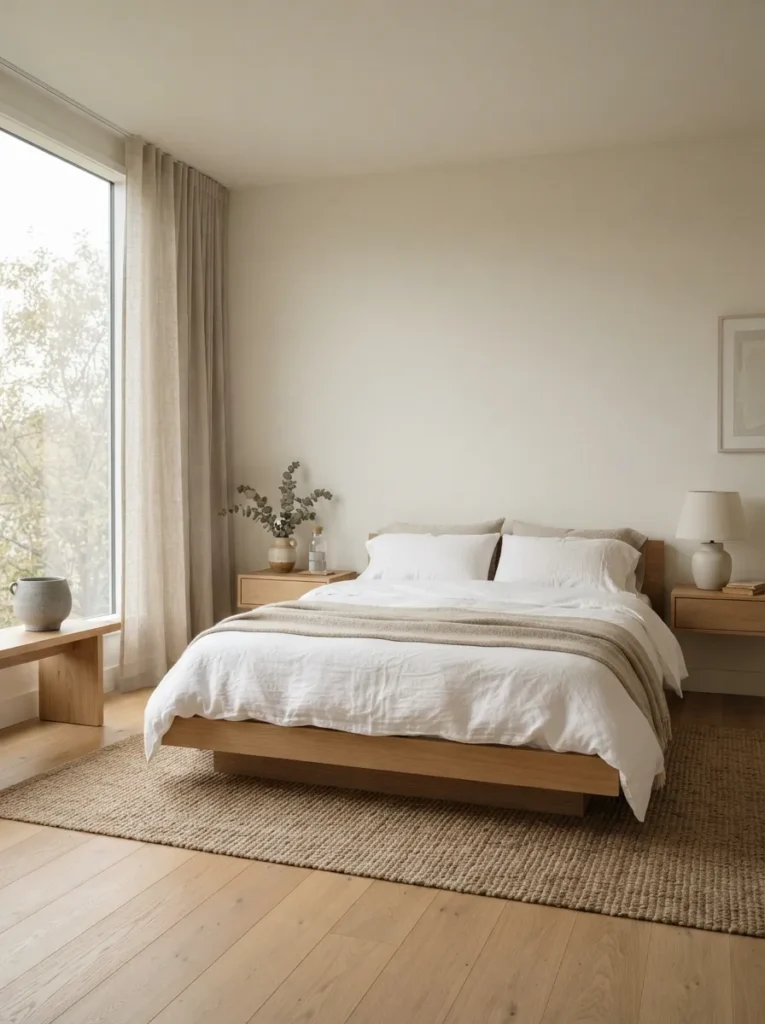
White, soft gray, warm beige, and muted taupe form the backbone of most minimalist bedrooms. These tones don’t pull focus, which lets the shape and texture of your furniture and bedding carry the room instead.
Stick to one dominant neutral across your walls, bedding, and largest furniture pieces, then let smaller items bring in just enough variation to keep things from feeling flat.
2. Choose a Bed Frame With Simple Lines
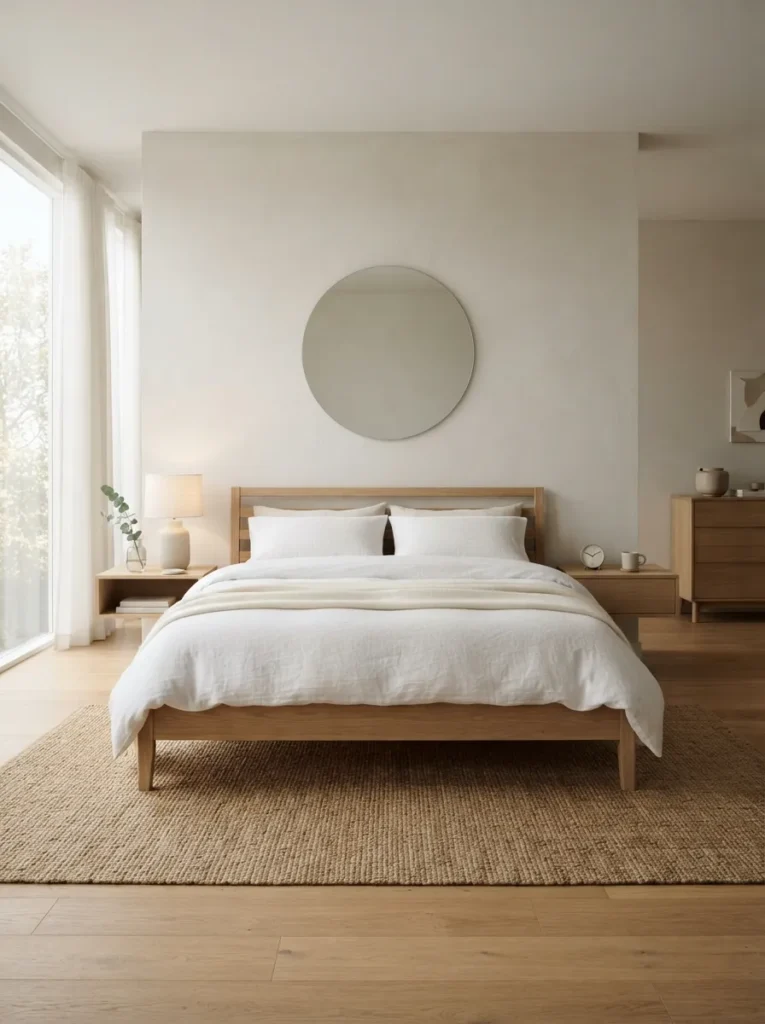
A platform bed with a plain, unadorned headboard, or no headboard at all, fits the minimalist approach far better than anything ornate or heavily upholstered. The bed should read as a clean, restful shape rather than a decorative statement on its own.
3. Keep Bedding to One or Two Tones
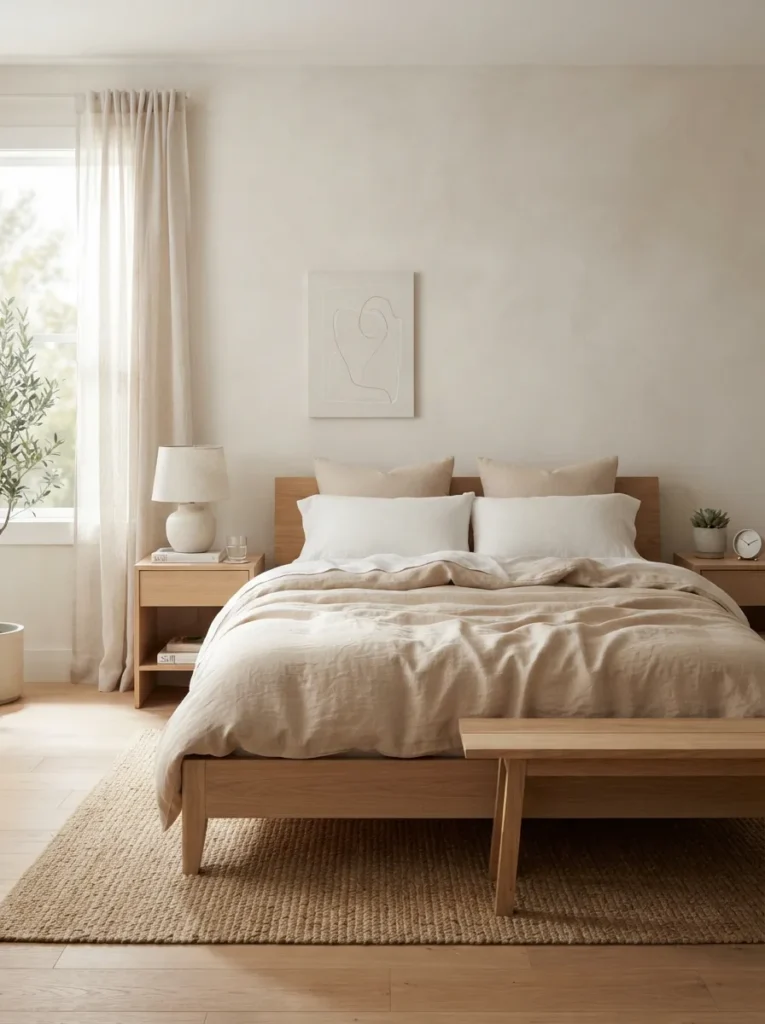
A duvet, sheets, and pillowcases in matching or closely related neutral tones create a calm, unified look. Too many competing colors or patterns on the bed undercuts the quiet feeling minimalist design depends on.
4. Use Hidden Storage Wherever Possible
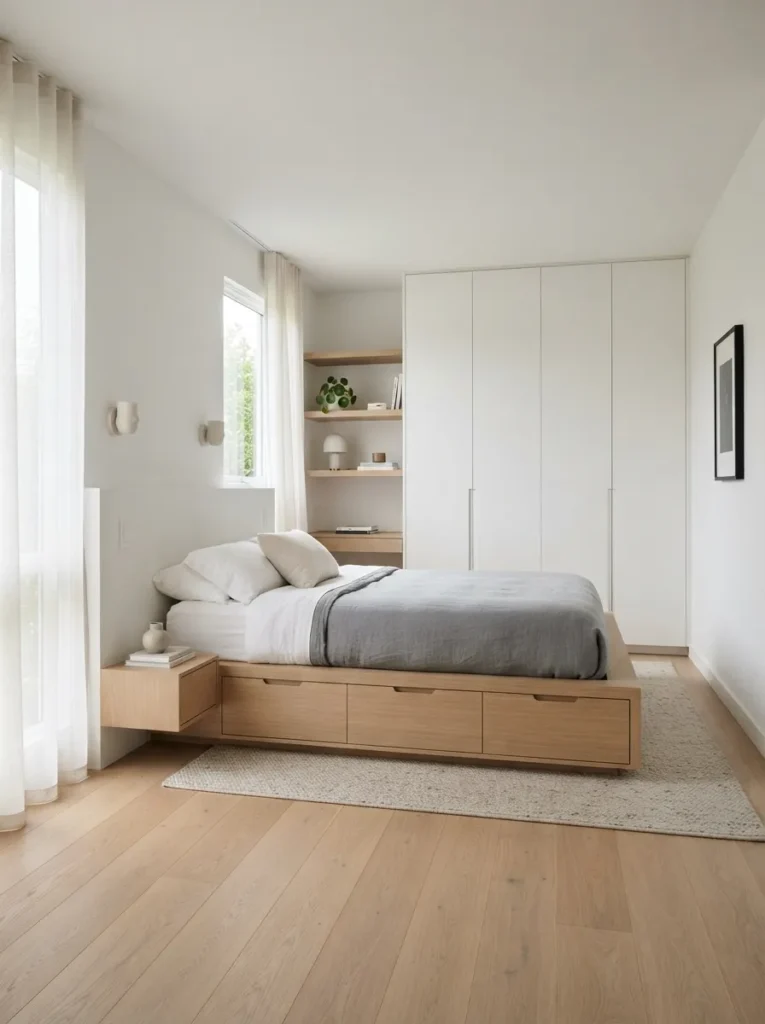
Clutter is the fastest way to break a minimalist room. Furniture with built in storage keeps everyday items out of sight without needing extra pieces taking up visual space.
- A bed frame with drawers built into the base
- A closed wardrobe instead of open shelving
- An ottoman or bench with a lift up lid
- Under bed storage bins kept out of view
5. Choose One Statement Piece per Room
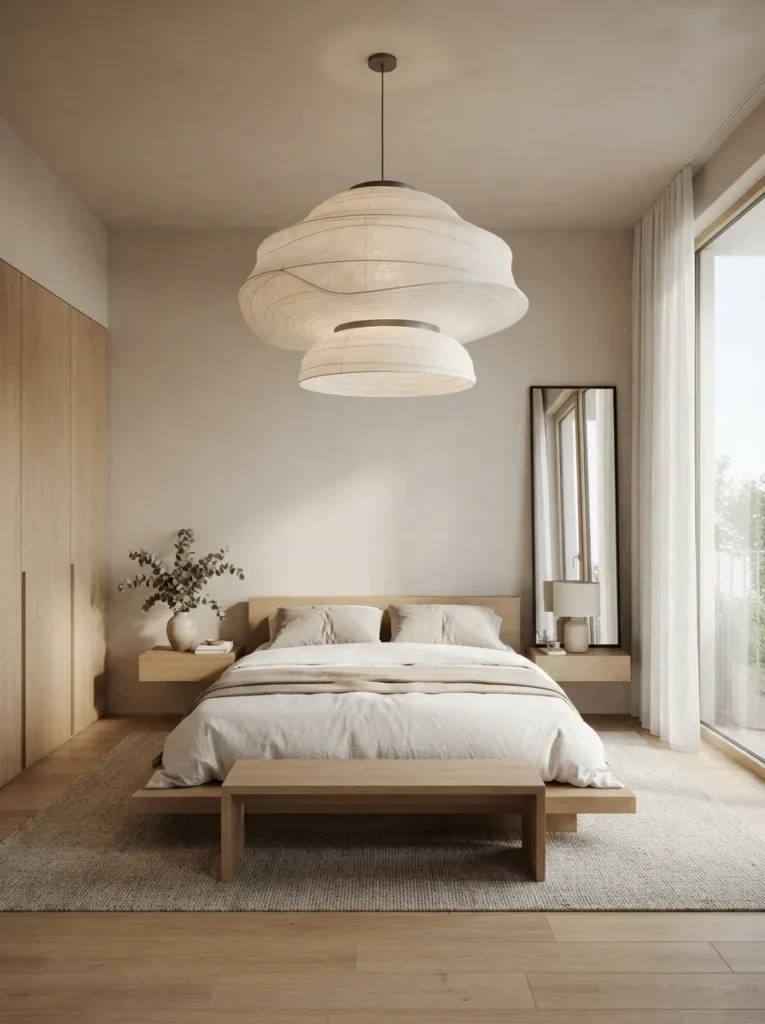
Rather than several competing decor items, pick a single piece that carries the visual weight of the space, whether that’s a sculptural light fixture, one piece of art, or a distinctive accent chair. Let everything else stay quiet around it.
This single piece also becomes easier to change over time. Since nothing else in the room is competing for attention, refreshing just this one element can shift the whole feel of the space without a larger overhaul.
6. Leave Walls Mostly Bare
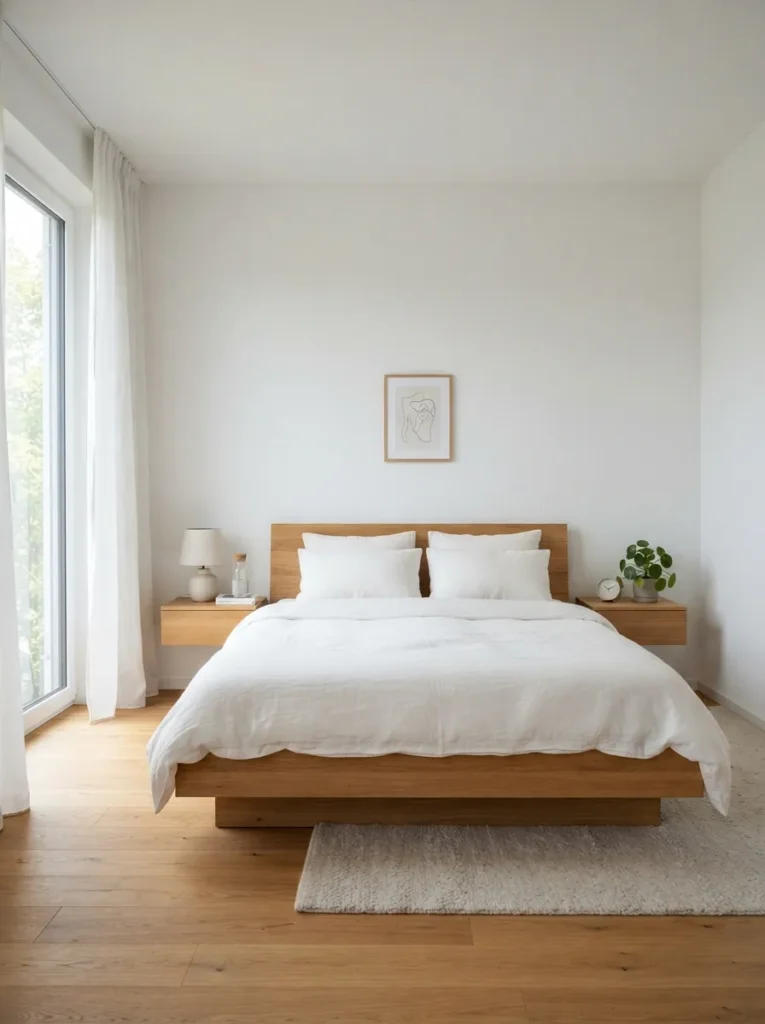
Empty wall space isn’t wasted space in minimalist design, it’s part of the design itself. One piece of art or a single mirror, given plenty of open space around it, has more impact than a wall filled with smaller frames.
7. Choose Furniture With Exposed Legs
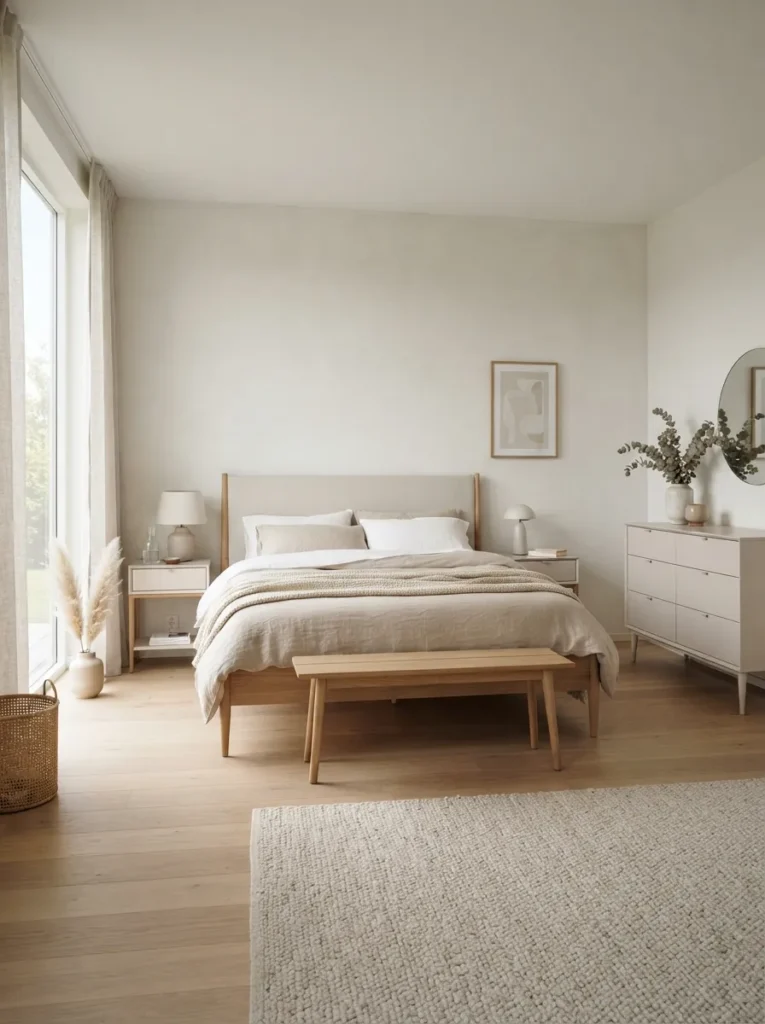
Nightstands and dressers with thin, visible legs let light travel underneath, keeping the room from feeling visually heavy. This detail matters even in a small room, since it affects how open the space feels regardless of the actual square footage.
8. Keep Nightstand Surfaces Nearly Empty
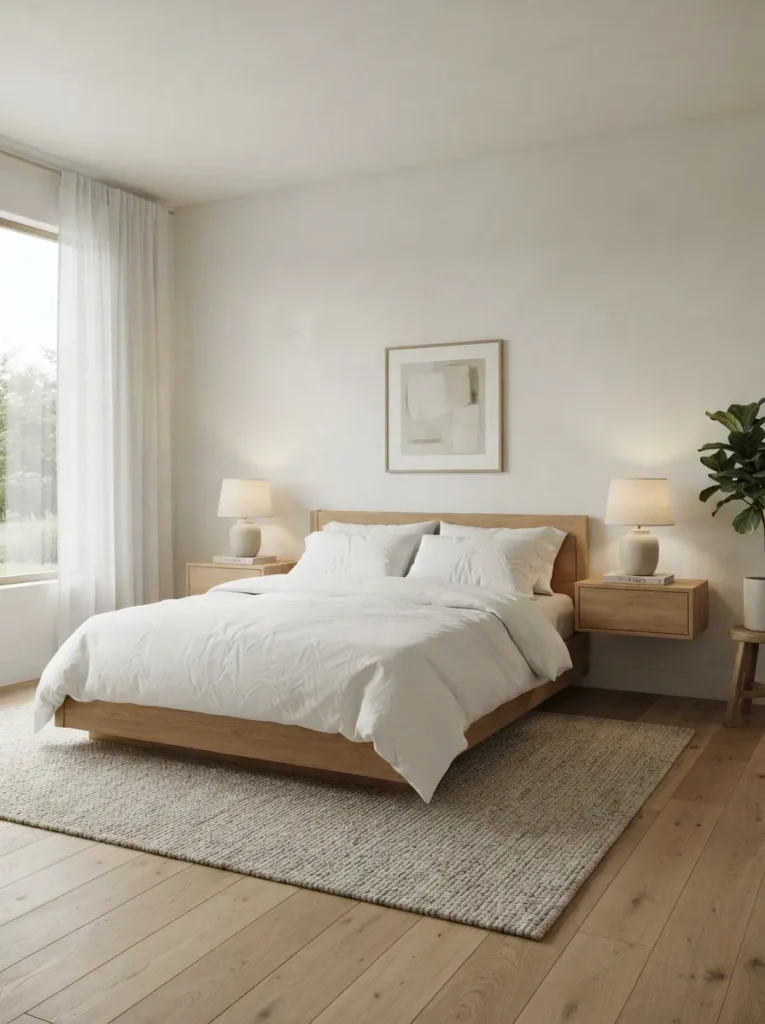
A lamp and one small object is usually enough. Anything more starts to clutter the one surface closest to where you sleep, which works directly against the calm feeling a minimalist bedroom is meant to create.
9. Use Soft, Natural Materials
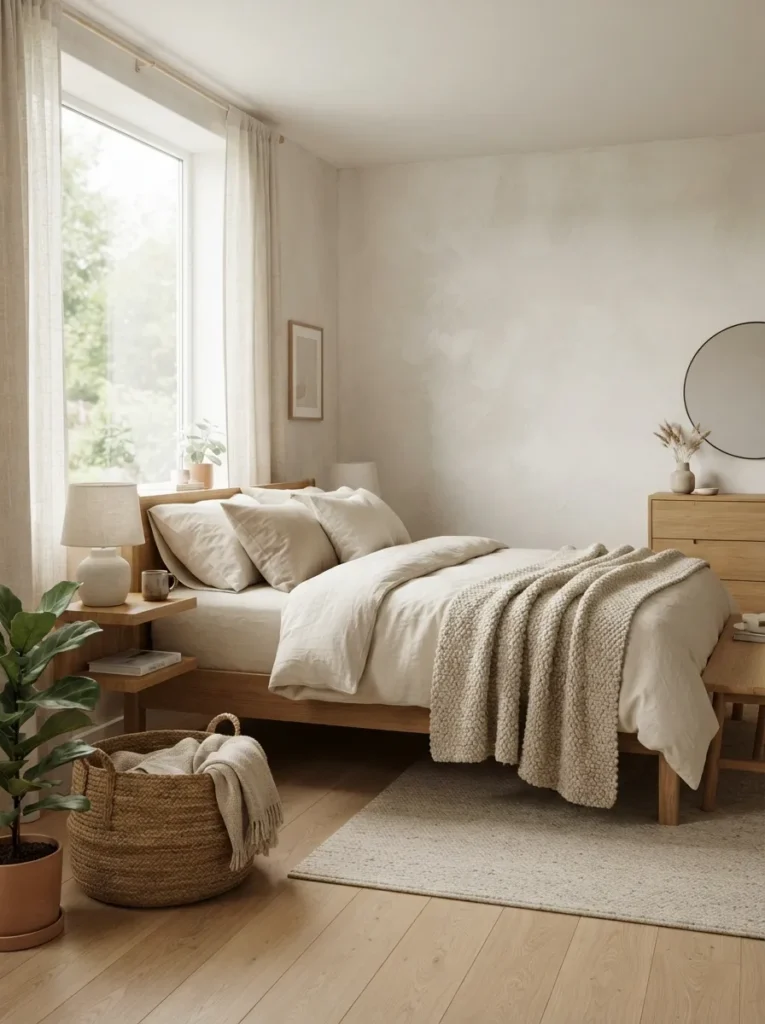
Linen, wood, and wool bring warmth and texture into a neutral room without adding visual noise the way patterns or bright colors would. A linen duvet or a simple wood nightstand adds depth while staying fully within the minimalist palette.
10. Choose One Wood Tone and Repeat It
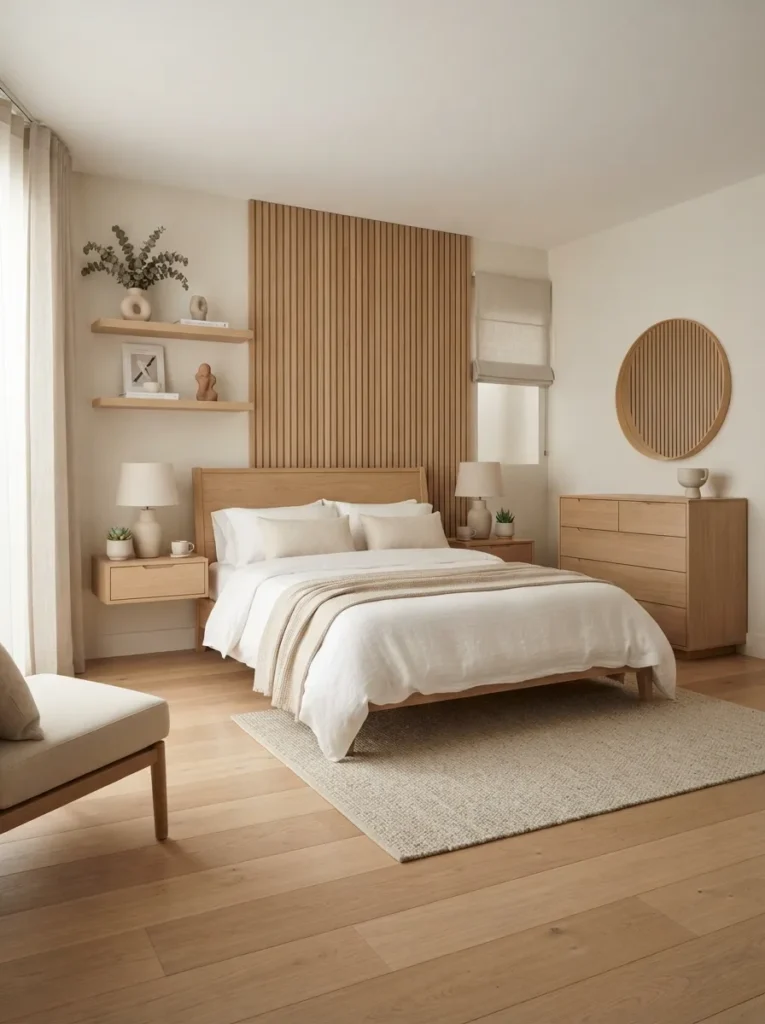
Mixing several different wood finishes across your furniture can make even a very simple room feel disjointed. Stick to one wood family, whether that’s a warm walnut or a lighter oak, and repeat it across your bed frame, nightstands, and any shelving.
11. Add Texture Instead of Pattern
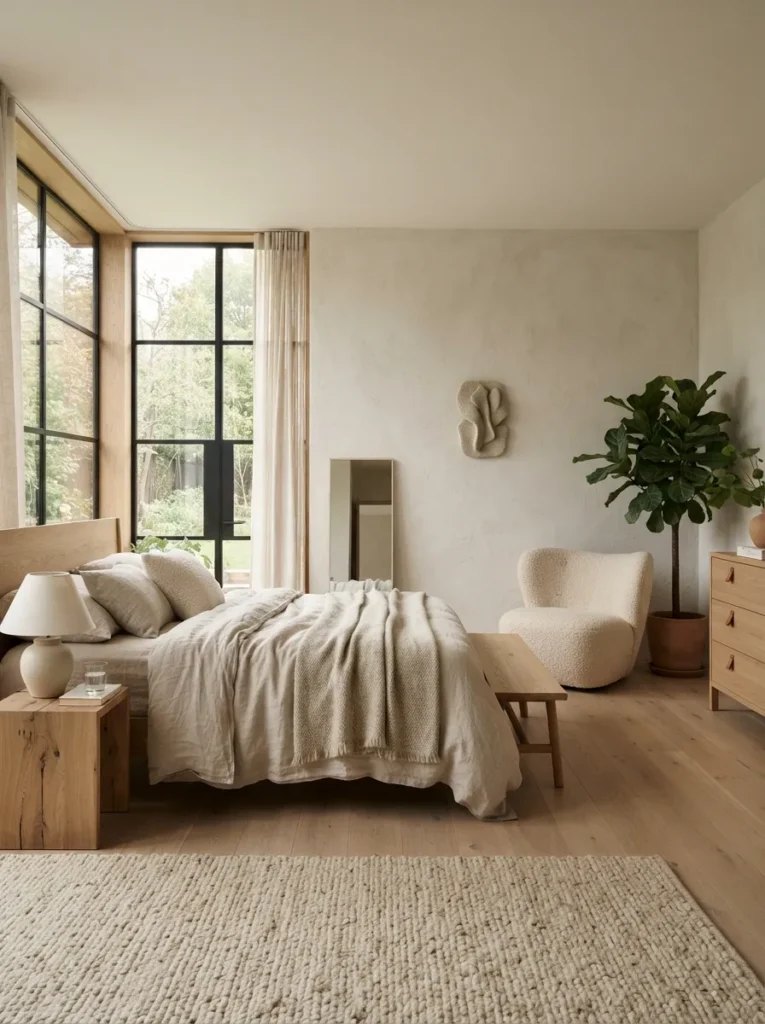
Since minimalist rooms avoid busy prints, texture becomes the main way to add interest. A woven throw, a boucle accent pillow, or a linen curtain panel all bring tactile depth without disrupting the room’s clean, quiet look.
- A chunky knit throw folded at the foot of the bed
- A textured woven rug underfoot
- A linen or raw cotton curtain panel
- One matte ceramic object on the dresser
12. Skip the Rug or Choose a Very Simple One
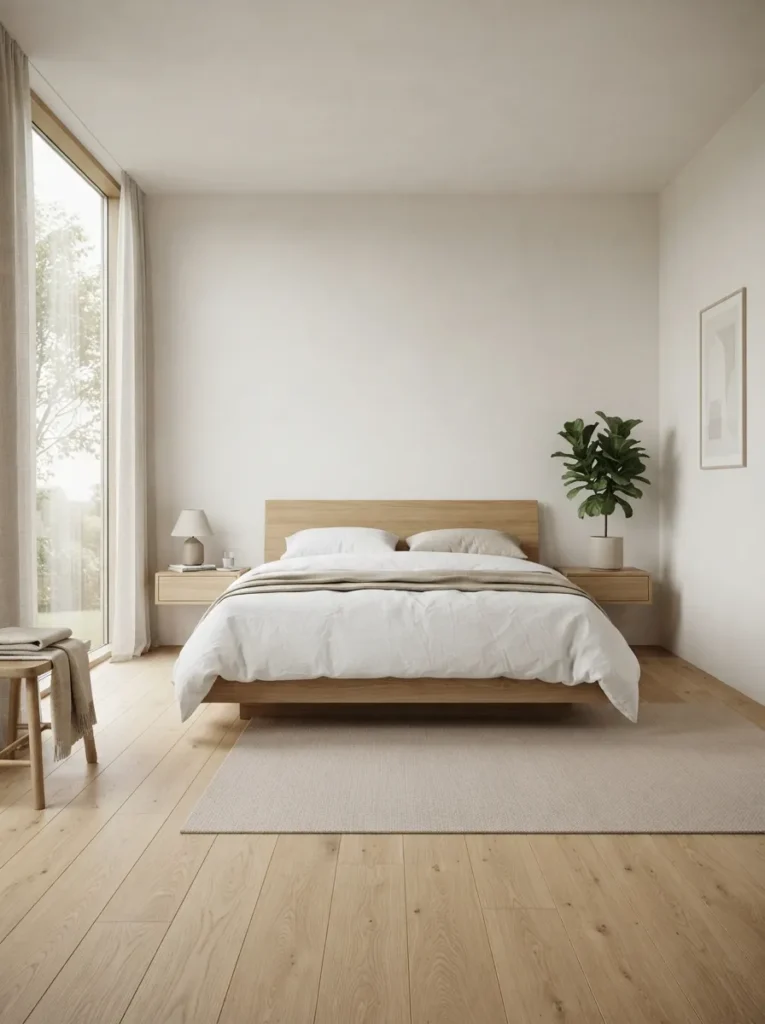
Bare wood or polished concrete floors, left uncovered, suit minimalist bedrooms well and let the floor itself be part of the quiet palette. If you do want a rug, choose a solid tone or a very subtle texture rather than anything with a bold pattern.
13. Use Sculptural Lighting as Your Main Decor
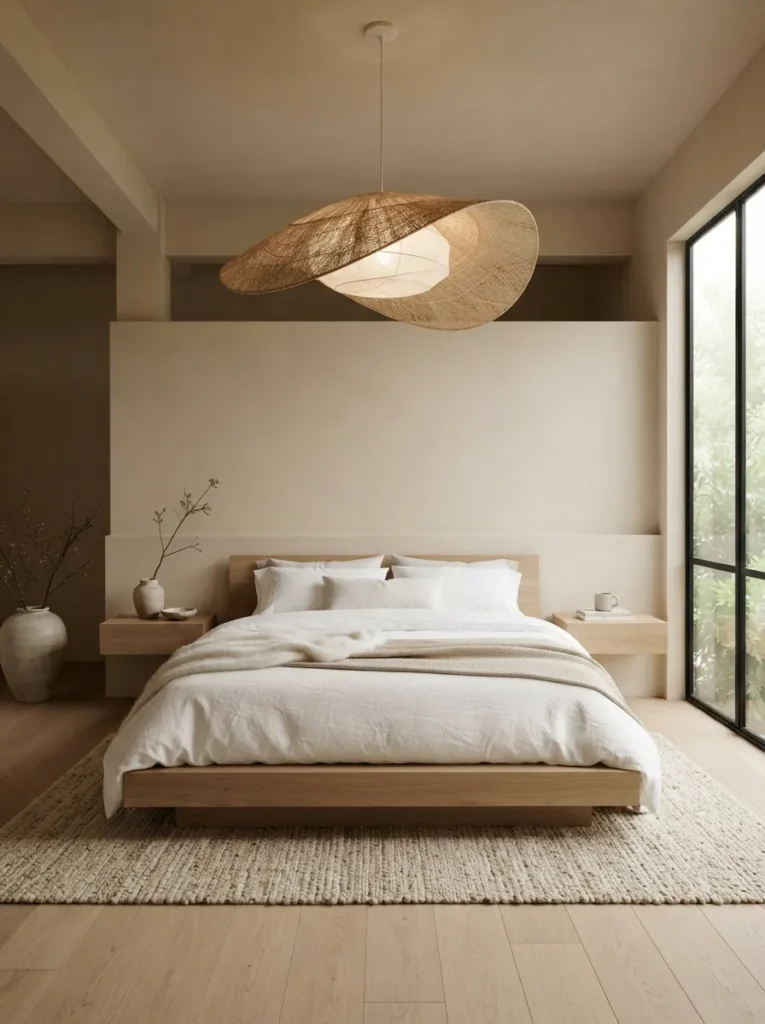
With few decorative objects in the room, your light fixtures can carry more visual weight than usual. A single sculptural floor lamp or pendant can act almost like a piece of art, giving the room a focal point without adding clutter.
14. Choose Curtains in a Single Solid Tone
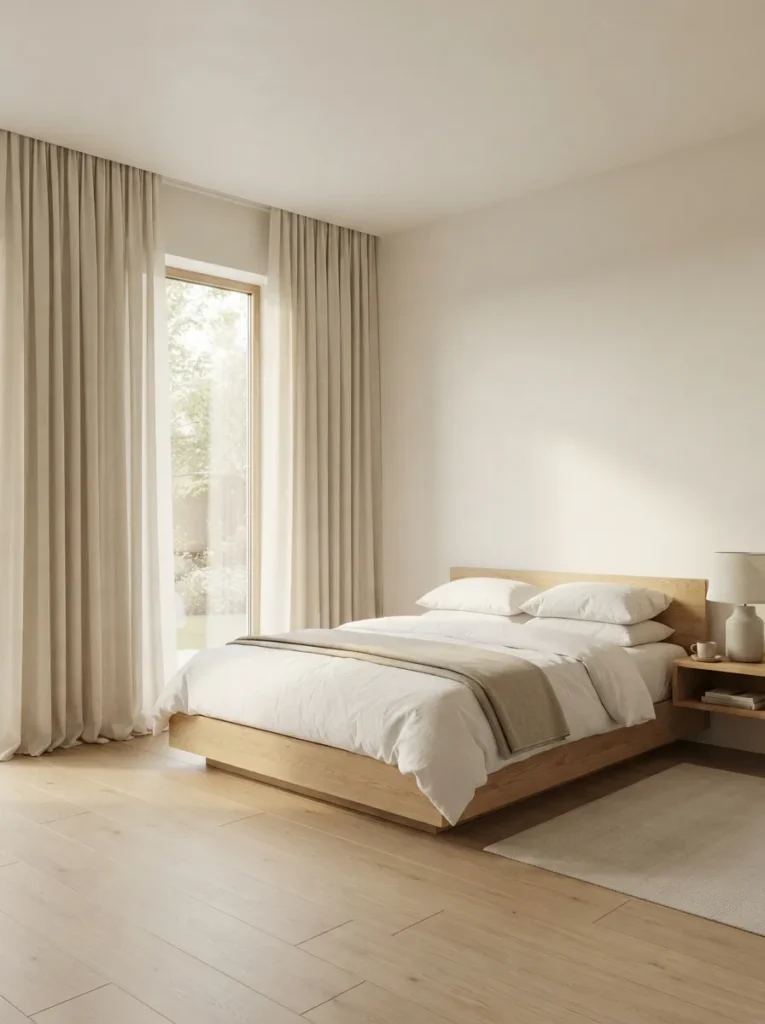
Patterned curtains can quickly clash with the simplicity of a minimalist bedroom. Solid linen or cotton panels in a tone close to your wall color keep the windows looking clean and let natural light take center stage.
15. Keep Cords and Electronics Out of Sight
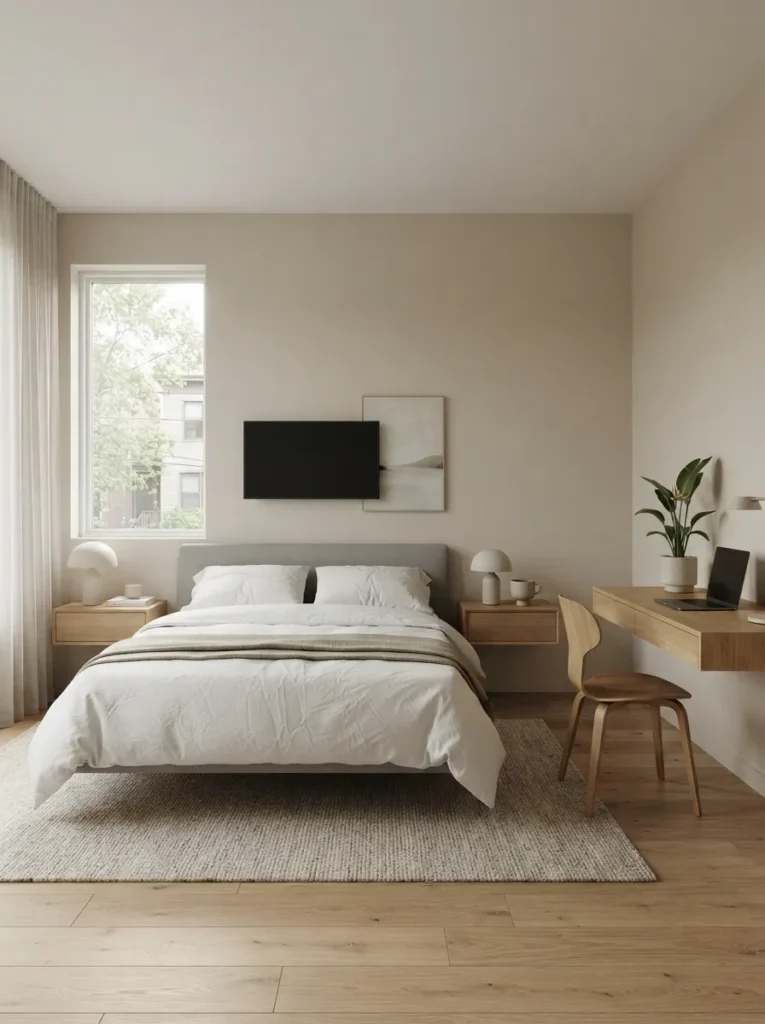
Visible cables undercut a minimalist look fast, especially in a room built around calm and quiet. Route cords behind furniture, use a cord cover along the baseboard, or tuck a charging station inside a nightstand drawer so your clean lines stay uninterrupted.
16. Add Just One Plant
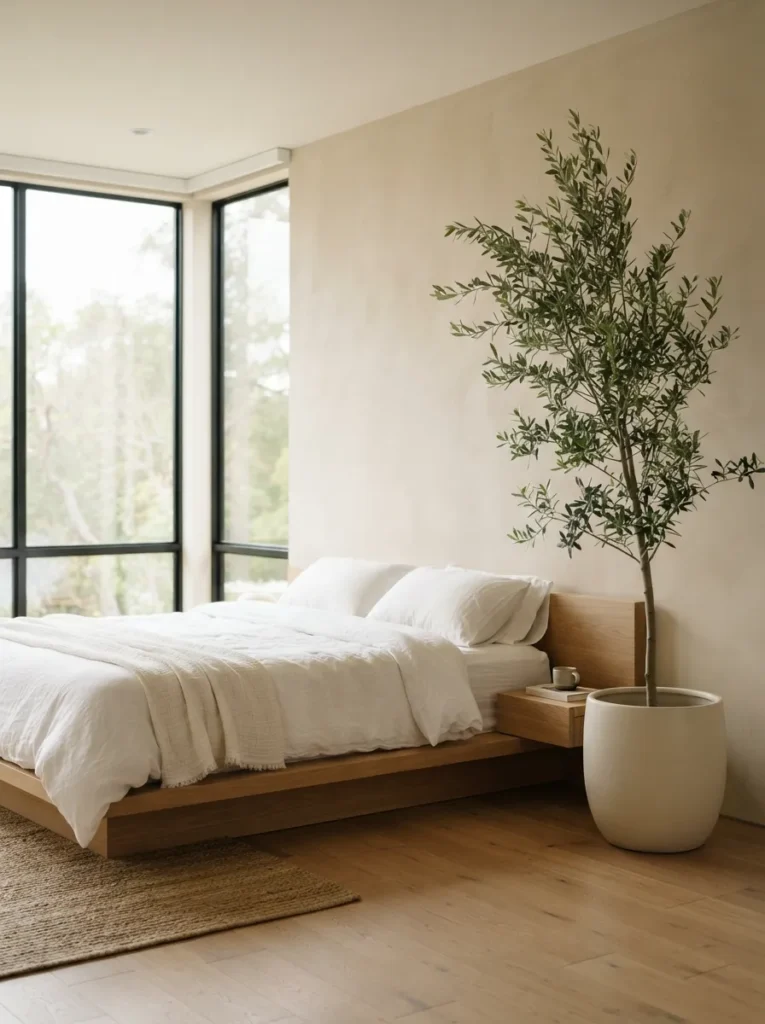
A single well chosen plant, like a snake plant or a small fiddle leaf fig in a plain pot, brings life into the room without crowding it. One plant, placed with intention, does more for a minimalist space than several scattered around the room.
Choose a pot in a matching neutral tone to keep the plant from becoming an unintended pop of color that pulls focus from the rest of the room.
17. Use a Closed Wardrobe Instead of a Visible Closet
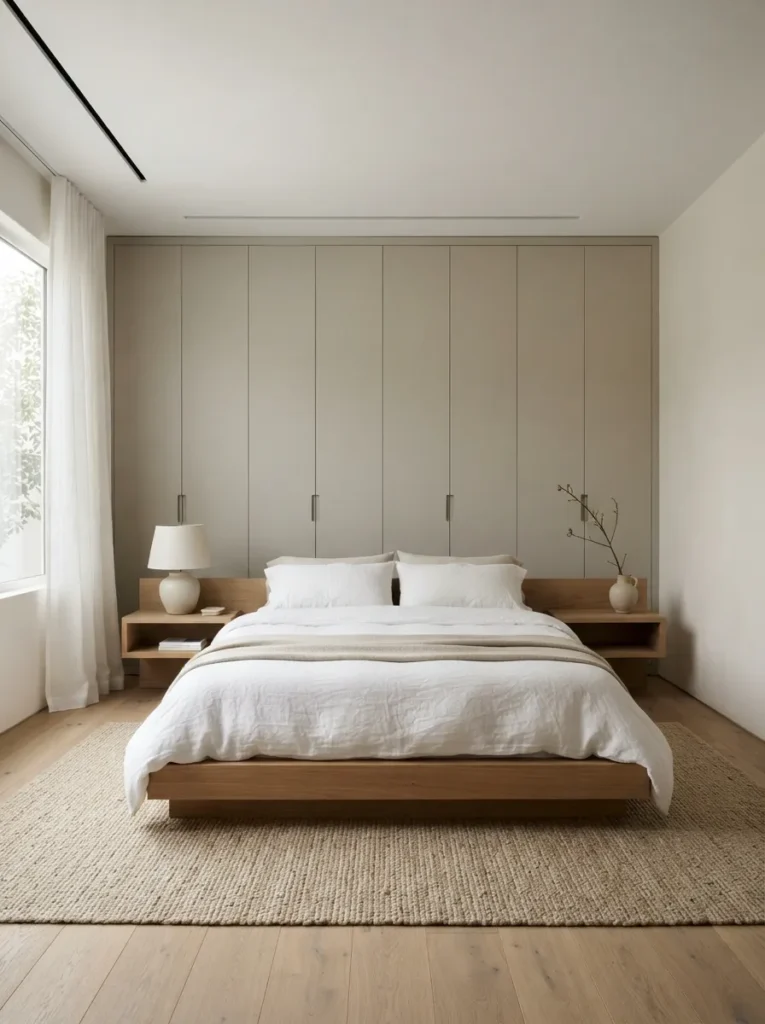
If your closet doors don’t close fully or your closet is open by design, consider adding simple doors or a curtain panel. A visible jumble of clothes undercuts the calm feeling of an otherwise minimalist room, even if the rest of the space is perfectly edited.
18. Choose Matte Finishes Over Glossy Ones
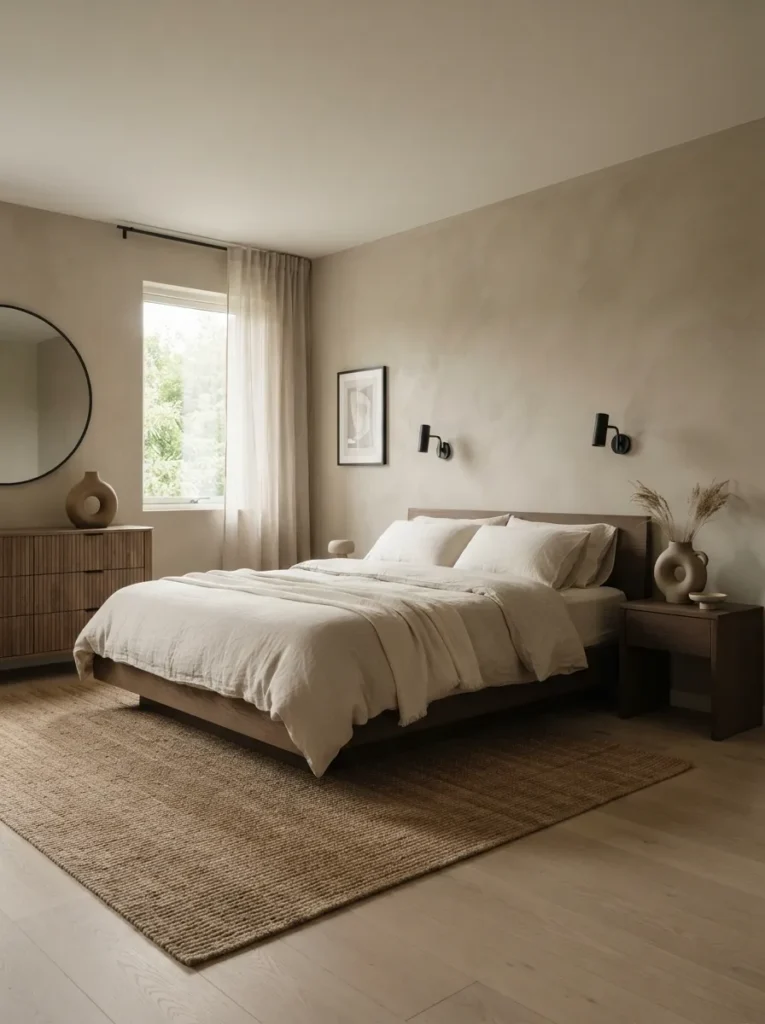
Matte walls, matte ceramic lamp bases, and brushed rather than polished hardware all feel calmer and softer than anything highly reflective. Glossy finishes tend to draw more visual attention, which works against the quiet feeling minimalist design is going for.
19. Keep Your Dresser Top Completely Clear
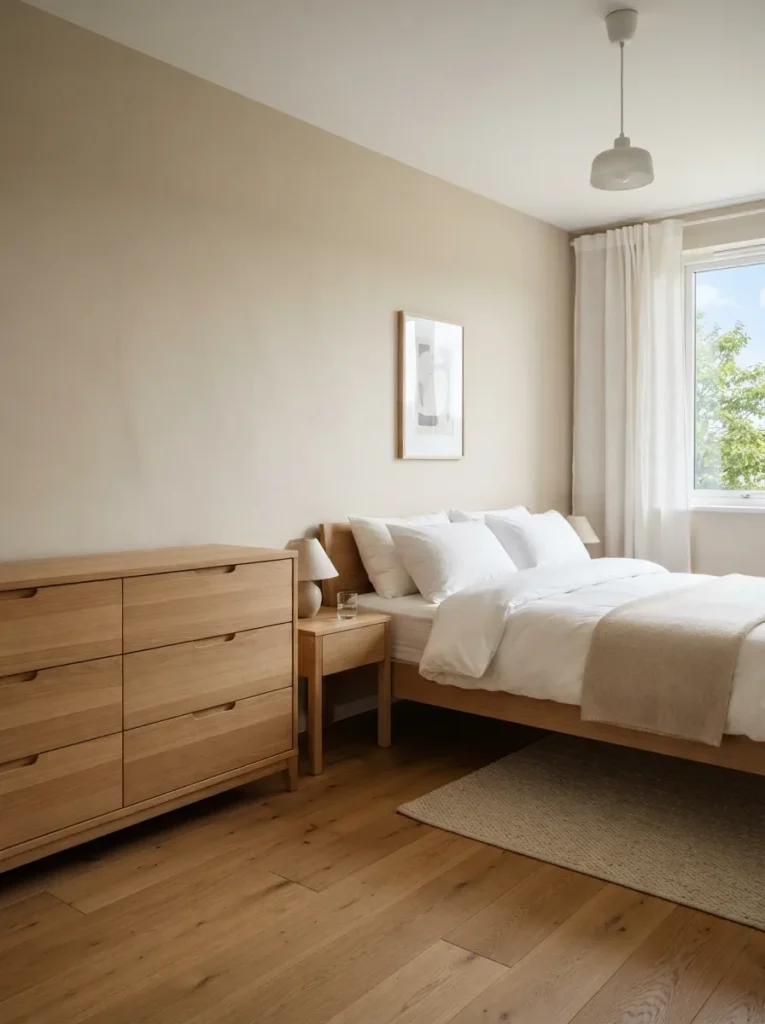
Unlike a nightstand, which can hold a lamp and one small object, a dresser top works best left almost entirely empty in a minimalist room. This creates a clean, restful line across one of the largest flat surfaces in the space.
20. Choose Function Over Decoration for Every New Item
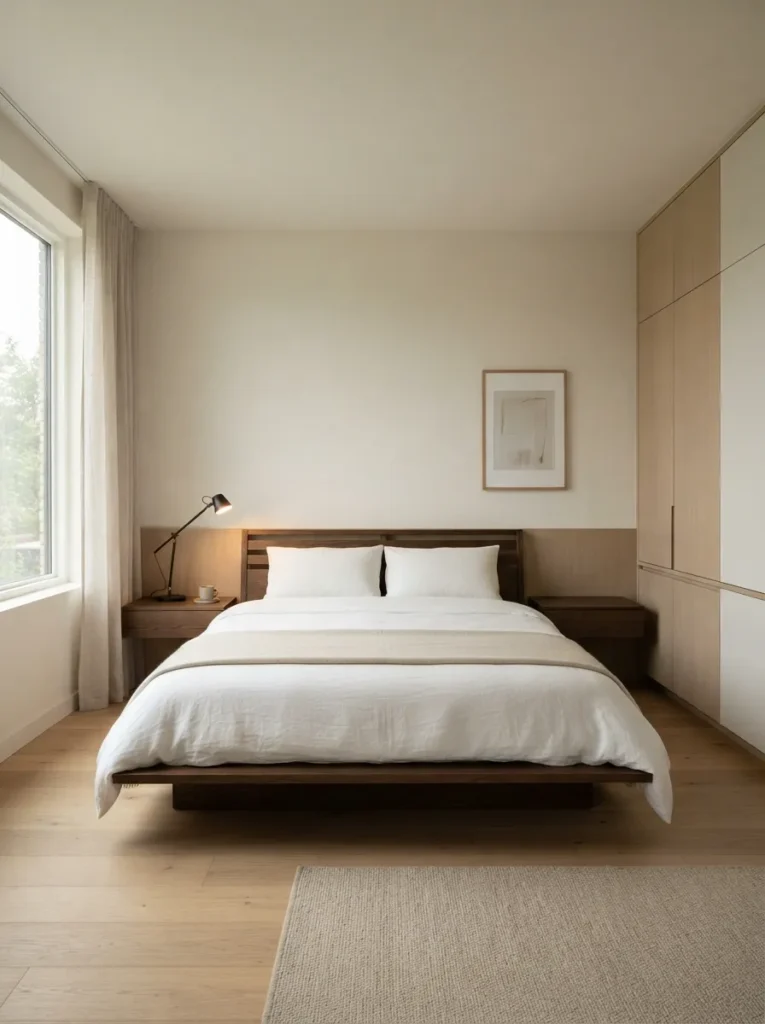
Before adding anything new to the room, ask whether it’s something you’ll actually use regularly, not just something that looks nice sitting there. This single habit, applied consistently, does more to maintain a minimalist bedroom over time than any single design choice made at the start.
Rooms tend to drift away from minimalism gradually, one small unnecessary item at a time, rather than all at once. Revisiting this question every few months helps catch that drift before it becomes clutter.
21. Use Blackout Shades Instead of Layered Curtains
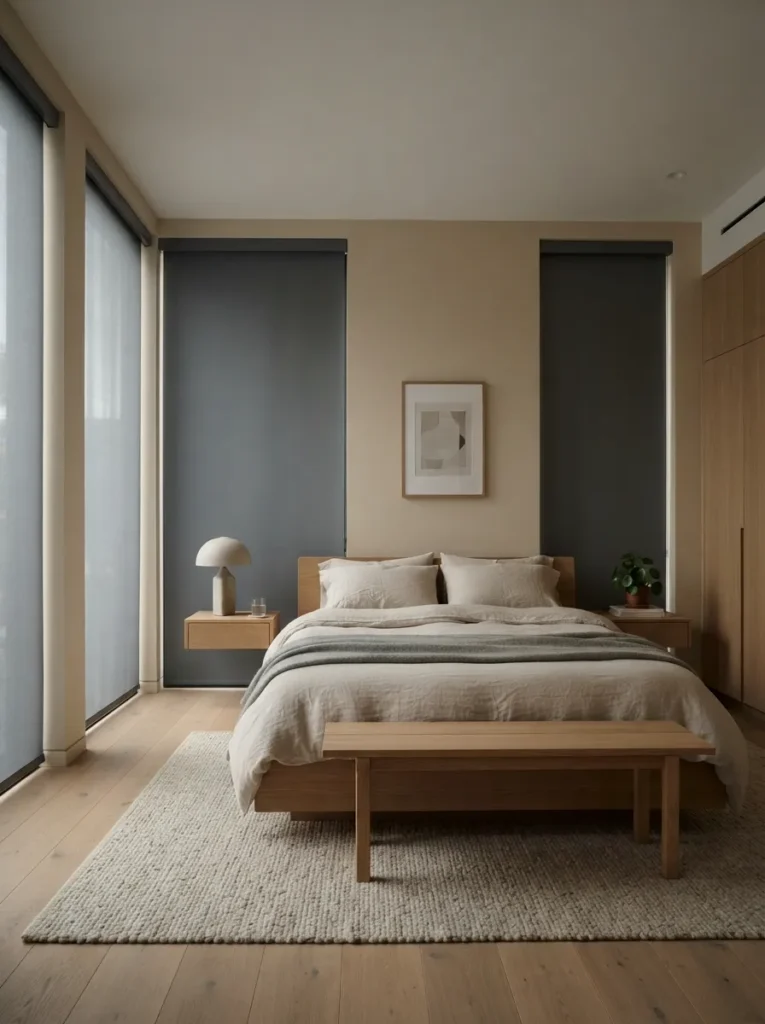
A single, well fitted blackout shade gives you the function of full darkness without the visual weight of multiple curtain layers. This keeps your windows looking clean and uncomplicated, in line with the rest of the room.
22. Choose a Simple, Low Profile Bench Instead of Extra Seating
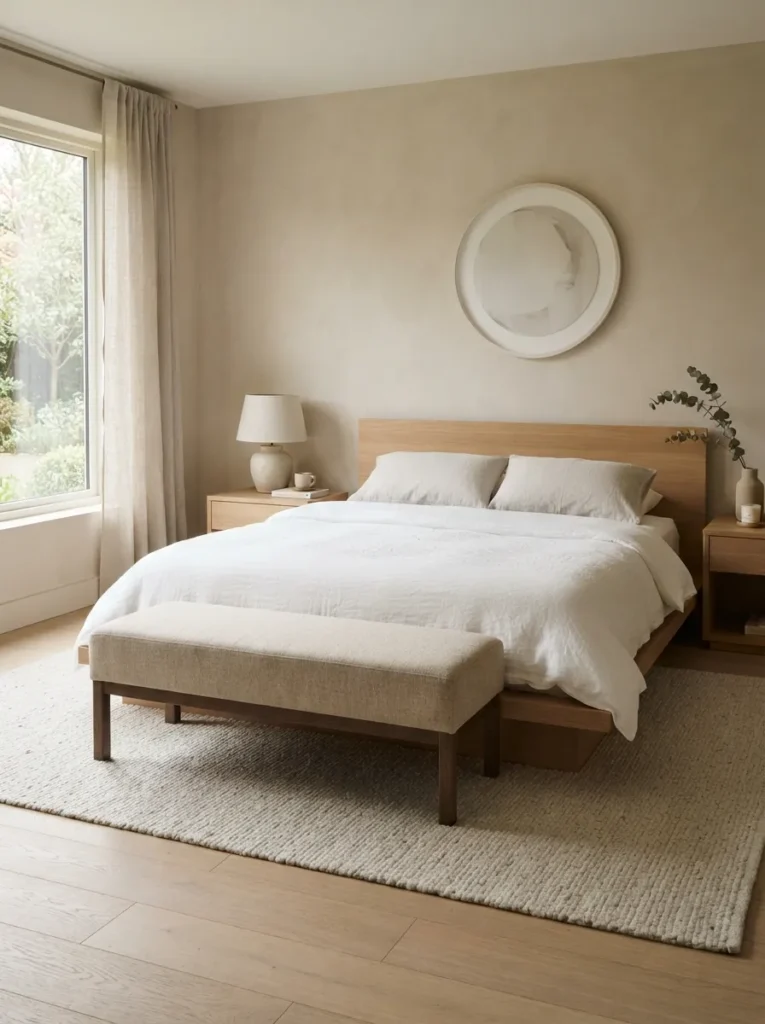
If you want a spot to sit while getting dressed, a slim bench at the foot of the bed serves that purpose without introducing a bulkier chair or additional furniture into the room.
23. Limit Your Textile Count Across the Whole Room
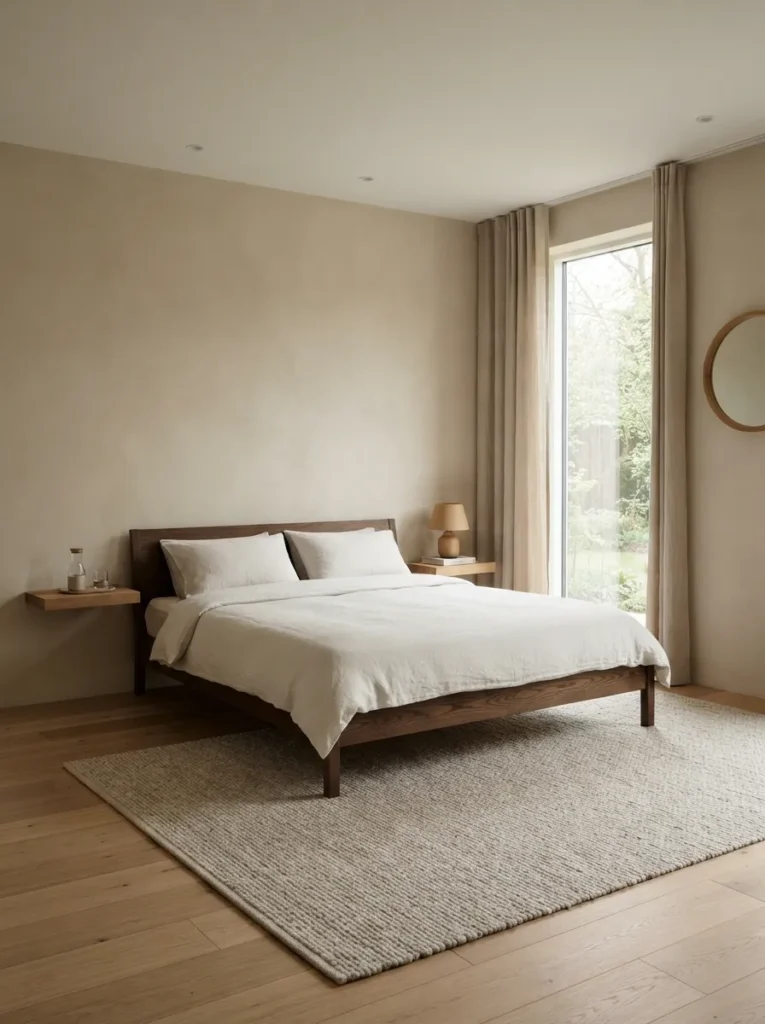
Count your throw pillows, blankets, and rugs together as one total. Minimalist rooms generally stay calmer with five or fewer soft textile pieces in the entire space, since each additional item adds a small amount of visual noise that accumulates quickly.
24. Edit the Room Every Season
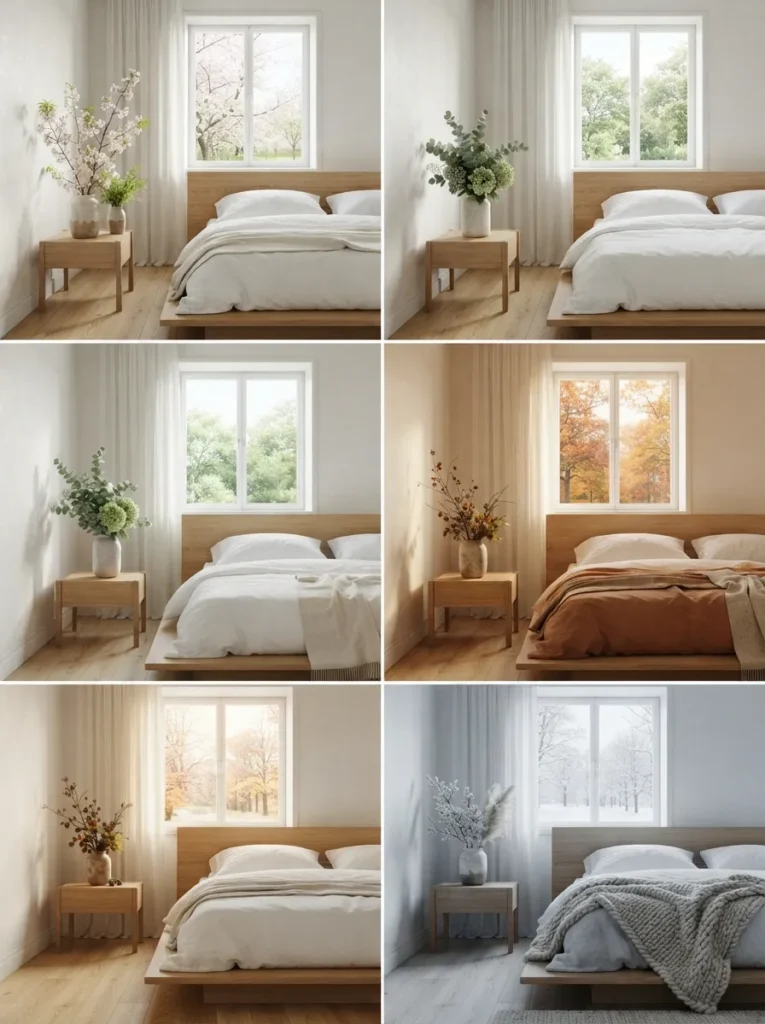
A minimalist bedroom isn’t a one time project, it drifts back toward clutter naturally over time the same as any other room. Set aside a few minutes each season to remove anything that’s crept in without a clear place or purpose, and the room will stay as calm as the day you first set it up.
A minimalist bedroom comes together slowly, through editing more than adding. Start by removing what you don’t need, then bring back only the pieces that genuinely support how you actually rest and get ready in the space.
Give yourself permission to take this process slowly rather than trying to get it perfect in a single weekend. A room edited down gradually, with each remaining piece chosen on purpose, will always feel more calm and considered than one that was simply cleared out all at once.