

Your master bedroom carries more weight than any other room in the house. It has to function as a place to sleep, get ready, and unwind, often all within the same small footprint. These 35 ideas cover the full range of what makes a master bedroom feel like a genuine retreat rather than just the biggest bedroom in the home.
1. Choose a Bed That Anchors the Room
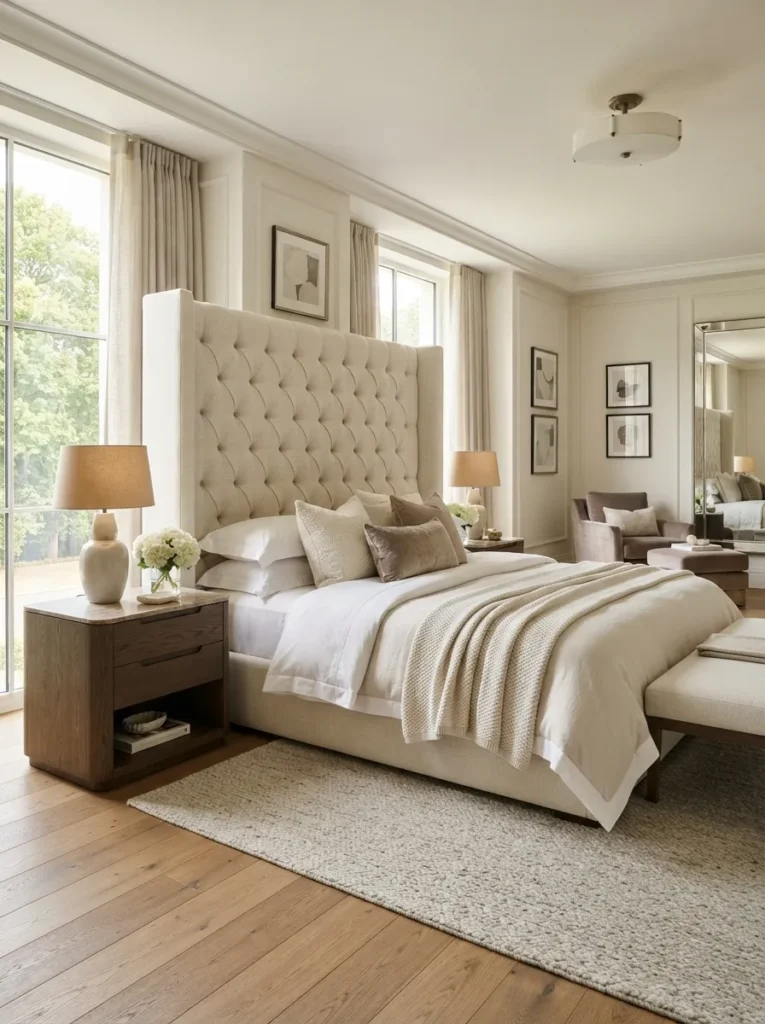
Your bed is the largest piece of furniture in the room, so it should be chosen first and everything else built around it. A well proportioned frame with a headboard that fits the scale of the wall behind it sets the tone for the entire space.
Measure the wall your bed will sit against before choosing a headboard style. A headboard that’s too narrow for the wall can leave the whole arrangement looking slightly off, even if every other piece in the room is chosen well.
2. Create a Dedicated Seating Area if Space Allows
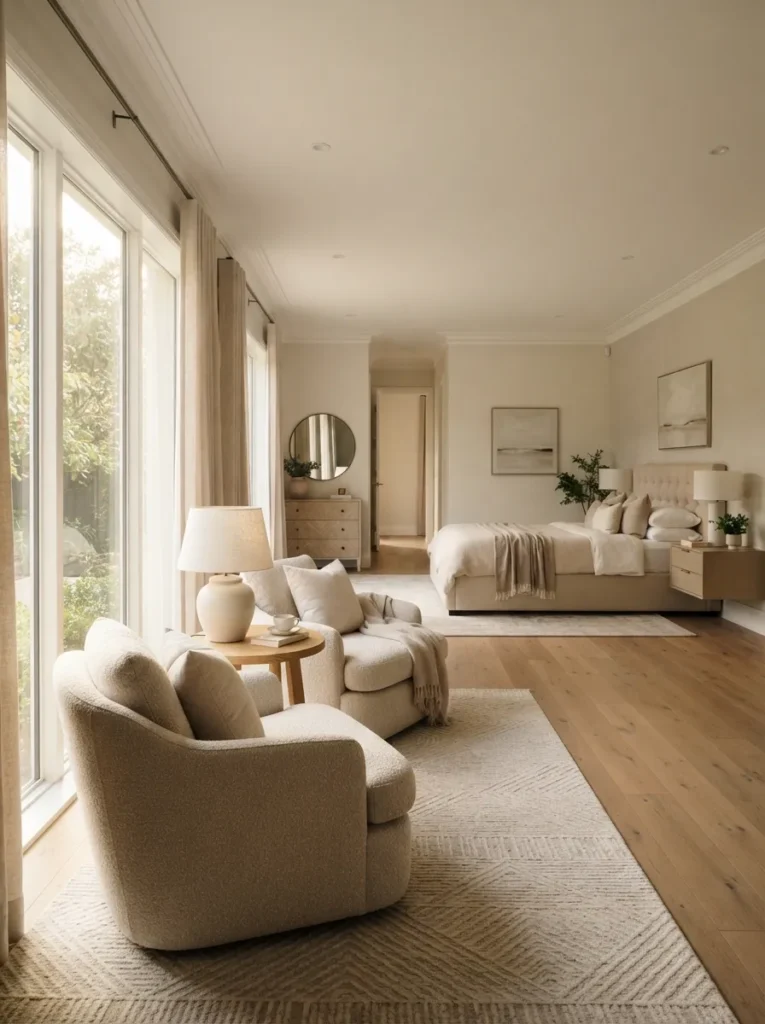
If your master bedroom has the square footage, a small seating area with one or two chairs and a side table gives you a spot to unwind that isn’t the bed itself. This separates the room’s sleeping function from its relaxing function, even within the same four walls.
Even a compact corner with a single accent chair and a reading lamp accomplishes this same goal without requiring a large amount of extra space.
3. Add a Bench at the Foot of the Bed
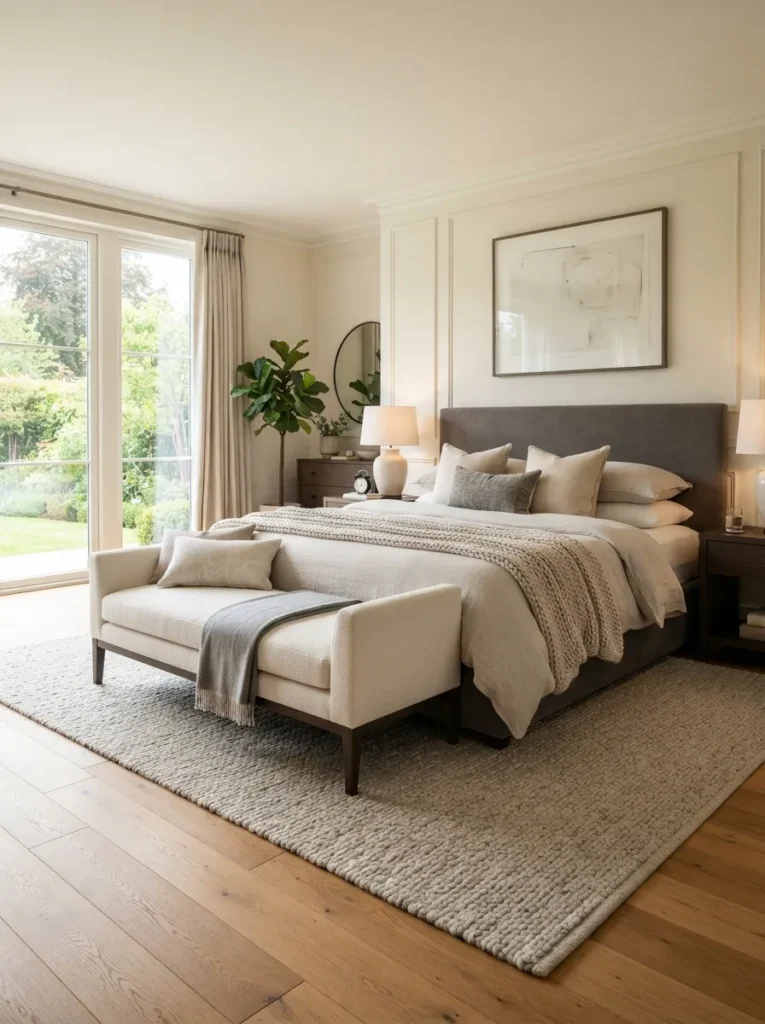
A bench gives you a place to sit while getting dressed and adds a horizontal design element that balances the visual height of the bed and headboard. Choose upholstery that complements your bedding without matching it exactly.
4. Layer Your Lighting Throughout the Room
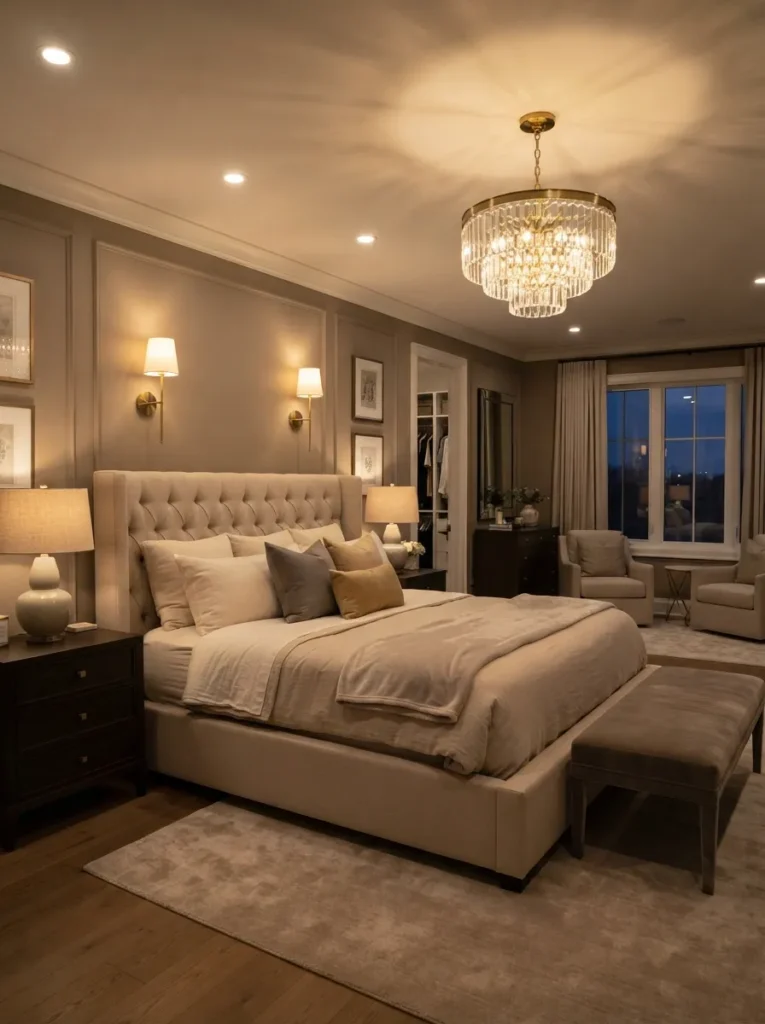
A single overhead fixture rarely covers every need in a master bedroom. Combine ambient overhead light, task lighting near a reading chair, and bedside lamps for a layered setup that adjusts to whatever you’re actually doing in the room at that moment.
- Overhead light for general brightness
- Bedside lamps for reading in bed
- A floor lamp near any seating area
- Dimmable options wherever possible
Think through your actual evening routine before finalizing this layout. If you read in bed but your partner doesn’t, individual bedside lamps with separate switches matter more than a single shared fixture ever will.
5. Choose a Calming Color Palette
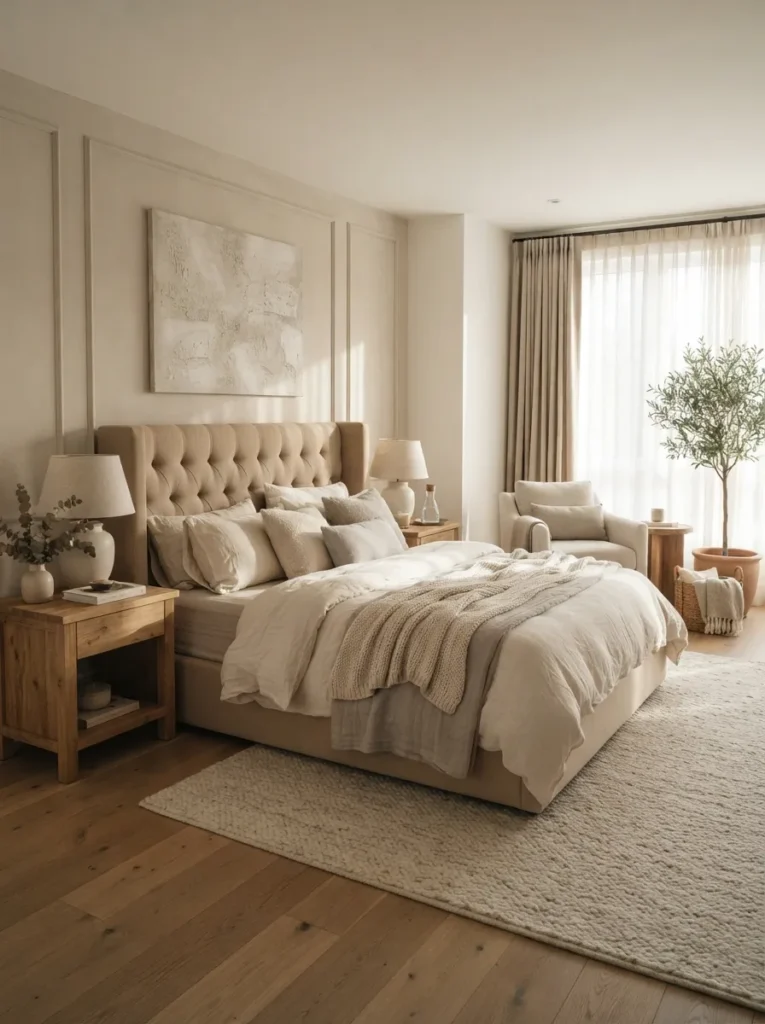
Soft blues, warm neutrals, and muted greens are consistently popular in master bedrooms because they tend to feel restful rather than energizing. Save bolder, more stimulating colors for rooms where you want more activity and energy, not the one meant for rest.
6. Add a Statement Headboard
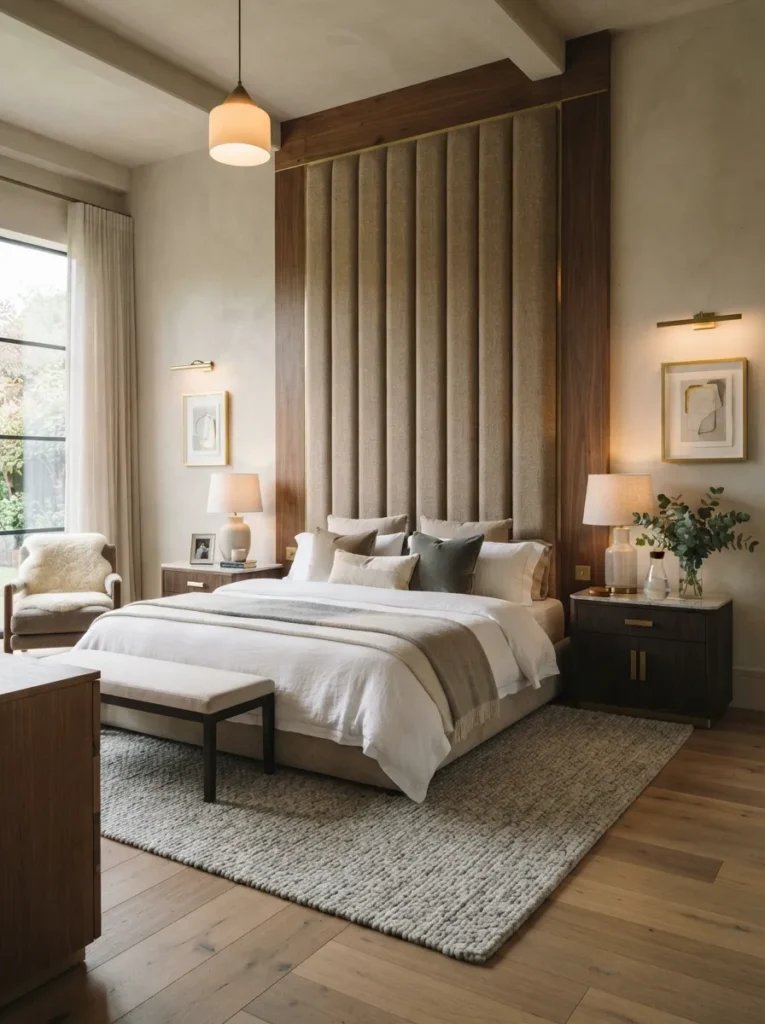
An upholstered, tufted, or architecturally interesting headboard gives your bed a strong visual anchor and often becomes the focal point of the entire room. This is one of the few places in a bedroom where a bolder design choice tends to pay off.
Since the headboard sits directly behind where your head rests each night, it’s also one of the few pieces worth spending a bit more on for both comfort and long term durability.
7. Create His and Hers Storage Zones if Sharing the Room
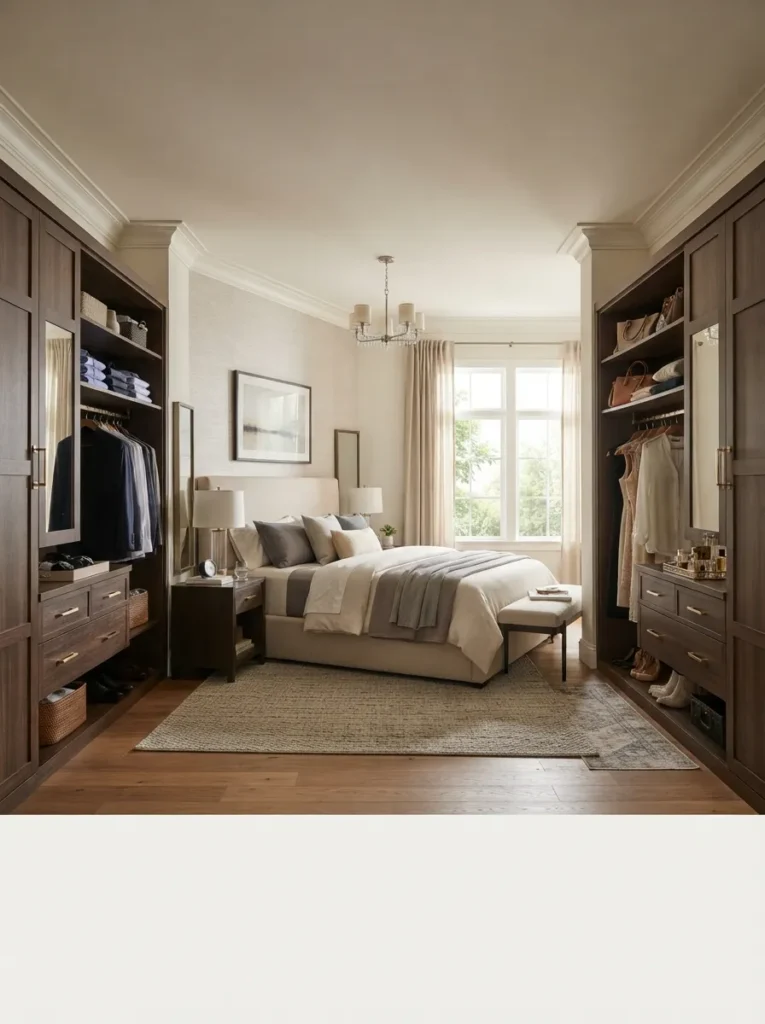
If two people share the space, dividing closet and dresser storage clearly, rather than mixing everything together, tends to reduce daily friction and makes the room feel more organized for both people using it.
8. Use a Large Area Rug Under the Bed
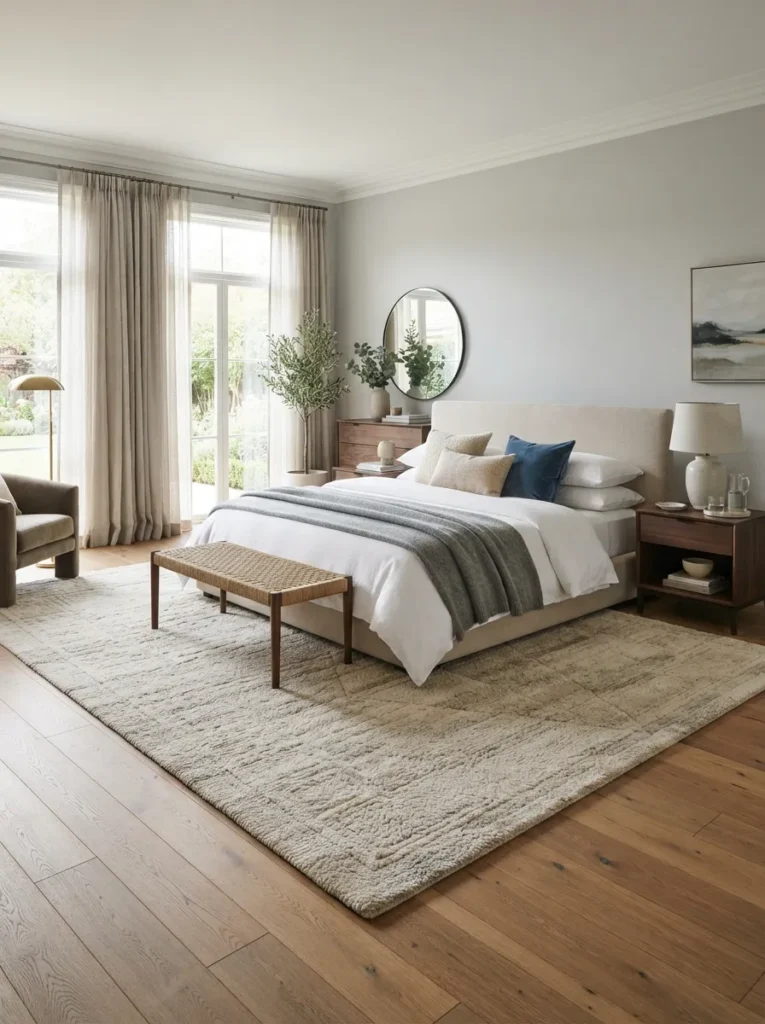
A rug that extends well past both sides of the bed adds warmth and softness underfoot and helps anchor the furniture arrangement visually, especially in larger master bedrooms where the bed alone can look a bit lost on a bare floor.
9. Add a Vanity or Dedicated Getting Ready Space
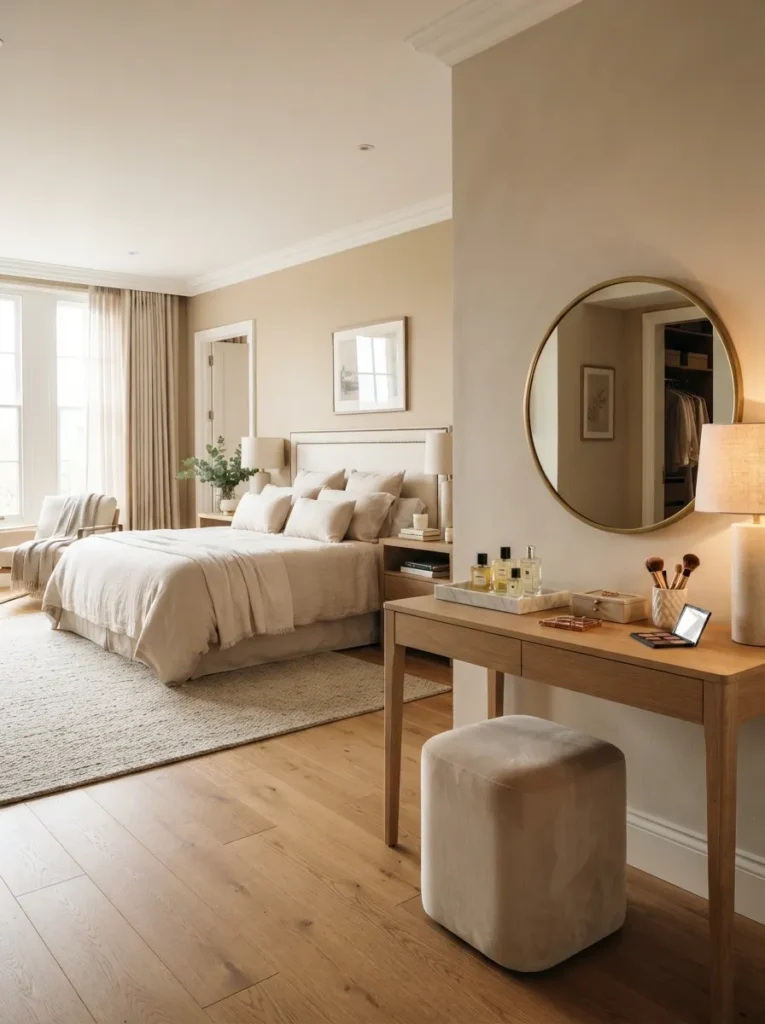
A small vanity with a mirror and good lighting gives you a defined spot for morning and evening routines, which keeps that activity from spilling into the rest of the room’s shared surfaces like the dresser top or nightstands.
Position the vanity near natural light if possible, since daylight gives a far more accurate read on makeup, skincare, or grooming than most artificial lighting alone.
10. Choose Nightstands With Enough Storage
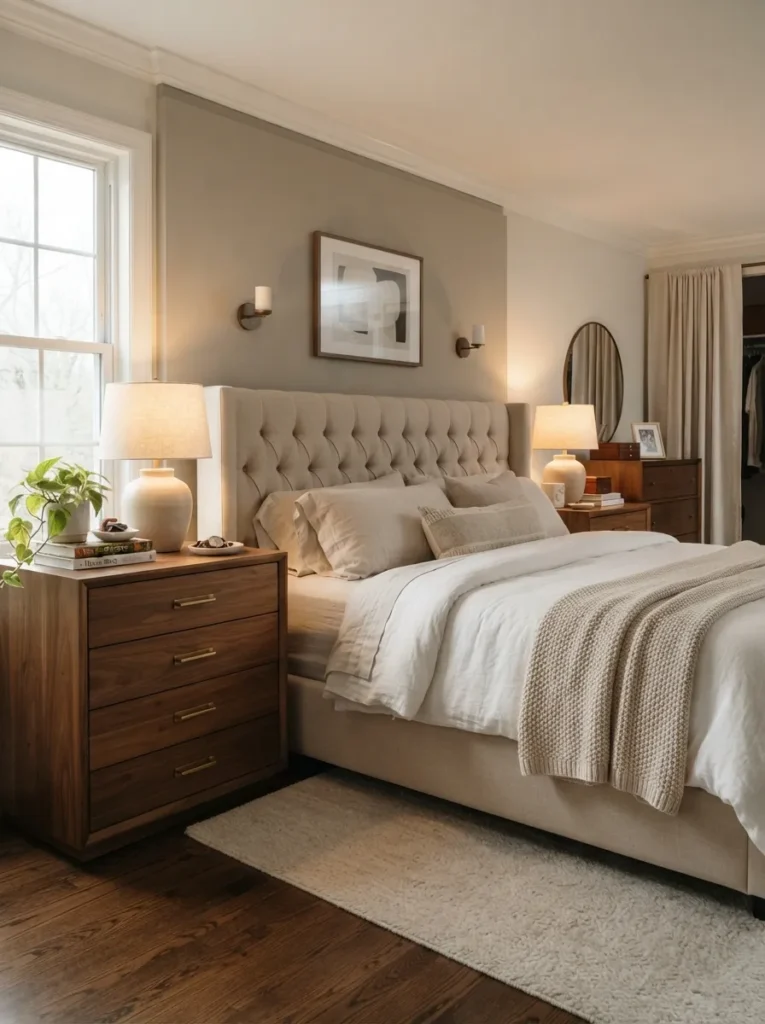
A nightstand with at least one drawer keeps everyday items like chargers, glasses, or reading material out of sight while still being within easy reach. Open shelf only nightstands tend to look cluttered faster in a room you use daily.
11. Add Blackout Curtains for Better Sleep
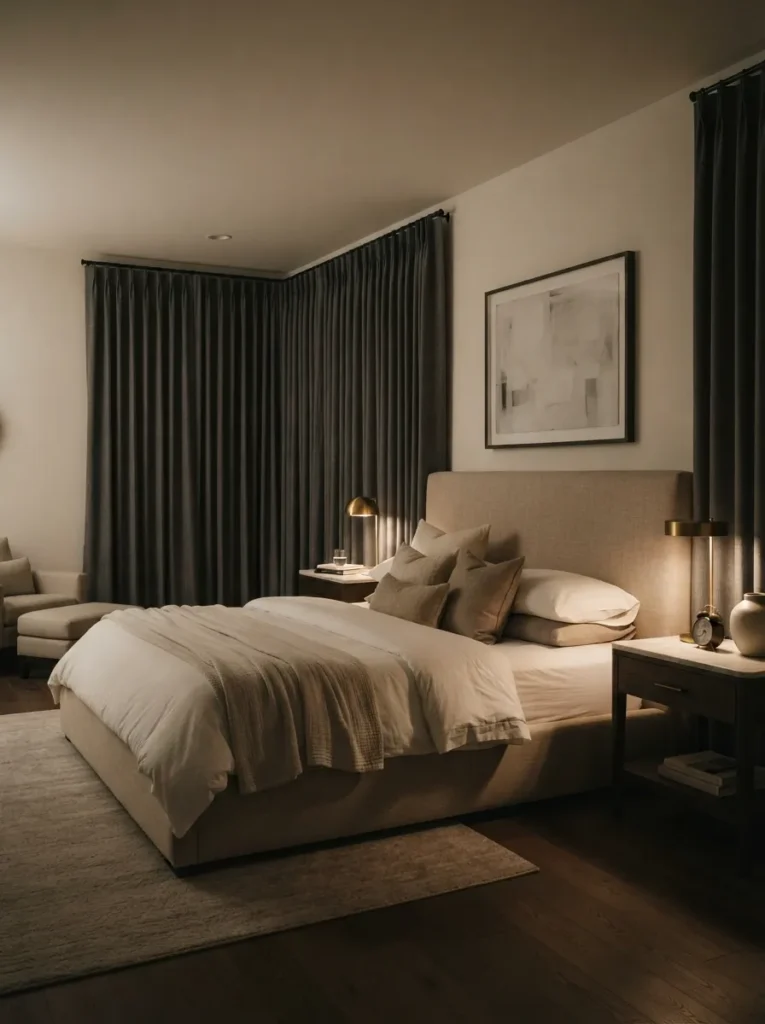
Full blackout curtains or shades genuinely improve sleep quality, especially in a room that gets strong early morning light or faces exterior street lighting. Pair them with a sheer layer if you still want soft, diffused light during the day.
12. Incorporate a Reading Nook by the Window
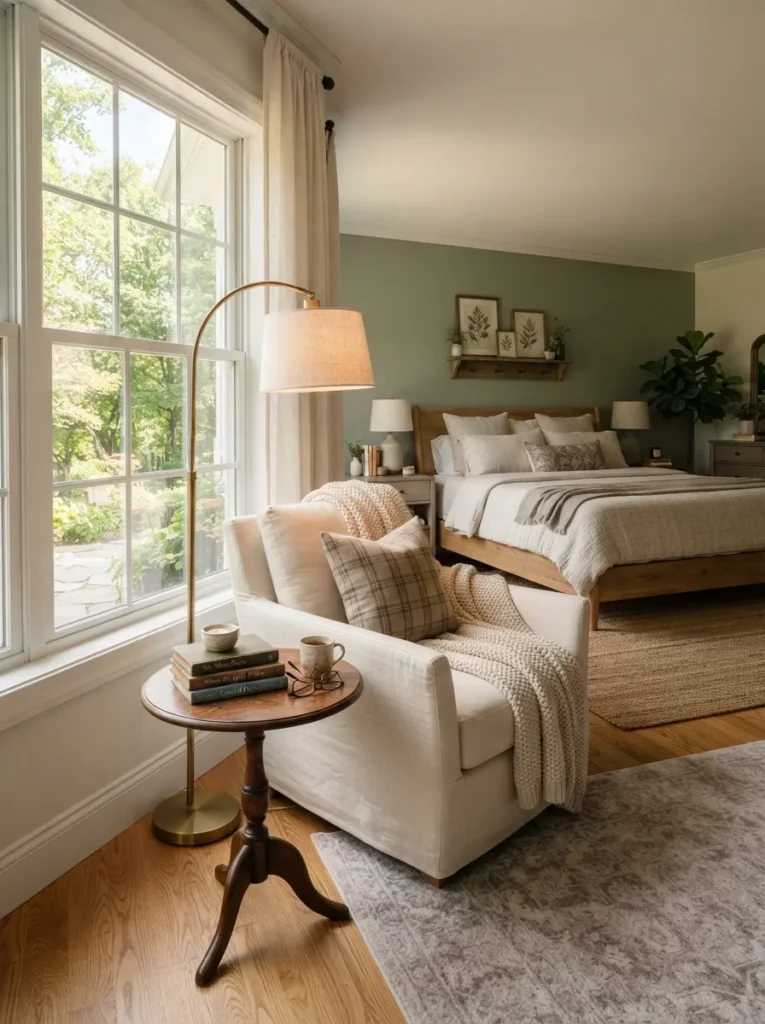
A chair positioned near natural light, with a small side table and a lamp for evening use, gives the room a quiet activity zone beyond sleeping. This is especially valuable in a master bedroom that also needs to function as a place to decompress.
13. Choose a Ceiling Fan or Statement Fixture With Function
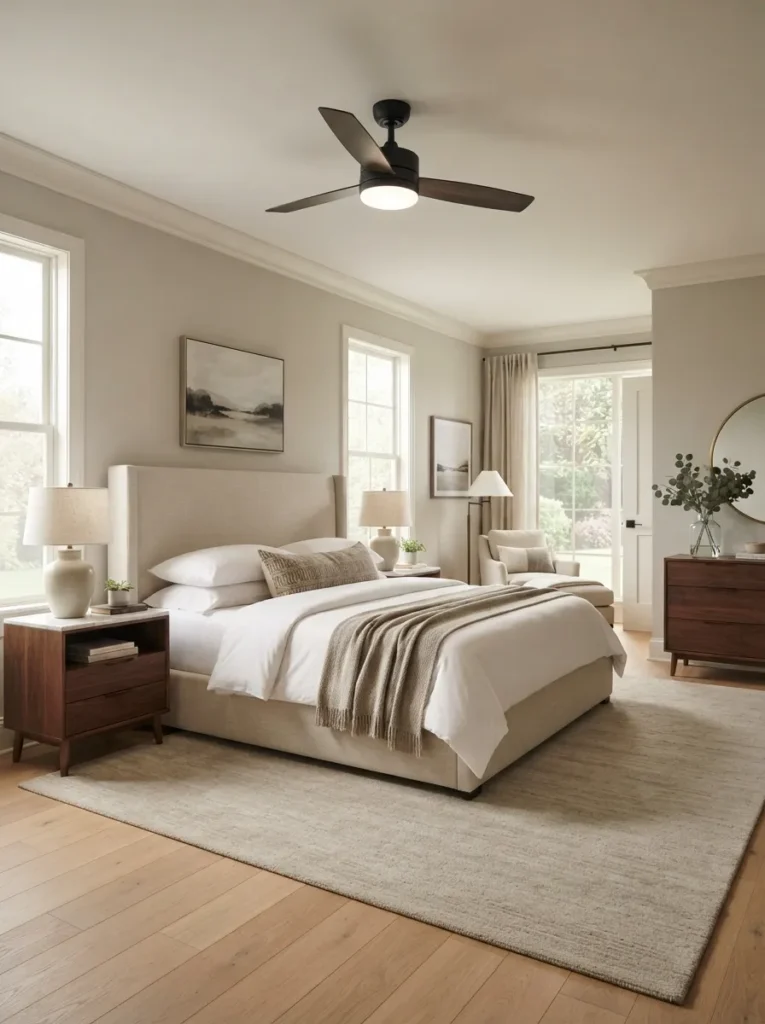
Comfortable sleep depends heavily on temperature, so a ceiling fan, ideally one with a design that still fits your decor, adds real function alongside whatever overhead lighting you choose.
Many modern ceiling fans now come with remote or app based controls, which makes adjusting airflow in the middle of the night far easier than getting up to use a wall switch or pull chain.
14. Add Personal Art Above the Bed
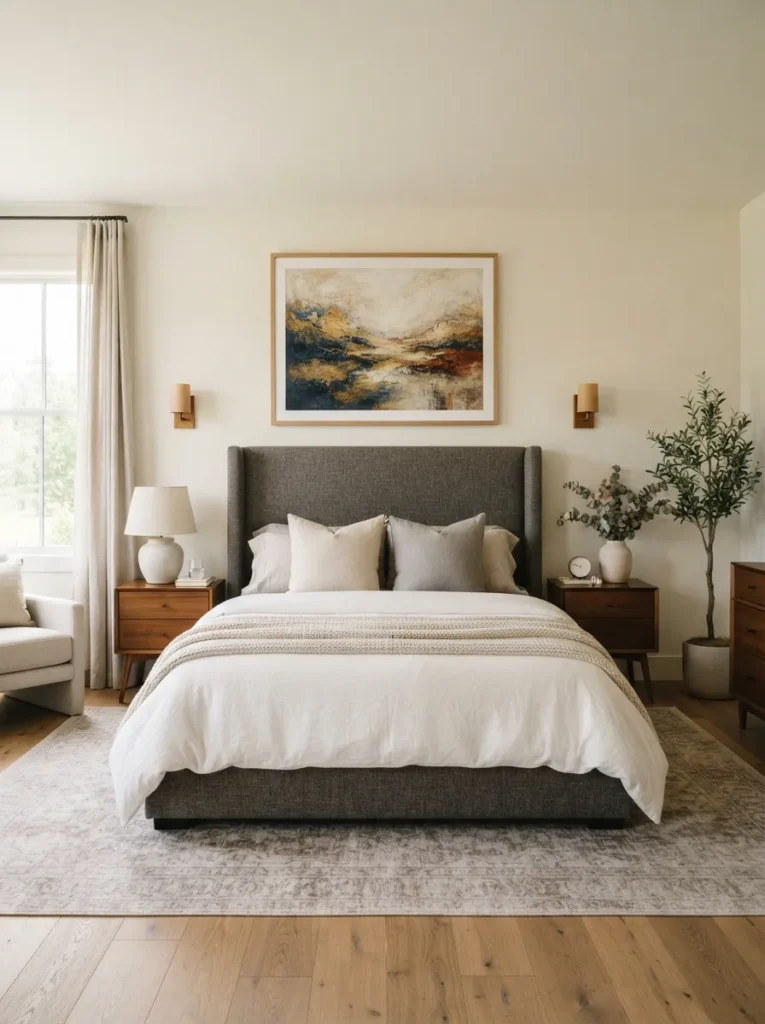
A large piece of art centered above the headboard fills what’s often the room’s most visually prominent wall. Choose something that feels calming rather than visually loud, since this piece will be one of the last things you see before sleep each night.
15. Use Soft, Layered Bedding
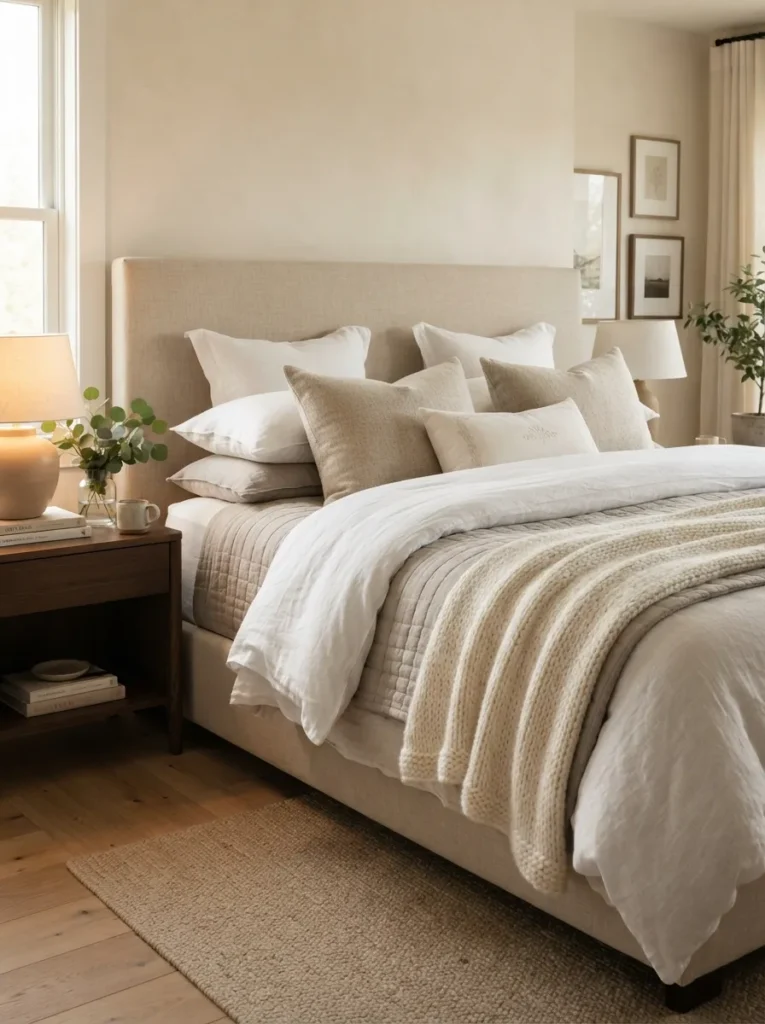
A well made bed with a mix of pillow sizes, a duvet or comforter, and a folded throw at the foot instantly makes the whole room feel more finished and inviting, even before anything else in the space is styled.
- Two standard or king sleeping pillows
- One set of euro shams against the headboard
- A duvet or comforter as the main layer
- A folded throw blanket at the foot of the bed
Making the bed each morning, even just pulling the top layer into place, takes under a minute but has an outsized effect on how put together the entire room feels for the rest of the day.
16. Add a Full Length Mirror
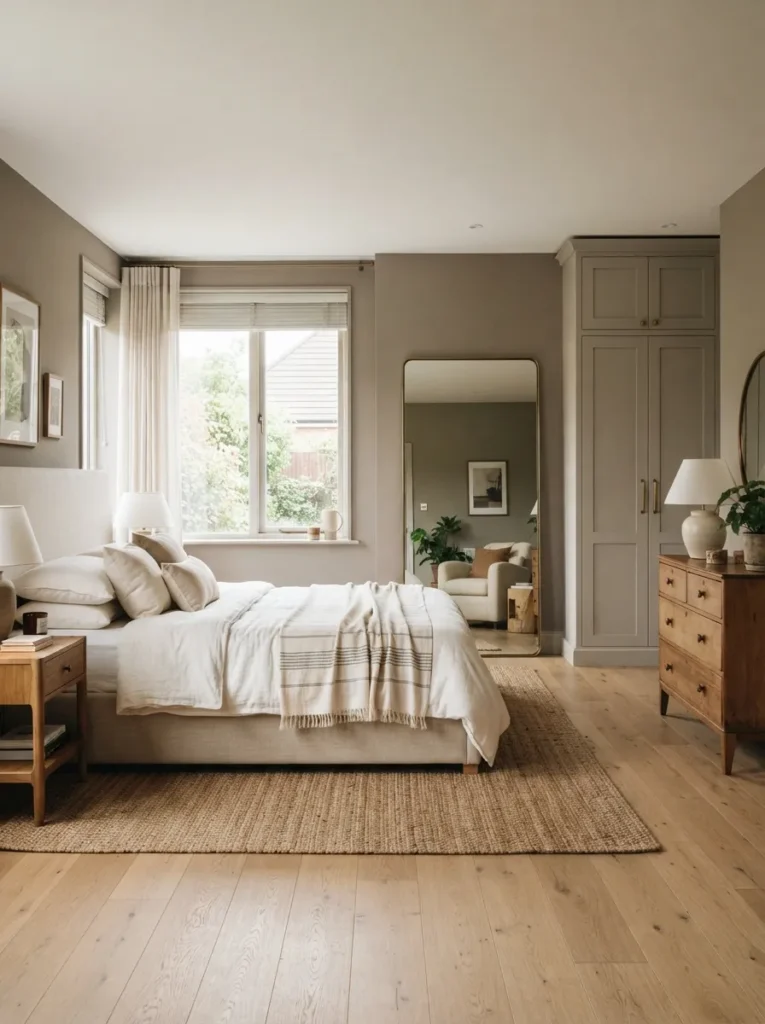
A full length mirror, whether leaning against a wall or mounted on a closet door, adds function for getting dressed and also helps bounce light around the room, making it feel a bit larger in the process.
17. Choose Window Treatments That Match the Room’s Formality
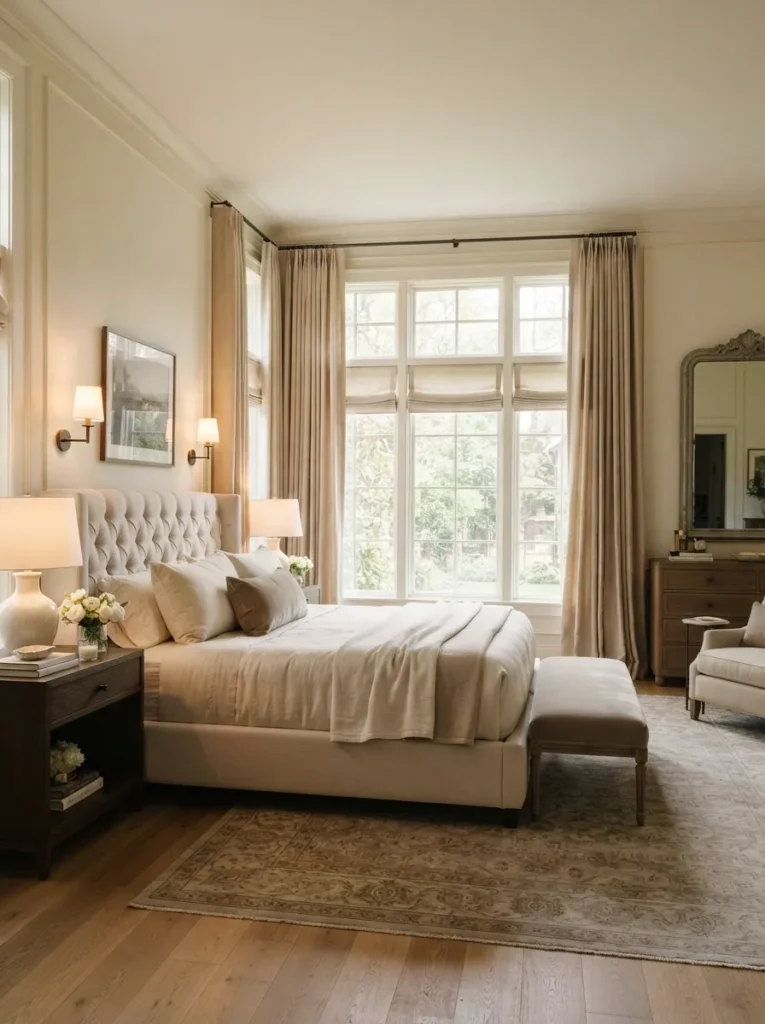
A more formal master bedroom might call for layered drapery, while a relaxed, casual space often looks better with simple linen curtains or woven shades. Matching the window treatment style to the rest of your decor keeps the room feeling cohesive.
18. Add a Small Reading Library
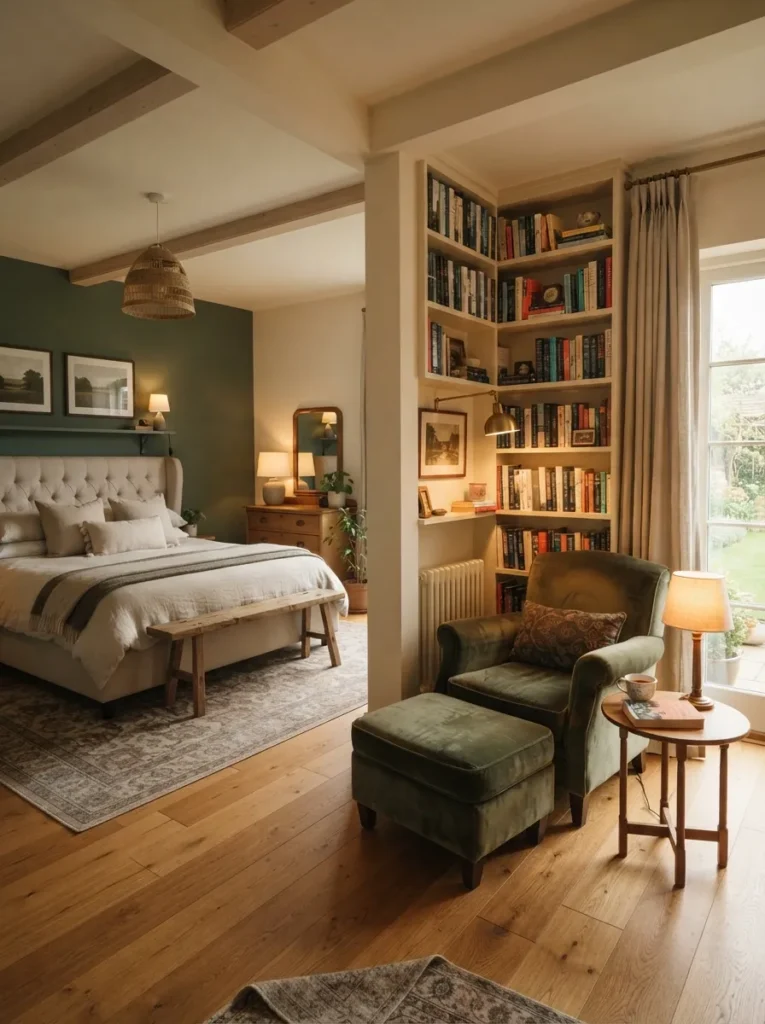
A slim bookshelf or a stack of books on a nightstand personalizes the space and supports an actual evening wind down routine, especially if reading before bed is part of how you relax.
19. Use a Consistent Metal Finish Throughout
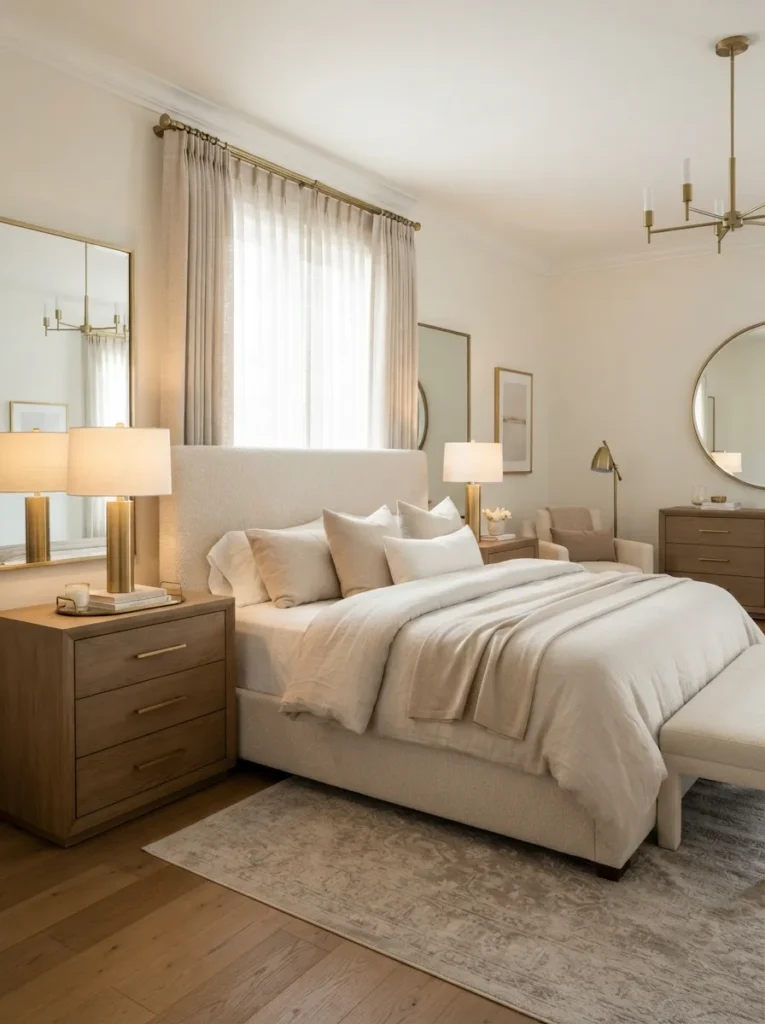
Match your lighting, hardware, and any decor accents to a single metal finish, whether that’s brushed brass, matte black, or brushed nickel. This consistency quietly elevates the room even when most people won’t consciously notice why.
20. Add Warm, Natural Wood Tones
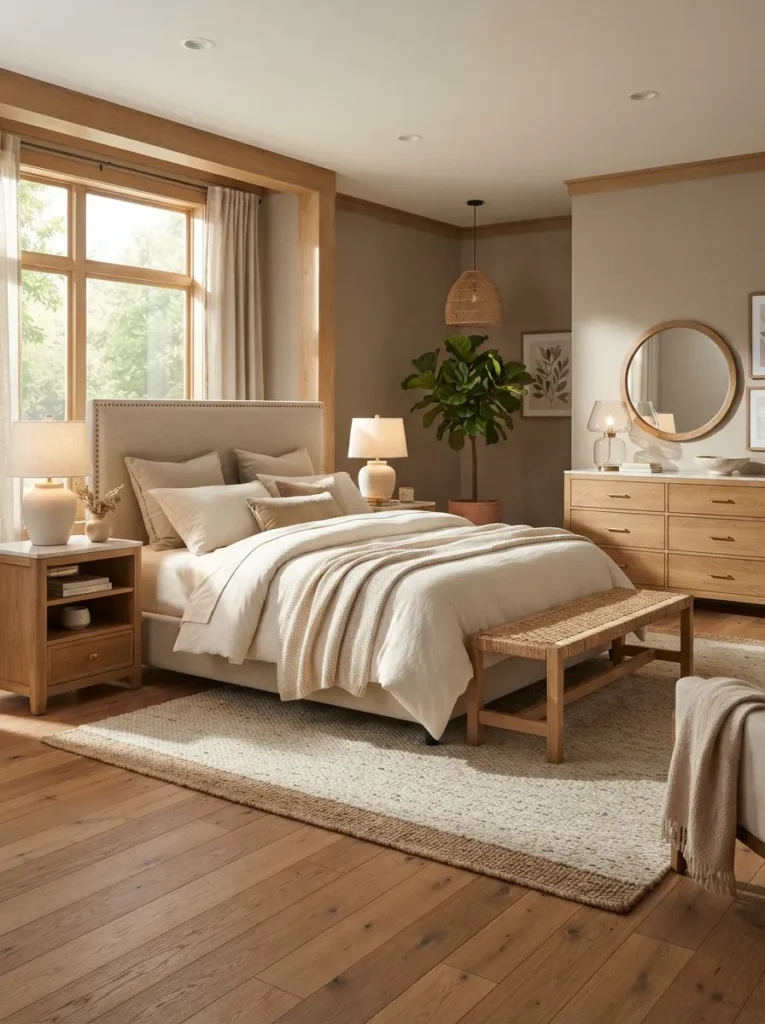
Wood furniture, whether in your bed frame, nightstands, or a dresser, brings warmth into the room that helps balance out cooler wall colors or bedding tones. Stick to one wood family across pieces so the room feels intentional rather than mismatched.
21. Create a Defined TV Zone if You Watch in Bed
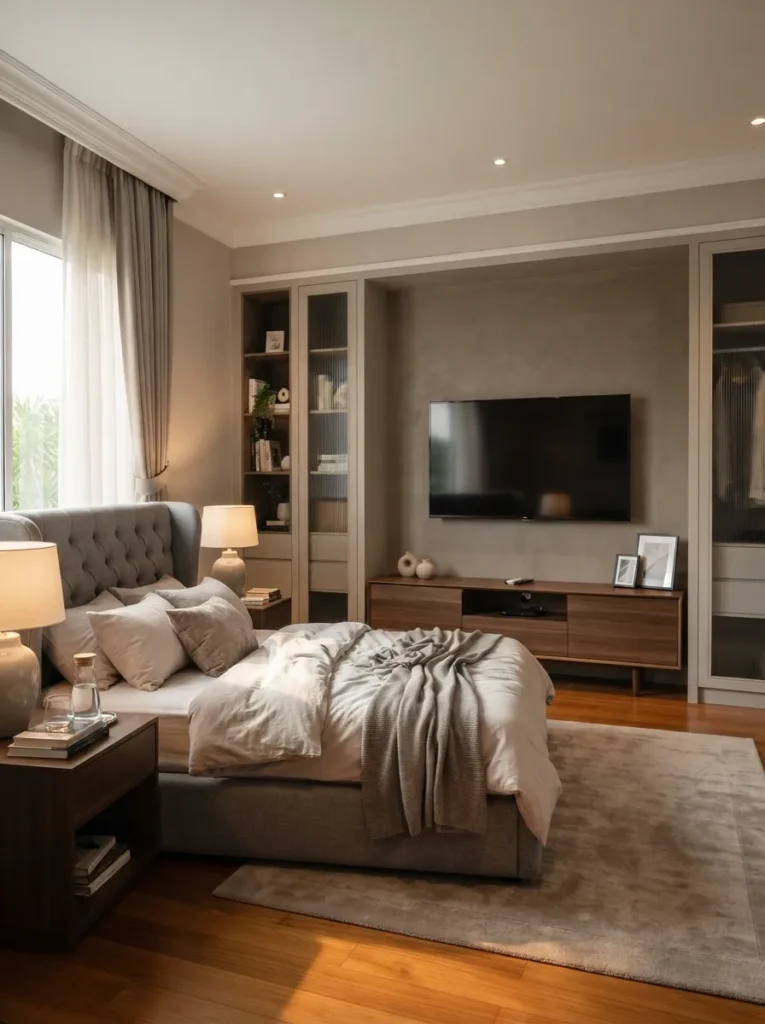
If a television is part of your bedroom routine, plan its placement and any surrounding storage deliberately rather than letting it dominate the wall opposite the bed by default. A slim console or wall mount keeps the setup from overwhelming the room.
Consider the mounting height carefully as well. A television mounted too high forces an uncomfortable neck angle while lying in bed, so aim for the center of the screen to sit roughly at eye level when you’re sitting up against your pillows.
22. Add Soft Textures Through Pillows and Throws
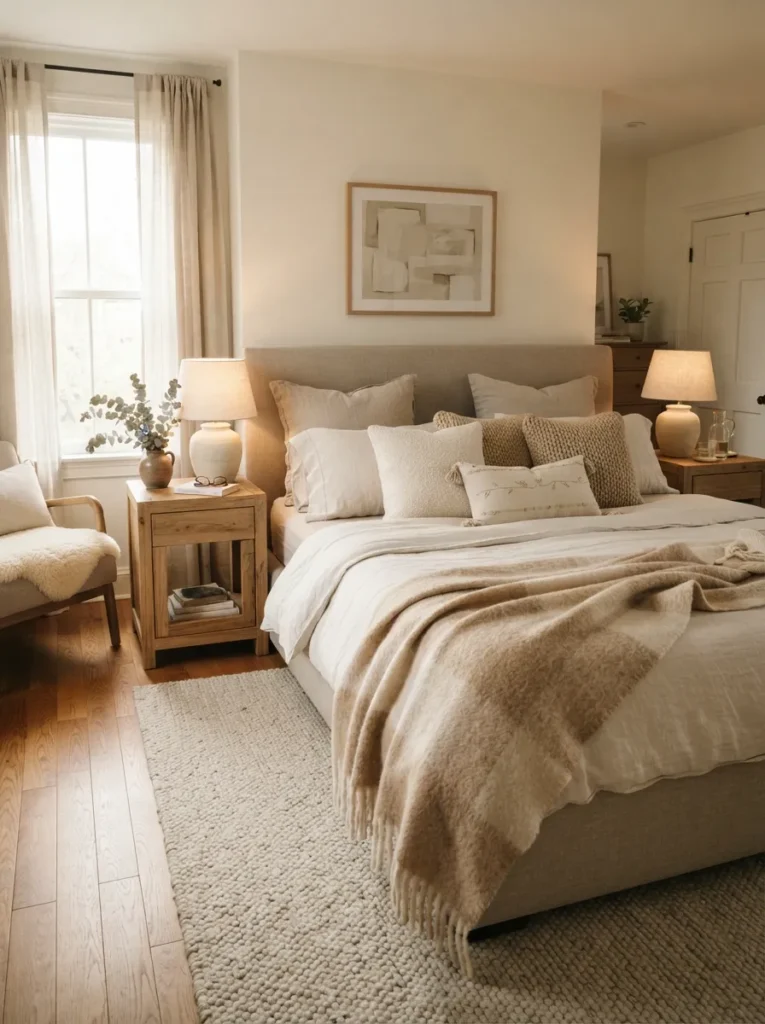
Mixing a few different textures, like velvet, boucle, and linen, across your pillows and throws adds tactile depth to the bed without requiring bold colors or patterns to create visual interest.
23. Choose Blackout Shades for Windows Near Streetlights
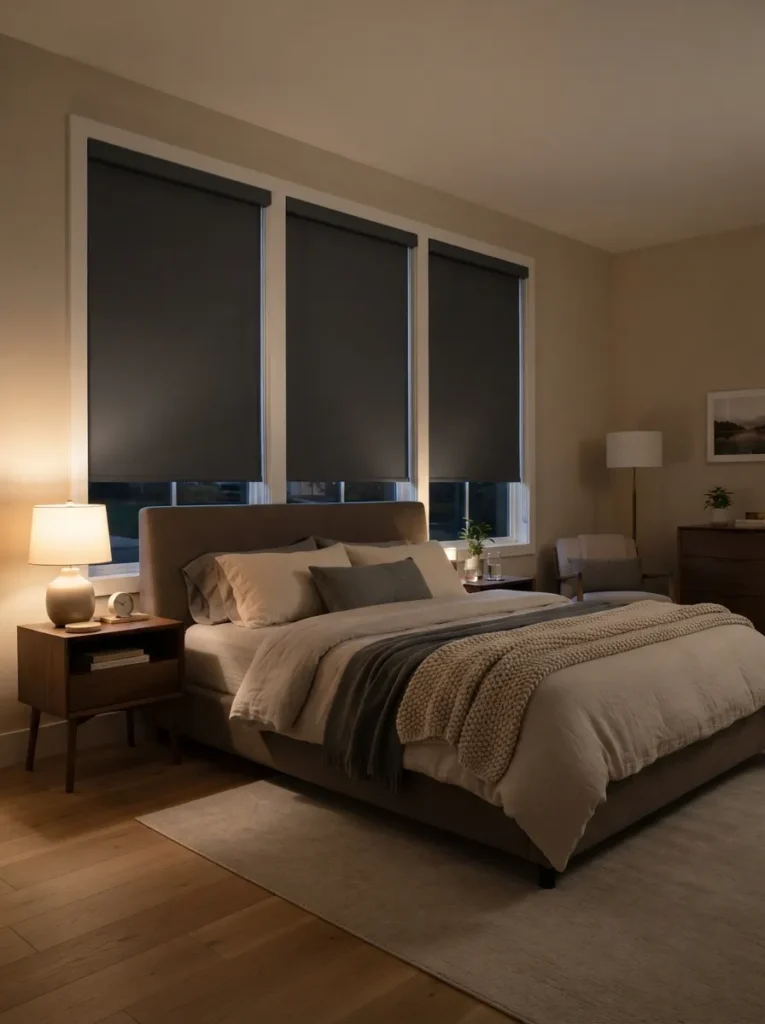
If your bedroom windows face any exterior lighting, a well fitted blackout shade behind your regular curtains makes a noticeable difference in sleep quality, even if you don’t currently think light is disrupting your rest.
24. Add a Small Bar or Coffee Station if Space Allows
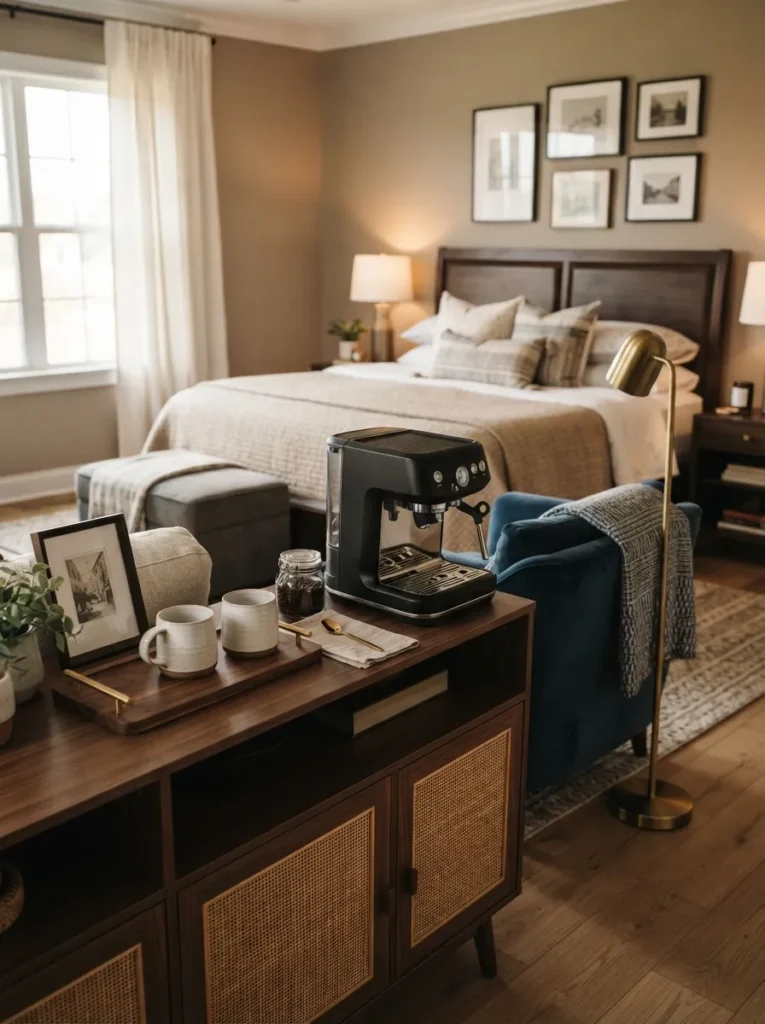
A small tray with a coffee maker or an electric kettle on a dresser or console gives you the option of a slower, more private morning without needing to head to the kitchen right away.
25. Use a Canopy or Curtain Detail for Softness
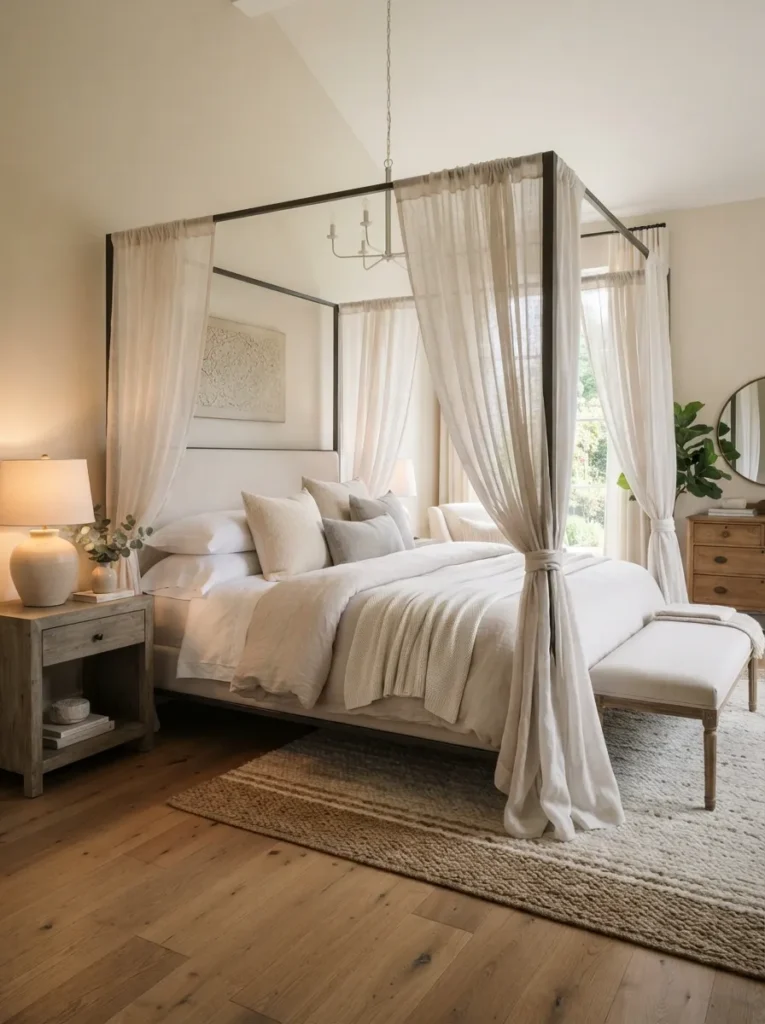
A simple canopy frame or a curtain panel draped near the headboard adds a soft, enclosed feeling that many people find calming, especially in a larger master bedroom where the bed might otherwise feel a bit exposed in the middle of the room.
26. Choose a Rug Layering Approach for Texture
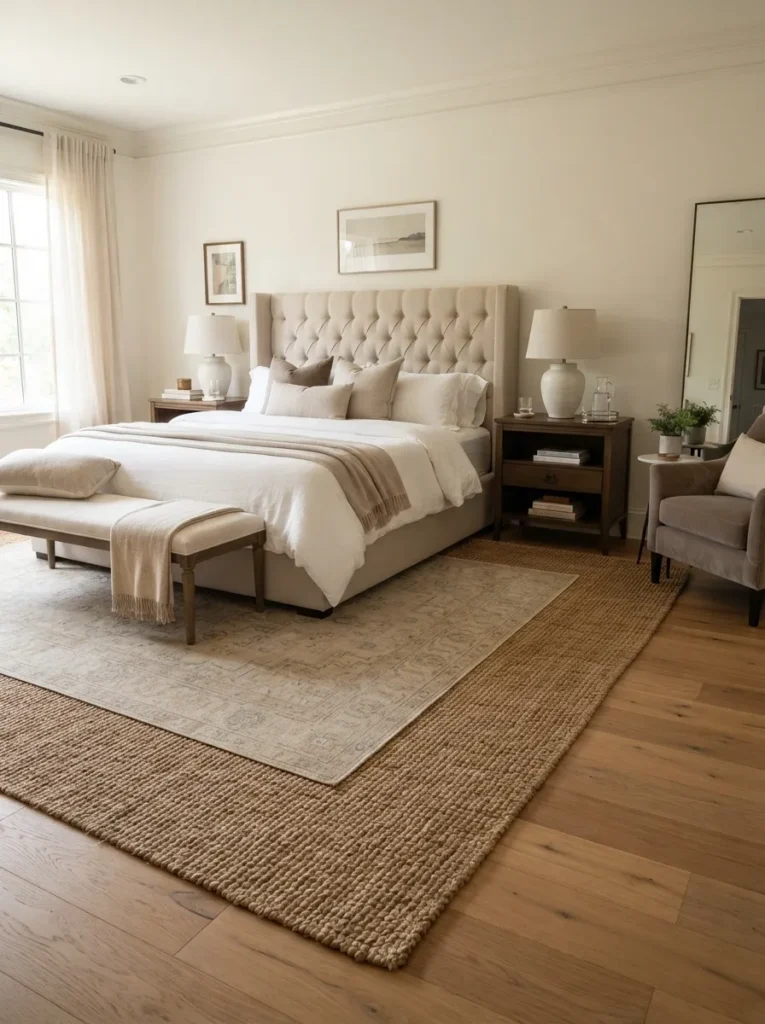
Layering a smaller textured rug over a larger flatweave rug near the bed adds both visual interest and extra softness underfoot, particularly useful on hardwood or tile flooring.
27. Add Blackout Curtains With a Decorative Lining
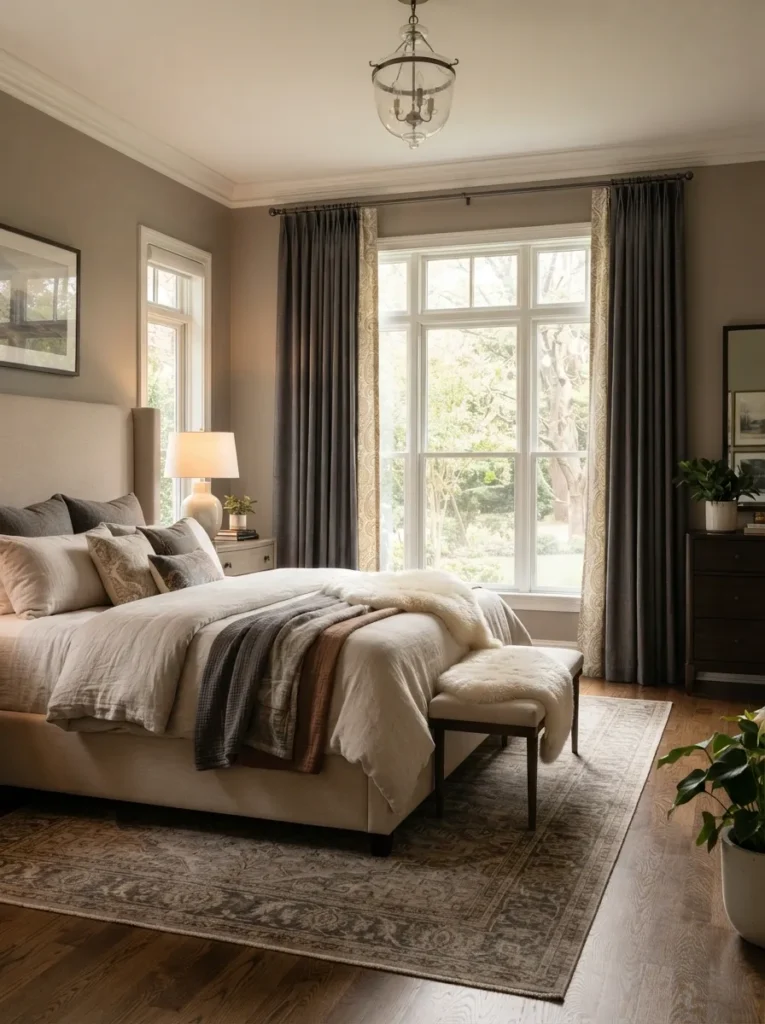
Some blackout curtains come with a decorative pattern on the room facing side and a plain blackout lining behind it, giving you full light control without sacrificing style, which matters in a room where the curtains are often a major visual element.
28. Include a Small Desk for Quiet Work
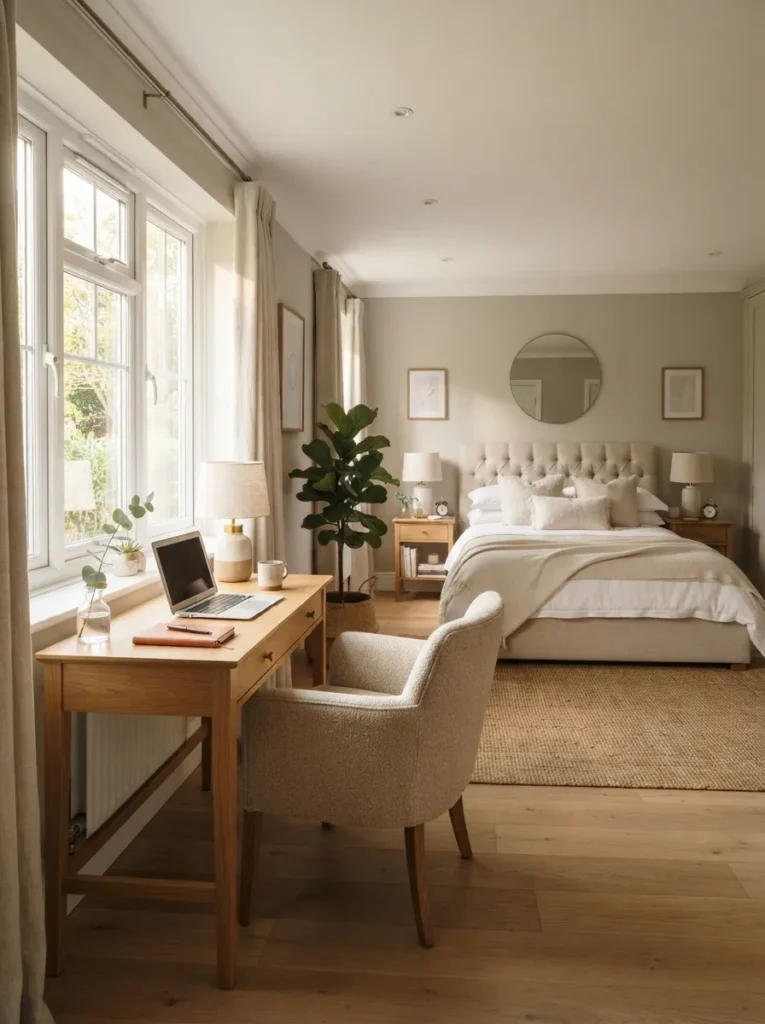
If you occasionally need a private workspace, a compact desk in an underused corner gives you that option without requiring a full home office. Keep it tucked away or foldable if you’d rather it not become a visual focal point.
A desk placed near a window also doubles as a quiet spot for morning coffee or journaling, which extends its usefulness well beyond just occasional work tasks.
29. Personalize With Meaningful Objects
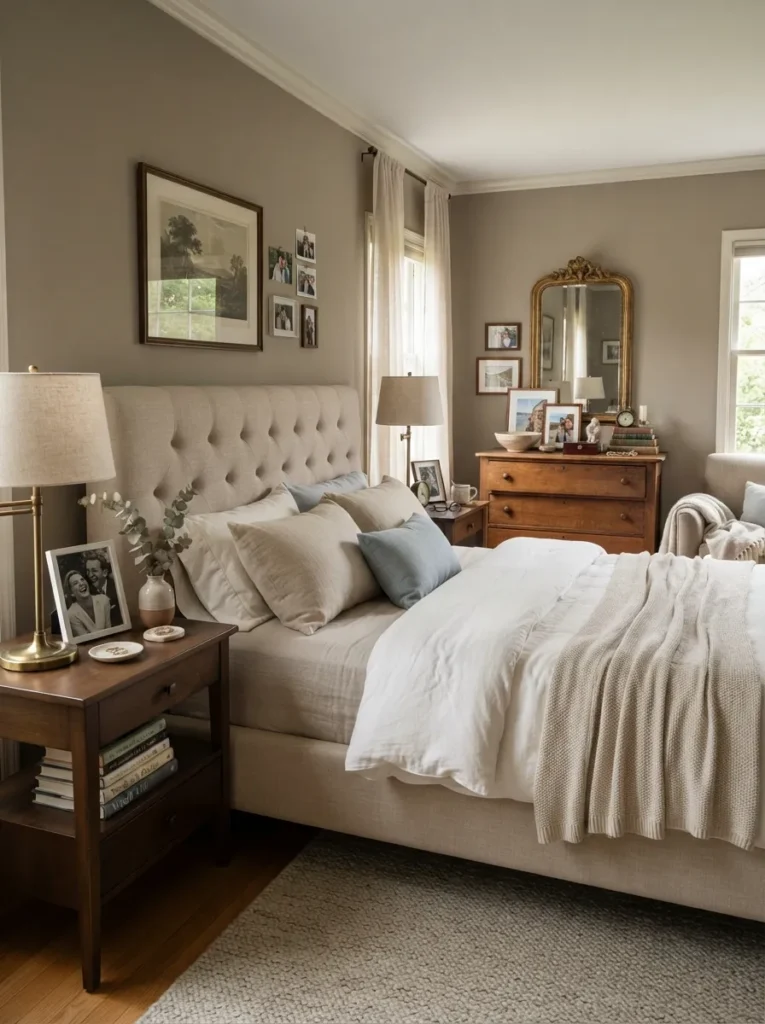
A few photos, travel souvenirs, or sentimental pieces placed thoughtfully around the room make a master bedroom feel like yours specifically, rather than a generic, catalog styled space.
30. Add Warm Dimmable Lighting for Evenings
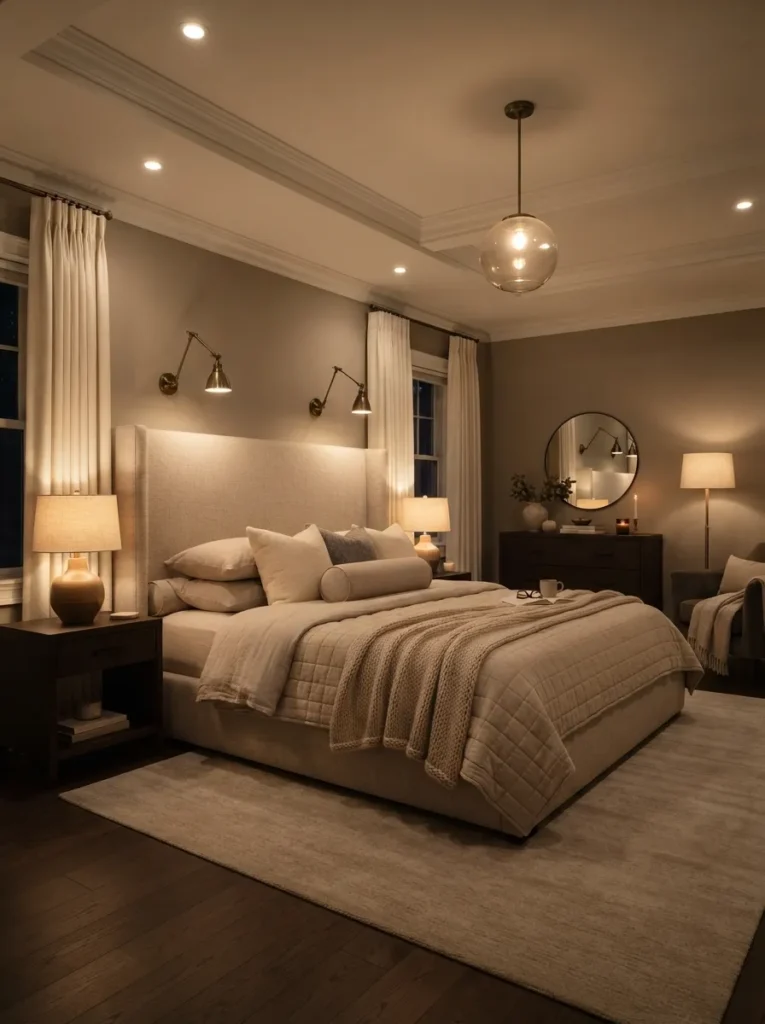
Warm toned, dimmable bulbs throughout the room let you shift from bright morning light to a softer, more relaxed glow at night, supporting the room’s dual function as both a functional and restful space.
31. Choose a Closet System That Actually Works for You
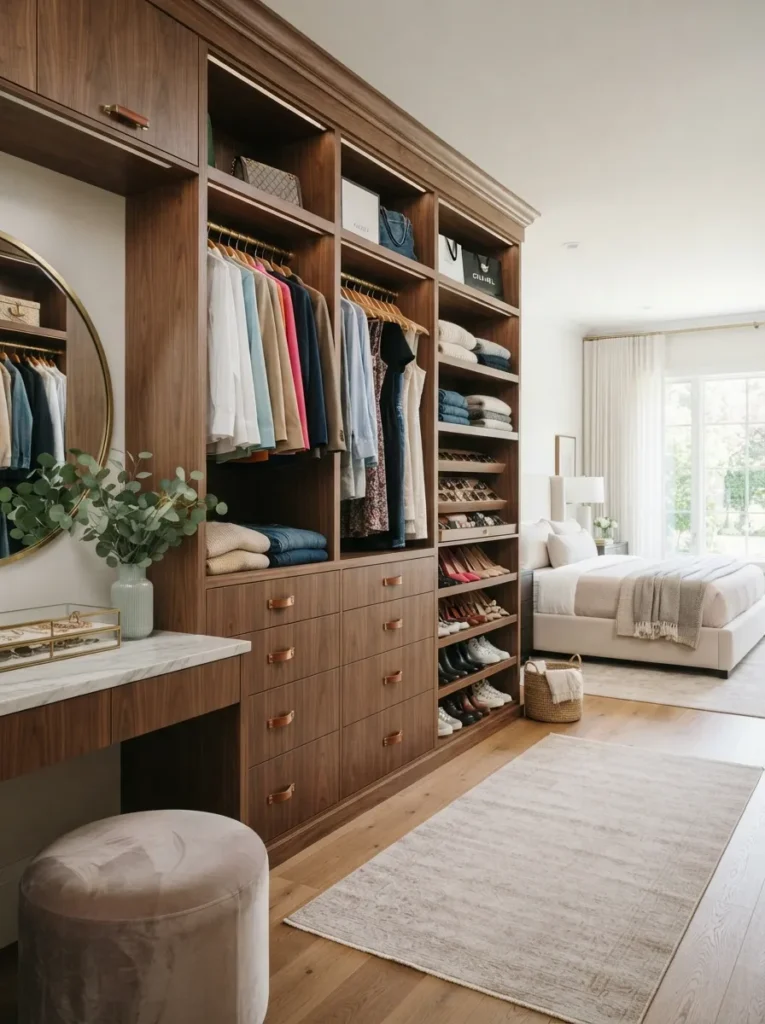
If your master bedroom includes a walk in closet, a thoughtfully organized system, rather than a single hanging rod, makes daily routines noticeably easier and keeps clothing from spilling out into the bedroom itself.
Take stock of what you actually own before designing the system. A closet built around shoes and folded items when your wardrobe is mostly hanging clothes, or the reverse, ends up wasting space no matter how well built the shelving itself is.
32. Add a Chaise or Daybed for Extra Lounging Space
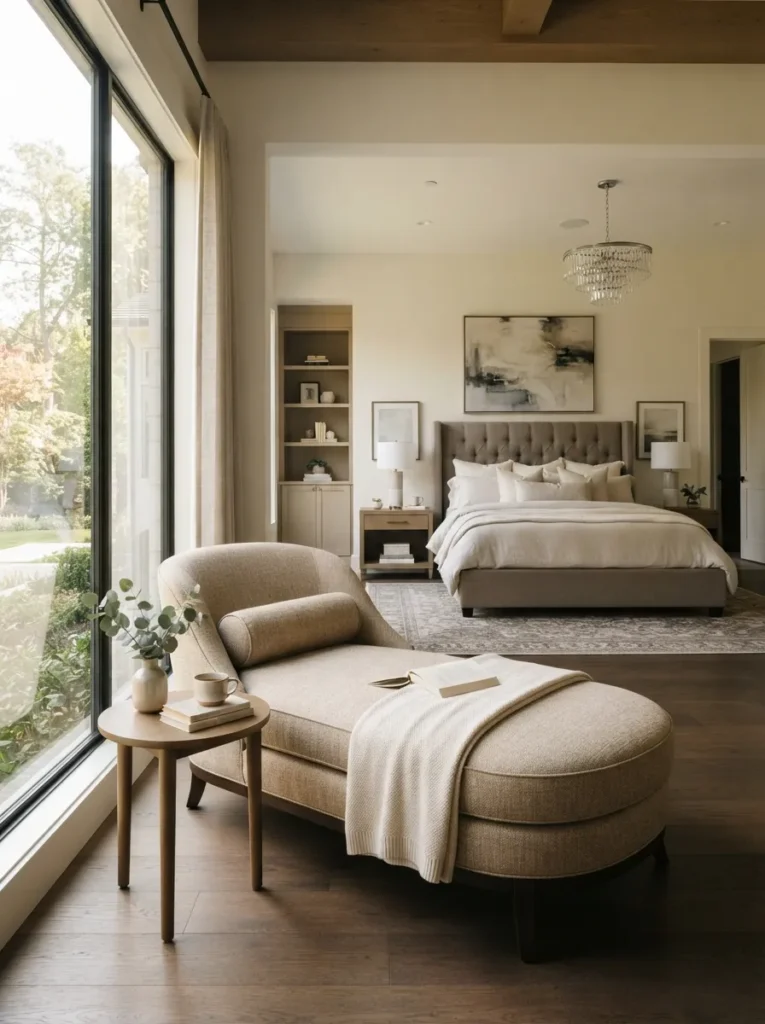
If you have the room, a chaise lounge or small daybed near a window gives you a comfortable spot to relax that’s separate from your actual bed, which is especially useful if you like to read or unwind before sleep.
33. Use Symmetry on Either Side of the Bed
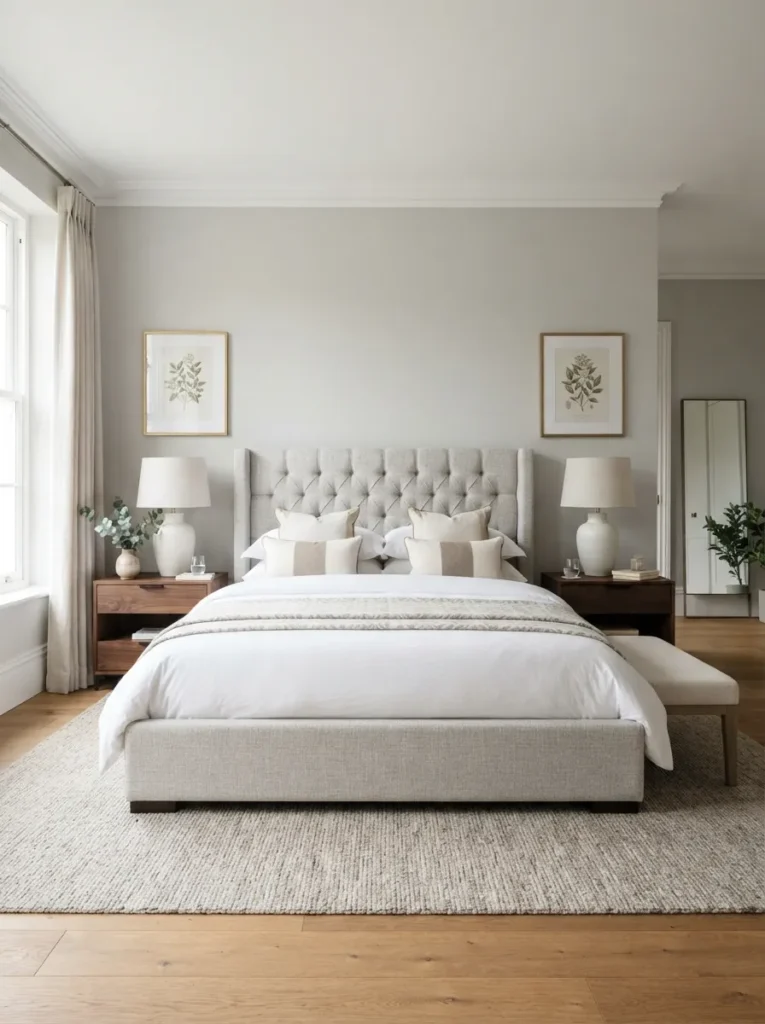
Matching nightstands, lamps, and even wall art on either side of the bed create a sense of balance that most people find calming, even if they can’t immediately identify why a symmetrical bedroom feels more settled than an asymmetrical one.
34. Add Scent Through Candles or Diffusers
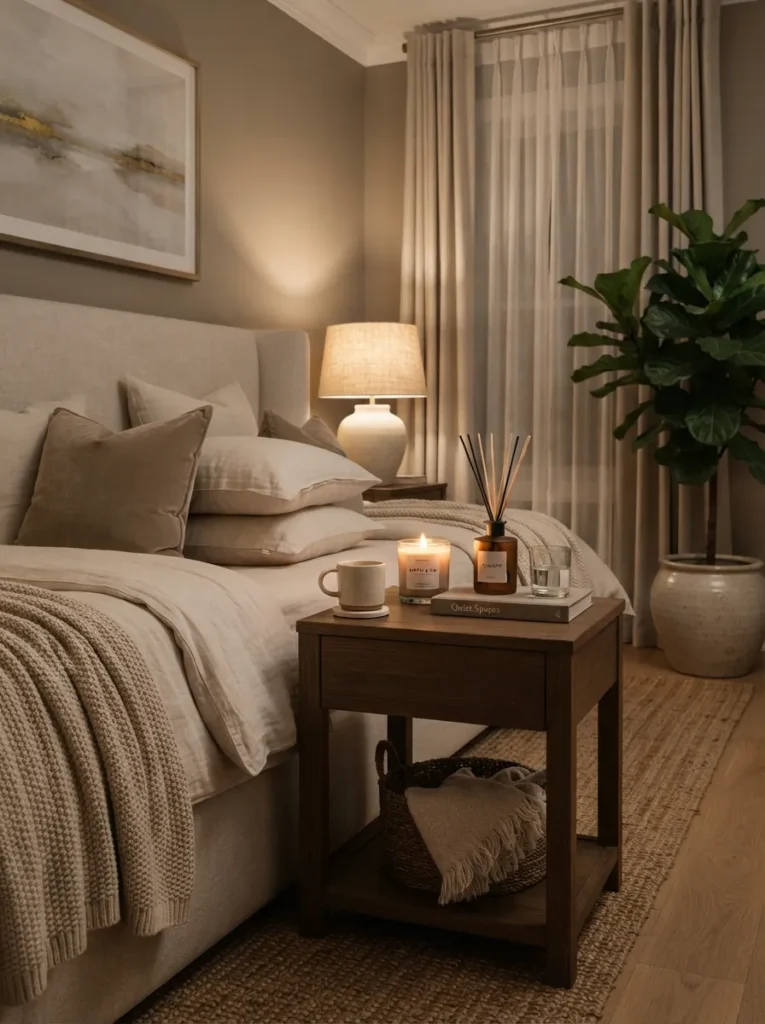
A consistent, calming scent, like sandalwood, lavender, or a soft vanilla, reinforces the room’s function as a place to relax and unwind, and can become part of your actual wind down routine over time.
35. Keep Surfaces Edited, Not Empty
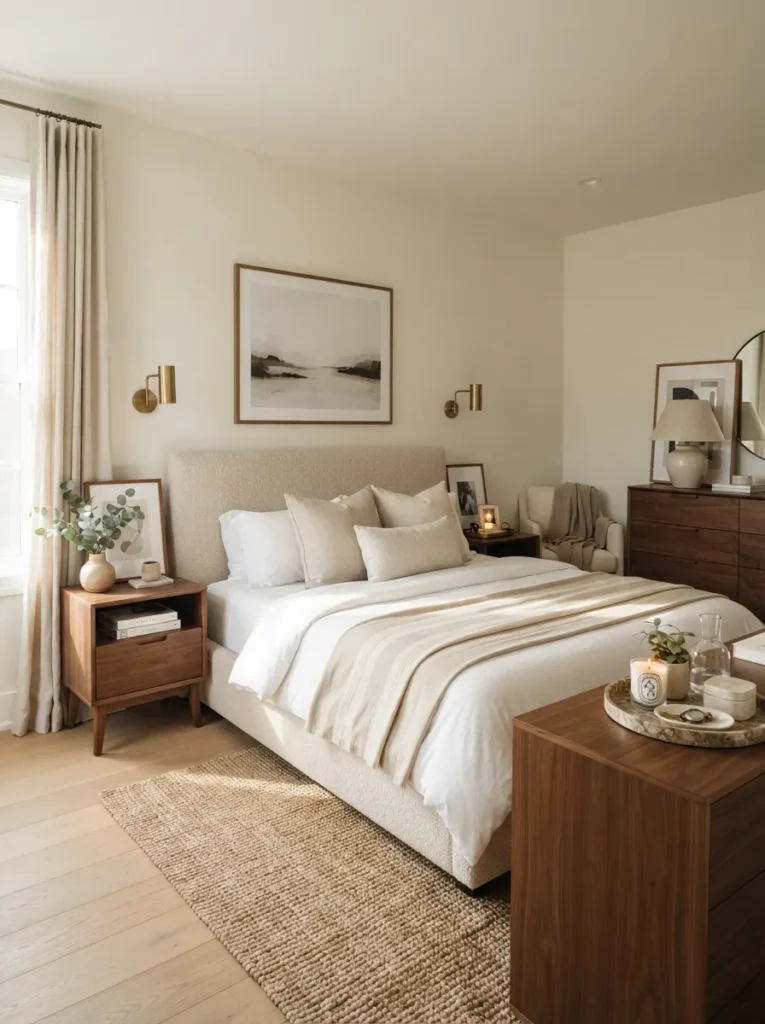
A master bedroom that functions daily will naturally collect a few items on dressers and nightstands, and that’s fine. The goal isn’t a completely bare room, it’s making sure everything visible has an actual purpose or clear reason for being there, rather than accumulating without any real intention behind it.
Set a quick habit of clearing both nightstands and the dresser top once a week. It takes only a couple of minutes but keeps the room from slowly drifting toward clutter the way most daily use spaces naturally tend to over time.
A master bedroom works best when it’s designed around how you actually use the space, not just how it photographs. Start with the bed and lighting, since those two elements affect daily comfort the most, then build in the smaller personal touches once the foundation is right.