

A dining room has to do more than just hold a table. It’s where holidays happen, where homework gets spread out on weeknights, and where a quick Tuesday dinner somehow still needs to feel a little bit special. Getting the room right means balancing that everyday function with the kind of atmosphere that makes people want to actually sit down and linger. Here are 33 ideas for building that balance into your own space.
1. Choose a Table Sized for Your Actual Space
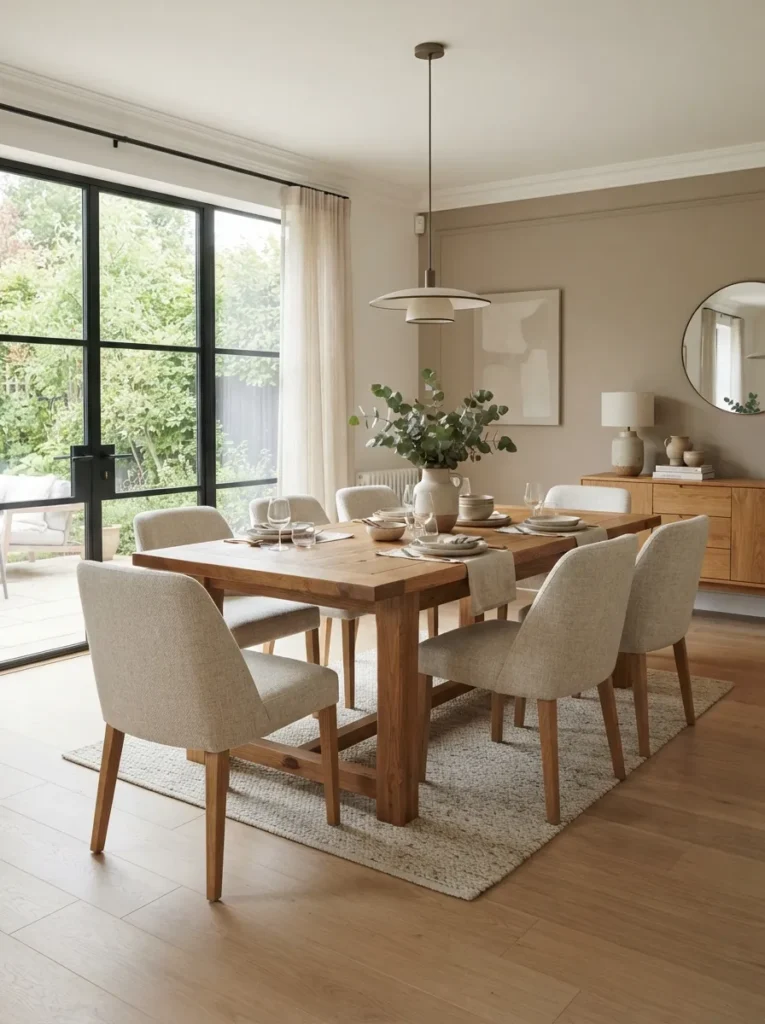
Measure your room before choosing a table, and leave at least 36 inches of clearance around all sides for chairs to pull out and people to walk past comfortably. A table that technically fits but leaves no breathing room will feel cramped every time you use it.
If your room needs to serve double duty as a walkway to another part of the house, add a few extra inches to that clearance on whichever side sees the most regular foot traffic.
2. Add a Statement Chandelier or Pendant
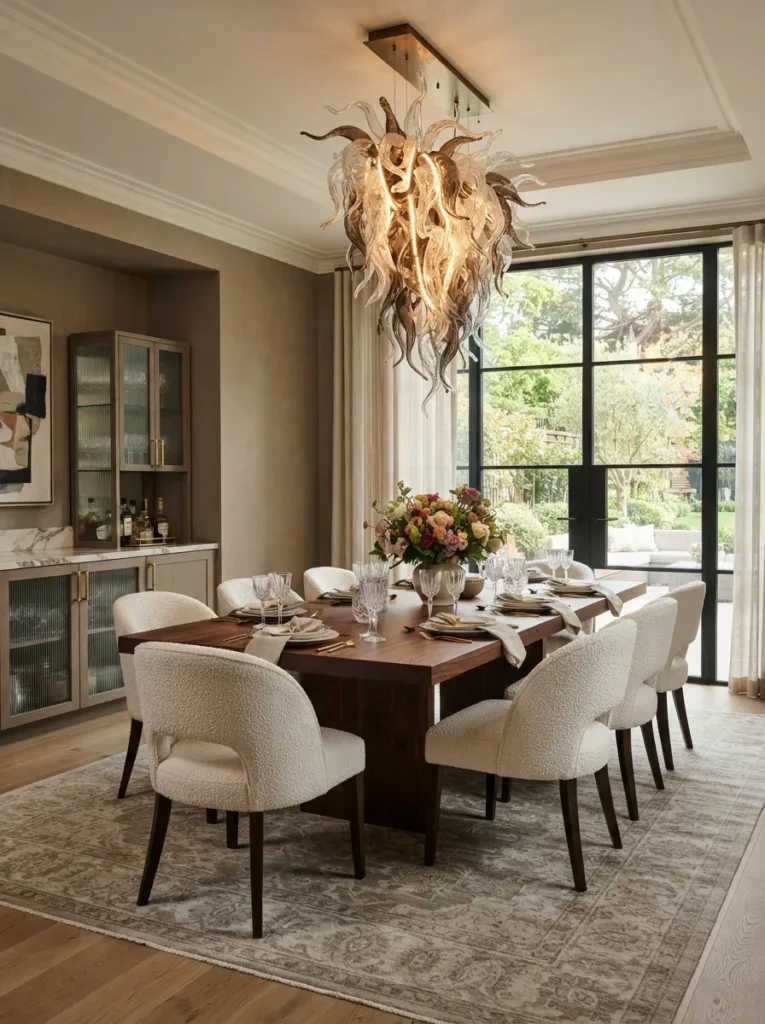
Lighting positioned directly above the table becomes the natural focal point of the room. Choose a fixture sized appropriately for your table, roughly two thirds the width of the tabletop, so it doesn’t look undersized or overwhelming once it’s hung.
Hang the fixture around 30 to 34 inches above the table surface for the most balanced look, adjusting slightly based on your ceiling height and the fixture’s own scale.
3. Use a Rug to Anchor the Table
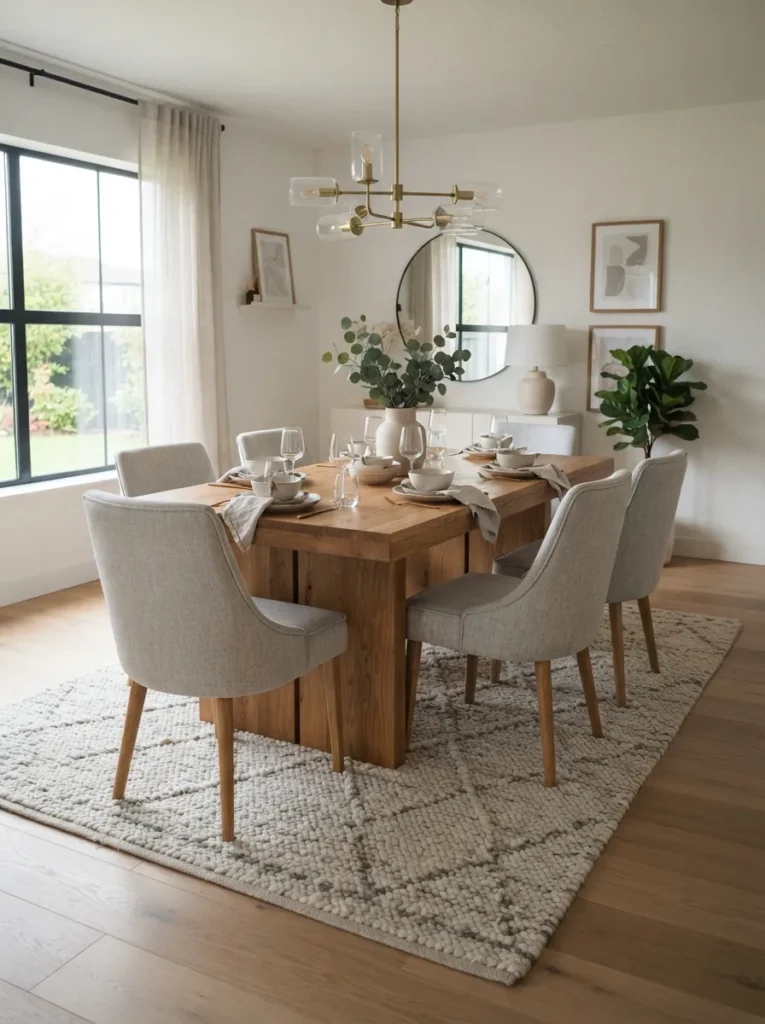
A rug under the dining table adds warmth and helps define the space, especially in an open floor plan. Choose one large enough that all four chair legs stay on the rug even when pulled out from the table.
A low pile or flatweave rug tends to hold up better under a dining table than a plush, high pile option, since chairs sliding in and out daily can gradually wear down thicker fibers faster than a flatter weave.
4. Add a Mix of Chair Styles
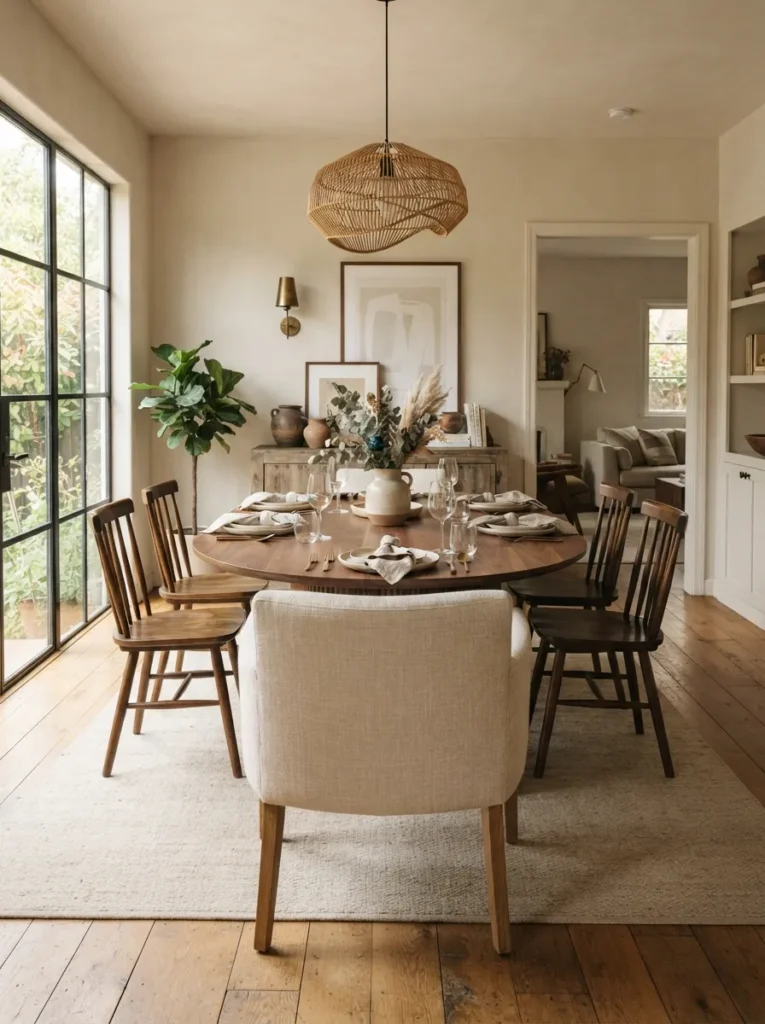
Pairing your head chairs in a different style from the side chairs, whether through material, color, or shape, adds visual interest and a slightly more collected, less matchy feel to the room.
- Upholstered head chairs with wood side chairs
- Two accent chairs with the rest in a simple style
- A bench on one side paired with chairs on the other
- Mismatched vintage chairs unified by paint color
Keeping one element consistent across the mismatched chairs, like the same wood tone or a shared paint color, is usually what keeps this approach looking intentional rather than simply unfinished.
5. Choose a Statement Wallpaper
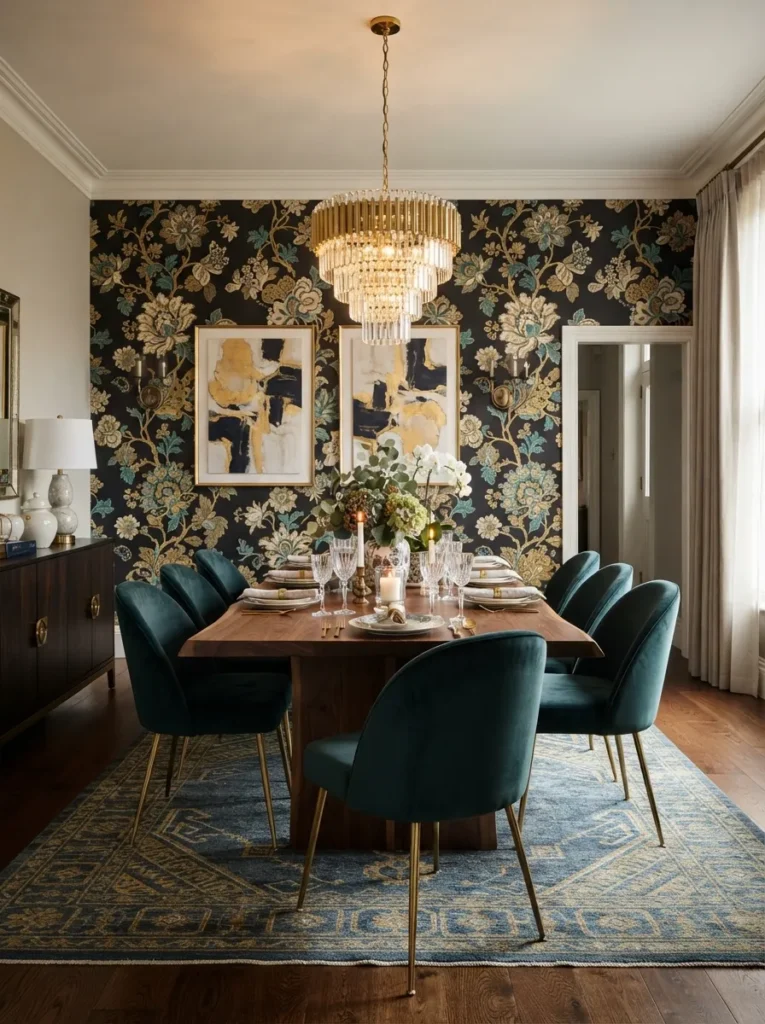
A bold wallpaper pattern in the dining room works especially well since this is often a room used for shorter periods of time, which makes a dramatic pattern easier to embrace than it might feel in a space you’re in all day.
6. Add a Sideboard or Buffet for Storage
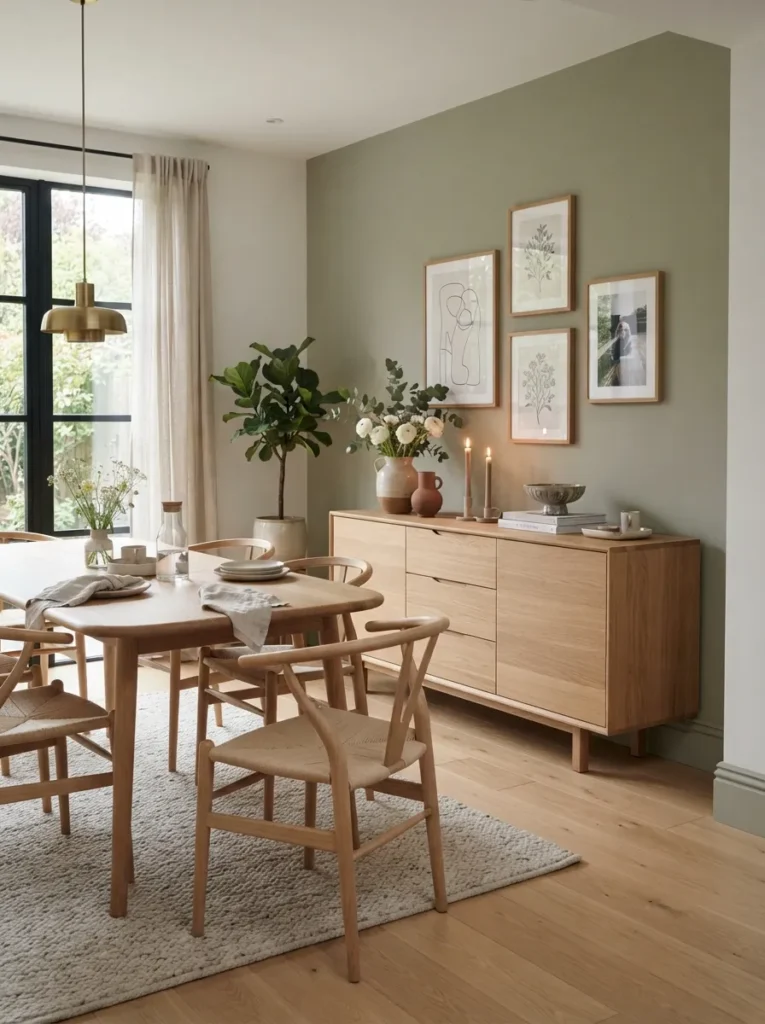
A sideboard gives you a place to store table linens, extra dishware, and serving pieces while also providing a surface for serving during larger gatherings. Choose one in a finish that complements your table rather than matching it exactly.
7. Layer in a Statement Mirror
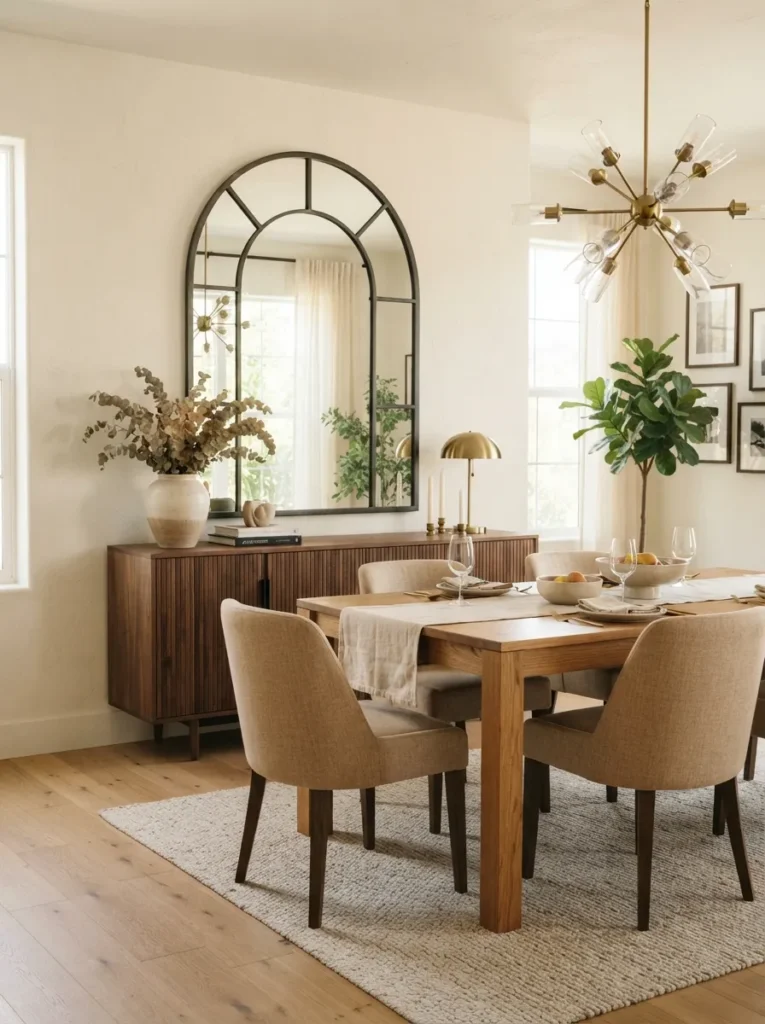
A large mirror above a sideboard or on an open wall bounces light around the room and makes the space feel larger, particularly useful in dining rooms that don’t get much natural light of their own.
Position the mirror to reflect either a window or your main light fixture rather than a blank wall, since the reflected light source is what actually creates the brightening effect, not just the mirror’s presence alone.
8. Use a Table Runner Instead of a Full Tablecloth
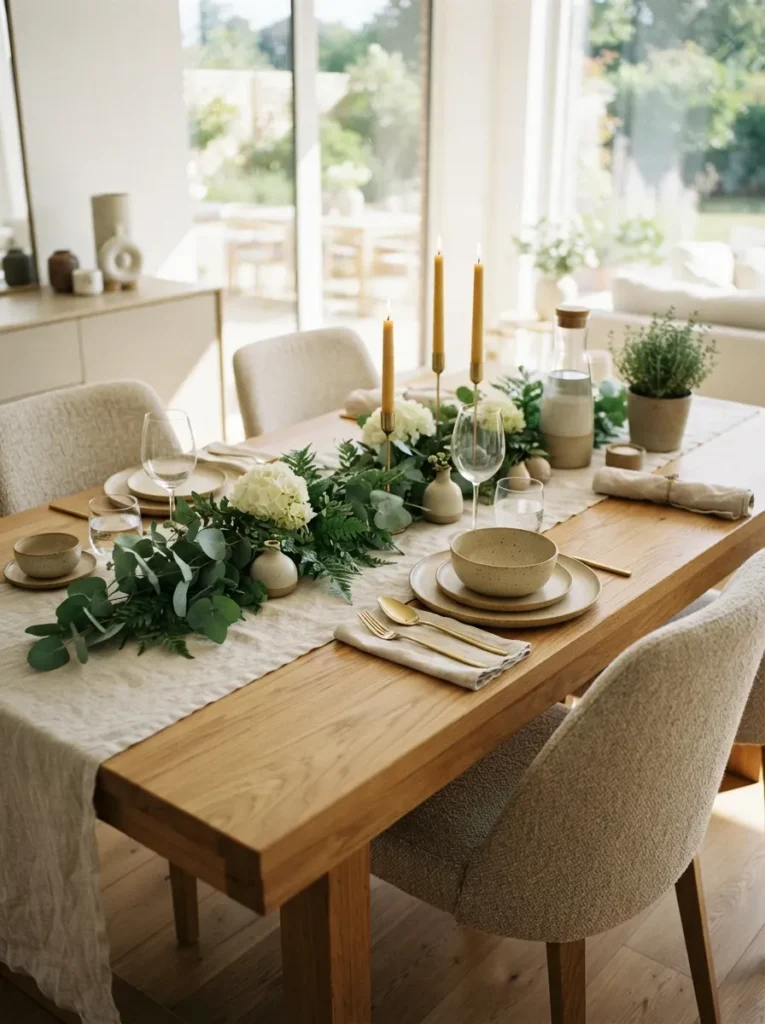
A runner adds color and texture down the center of the table while still showing off the wood grain or material of the table itself, which tends to read as more relaxed and modern than a full cloth covering the entire surface.
9. Add Layered Centerpiece Elements
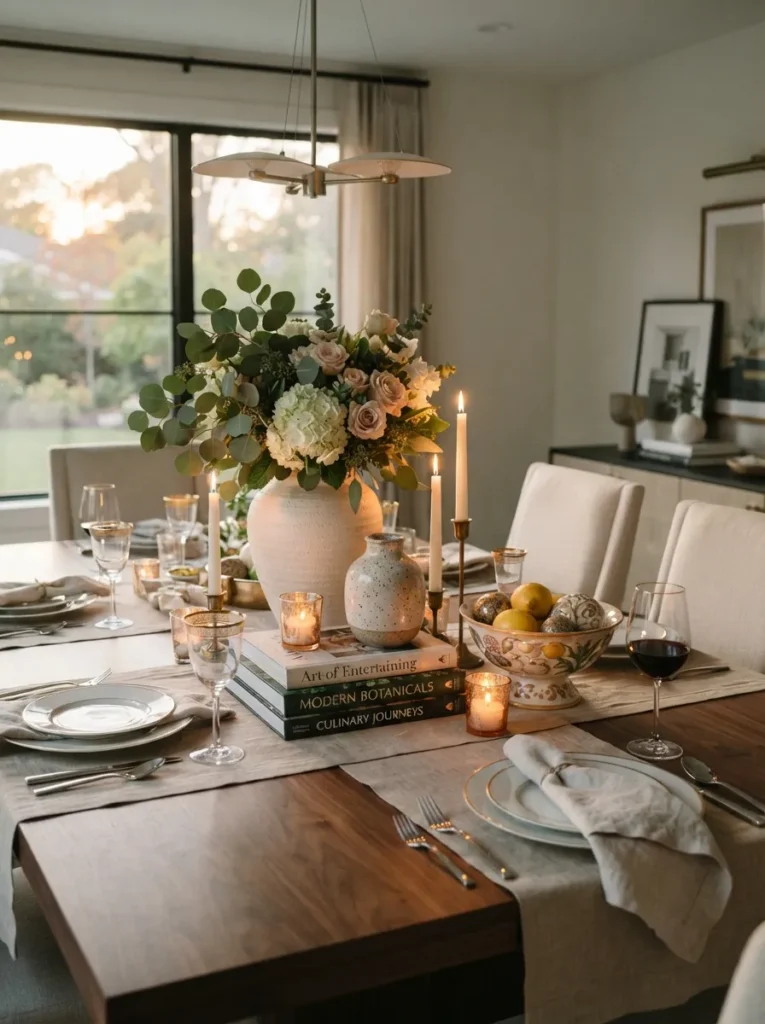
Rather than one single centerpiece, layer a few elements together, a low bowl of fruit, a scattering of candles, a small stack of books, for a more curated, lived in look on the table when it’s not set for a meal.
Keep the arrangement low enough that people can still see each other across the table, since anything too tall interrupts conversation even if it looks striking on its own.
10. Choose a Gallery Wall for the Dining Room
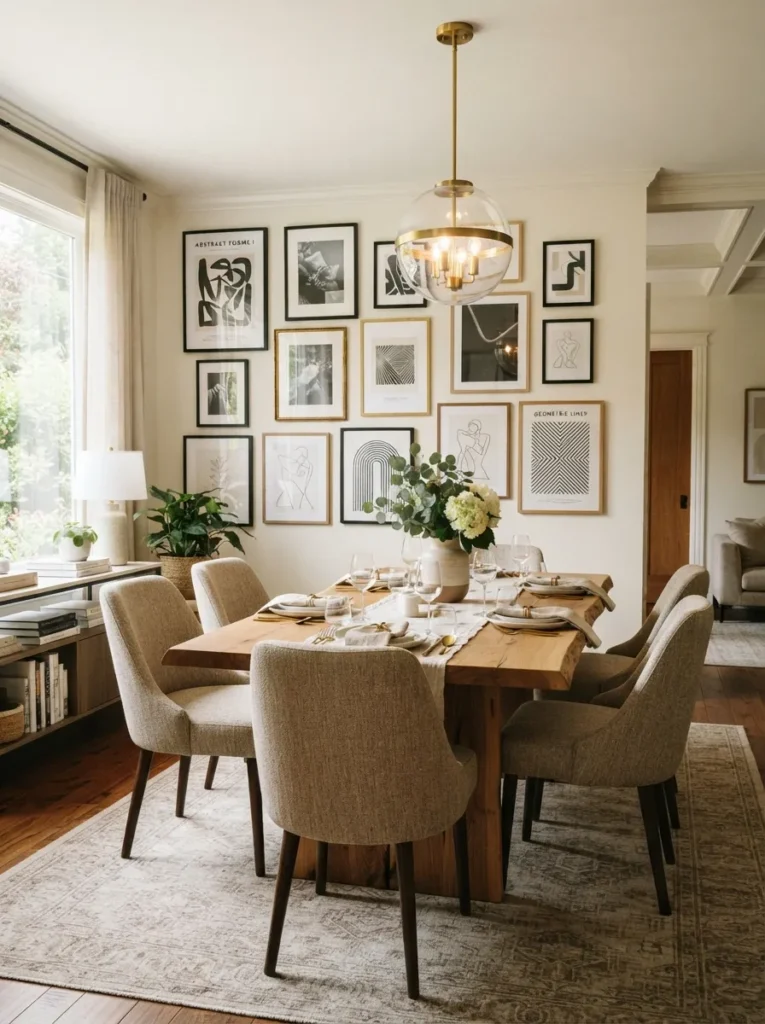
A gallery wall of art, photos, or even framed menus and travel mementos gives the room personality and a conversation starter for guests during longer meals.
11. Add Dimmable Lighting
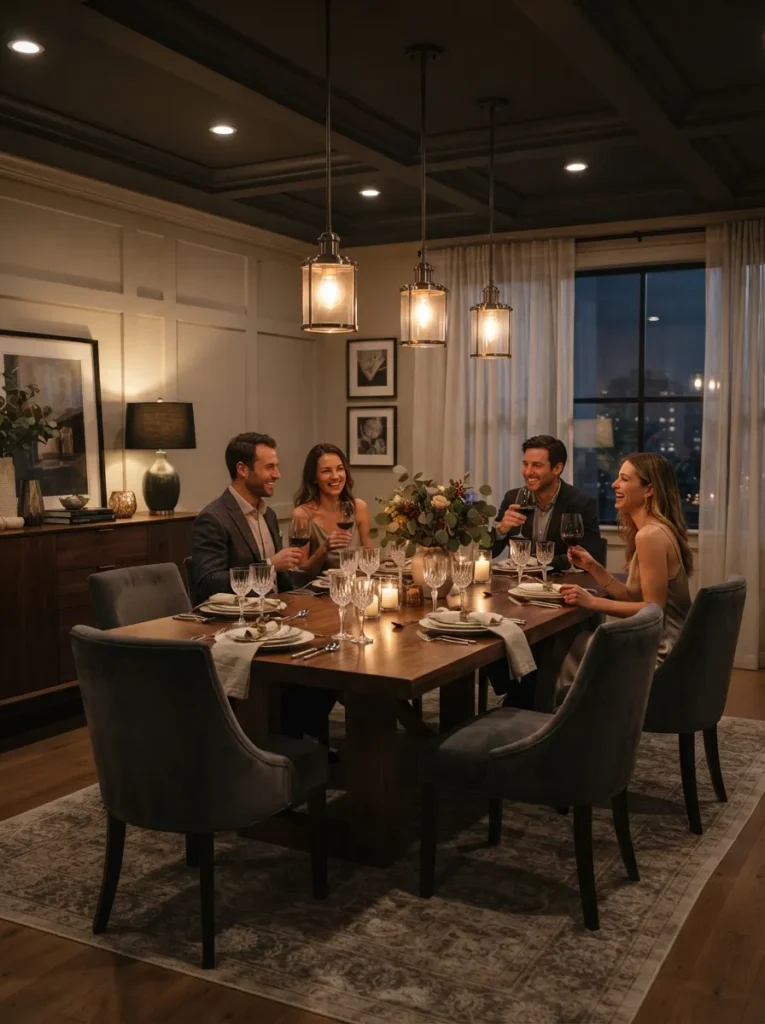
A dimmer on your main dining fixture lets you shift from bright, functional light during homework or daytime meals to a softer glow for dinner parties and evening gatherings.
12. Use Drapery to Soften the Room
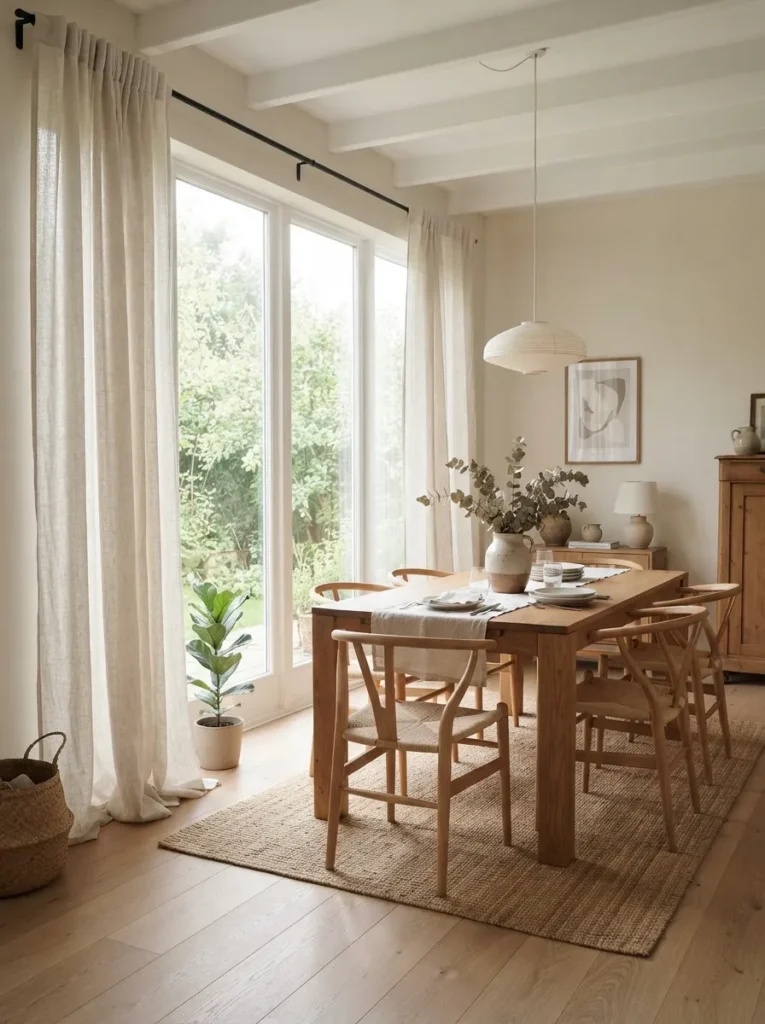
Floor length curtains, even purely decorative ones if the window doesn’t need functional coverage, add height and softness to a room that’s often filled mostly with hard surfaces like the table and floor.
13. Choose a Bench for Flexible Seating
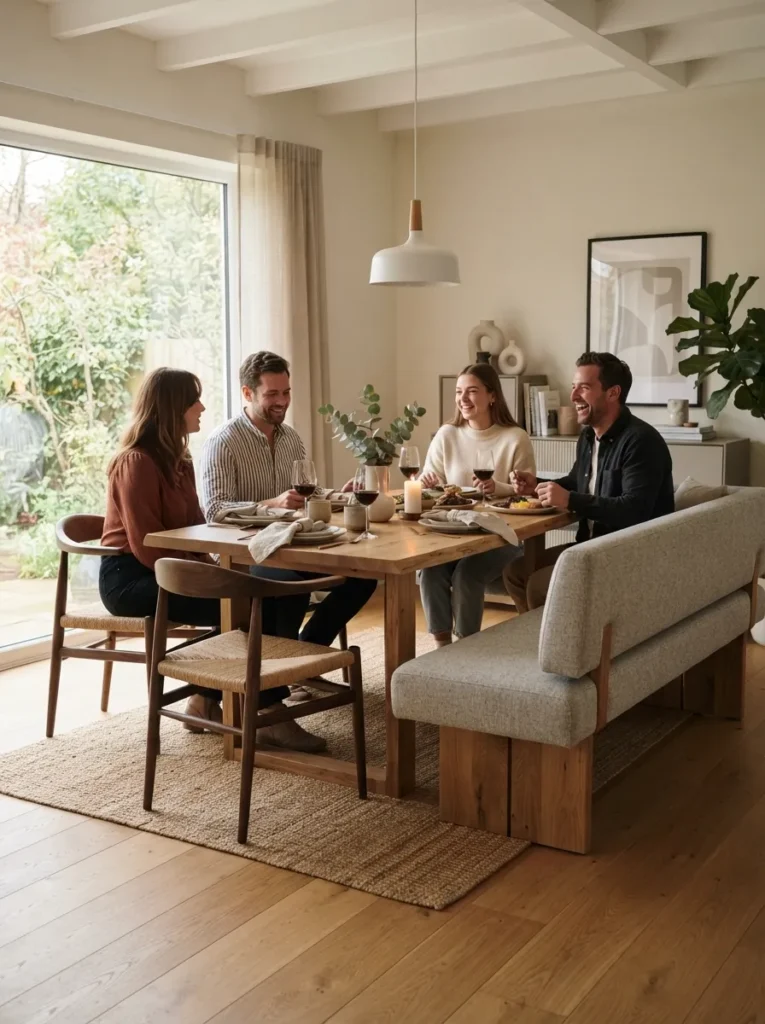
A bench along one side of the table adds extra seating capacity for larger gatherings and tends to read as more casual and space efficient than a full set of matching chairs.
A bench also makes it easier to seat an odd number of guests or squeeze in an extra person during holidays, since people can shift closer together in a way that’s simply not possible with fixed individual chairs.
14. Add a Bar Cart for Entertaining
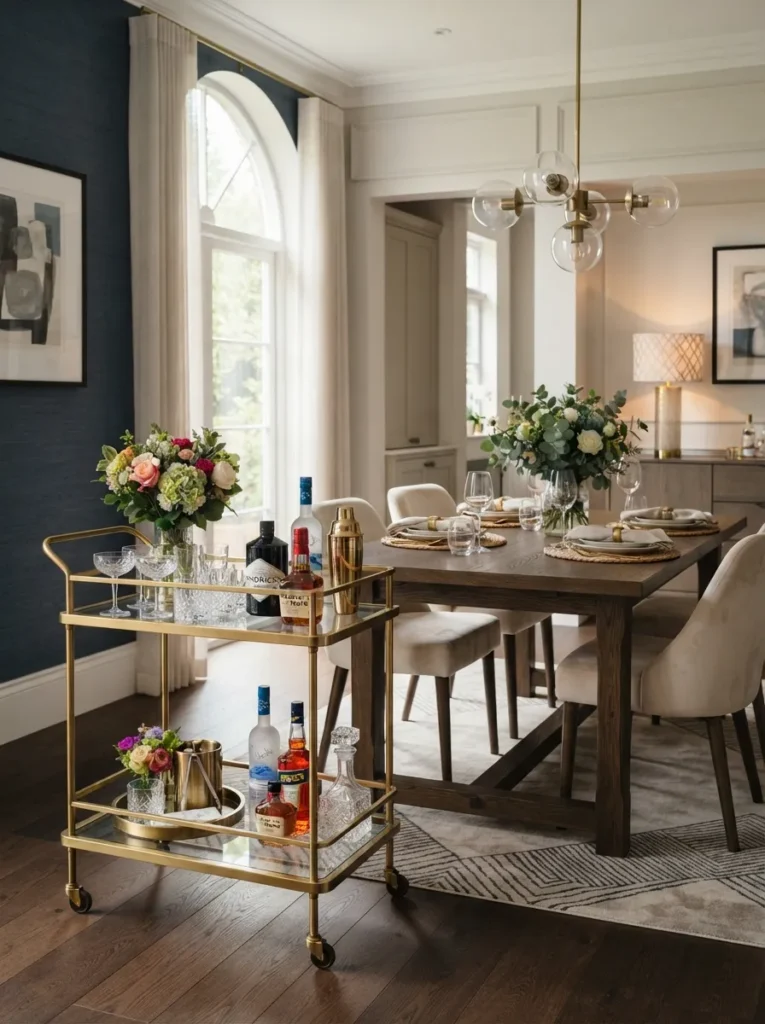
A small bar cart gives you a dedicated spot for drinks and glassware during dinner parties, keeping that clutter off the dining table itself and adding a stylish, functional piece to the room.
15. Use Wallpaper or Paneling on a Ceiling
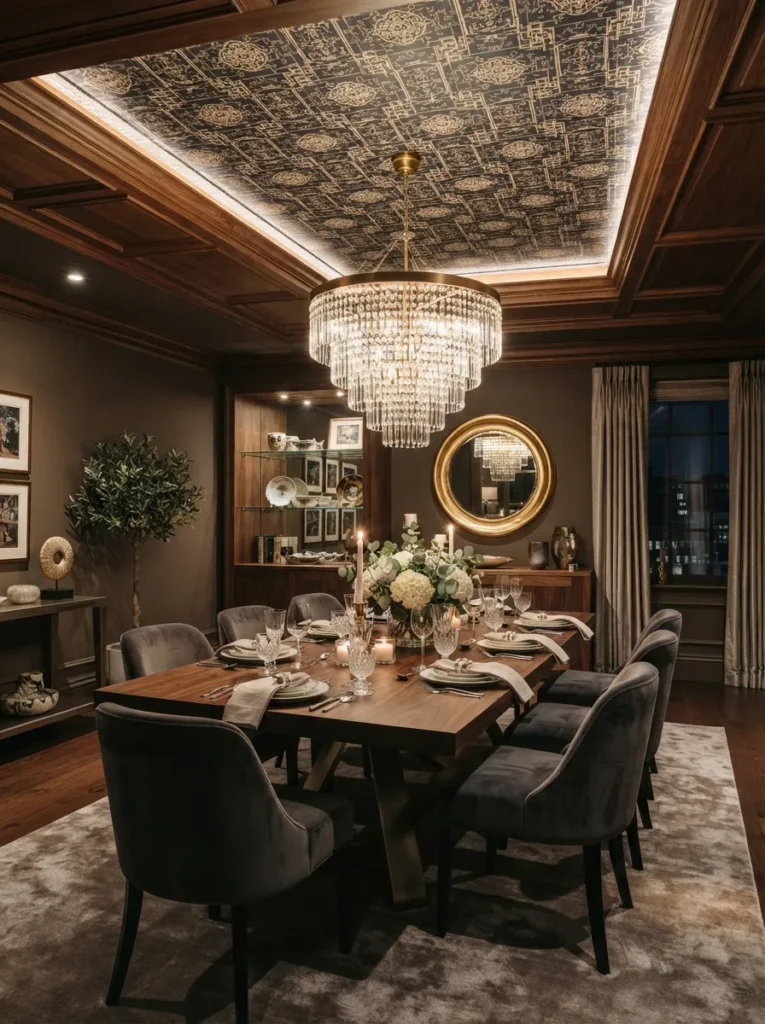
An often overlooked detail, a papered or paneled ceiling adds unexpected drama to a dining room, especially one used mainly for evening meals when the ceiling catches candlelight or warm overhead lighting.
16. Choose a Neutral Base With One Bold Element
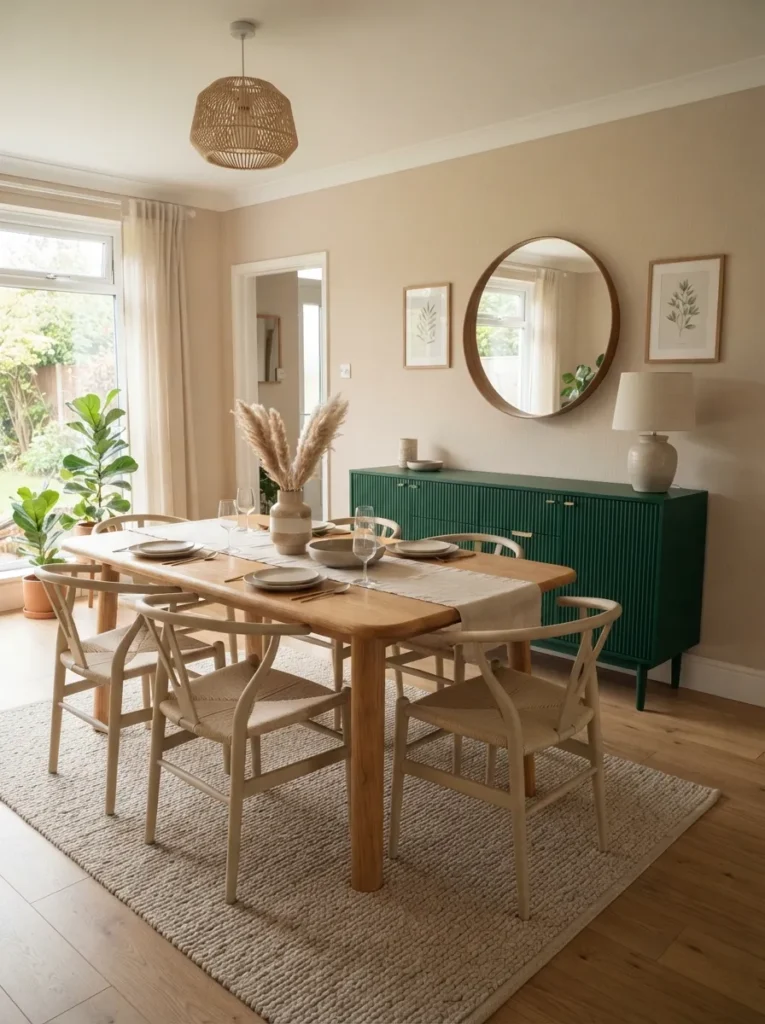
Keep your walls, floor, and larger furniture neutral, then commit to one bold element, a chandelier, a wallpapered accent wall, or a patterned rug, to give the room its personality without overwhelming it.
17. Add Built In or Freestanding Shelving for Display
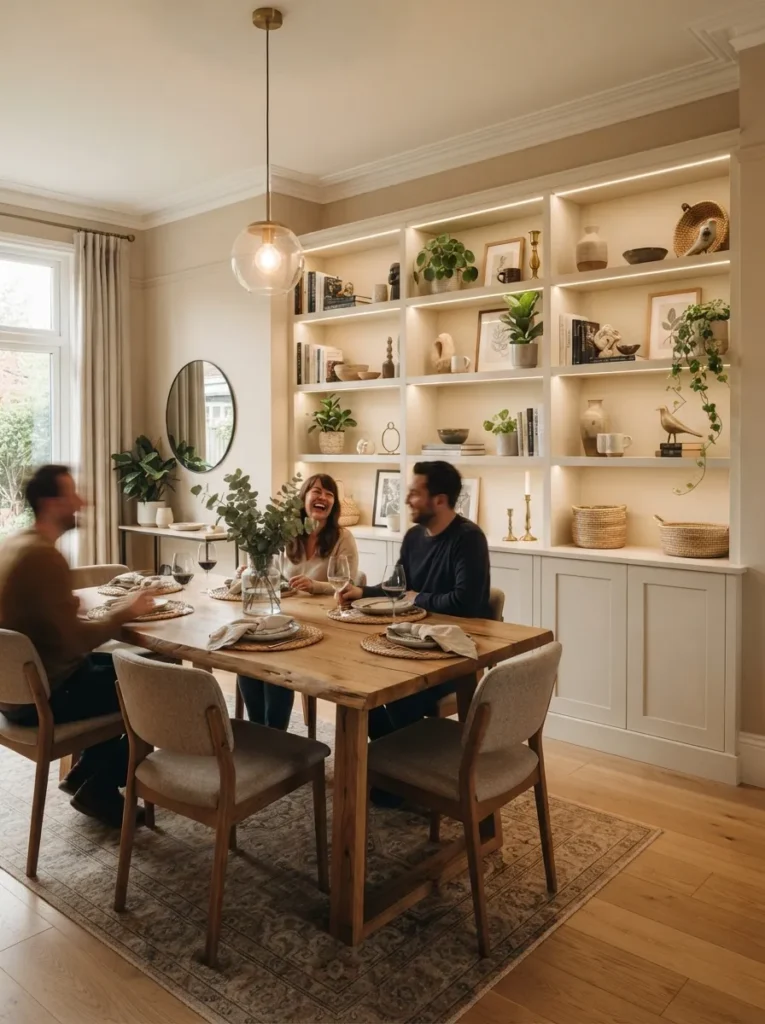
Open shelving for dishware, glassware, or collected objects gives the room a personal, curated feel and doubles as practical storage for entertaining pieces you don’t use daily.
18. Use Candlesticks or Taper Candles for Ambiance
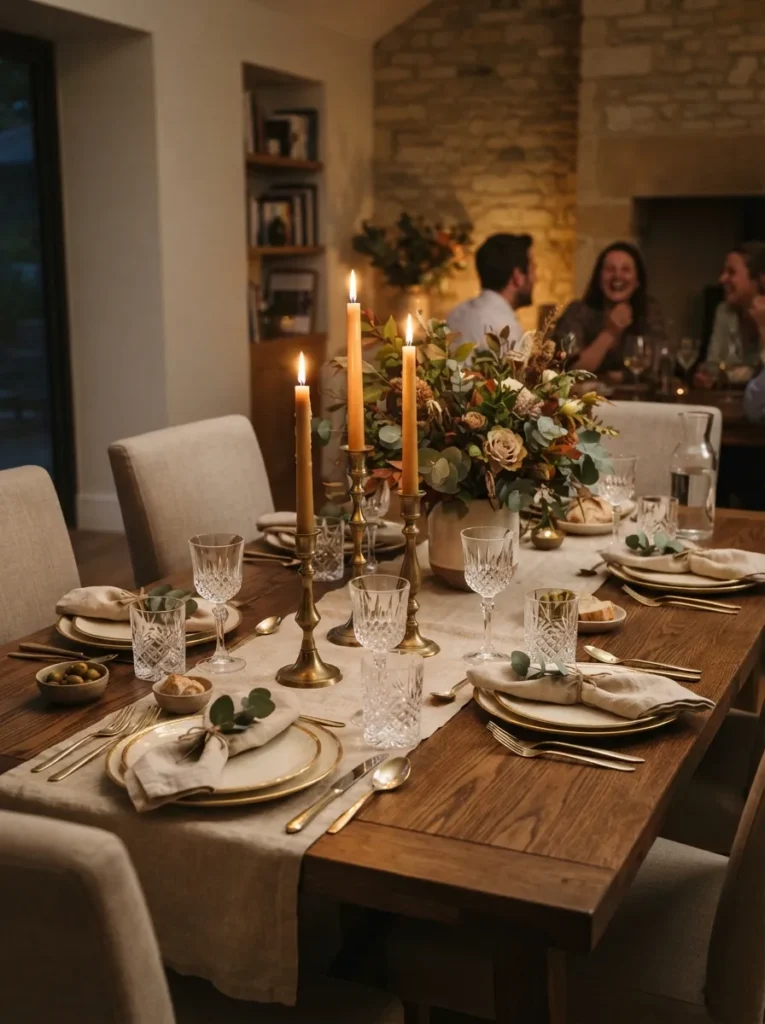
A pair or trio of candlesticks down the center of the table adds height and warmth, especially effective for evening meals when the flickering light becomes part of the room’s actual atmosphere.
Vary the candlestick heights slightly rather than using a uniform set, since a bit of visual variation down the center of the table tends to look more collected than a perfectly matched row.
19. Choose an Extendable Table for Flexibility
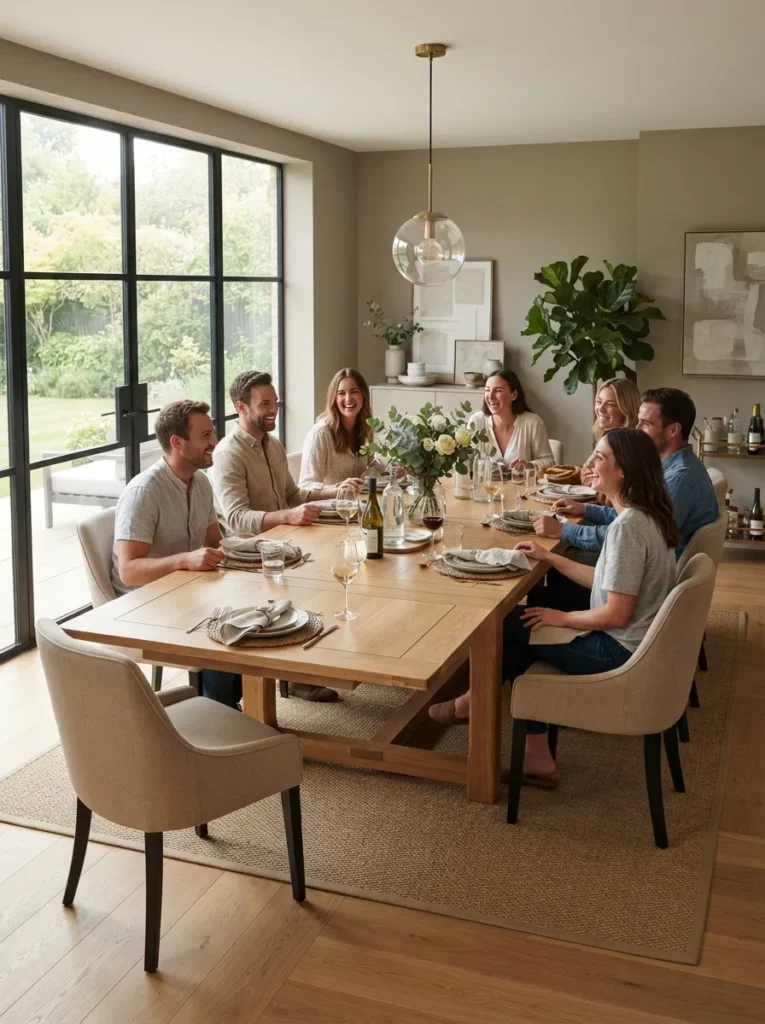
A table with a leaf or extension gives you flexibility between everyday meals and larger gatherings without needing separate furniture for each occasion.
- Everyday configuration for daily use
- Extended configuration for holidays and guests
- Removable leaf stored in a nearby closet
- Matching extra chairs stored elsewhere until needed
Measure your storage space for the leaf and any extra chairs before buying an extendable table, since these pieces are only genuinely convenient if you actually have somewhere reasonable to keep them between uses.
20. Add a China Cabinet for Special Occasion Pieces
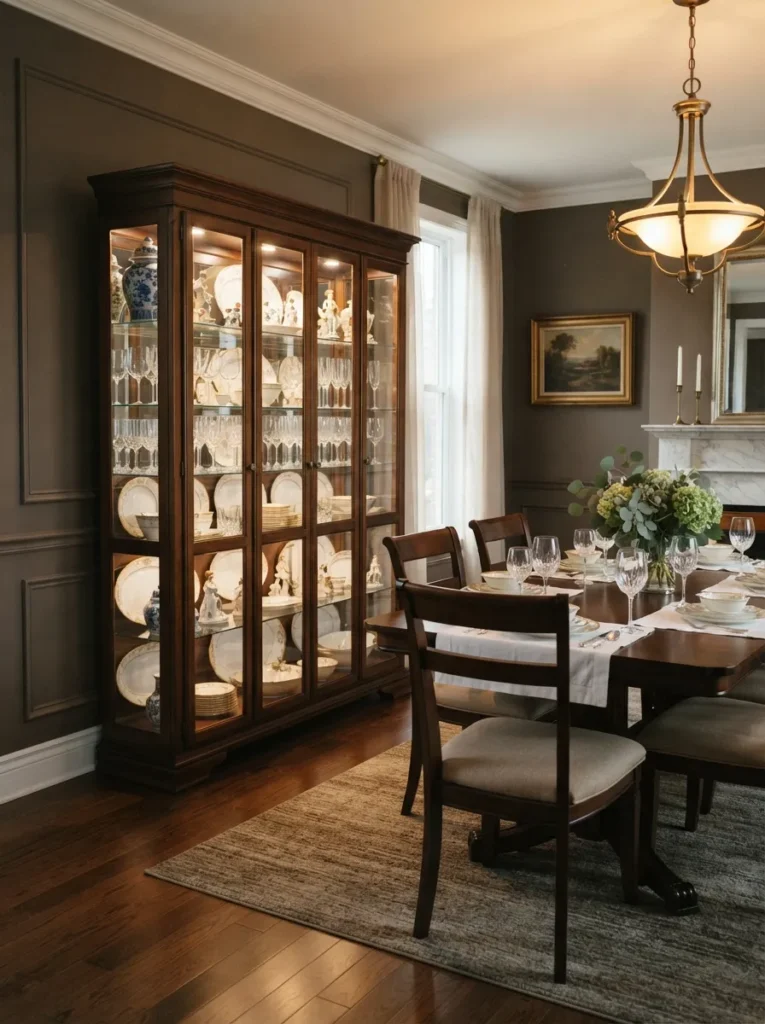
A china cabinet keeps special occasion dishware protected and on display, adding a traditional but genuinely useful piece to a dining room that hosts family gatherings or holidays.
21. Use a Bold Paint Color on the Walls
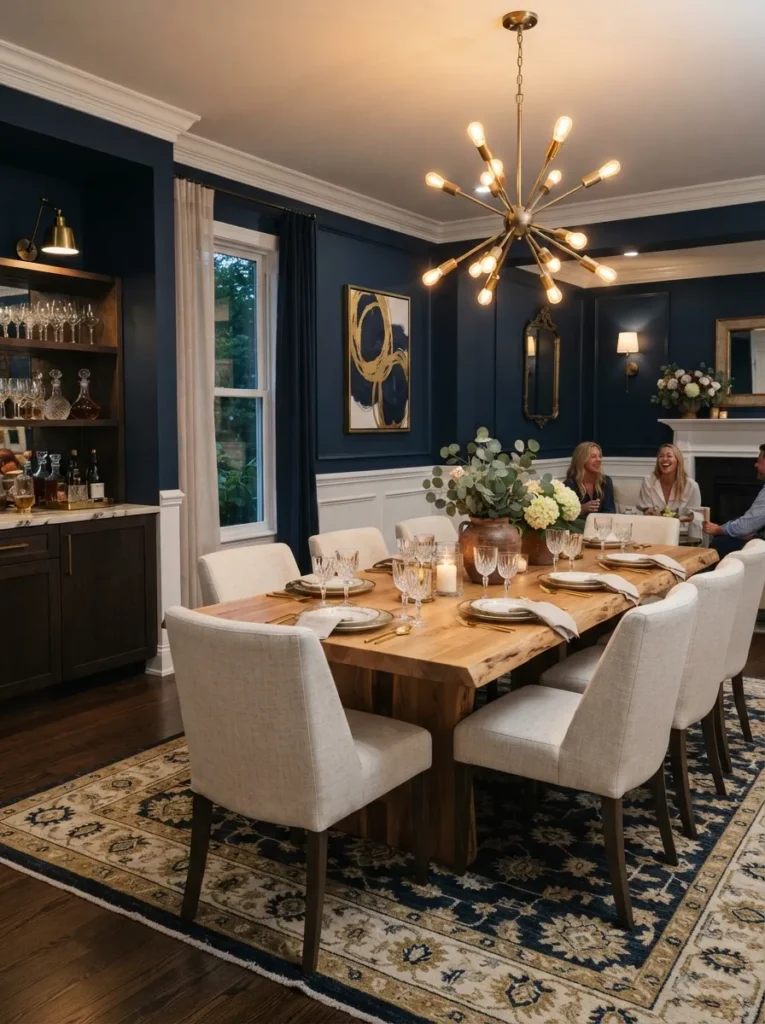
Since dining rooms are typically used for shorter stretches of time, they’re a good candidate for a richer, more saturated wall color than you might choose for a room you spend all day in.
22. Add Textured Placemats Instead of a Full Table Setting Daily
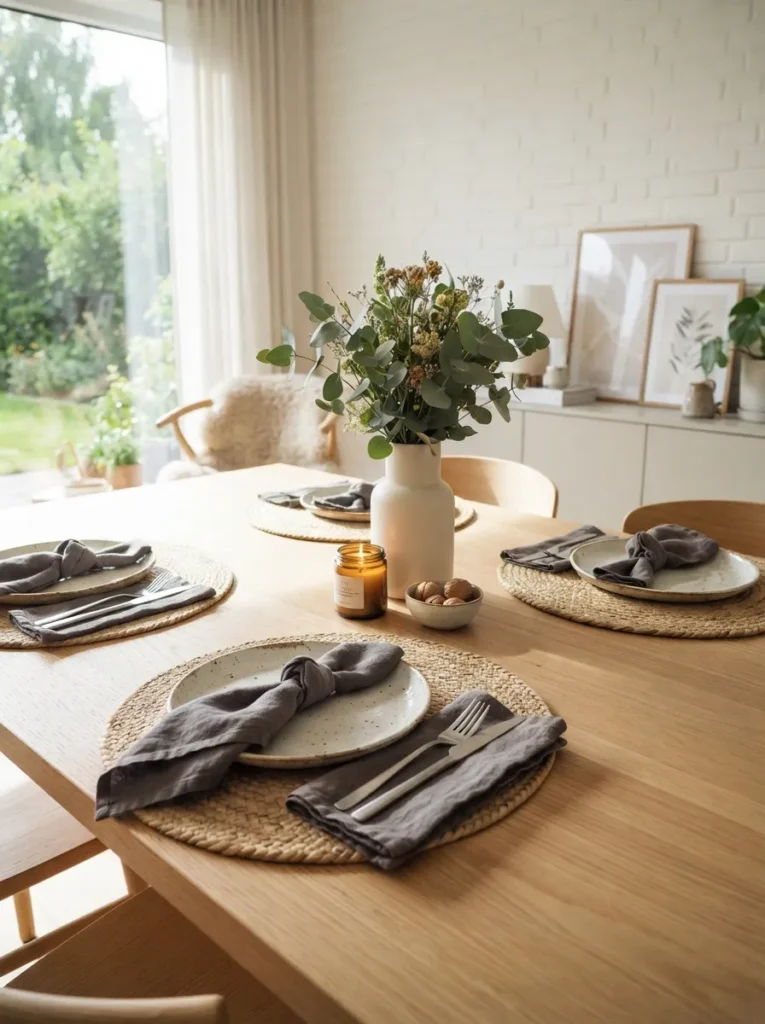
Simple woven or linen placemats keep the table looking styled for everyday meals without the commitment of a full tablecloth and formal setting every single time you sit down to eat.
23. Choose Upholstered Chairs for Comfort
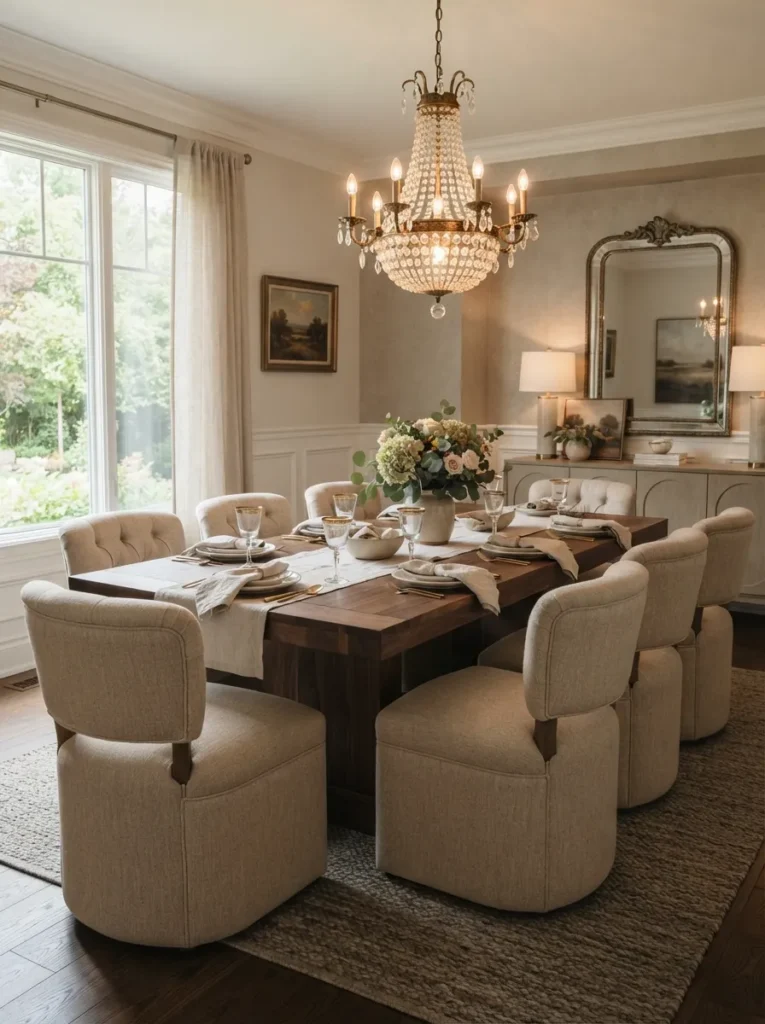
Dining chairs with real cushioning encourage people to actually linger at the table rather than rushing through a meal, which matters if the room is meant to host longer gatherings and conversations.
A performance fabric rated for everyday wear is worth the slightly higher cost on dining chairs specifically, since this is furniture that deals with far more spills and daily use than most other upholstered pieces in the house.
24. Add a Statement Light Fixture Over a Sideboard
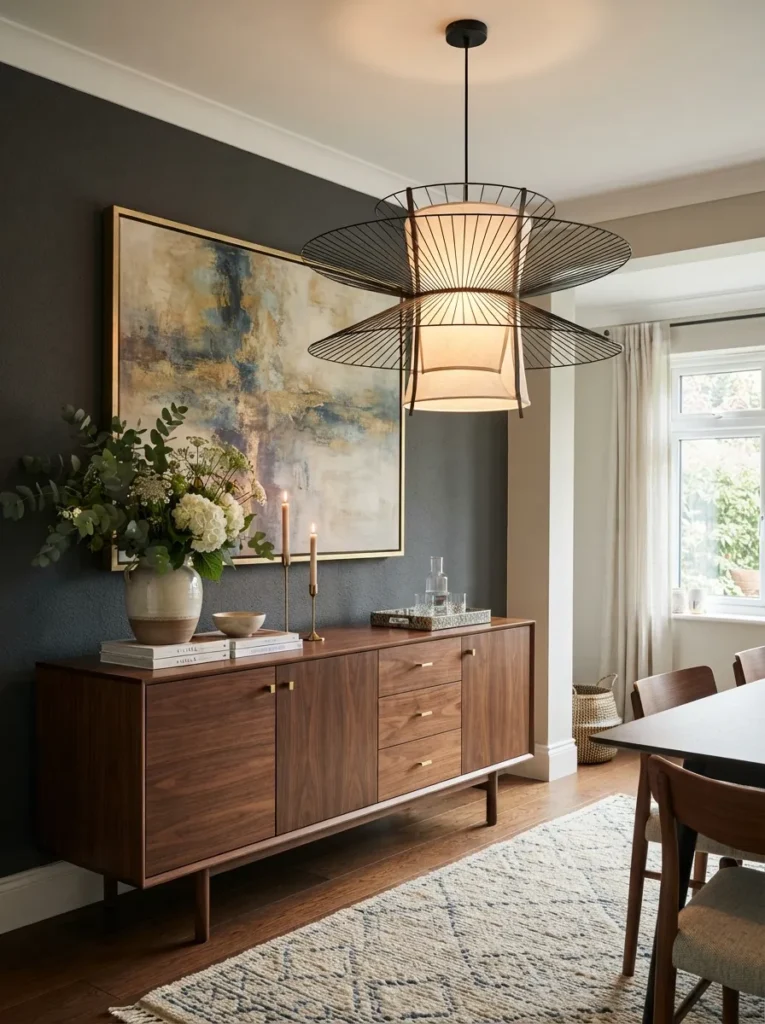
A secondary light fixture above your sideboard or buffet adds another layer of ambient lighting and highlights whatever you’ve chosen to display on that surface.
25. Use Mixed Metals for Table Settings
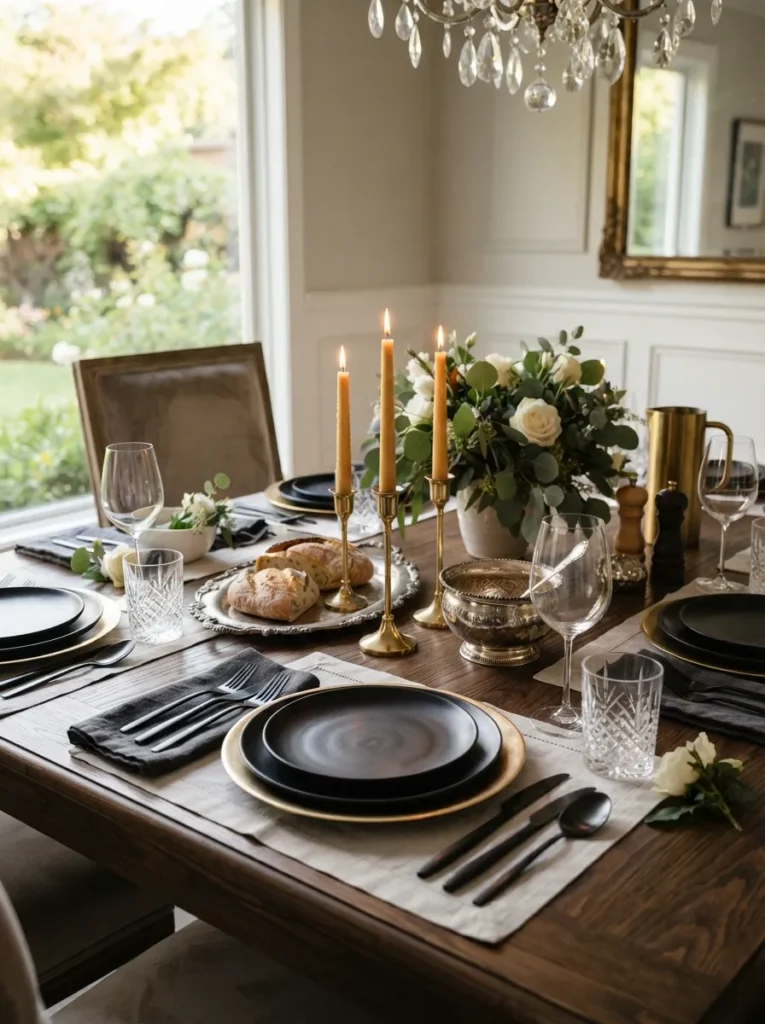
Combining gold flatware with black or silver accents on the table adds a bit of visual interest to everyday place settings without requiring an entirely new dish or flatware collection.
26. Add a Window Seat or Banquette if Space Allows
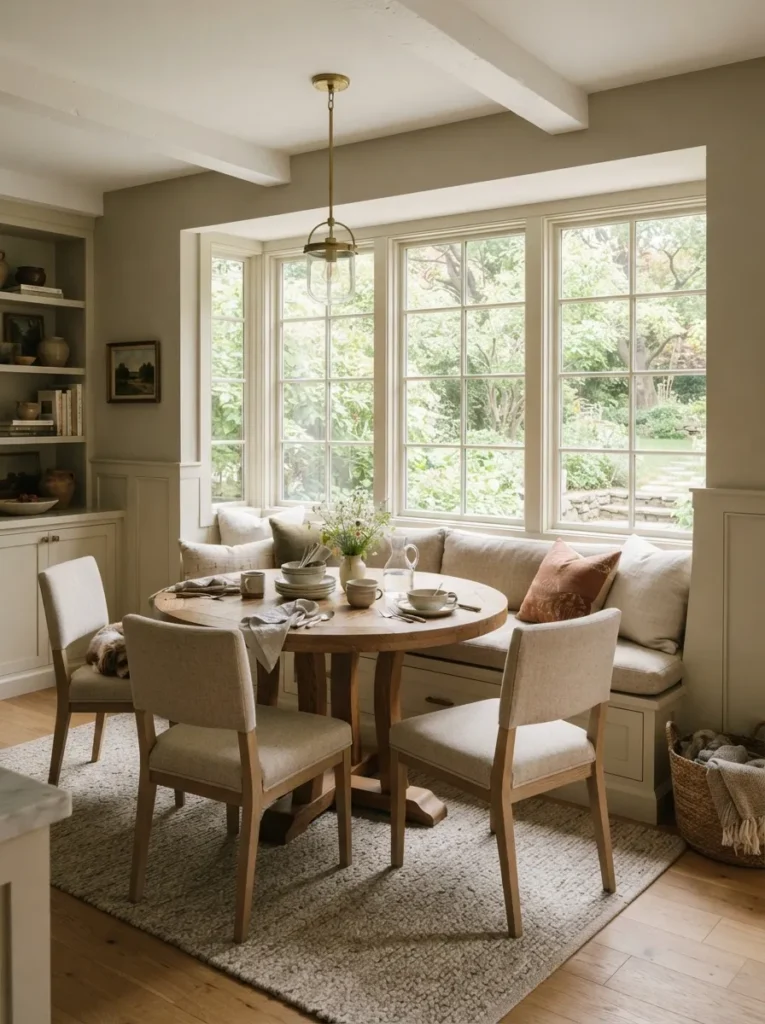
A built in banquette along one wall of the dining room adds comfortable, space efficient seating and gives the room a cozier, more layered feel than chairs alone.
27. Choose Art That Complements, Not Matches, Your Table
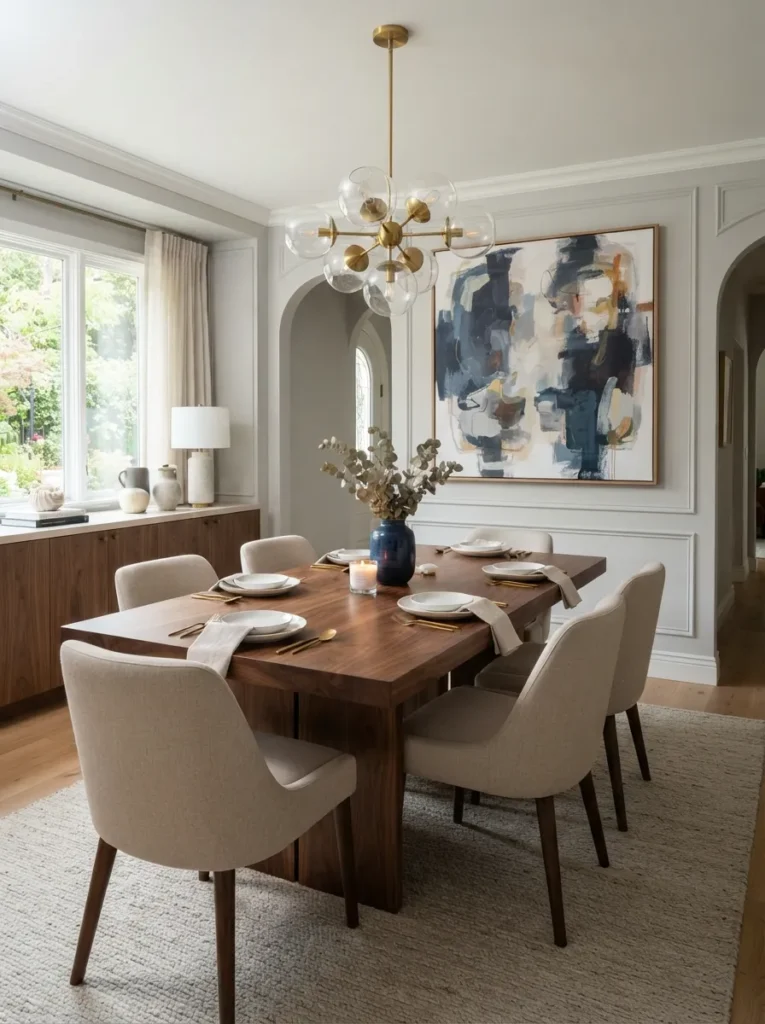
Art with tones that pull from your table or chairs, rather than an exact color match, tends to look more intentional and less like a coordinated set bought all at once.
28. Add a Statement Rug Pattern for Personality
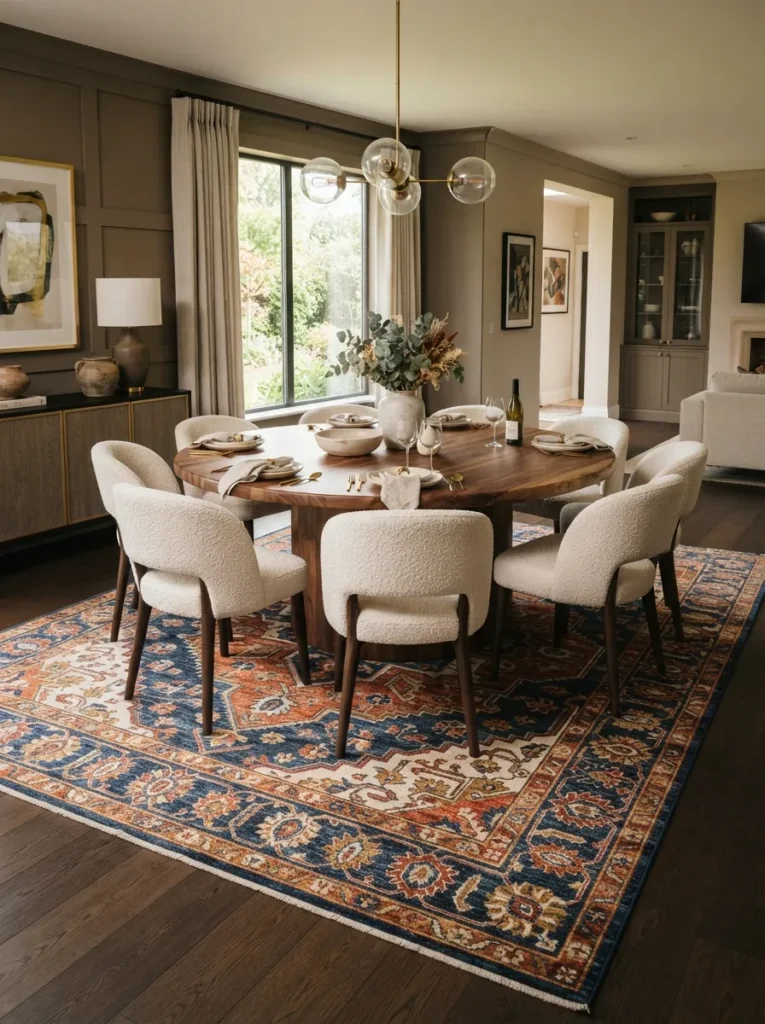
If your walls and furniture stay fairly neutral, a boldly patterned rug can carry much of the room’s personality on its own, and it’s easier to swap out later than a wallpapered wall or painted ceiling.
29. Use Seasonal Centerpieces for Easy Refreshes
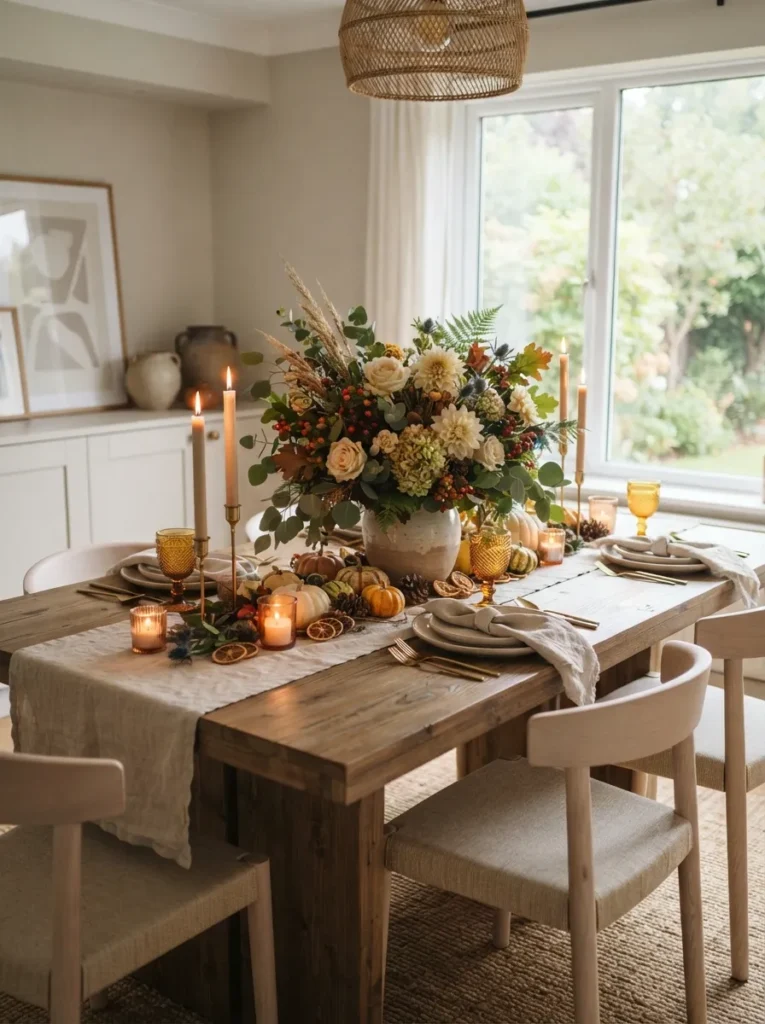
Rotating a few simple seasonal elements, greenery in winter, fresh flowers in spring, keeps the table feeling current throughout the year without needing to change anything else in the room.
30. Add a Statement Runner Rug in a Long, Narrow Room
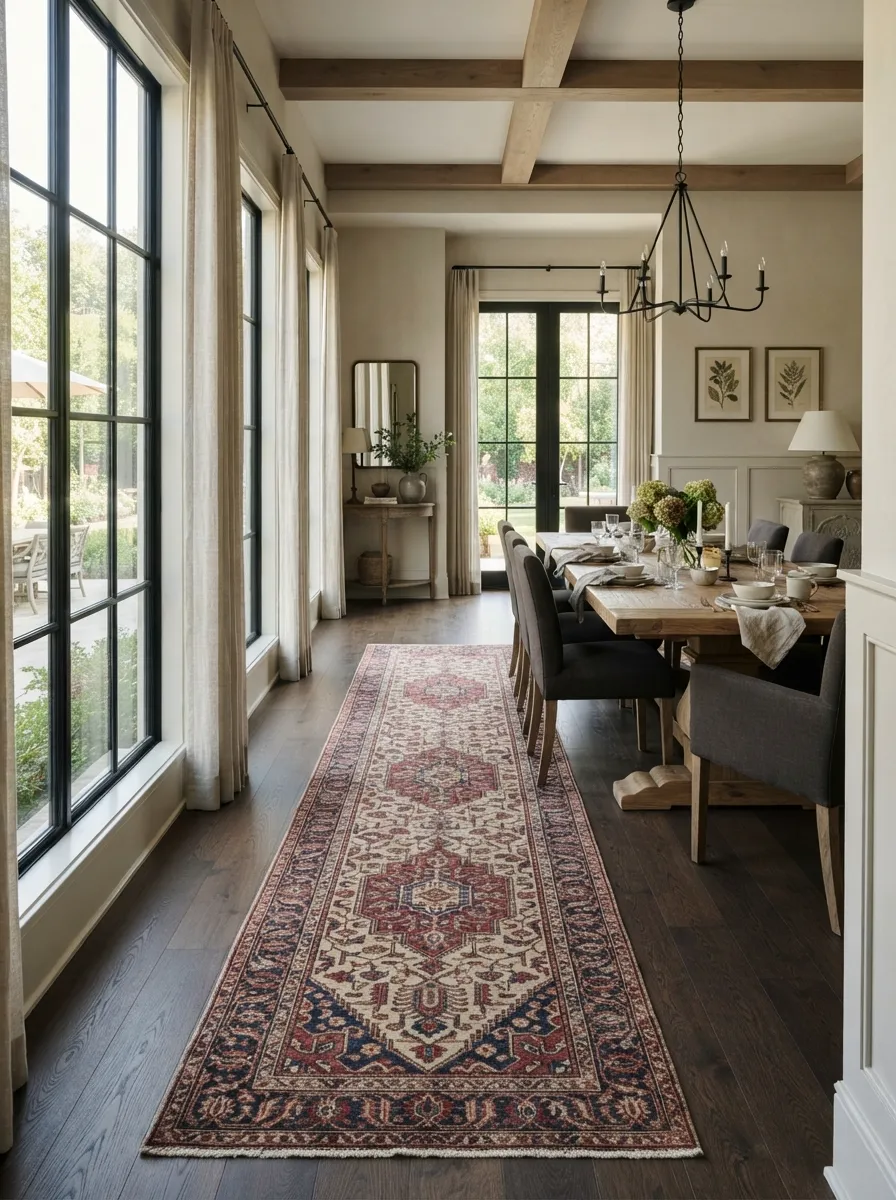 If your dining space is part of a long, narrow room, a runner style rug rather than a standard rectangular one helps the proportions of the space feel more balanced and intentional.
31. Choose Warm, Layered Table Lighting
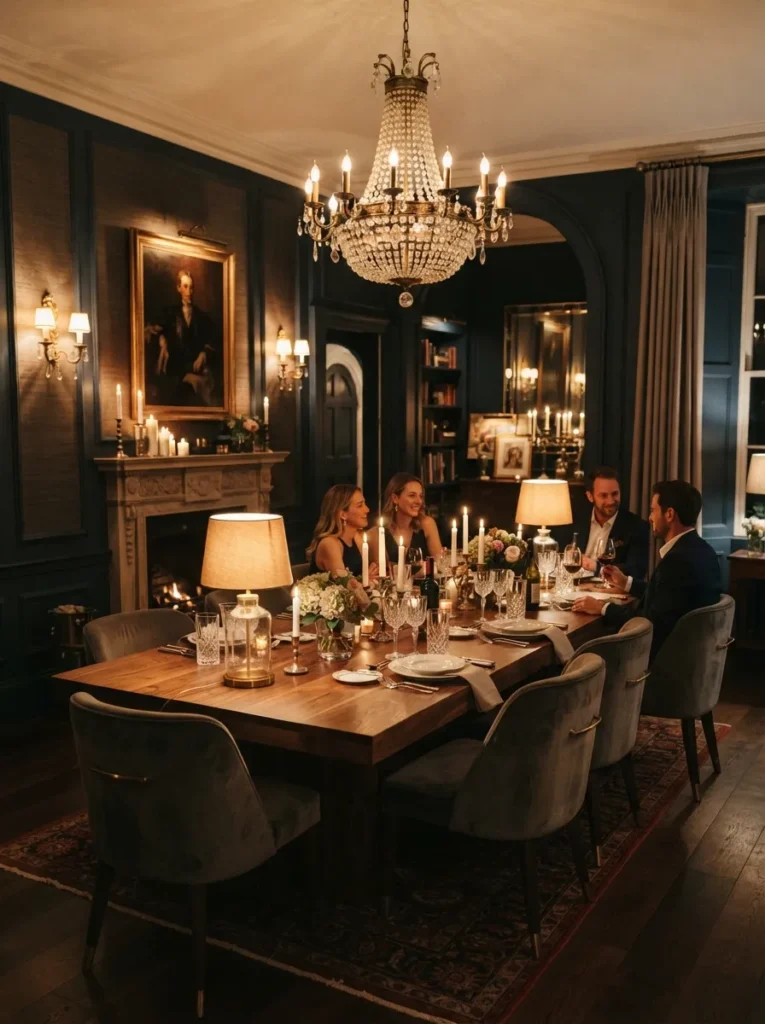
Combine your main overhead fixture with a pair of tall candlesticks or a few smaller candles for layered lighting on the table itself, which adds warmth beyond what the ceiling fixture alone can provide.
32. Add Personal Touches Through Displayed Collections
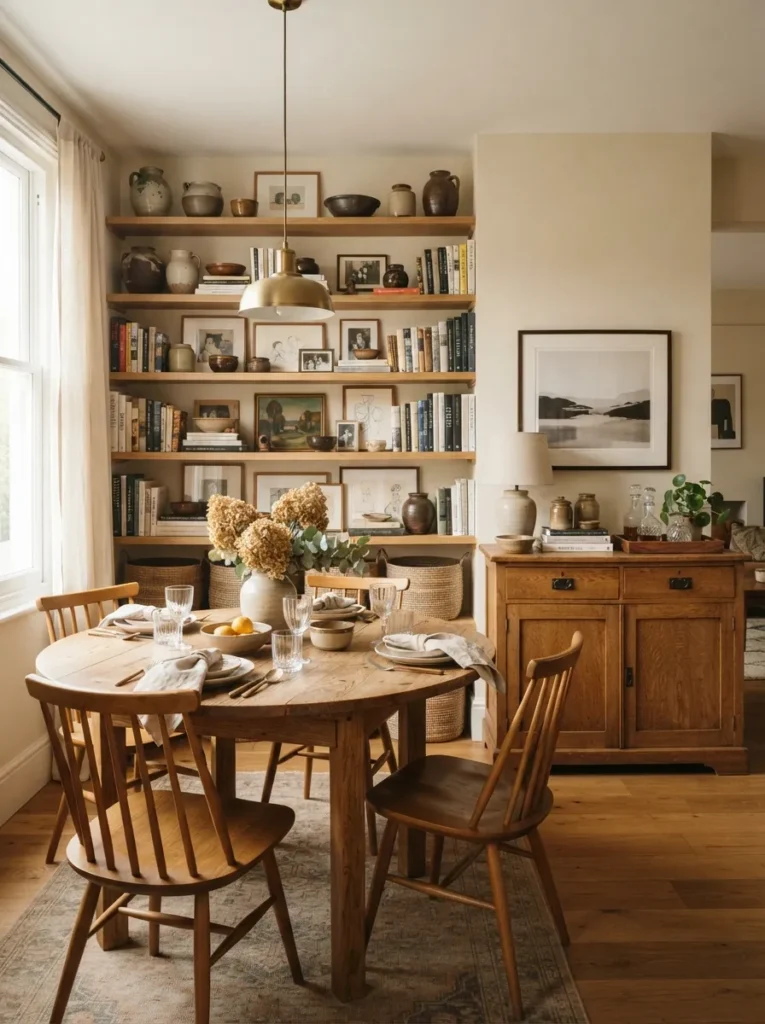
A collection of vintage plates, glassware, or travel finds displayed on open shelving or inside a glass front cabinet gives the room a personal history that generic decor can’t replicate.
33. Keep the Table Ready for Everyday Use
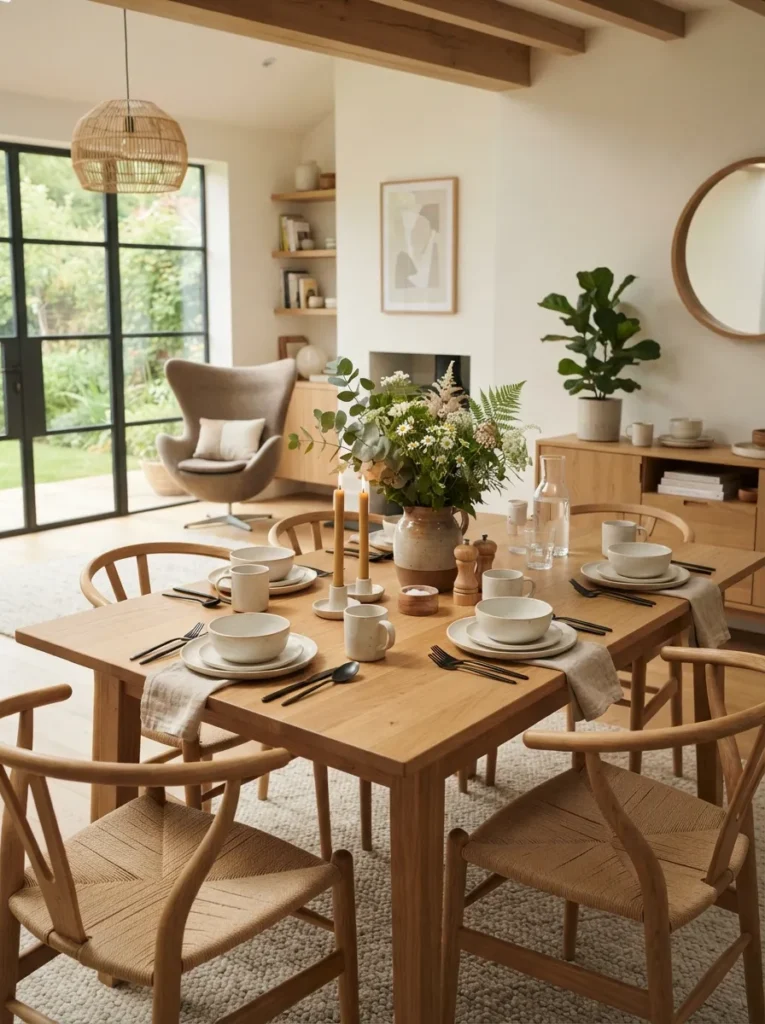
A dining room that only gets used for holidays tends to feel underused and a bit disconnected from daily life. Keep the table set simply enough, a runner, a low centerpiece, that it invites regular use rather than staying reserved for special occasions only.
This last point matters more than it might seem. A dining room that’s approachable and inviting on an ordinary Tuesday will naturally get used far more often than one that only comes out of storage a few times a year, which ultimately makes all the decorating effort worth far more in day to day life.
A dining room comes together best when it’s built around how you actually gather, not just how it photographs for a special occasion. Start with a table and lighting that fit the room’s real proportions, then layer in the smaller personal touches, from centerpieces to displayed collections, that make the space feel like it’s genuinely yours to use often, not just admire occasionally.