

A small dining room forces more intentional decisions than a larger one ever does, every chair, every inch of clearance, and every piece of furniture has to justify its place in the room. The good news is that a tight dining space can still feel open, functional, and genuinely inviting once you stop trying to fit in more than the room can actually hold. Here are 16 ideas for making that happen.
1. Choose a Round or Oval Table
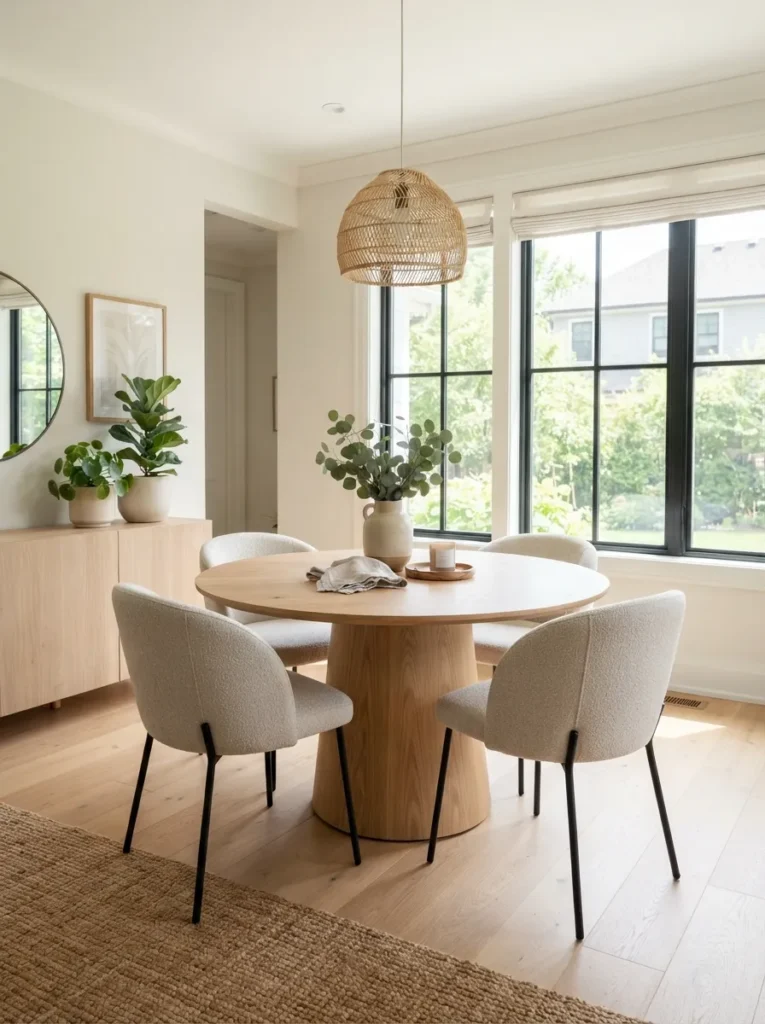
Round and oval tables lack the sharp corners of a rectangular table, which makes them easier to navigate in a tight room and reduces the number of painful bumped hips walking past. They also tend to seat people slightly more efficiently in a small footprint, since there’s no wasted space at the corners.
If your room is narrow rather than small overall, an oval table can be a better compromise than fully round, since it still fits a longer, narrower floor plan while keeping those softened edges.
2. Use an Extendable or Drop Leaf Table
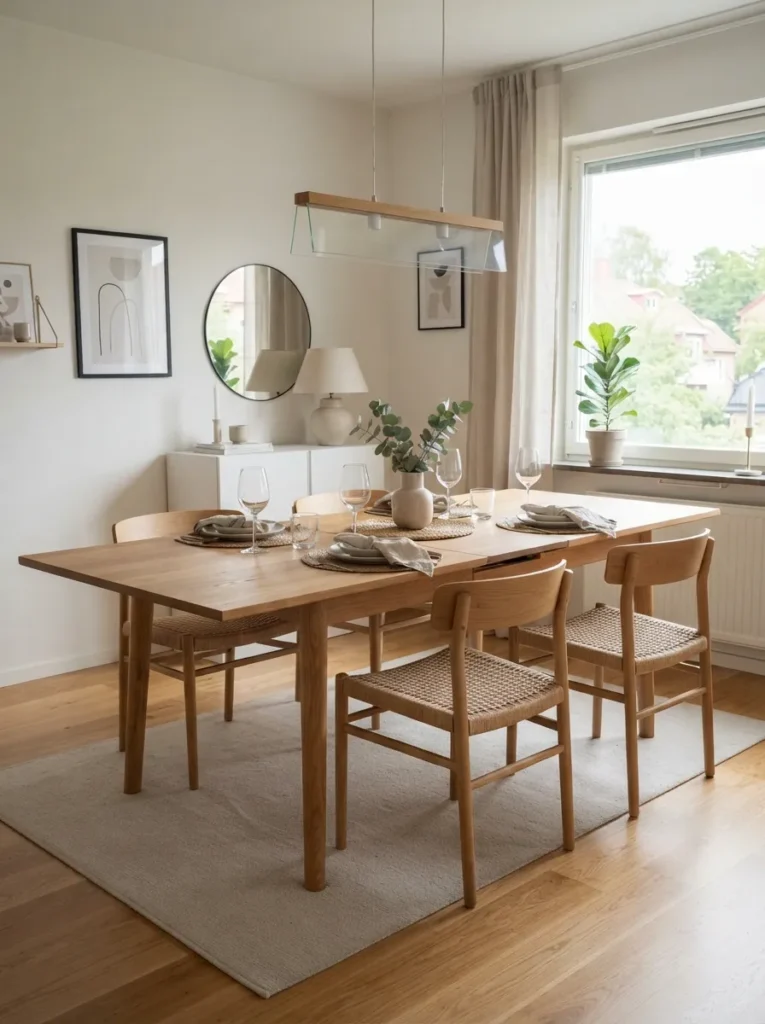
A table that expands only when needed lets you keep the room open on ordinary days and gain extra seating for guests or holidays without needing a permanently larger table taking up space year round.
3. Choose Chairs With Slim, Simple Profiles
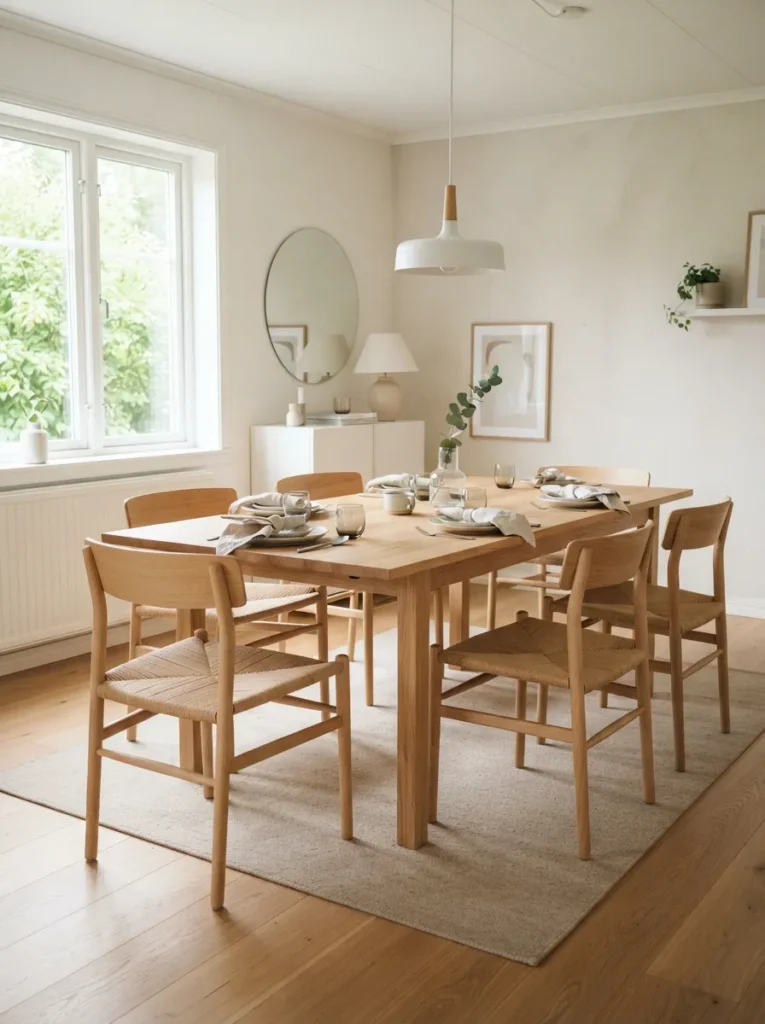
Bulky upholstered chairs with wide arms eat into a small room’s limited clearance fast. Chairs with slim frames and minimal detailing let you fit more seats comfortably around the same table without the room feeling crowded.
4. Use a Bench Along One Side
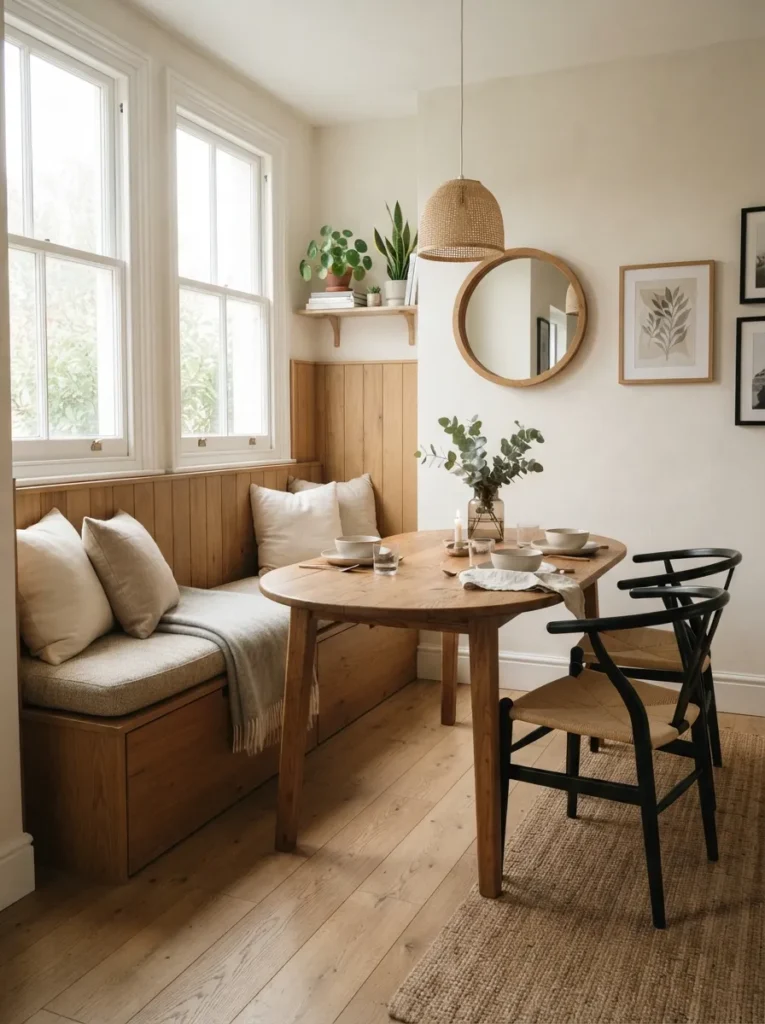
A bench can slide fully under the table when not in use, unlike a row of chairs that always need to be pulled back for someone to sit or stand. This makes a bench one of the most space efficient seating choices for a tight dining area.
- A bench along the wall side of the table
- Chairs on the open side for easier access
- A bench that tucks completely under the table edge
- Cushions added for comfort without adding bulk
5. Choose a Table With Slim, Exposed Legs
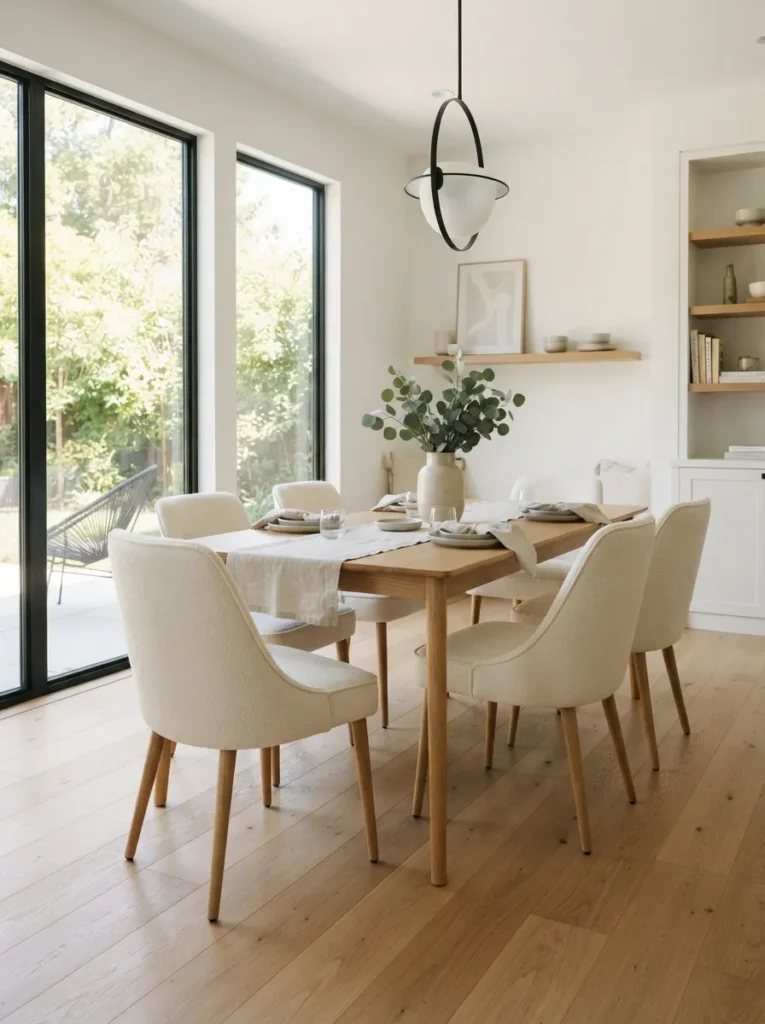
A table base with thin, visible legs rather than a solid pedestal lets more light and sightlines pass underneath, which keeps a small room from feeling visually heavier than it needs to.
6. Use a Mirror to Expand the Room Visually
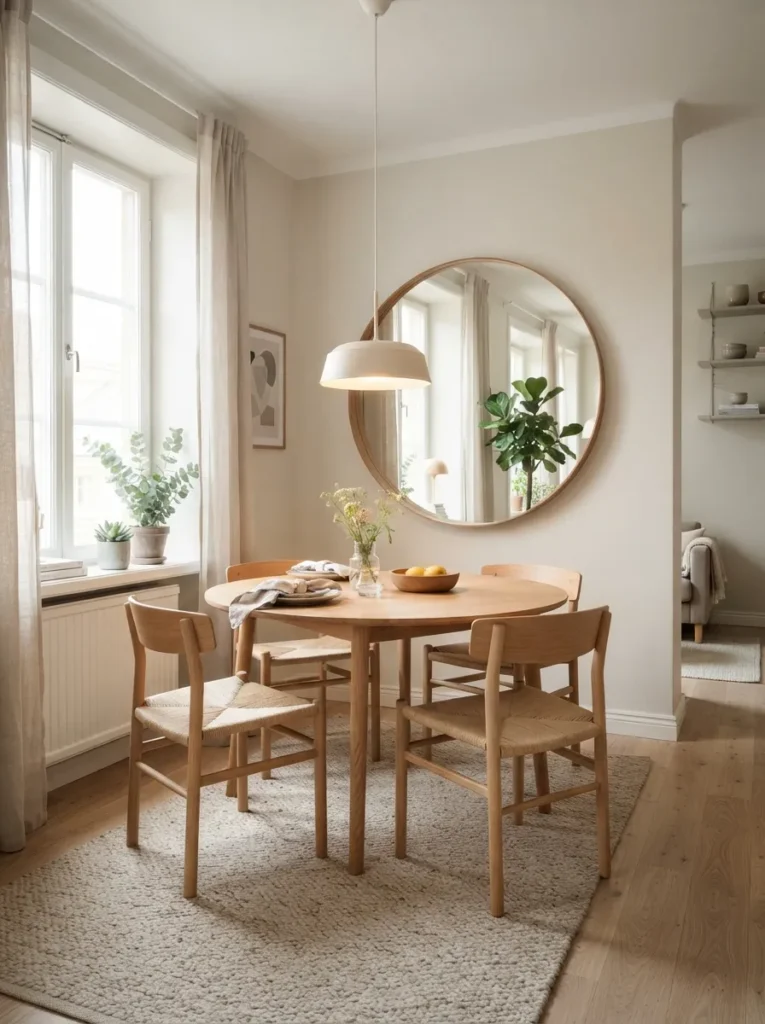
A large mirror on one wall bounces light around the space and creates the illusion of a second room beyond it, which is one of the most effective tricks for making a small dining area feel considerably larger than its actual square footage.
Position the mirror to reflect either a window or your main light source rather than a blank wall, since the reflected light is what actually creates the sense of expanded space, not the mirror alone.
7. Choose Wall Mounted Lighting Instead of a Floor Lamp
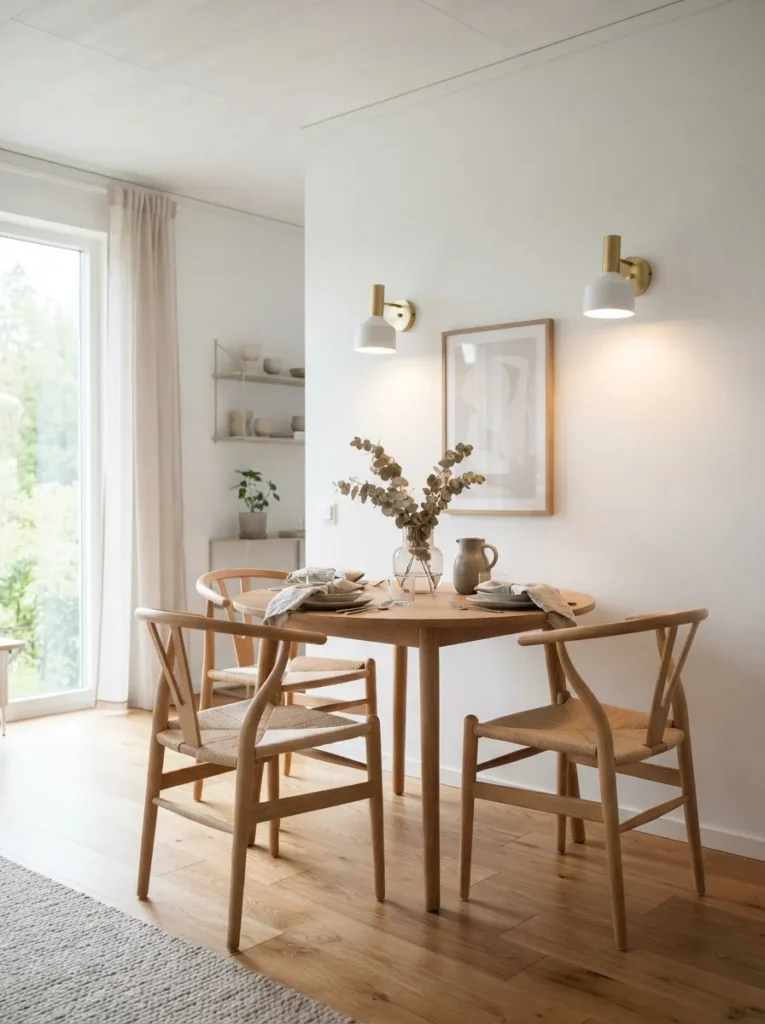
Sconces or a pendant fixture free up floor space that a lamp would otherwise occupy, which matters more in a small dining room than almost anywhere else in the house, since every square foot of clearance around the table counts.
8. Use a Narrow Console Instead of a Full Sideboard
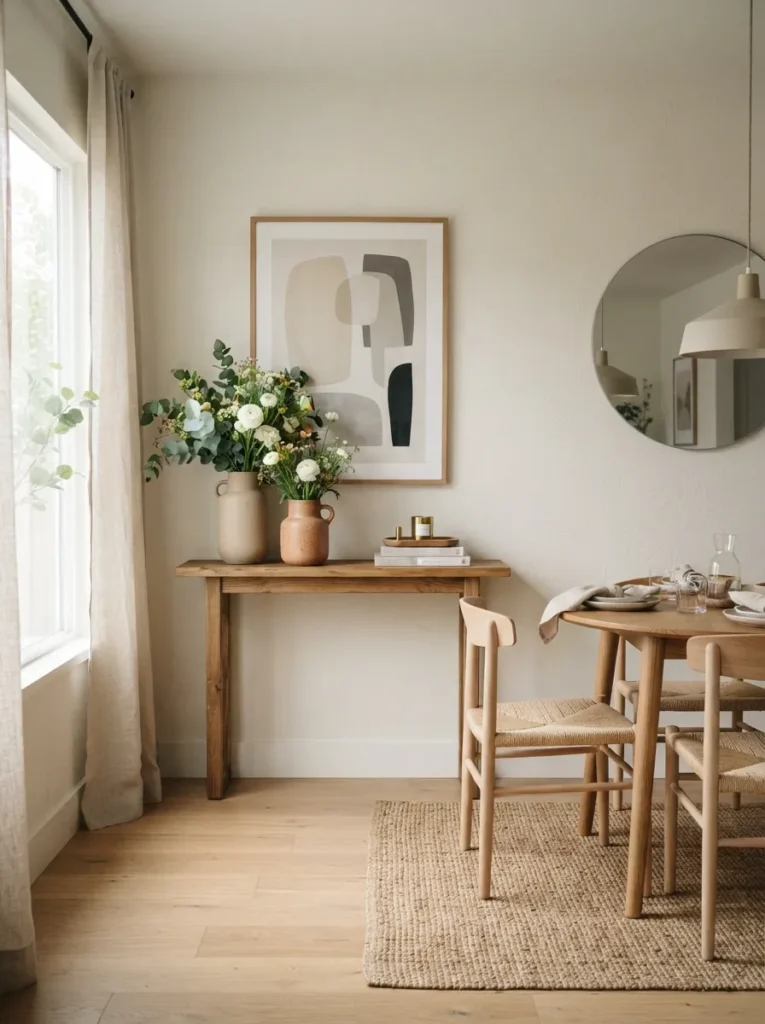
A slim console table under 14 inches deep gives you extra storage and display space without eating significantly into the room’s walking clearance the way a full depth sideboard would.
9. Choose a Light, Reflective Color Palette
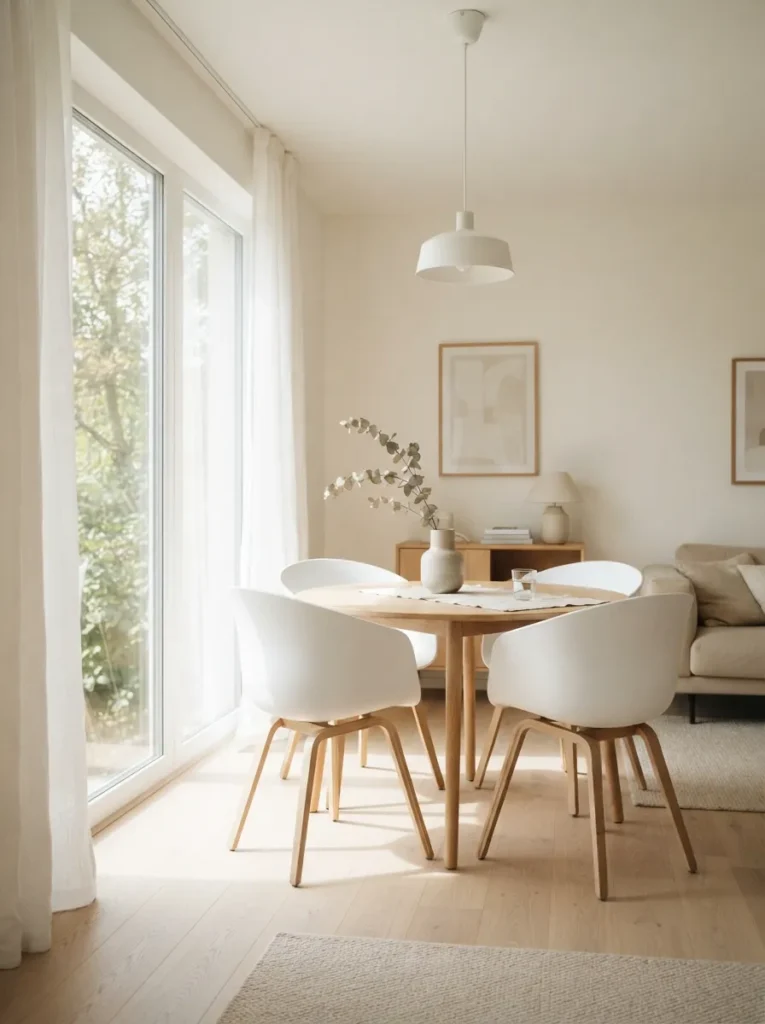
Soft whites, light grays, and warm neutrals bounce more light around a small room, which makes the space feel more open than darker, heavier tones would in the same footprint.
10. Use the Dining Room as a Multi Purpose Space
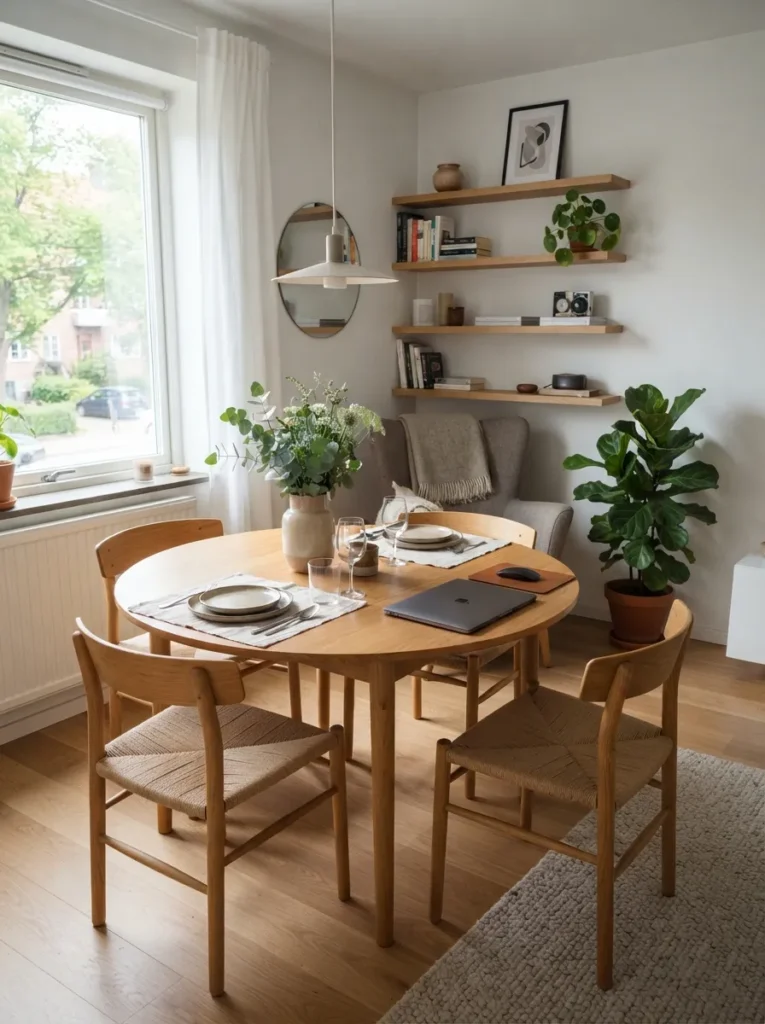
If the room needs to double as a home office or a craft space during the week, choose furniture that can adapt easily, a table with a drawer for supplies, or a nearby console that hides work materials when it’s time to eat.
Being upfront about this dual function when choosing furniture, rather than trying to force a purely formal dining setup into a room that actually needs to flex, tends to result in a space that works far better day to day.
11. Add Floating Shelves Instead of a Full Cabinet
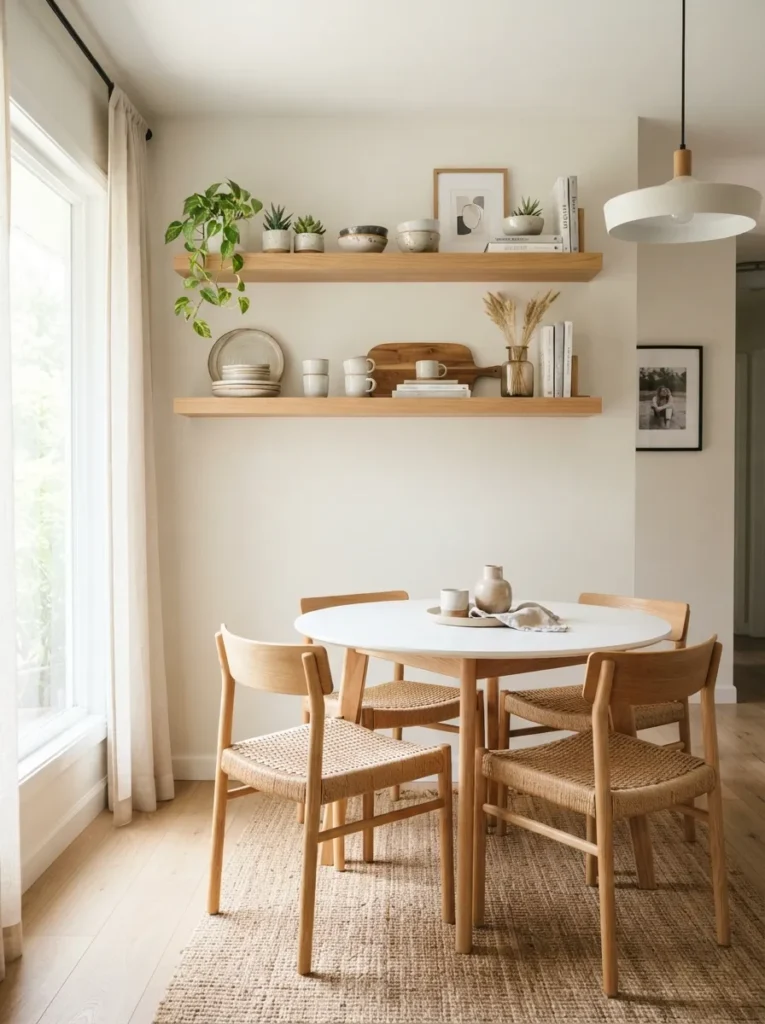
Floating shelves hold dishware or decor without the visual bulk of a full cabinet, which keeps the room feeling lighter while still giving you a spot for display and light storage.
12. Choose a Rug Sized Correctly for the Space
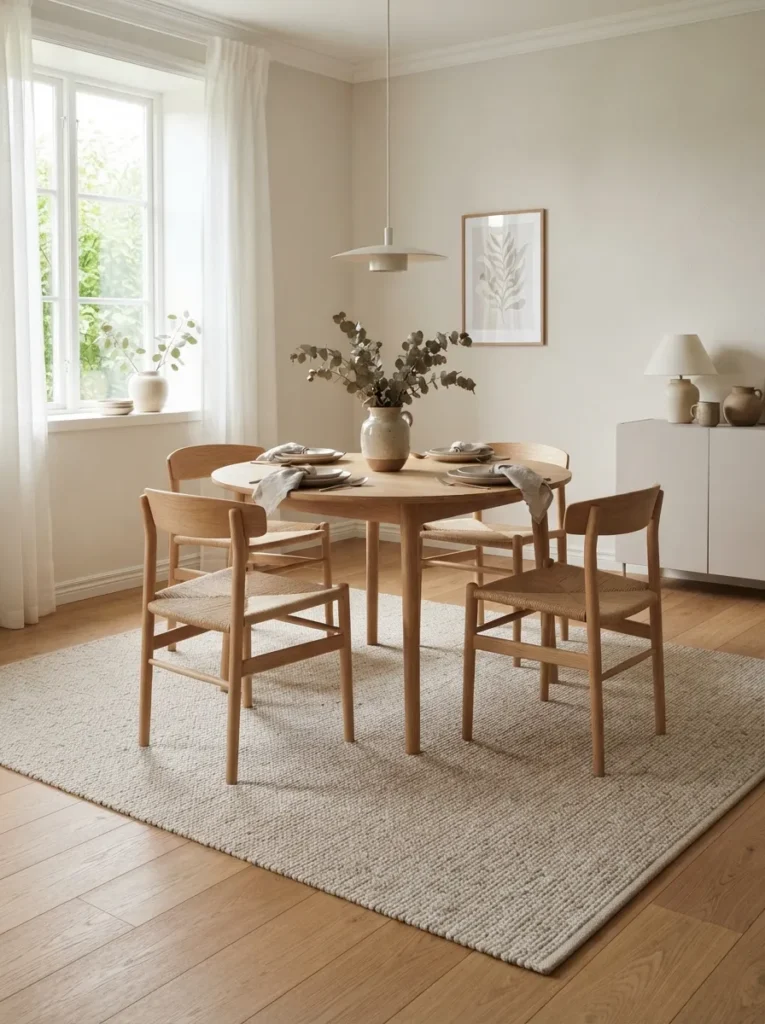
A rug that’s too large for a small dining room can actually make the space feel more cramped rather than less, since it visually shrinks the amount of open floor showing around the edges. Size the rug to extend only slightly past the chairs when pulled out, rather than filling the entire room.
13. Use Vertical Elements to Draw the Eye Upward
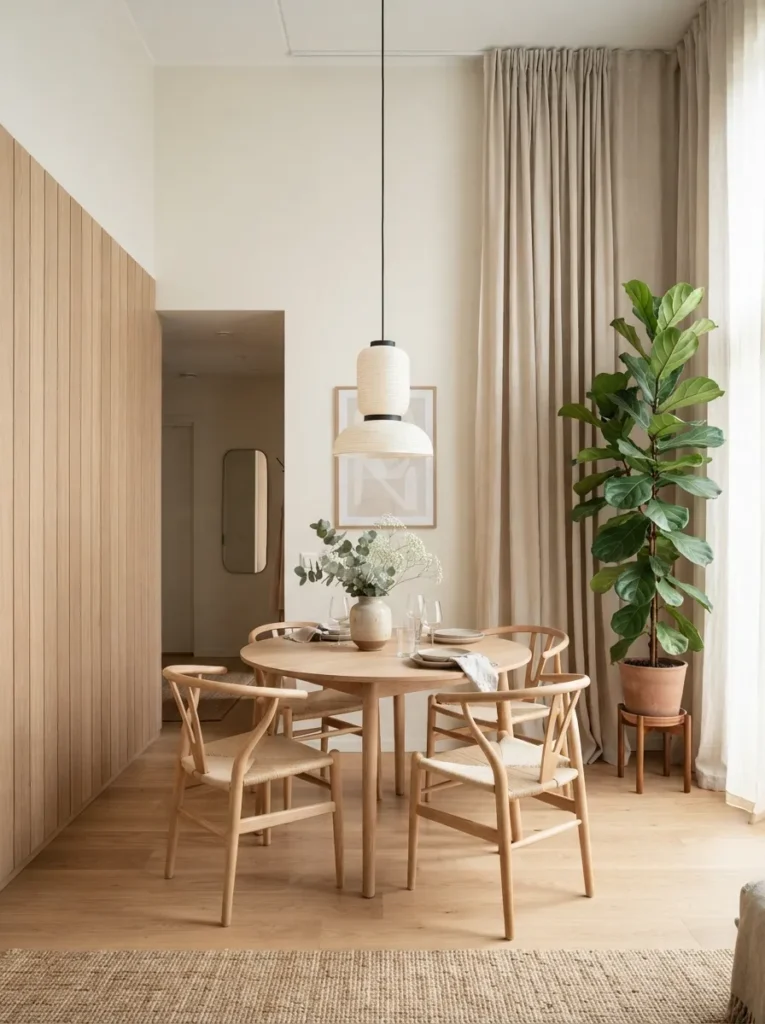
Tall, narrow art, floor to ceiling curtains, or a vertically striped wallpaper accent all draw the eye upward, which makes ceilings feel higher and the room feel less boxed in overall.
14. Choose a Pendant Light Instead of a Wide Chandelier
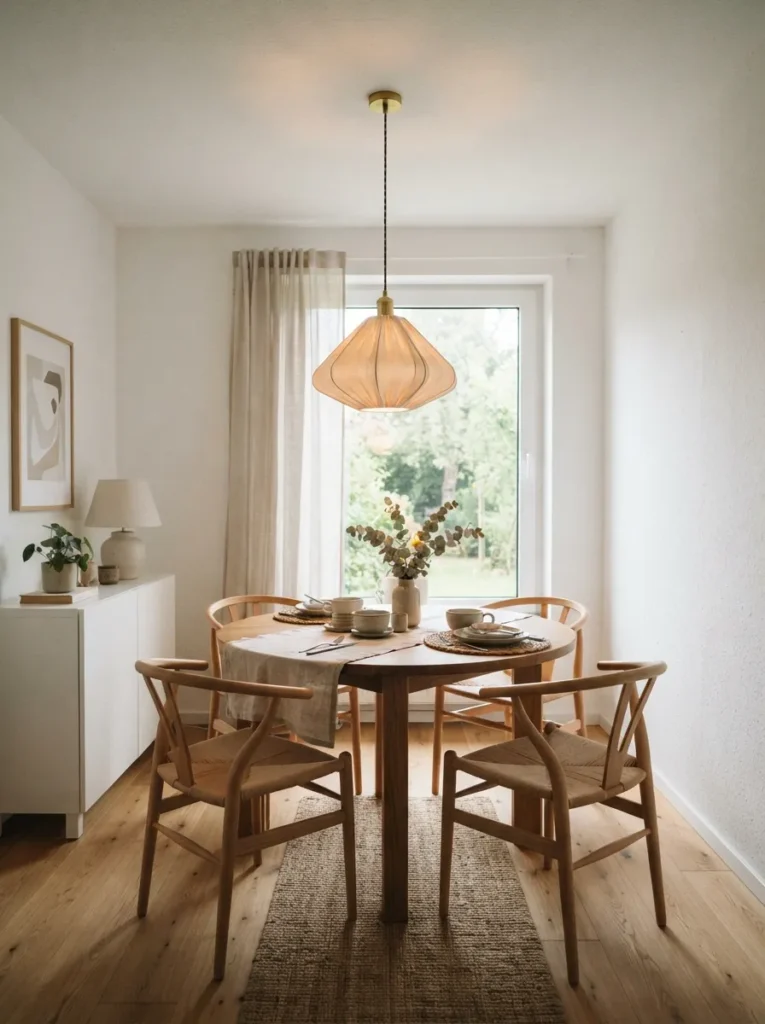
A single pendant light takes up far less visual and physical space than a wide, multi arm chandelier, while still giving the table a clear lighting focal point overhead.
15. Keep Surfaces and Walls Simple
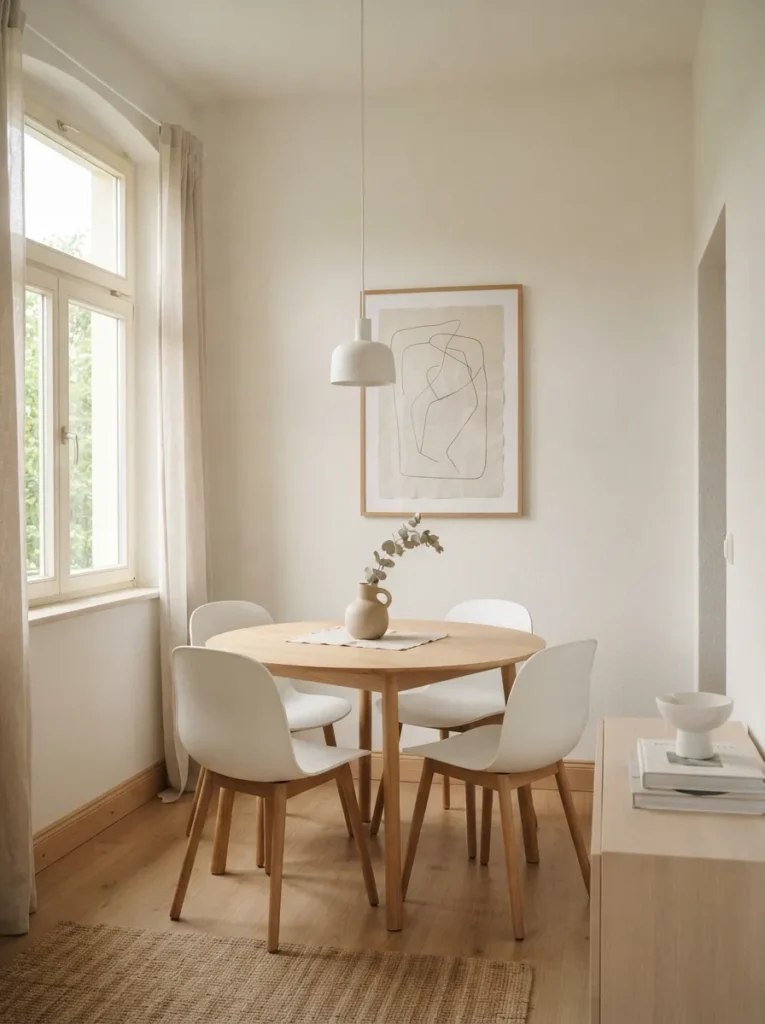
A small dining room can only handle so much decor before it starts to feel cluttered rather than cozy. Choose one or two meaningful pieces, like a single art piece or a simple centerpiece, and give them room to stand out instead of filling every available surface.
16. Position the Table to Maximize Walkway Clearance
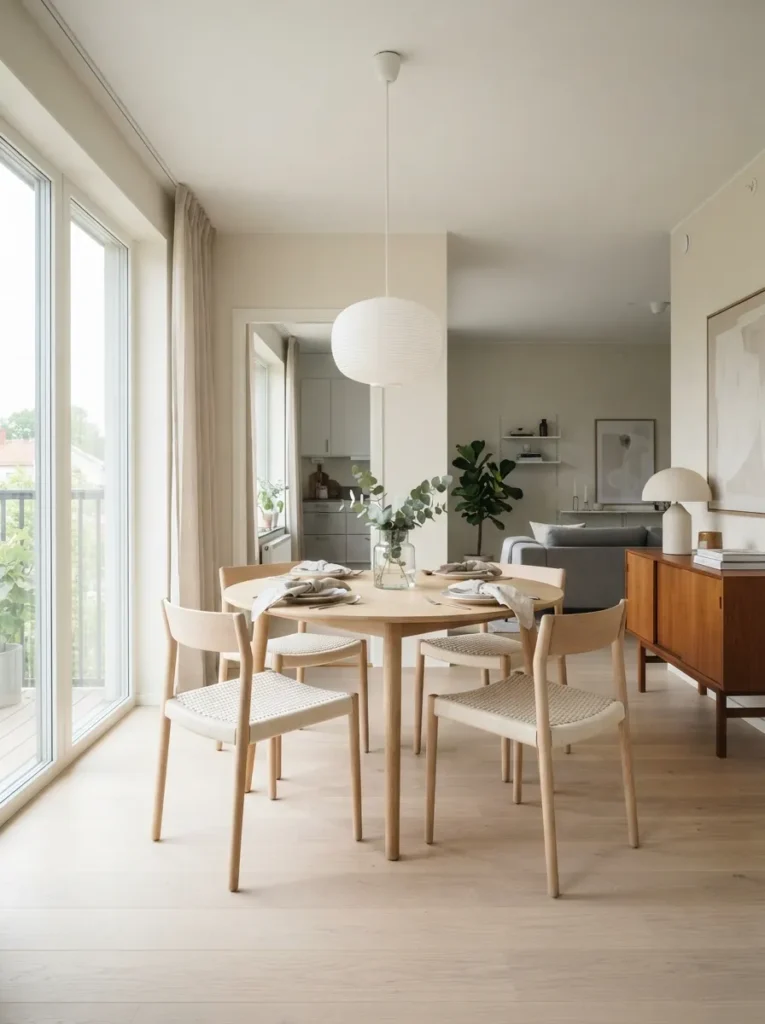
Sometimes the biggest improvement in a small dining room comes from simply repositioning the table rather than buying anything new. Try angling it, pushing it closer to one wall, or shifting it slightly off center to open up the most heavily used walking path through the room.
This kind of free rearrangement is worth testing before spending on new furniture, since the layout itself often has just as much impact on how spacious a small room feels as the furniture choices layered on top of it.
A small dining room works best when every piece earns its place through both function and scale, not just style. Start with a table and chairs sized honestly for your actual room, then layer in mirrors, lighting, and a few intentional details that open the space up rather than filling it further.