

Farmhouse dining rooms are built around one central idea, that the table should feel like the true heart of the home, worn in, welcoming, and built to host everything from a quiet Tuesday dinner to a full holiday gathering. The style leans on natural materials and a bit of collected history rather than anything polished or brand new feeling. Here are 31 ideas for bringing that warmth into your own dining space.
1. Choose a Reclaimed or Distressed Wood Table
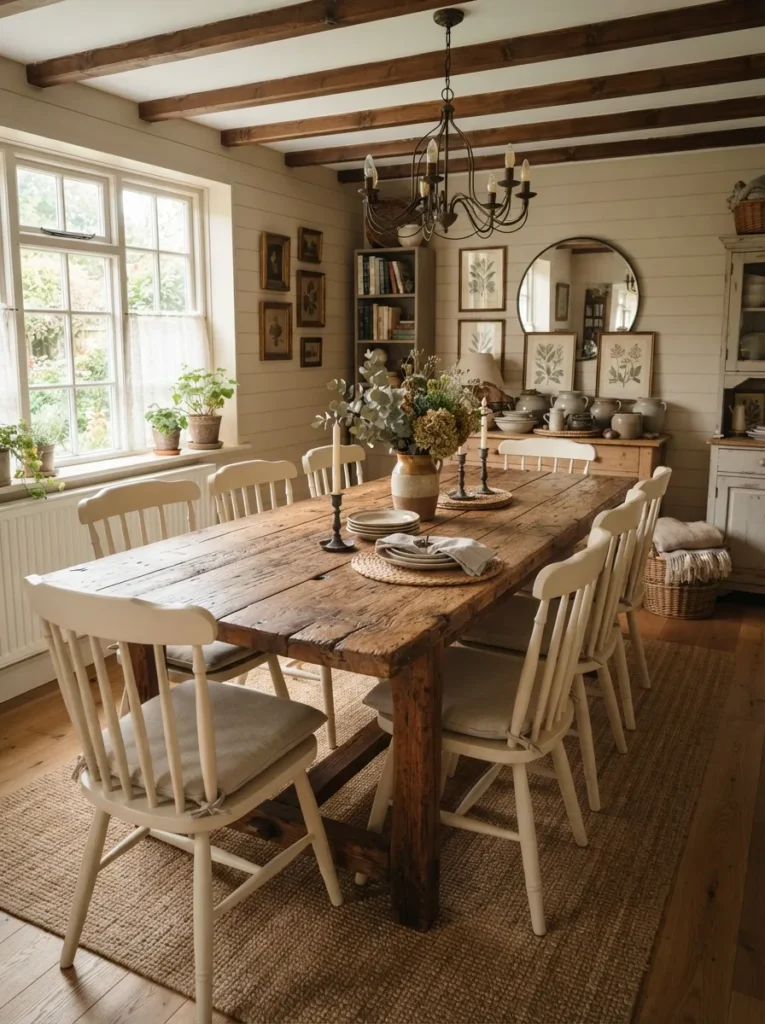
A table with visible wood grain, worn edges, or a genuinely reclaimed finish is the clearest anchor of a farmhouse dining room. It brings both authenticity and durability, since reclaimed wood is often built from thicker, older lumber than most new furniture.
If a genuinely reclaimed table isn’t in the budget, look for new tables specifically finished to mimic that worn, weathered look, many furniture makers now offer this style at a range of price points without sacrificing the visual character entirely.
2. Add Mismatched Farmhouse Style Chairs
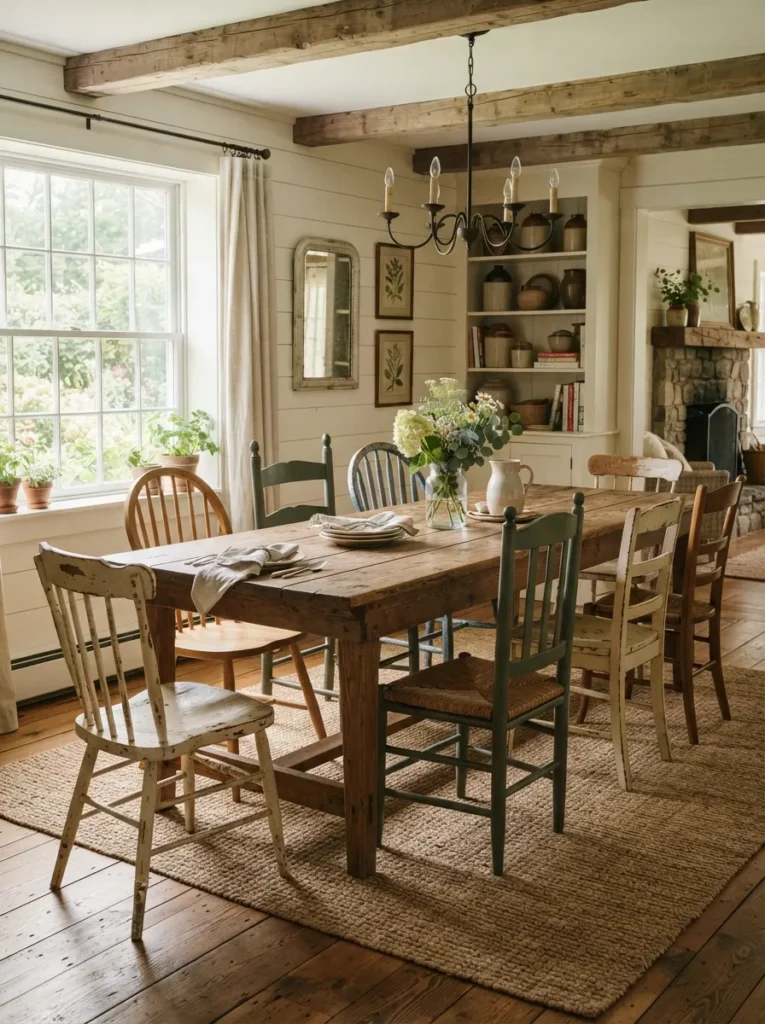
Chairs that don’t perfectly match, but share a similar wood tone or simple silhouette, reinforce the collected over time feeling central to farmhouse style. This approach also makes it easier to replace individual chairs later without needing to match an entire discontinued set.
3. Use a Bench Along One Side of the Table
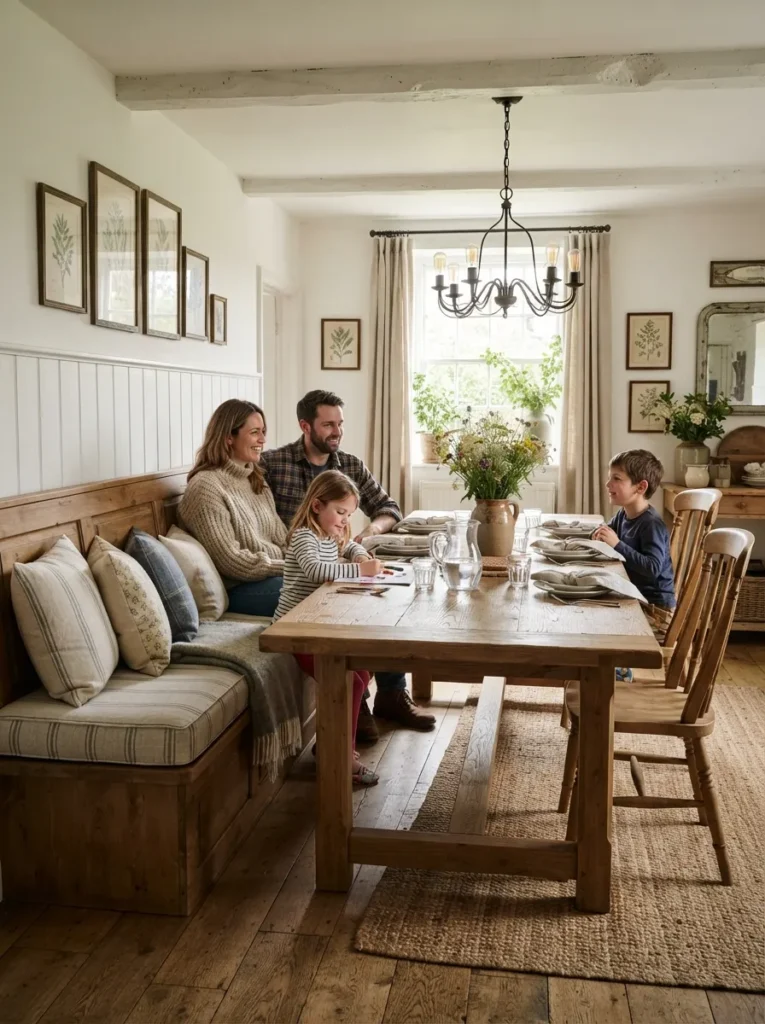
A long wood bench is a farmhouse staple, adding casual, flexible seating and echoing the communal, gather around the table feeling the style is built on. It also tucks fully under the table when not in use, keeping the room feeling open.
- A bench paired with chairs on the opposite side
- Cushions added for extra comfort during longer meals
- A bench long enough to seat three comfortably
- A slightly weathered wood finish to match the table
4. Add a Wood Beam or Shiplap Ceiling Detail
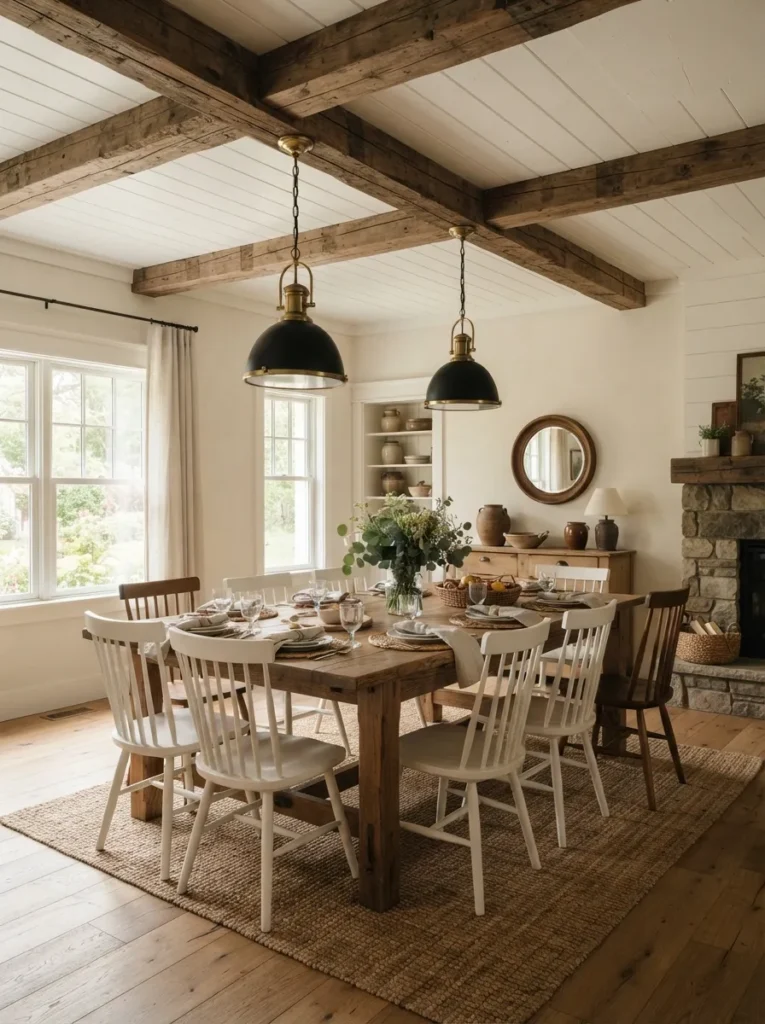
Exposed or faux wood beams, or a shiplap treatment on the ceiling, bring architectural texture into a part of the room that’s often overlooked entirely. This detail adds real farmhouse character even in a fairly simple, otherwise unadorned room.
5. Choose a Chandelier With Wood or Wrought Iron Details
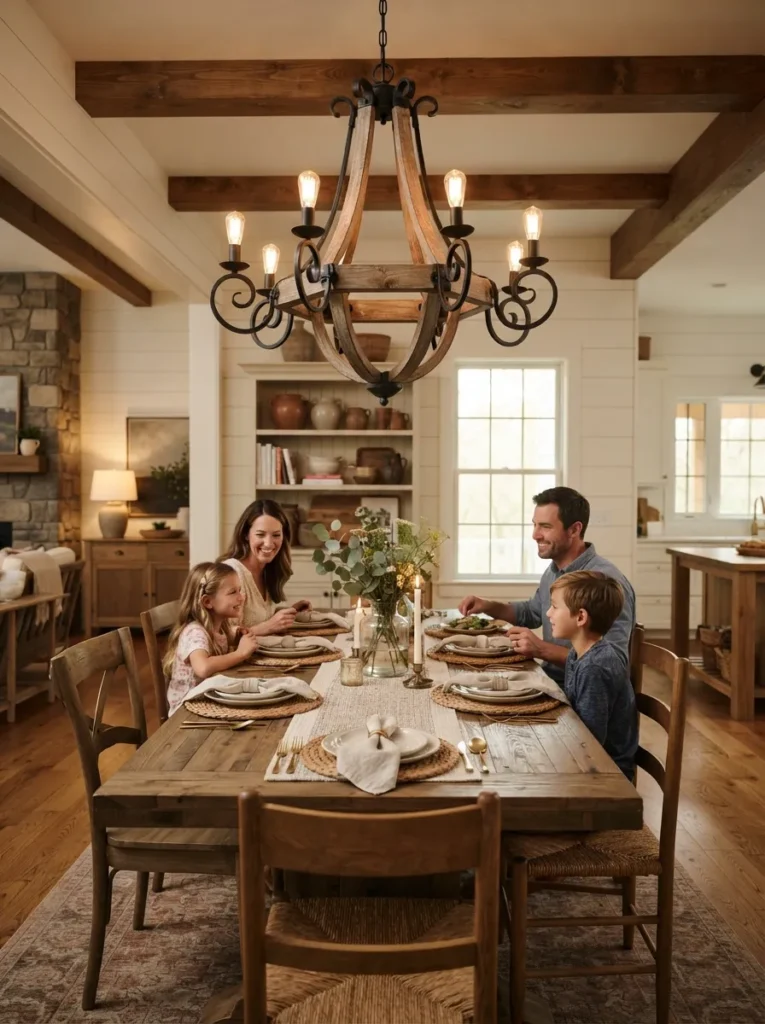
Farmhouse lighting often features raw wood, wrought iron, or a mix of both, sometimes styled after wagon wheels or antique fixtures. These pieces add a strong focal point above the table while staying true to the style’s rustic roots.
6. Use a Farmhouse Sideboard or Buffet
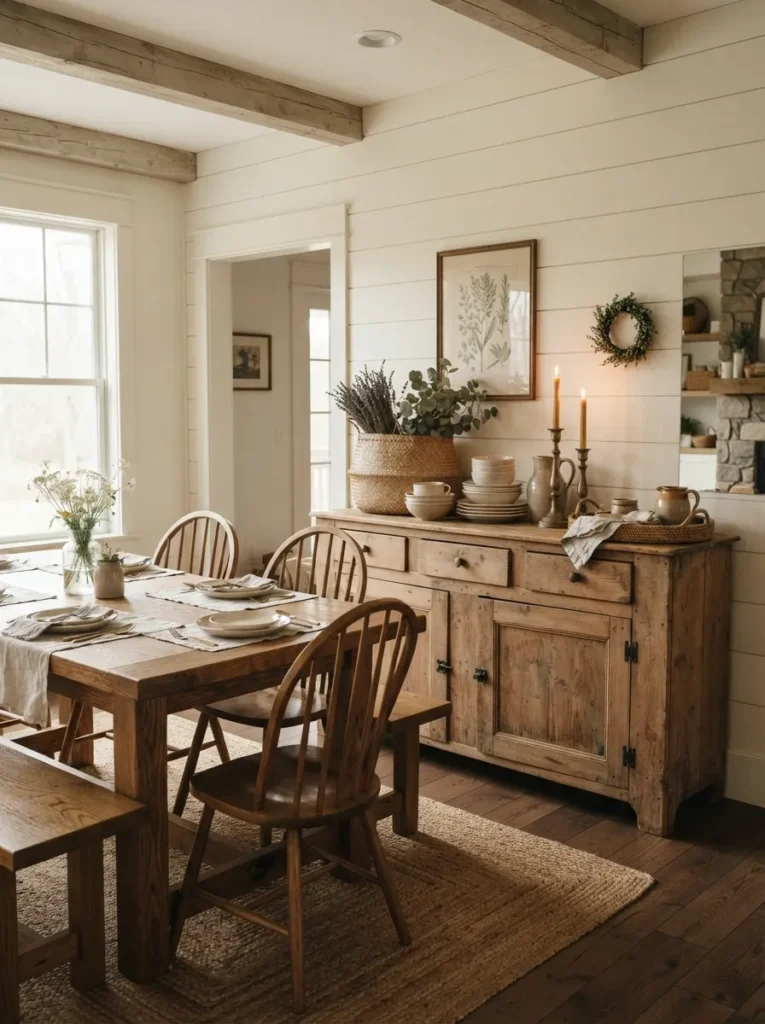
A wood sideboard with simple lines, visible hardware, and a slightly worn finish gives you storage for linens and serving pieces while reinforcing the room’s overall material palette.
7. Add Woven Placemats or a Table Runner
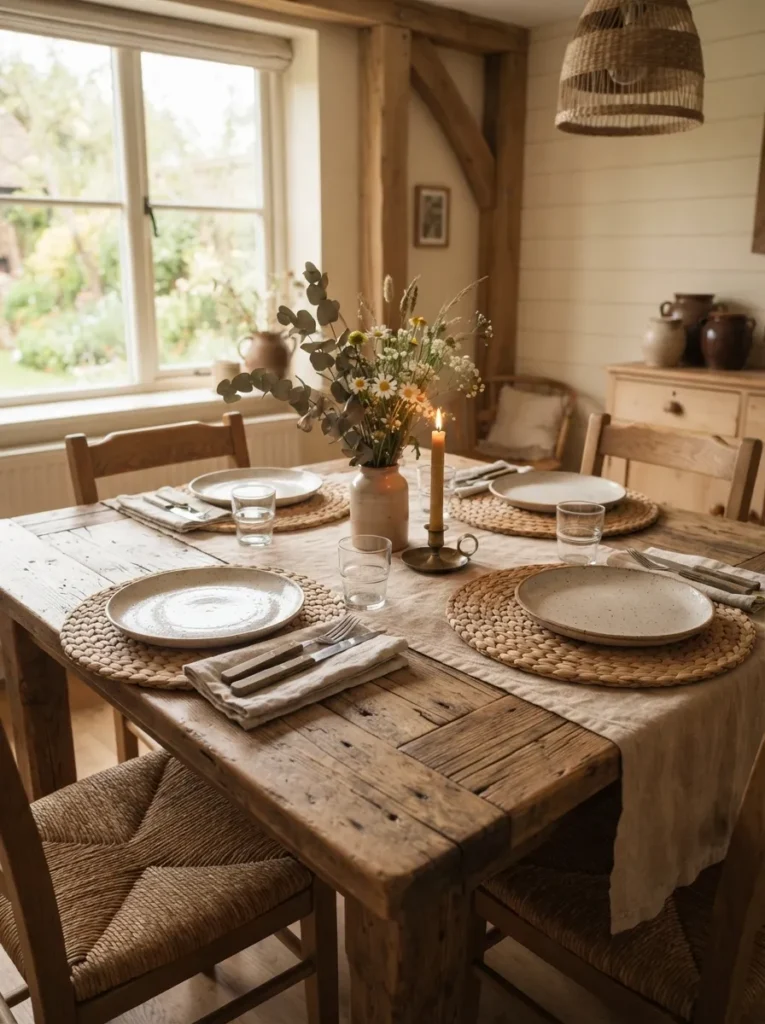
Natural fiber placemats or a woven runner bring texture to the table without introducing anything glossy or overly polished, keeping the everyday table setting consistent with the room’s rustic feel.
Rotating between a few different woven textures throughout the year, a heavier jute in cooler months and a lighter rattan weave in summer, keeps the table styling feeling seasonal without a full redecorating effort.
8. Choose a Vintage or Vintage Inspired Rug
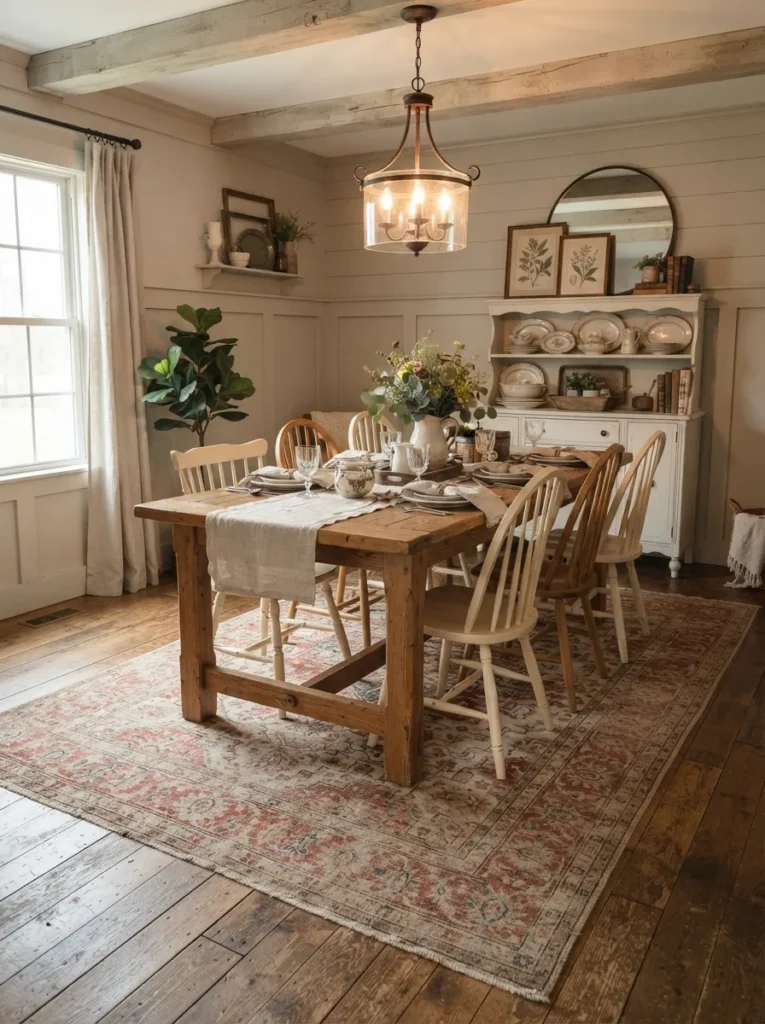
A worn looking rug with a faded pattern under the dining table adds warmth and a sense of history, even if the rug itself is newly made to look aged. Choose one large enough to keep all chair legs on the rug even when pulled out.
9. Add Galvanized Metal Accents
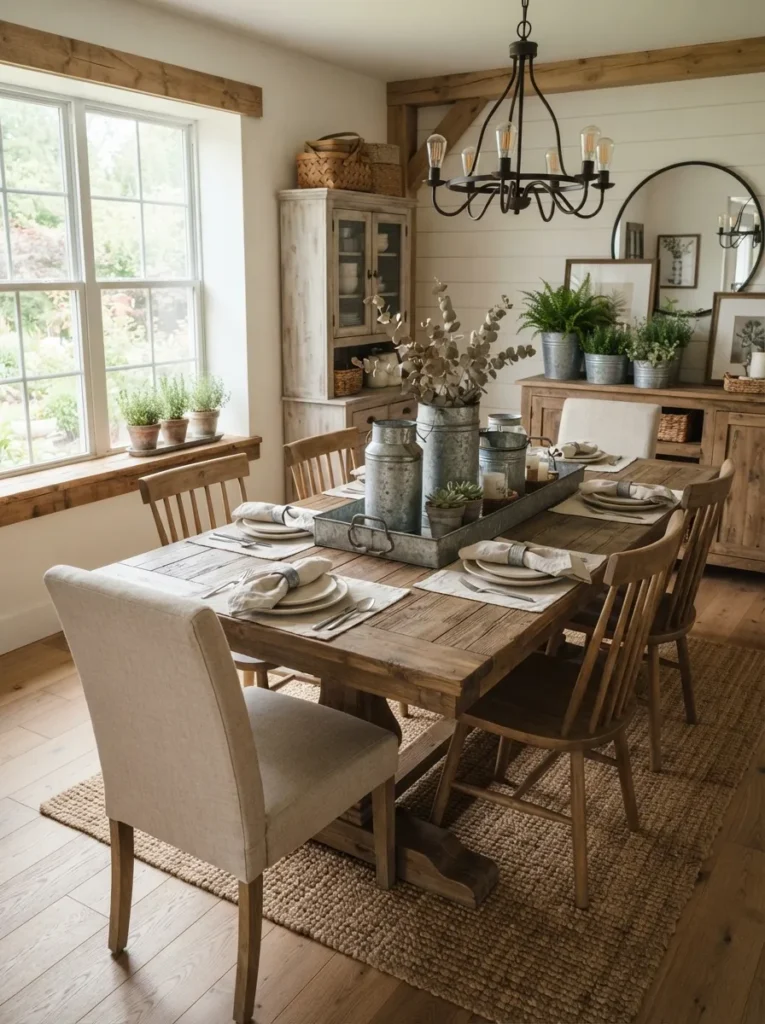
Galvanized trays, pitchers, or light fixtures bring in the utilitarian, farm inspired materials that pair so well with warm wood tones throughout the rest of the room.
10. Use Mason Jar or Lantern Style Lighting
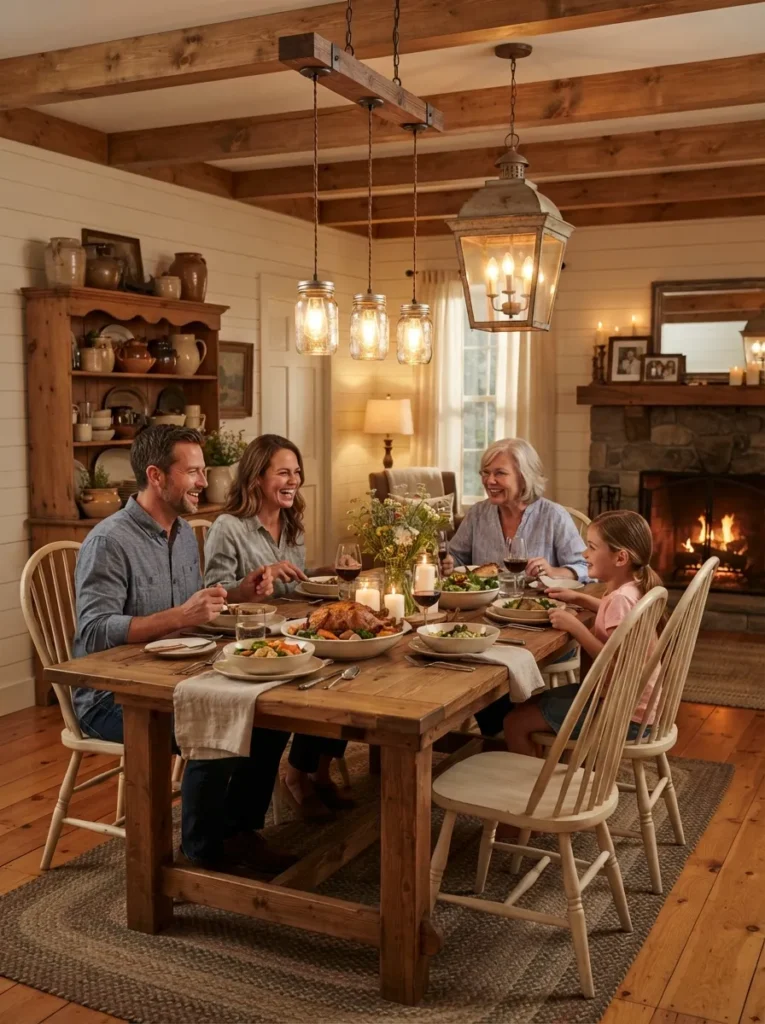
Light fixtures shaped like mason jars or lanterns add a cozy, nostalgic feel that’s become a signature farmhouse detail, especially effective when paired with warm toned bulbs.
11. Choose Curtains in Simple Linen or Cotton
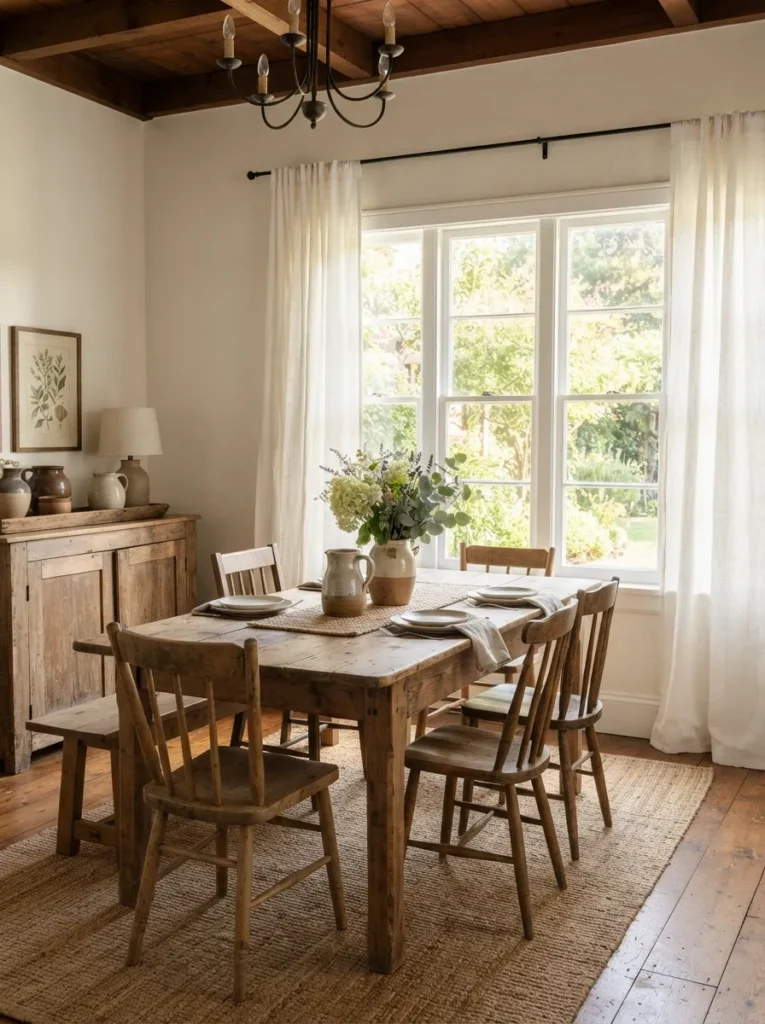
Unlined, relaxed linen or cotton curtains in a soft neutral tone let in natural light while keeping the window treatments simple and slightly rumpled rather than crisp and formal.
12. Add a Barn Door Style Detail Nearby
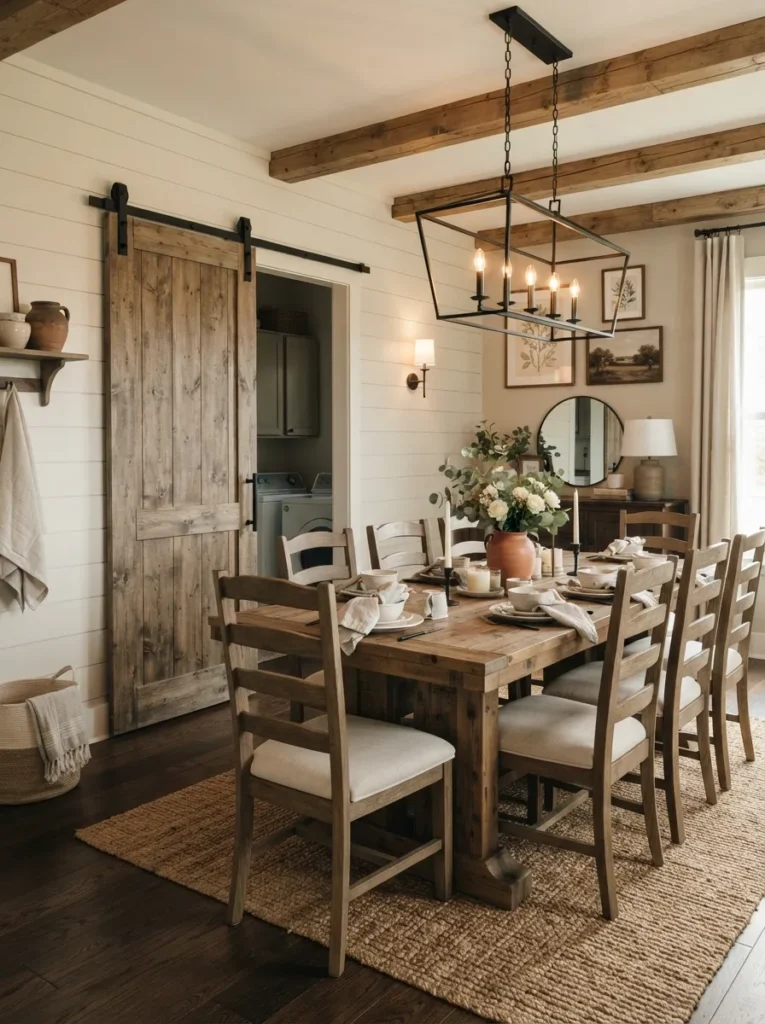
If your dining room connects to a pantry or adjoining space, a sliding barn door adds one of the most recognizable farmhouse architectural details, even if it’s used more for style than daily function.
13. Use Open Shelving for Dishware Display
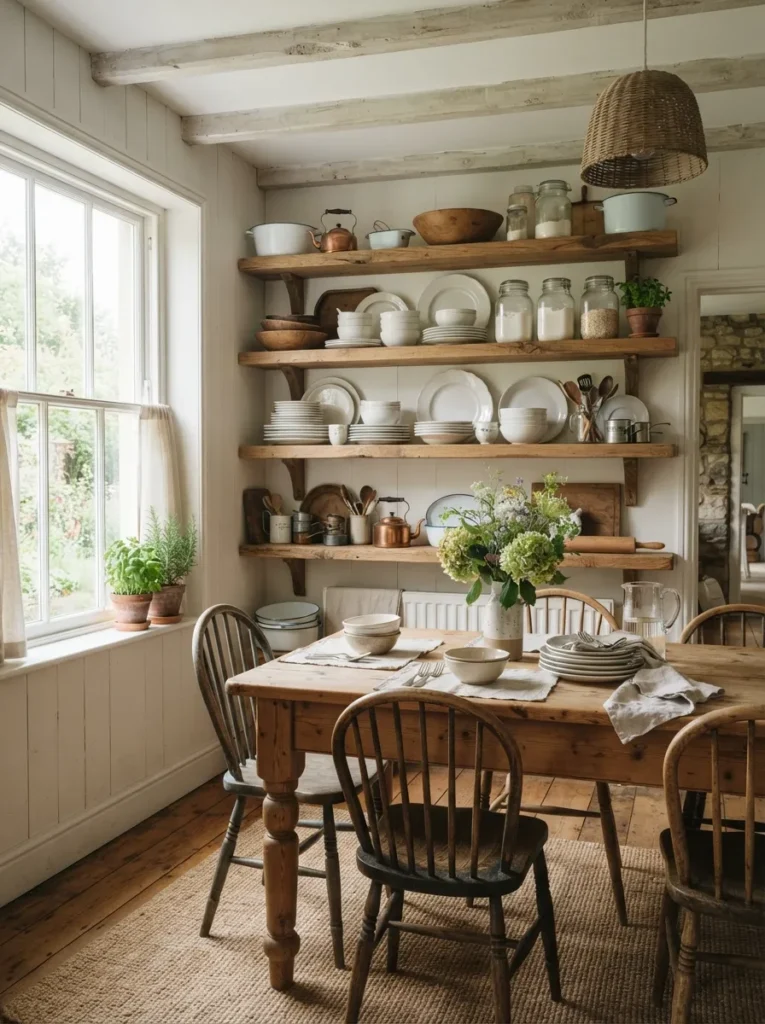
Open wood shelves for stoneware, glassware, or serving pieces give the room a functional, lived in feeling, and let you display everyday dishware as part of the decor rather than hiding it away.
Style the shelves with a mix of heights and a bit of negative space between groupings, since evenly spaced, perfectly matched dishware can end up looking more showroom than genuinely farmhouse.
14. Add a Wood Framed Mirror
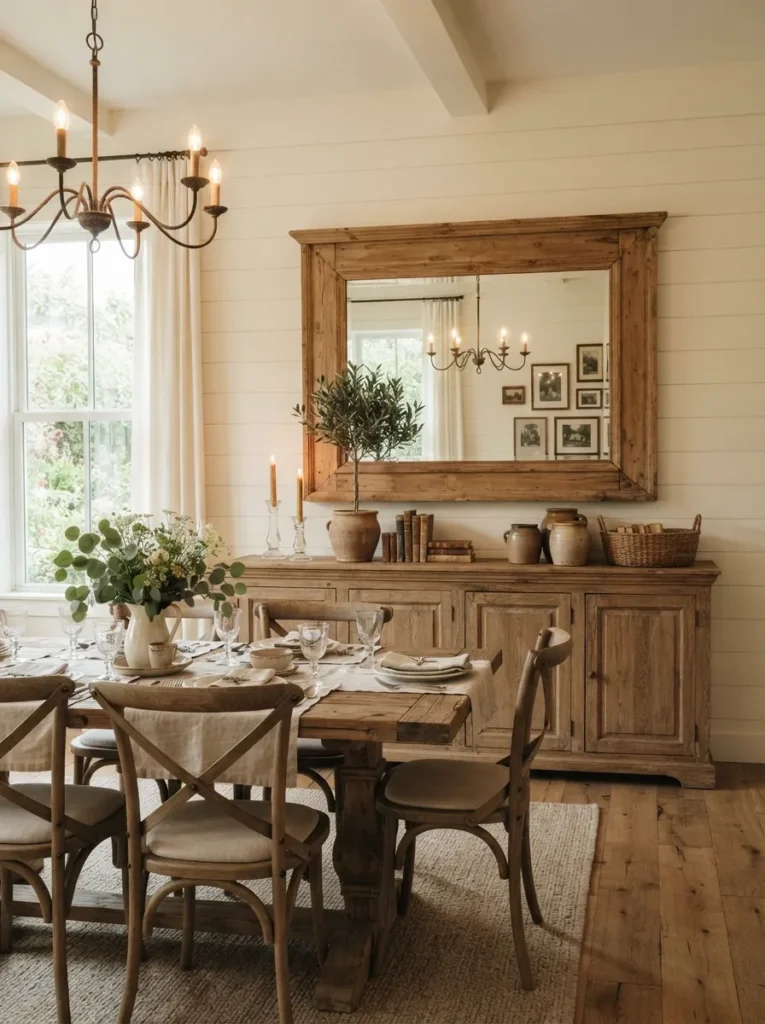
A large mirror with a simple wood frame adds function and reflects natural light back into the room while staying consistent with the farmhouse material palette throughout the rest of the space.
15. Choose Plaid or Buffalo Check Textiles
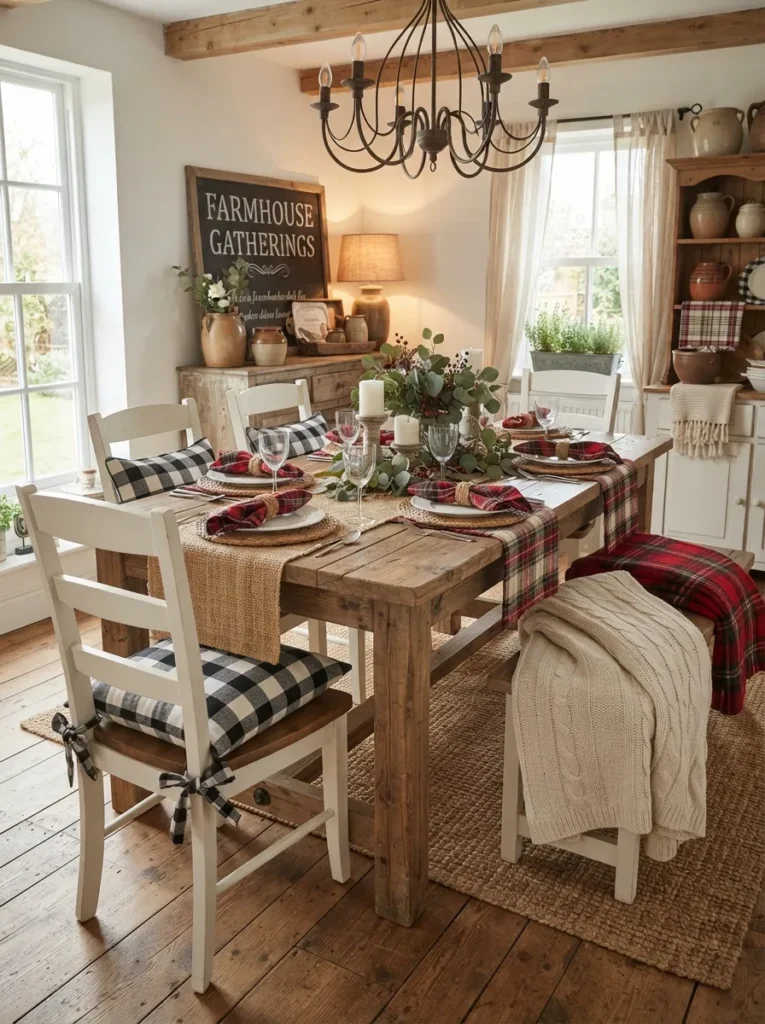
A buffalo check table runner, chair cushions, or even curtains bring in a classic farmhouse pattern without overwhelming the room, especially when used in smaller doses against mostly neutral surfaces.
16. Add a Ladder as Decorative Storage
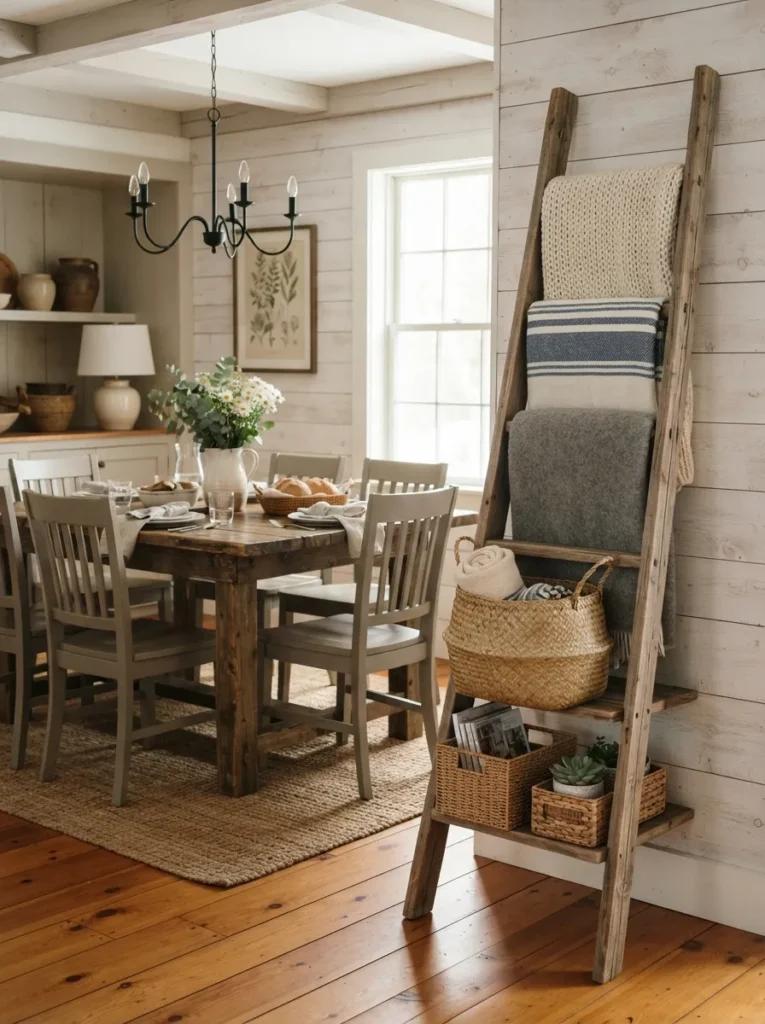
An old wooden ladder leaned against a wall can hold extra linens or serve purely as a decorative piece, adding rustic charm to an otherwise empty corner of the dining room.
17. Use a Stone or Brick Accent Wall
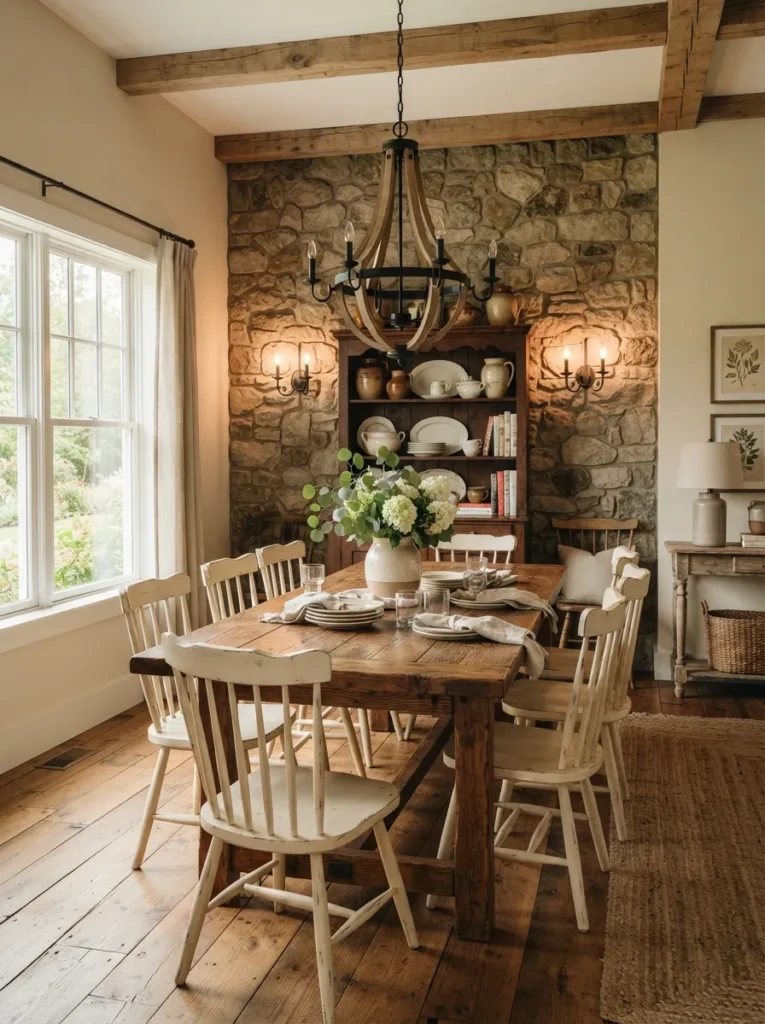
A stacked stone or exposed brick accent wall behind the table or sideboard adds texture and a sense of permanence that’s core to the farmhouse aesthetic, especially paired with simpler wood furniture around it.
18. Choose Turned Wood Legs on Furniture
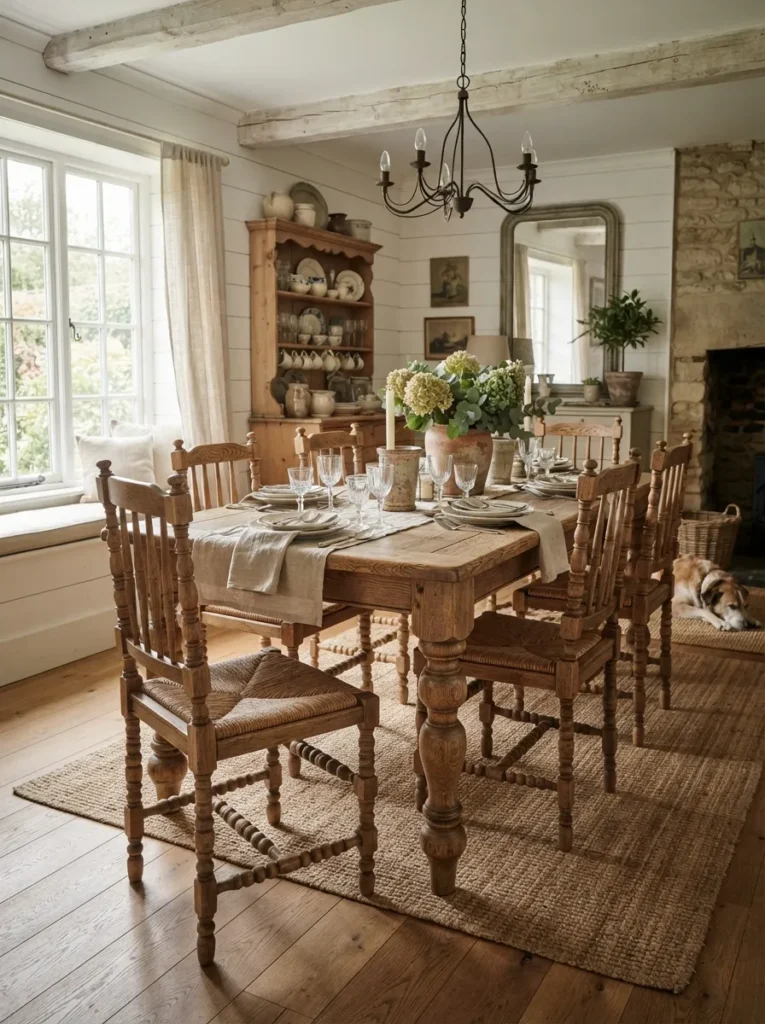
Farmhouse furniture often features simple turned wood legs rather than sleek metal or acrylic ones. This detail alone can shift a piece toward the farmhouse aesthetic even when the rest of its design stays fairly plain.
19. Add Vintage Signage or Typography Art
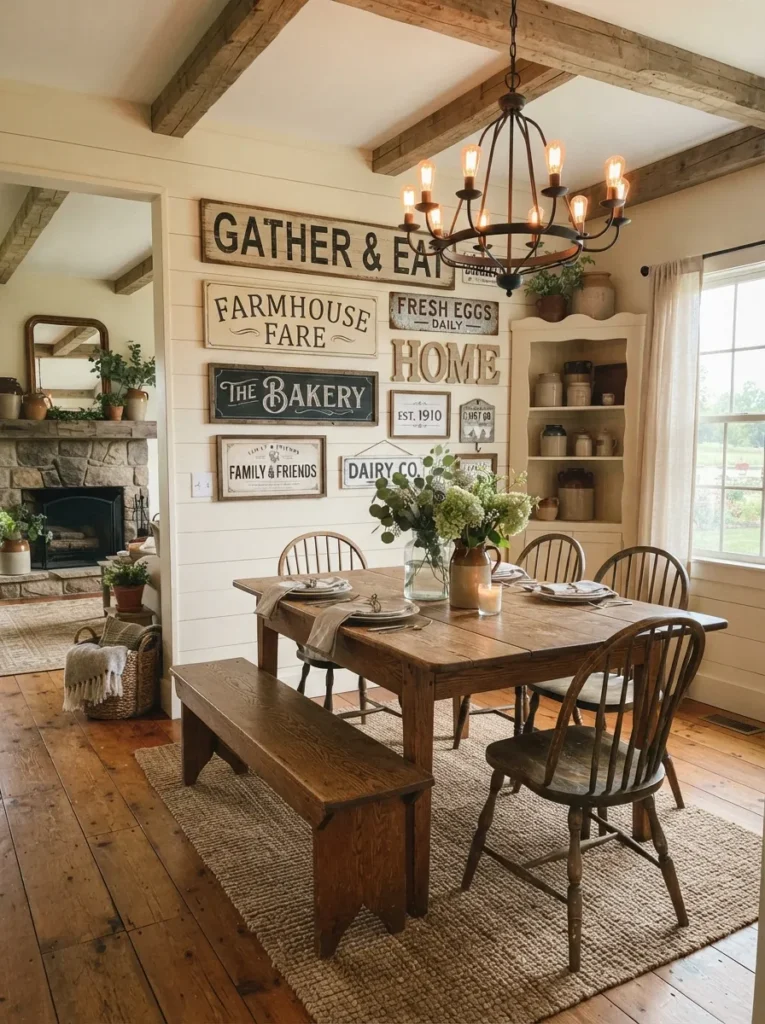
Simple black and white signs or vintage inspired typography art give the room a bit of character and personality, especially when framed simply or left with a slightly distressed edge.
- A vintage inspired kitchen or farm themed sign
- Simple black and white typography art
- A framed antique map or botanical print
- One larger statement piece rather than several small ones
20. Use Wicker or Woven Dining Chairs
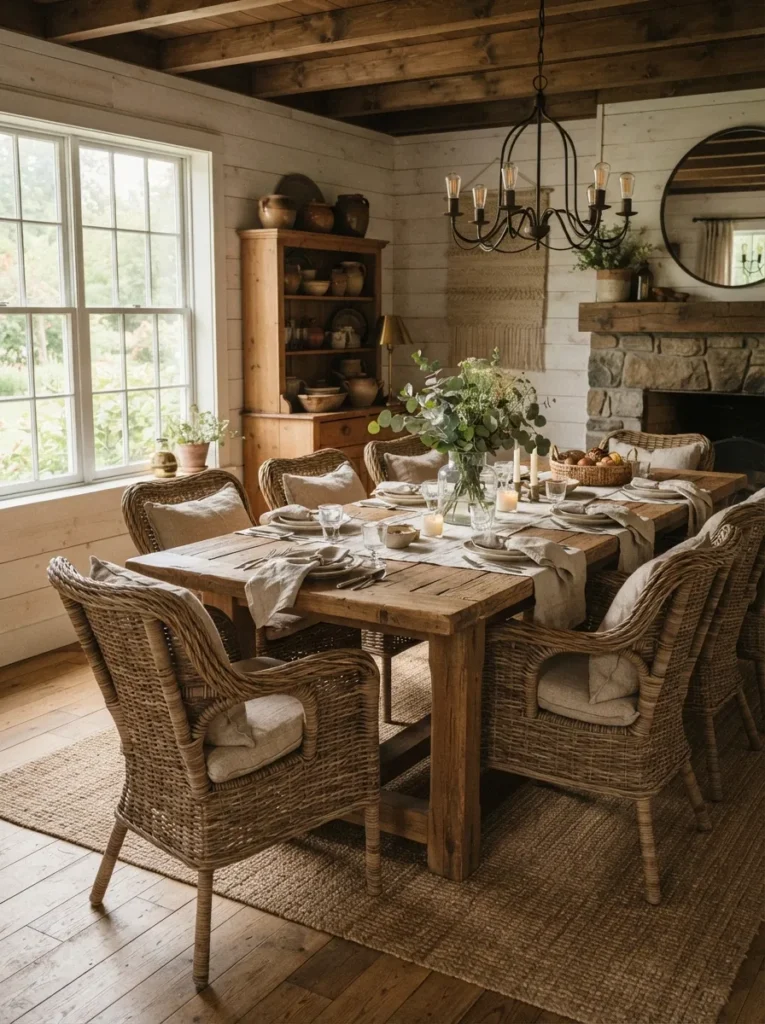
Chairs with a wicker or woven seat add texture and a slightly relaxed, natural feel, especially when paired with a solid wood table for contrast.
21. Choose Warm, Layered Lighting
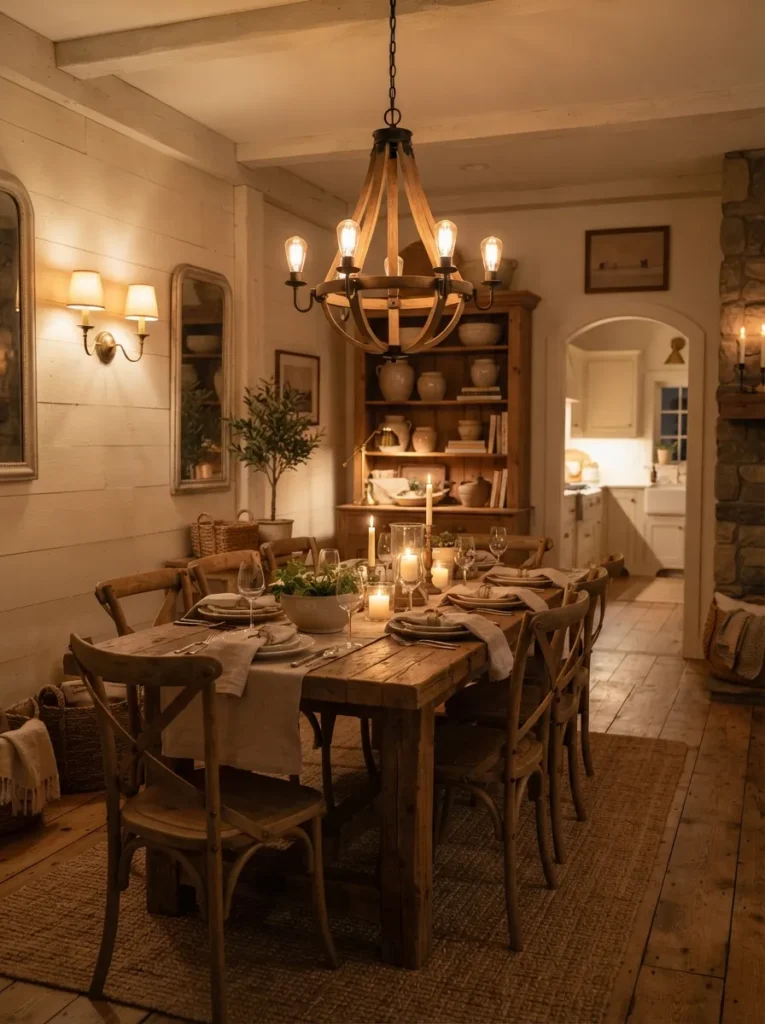
Combine your main chandelier with a few candles or a warm floor lamp nearby for layered lighting that feels cozy and welcoming rather than bright and utilitarian, particularly for evening meals.
22. Add Fresh or Dried Florals as a Centerpiece
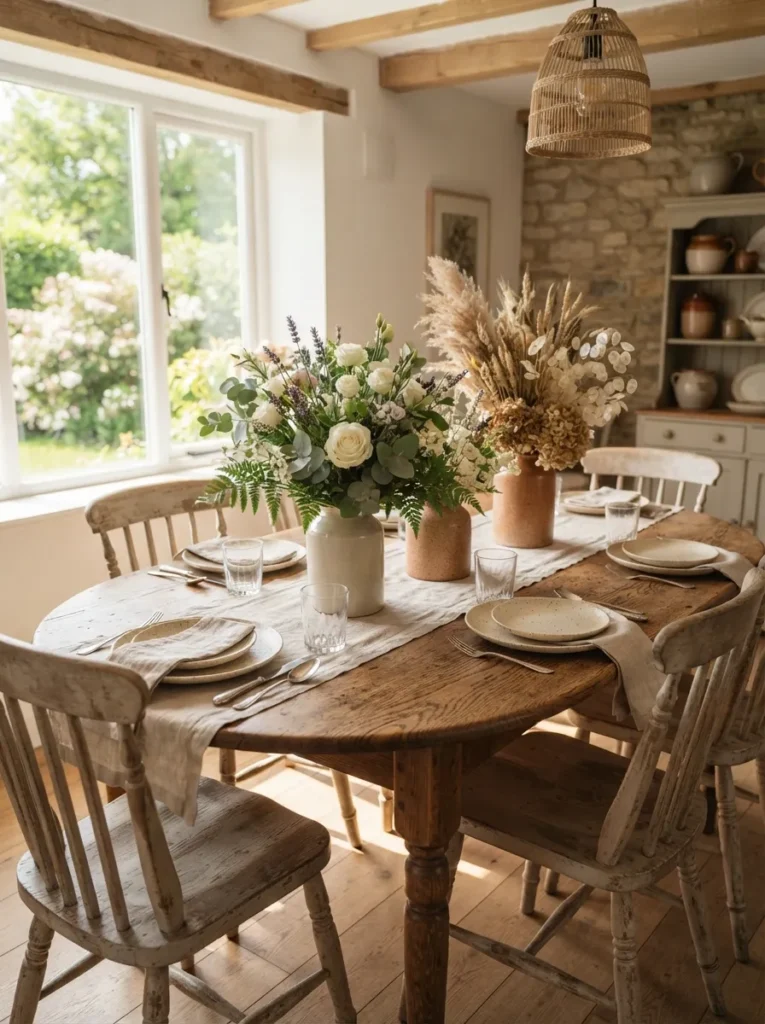
A simple arrangement of wildflowers, dried wheat, or seasonal greenery in a stoneware or galvanized vase keeps the centerpiece consistent with the room’s natural, unfussy material palette.
23. Use a Distressed Paint Finish on Furniture
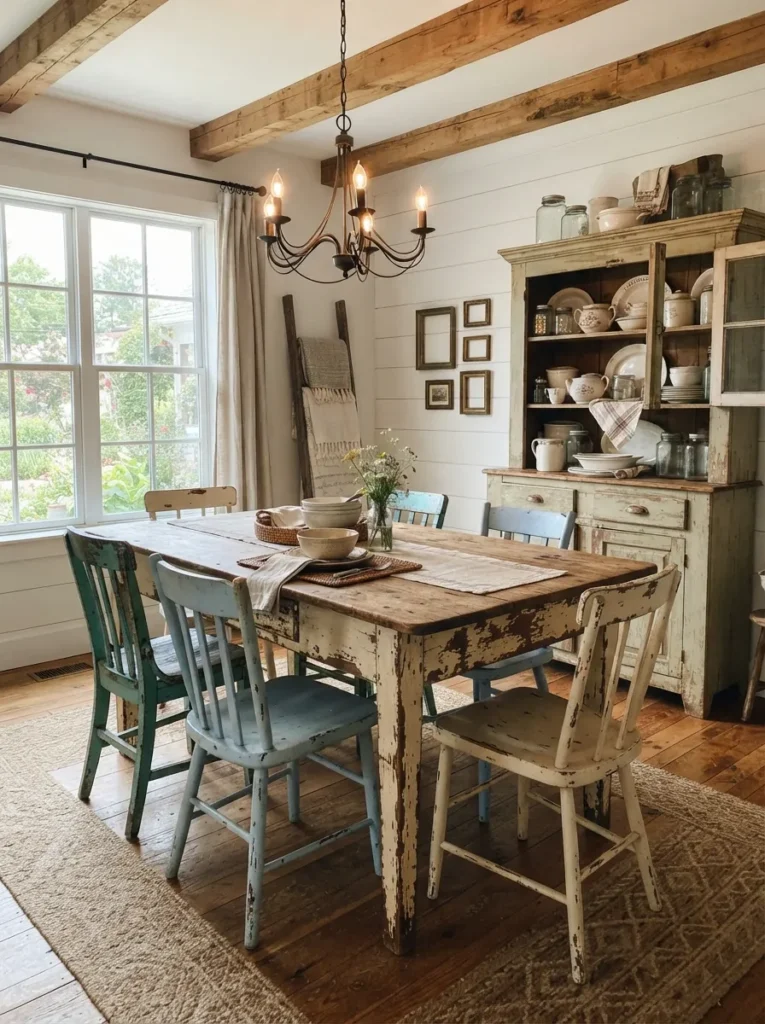
A hutch, sideboard, or set of chairs finished with a distressed or chalk paint technique adds visible character and history, even on furniture that’s actually fairly new.
24. Choose a Farmhouse Style Rug Pattern
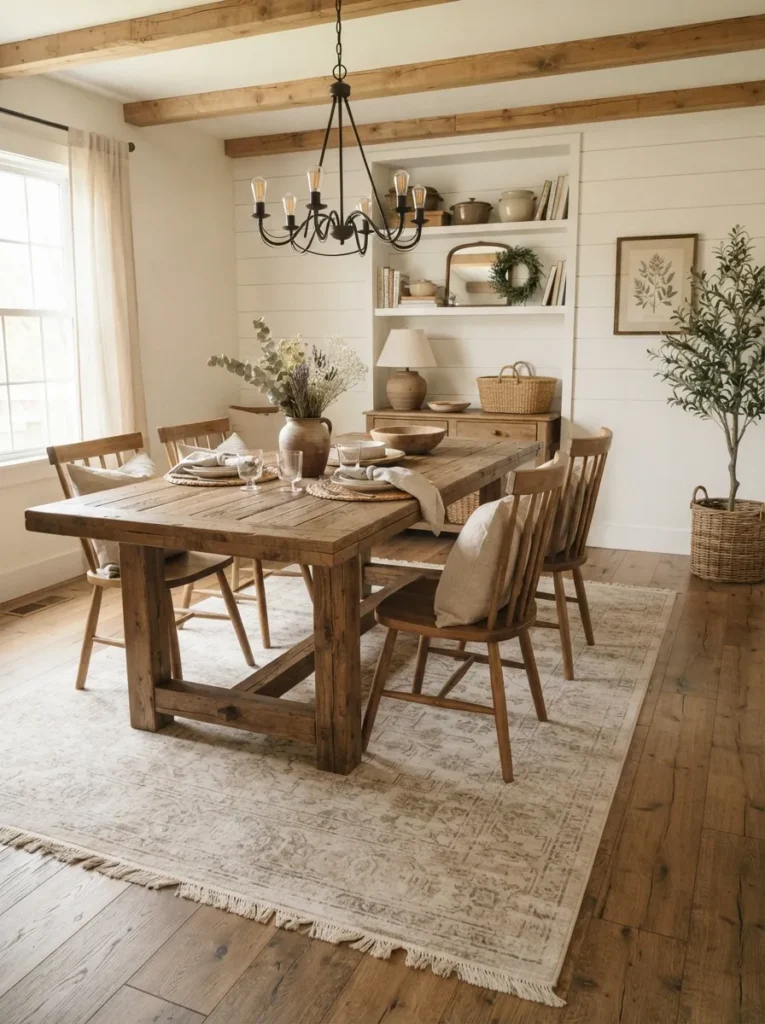
Oriental style rugs in muted, faded tones are especially popular in farmhouse spaces, since the worn pattern feels like it carries its own story even when the rug itself is new.
25. Add a Vintage Clock as a Focal Point
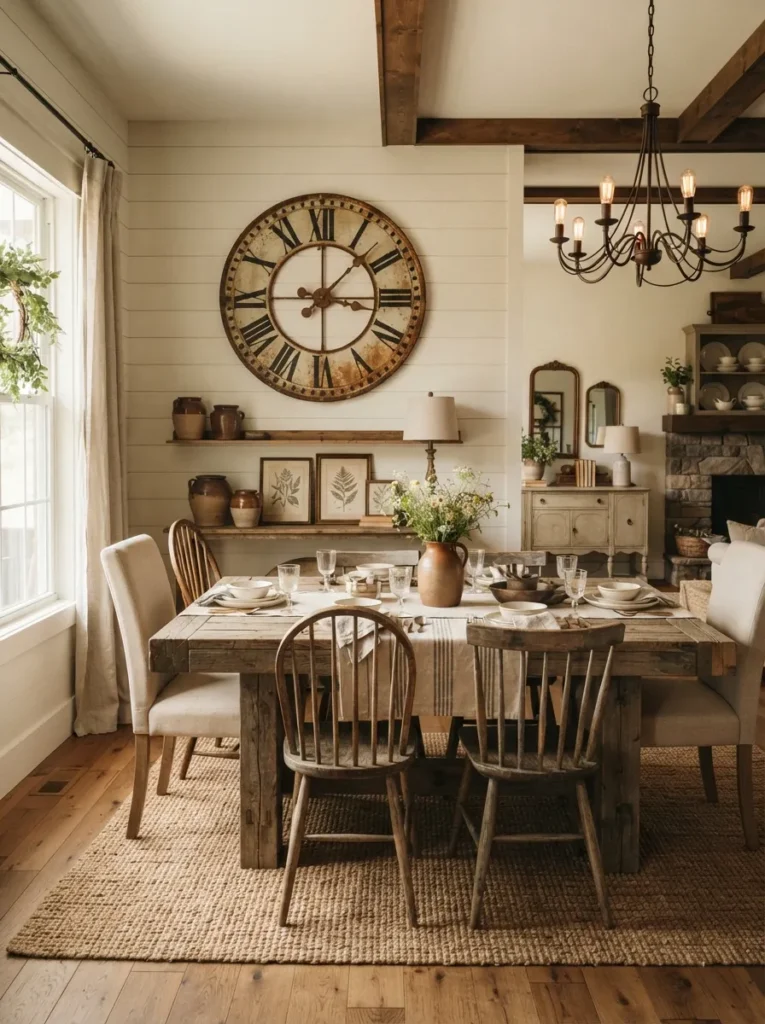
An oversized vintage or vintage inspired clock adds both function and a strong farmhouse focal point, particularly effective on a wall that doesn’t already have much else going on.
26. Use Woven Baskets for Storage Display
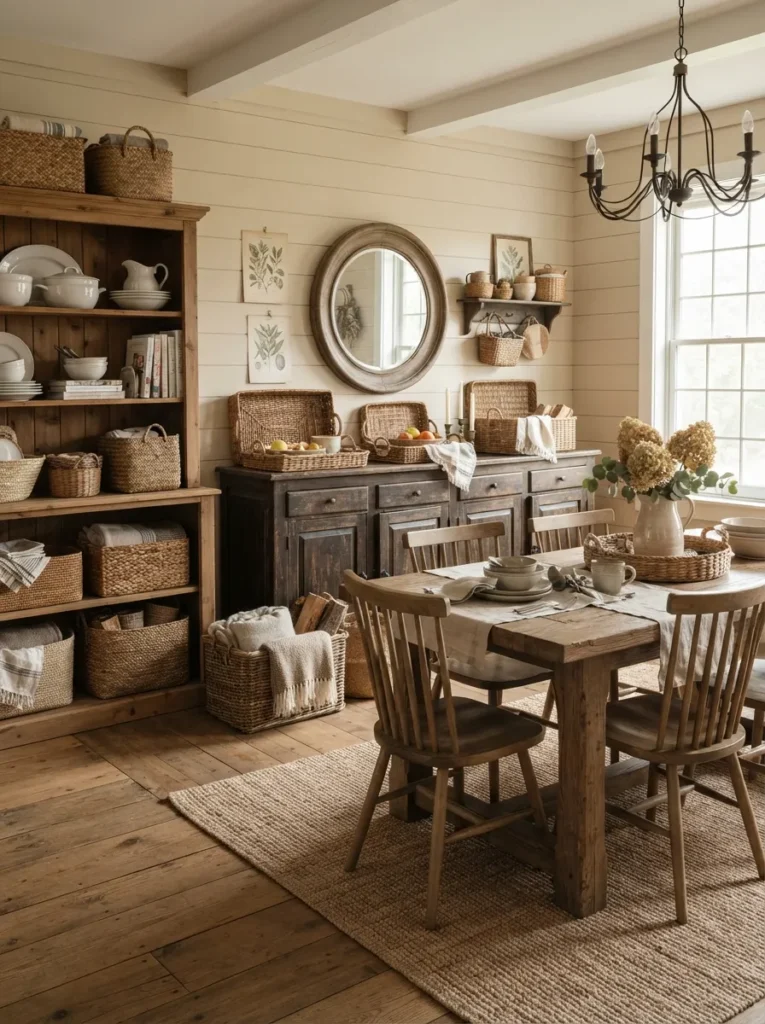
Baskets stacked or grouped on open shelving or the floor near a sideboard give you practical storage while reinforcing the room’s natural, textured material palette.
27. Choose a Neutral Wall Color With Wood Contrast
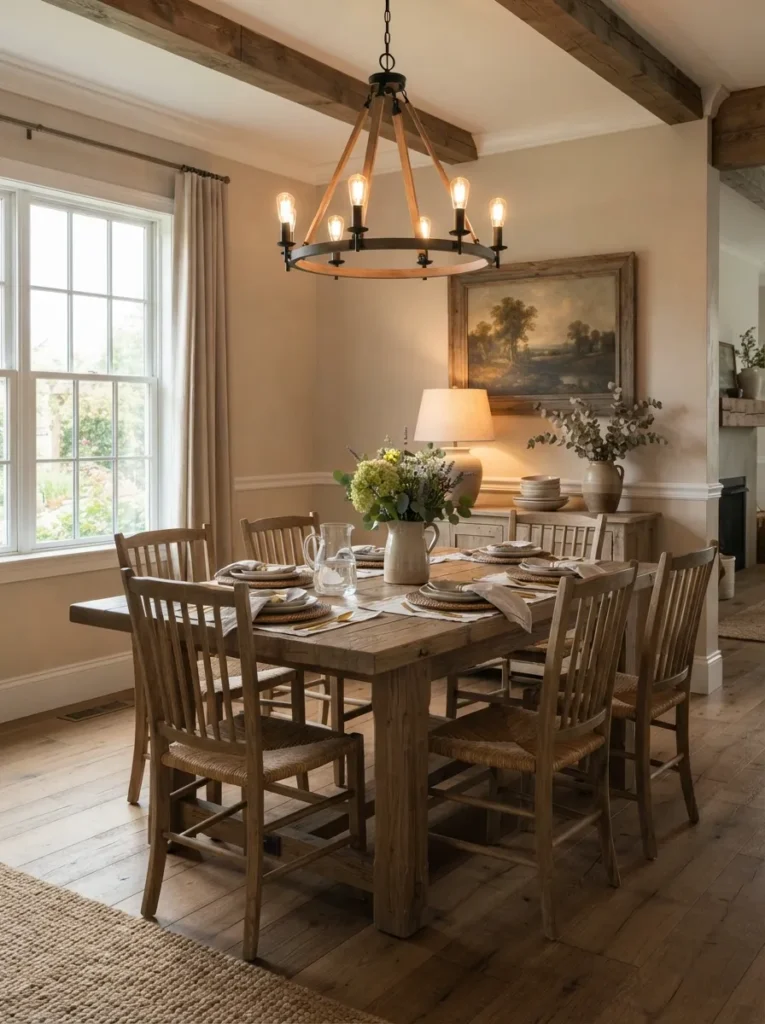
Soft white, warm greige, or a muted sage wall color lets the room’s wood tones and textures stand out, keeping the overall palette calm and cohesive rather than competing for attention.
28. Add a China Hutch With Glass Front Doors
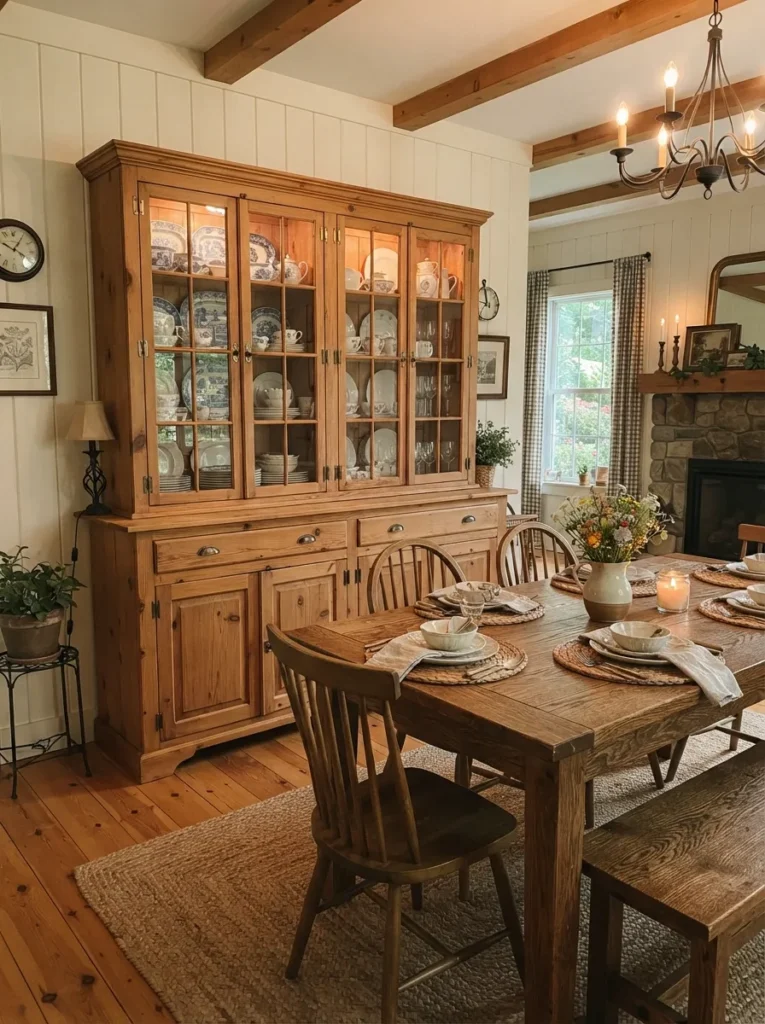
A farmhouse style hutch with glass doors gives you a place to display special occasion dishware while adding a substantial, furniture forward focal point to the room.
29. Use Antique or Flea Market Finds
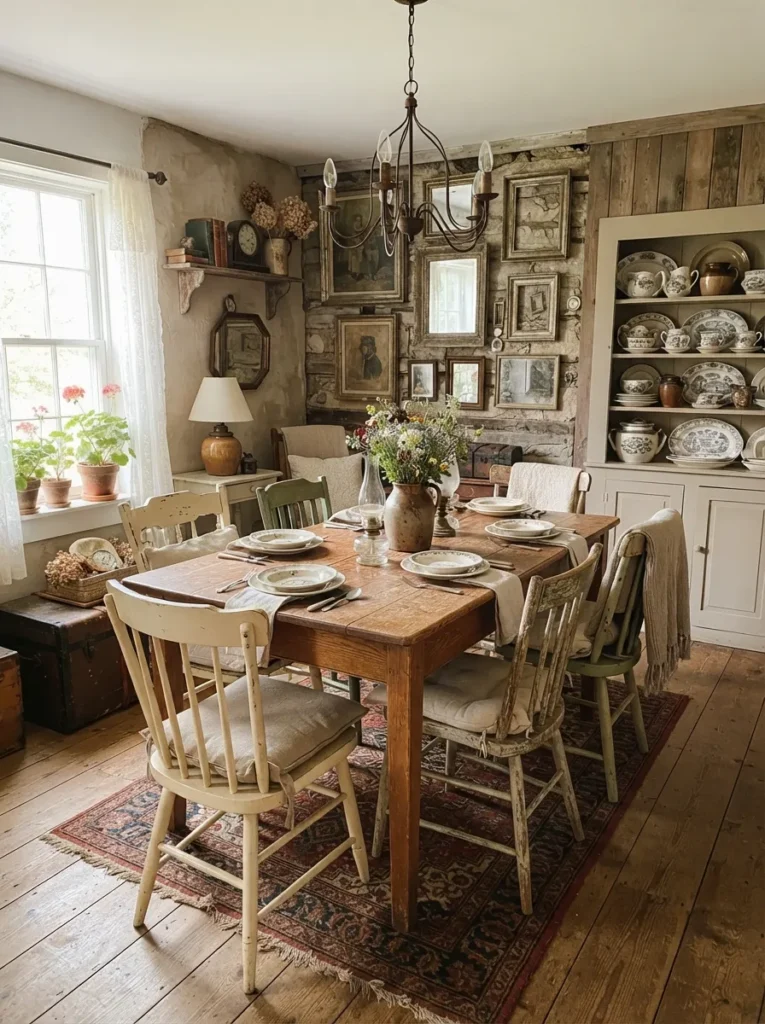
One or two genuinely old pieces, a vintage crate, an antique lamp, or a weathered side table, add real authenticity that new farmhouse style furniture alone can’t fully replicate.
These finds are worth prioritizing over buying several newer pieces, since a single well chosen antique often does more to establish the room’s character than multiple mass produced items styled to look old.
30. Add Black Metal Window Frames or Trim
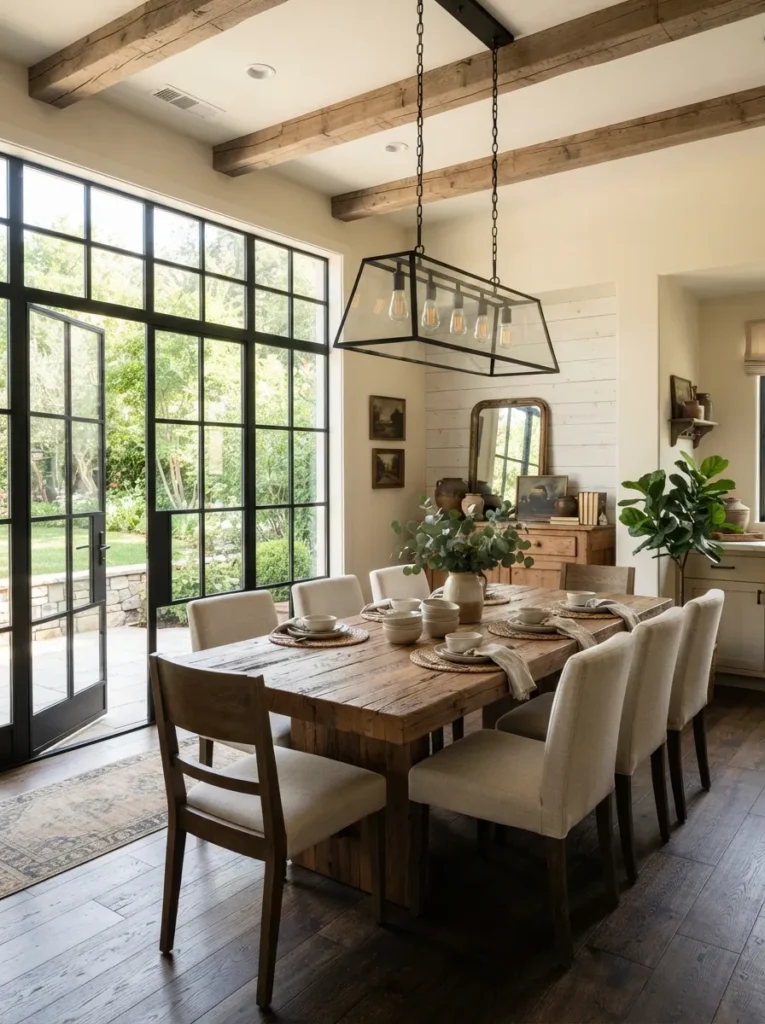
Black metal window frames, or simply black painted trim, add crisp contrast against the room’s lighter walls and wood tones, keeping the space from feeling too uniformly soft or washed out.
31. Keep the Table Ready for Everyday Gathering
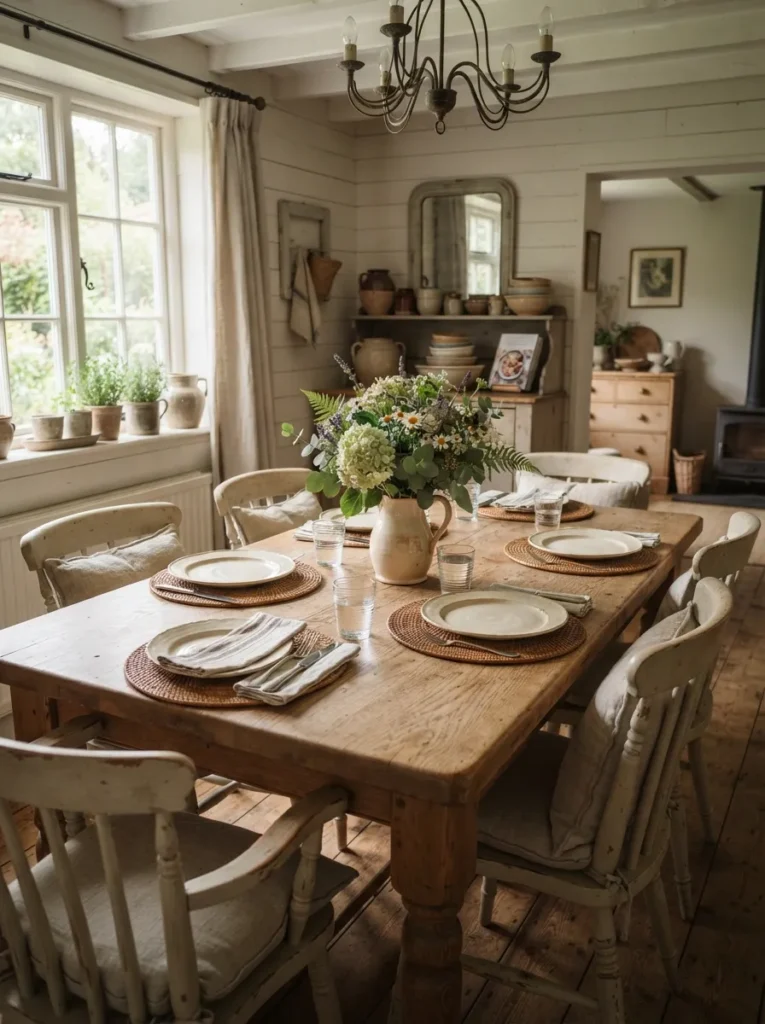
Despite all the character and texture, a farmhouse dining room is ultimately meant to be used often, not preserved for special occasions. Keep the table styled simply enough, a runner, a low centerpiece, that it invites regular meals rather than sitting reserved and untouched most of the year.
This point matters as much as any single design choice on this list. Farmhouse style was never meant to be precious, it was built around tables that saw daily use, and a dining room that stays true to that spirit will feel far more authentic than one that only gets styled for photographs.
A farmhouse dining room comes together through warmth, natural materials, and a sense of collected history more than any single expensive piece. Start with the table and lighting, since those two elements set the tone for the whole room, then layer in texture through rugs, textiles, and a few genuinely old finds to round out the space.