

If you open your pantry and feel a small wave of stress, you are not alone. A messy pantry makes cooking harder, wastes money on food you forgot you bought, and turns a simple task like finding pasta into a scavenger hunt. Boxes get pushed to the back, bags fall over, and before long the whole shelf feels like a puzzle nobody wants to solve.
The good news is that fixing this does not require a huge budget or a full weekend. With a few smart systems in place, your pantry can become a space that actually works for you instead of against you.
This guide walks you through 25 practical pantry organization ideas, from simple habits to clever storage tools. Pick the ones that fit your space and your budget, and start turning that chaotic cabinet into a calm, functional part of your kitchen.
Why Pantry Organization Matters More Than You Think
A cluttered pantry is not just an eyesore. It leads to duplicate purchases, expired food, and wasted time every single day. You buy a second jar of peanut butter because you could not see the first one, and a month later you find both, one nearly empty and one still full.
When everything has a clear spot, meal planning gets faster, grocery trips get shorter, and cooking feels less stressful. Think of pantry organization as an investment that pays you back every time you open the door.
Getting Started: Clear Everything Out First
Before buying a single bin or basket, take everything out of the pantry. This step feels tedious, but it gives you a true picture of what you own. It also lets you see how much shelf space you are truly working with, without guessing around items still sitting in place.
Wipe down the shelves once everything is out. A quick wipe removes crumbs, sticky spots, and stray flour that build up over time without anyone noticing.
Group similar items together as you set them back on the counter. Starting from a blank space makes every idea below much easier to apply, since you are building the system on a clean slate rather than working around old clutter.
1. Sort Before You Store
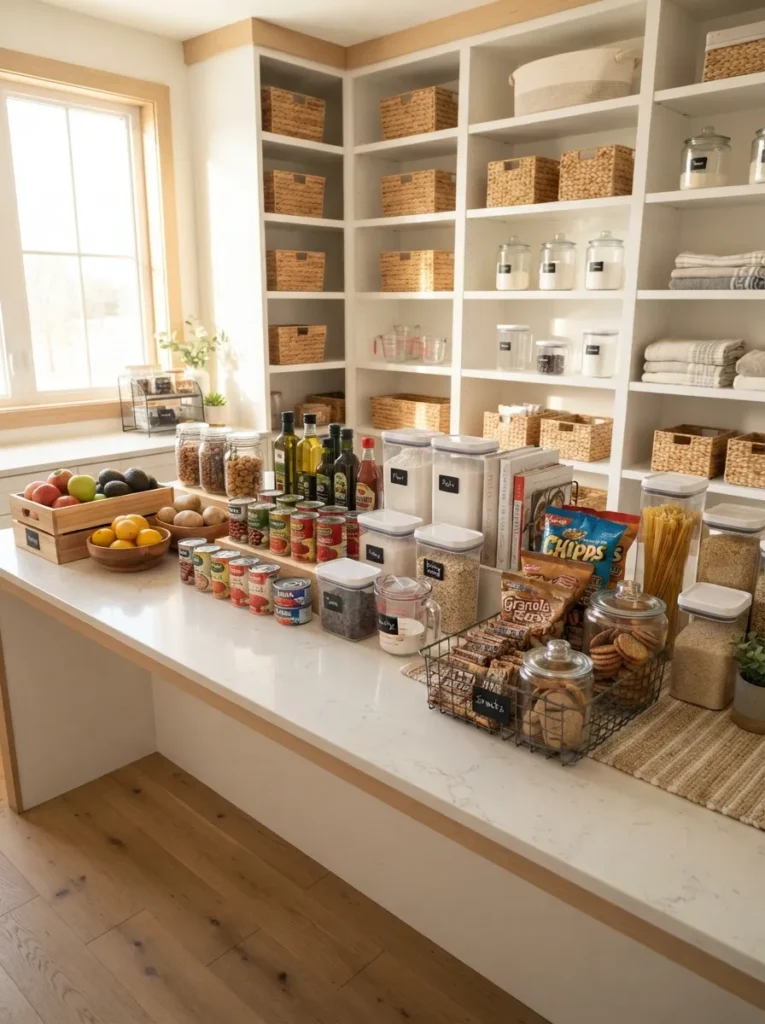
Group your items into simple categories such as:
- Baking supplies
- Snacks
- Canned goods
- Breakfast items
- Spices and seasonings
This sorting step is the foundation of a functional pantry, since every system you build afterward depends on knowing what you actually have.
2. Toss Expired and Stale Items Without Guilt
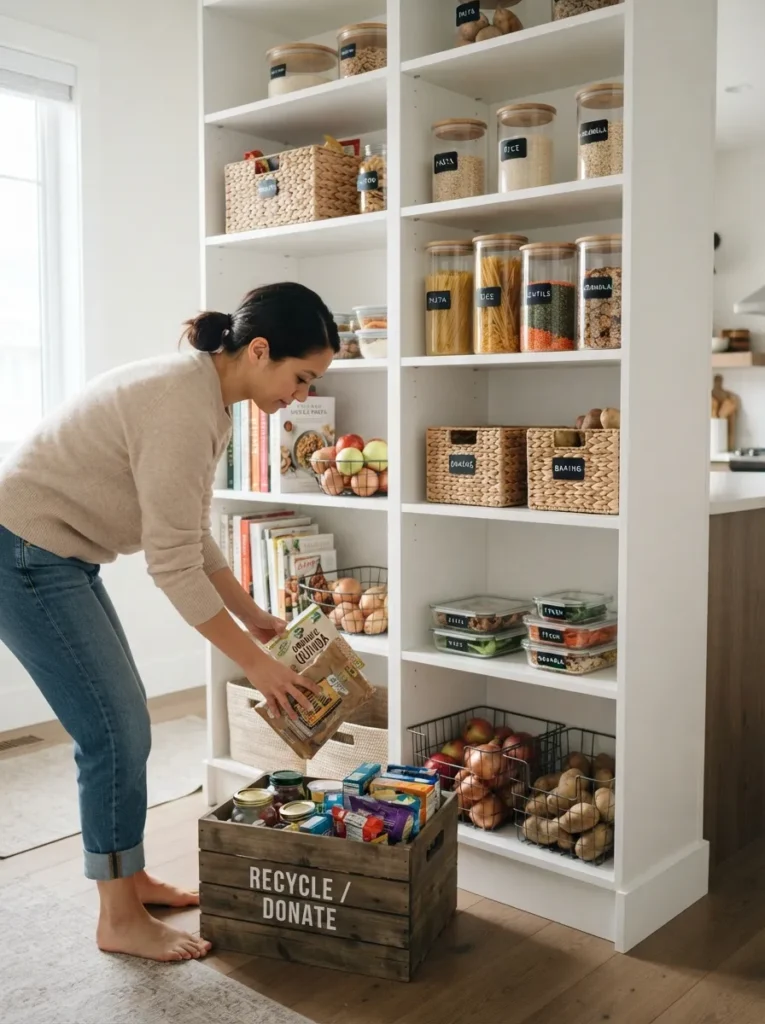
Check every date and give your fingers a quick sniff test on open packages. Holding onto expired spices or stale crackers only takes up space that could hold something you actually use.
Letting go of these items right away frees up real room fast, and it often reveals just how much space you had been losing without realizing it.
Smart Storage Solutions That Actually Work
3. Use Clear Containers for Dry Goods
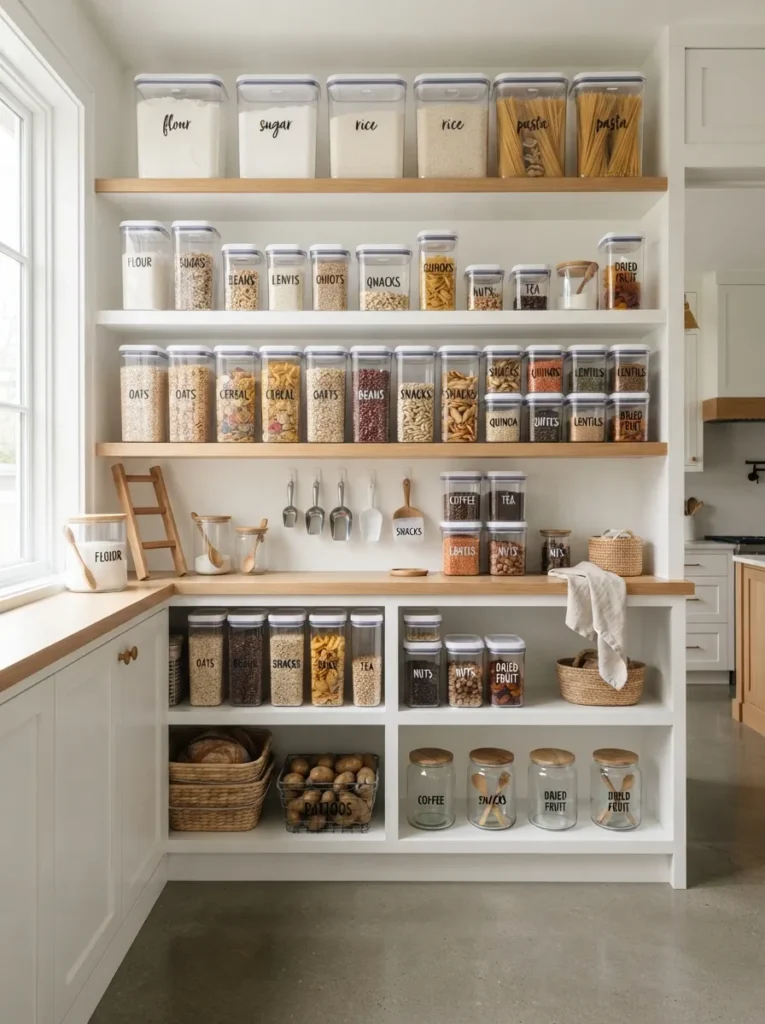
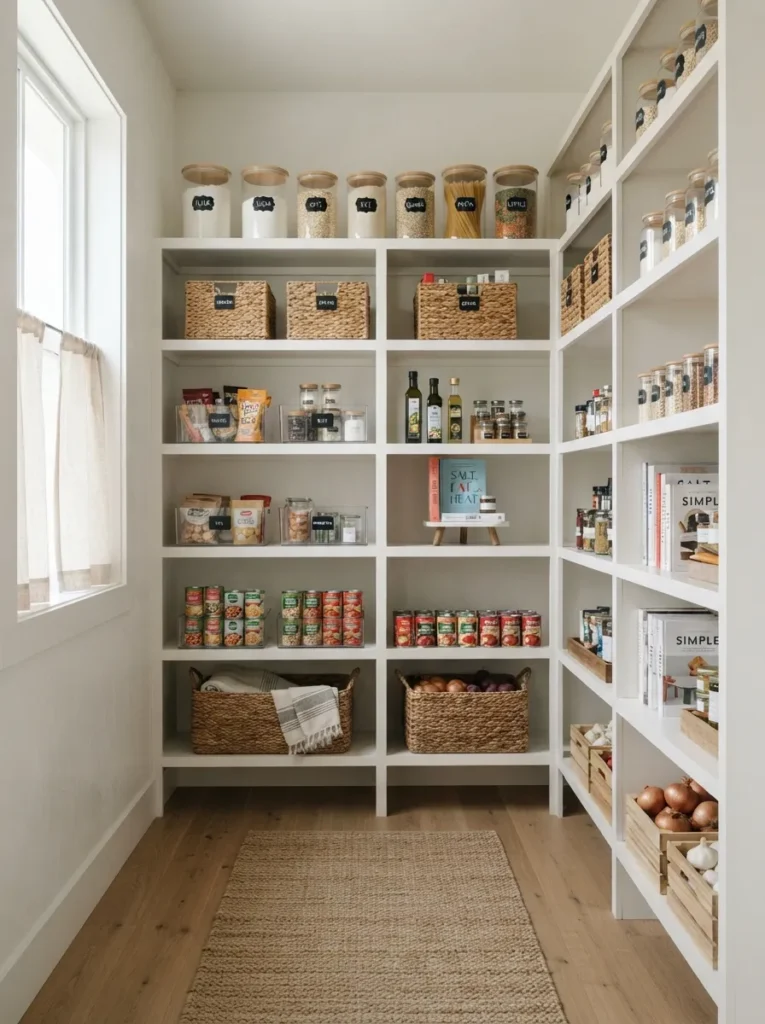
Transfer rice, flour, sugar, pasta, and cereal into clear airtight containers. Clear storage lets you see at a glance when you are running low, and it keeps pests and moisture away from your food far better than the original bags.
Uniform containers also stack neatly, which means less wasted vertical space and a shelf that looks calm instead of crowded.
4. Label Every Container
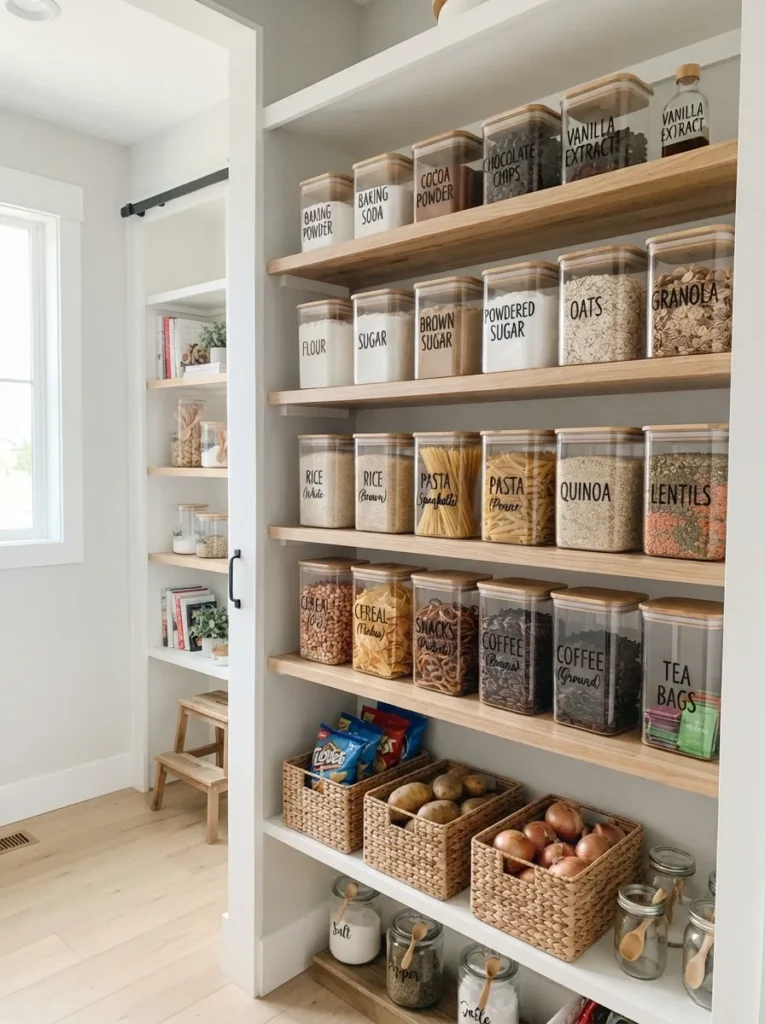
A simple label maker or handwritten tags on masking tape can turn a guessing game into a quick glance. Labels help everyone in the household put items back in the right spot, which keeps the system working long term.
5. Add Lazy Susans for Awkward Corners
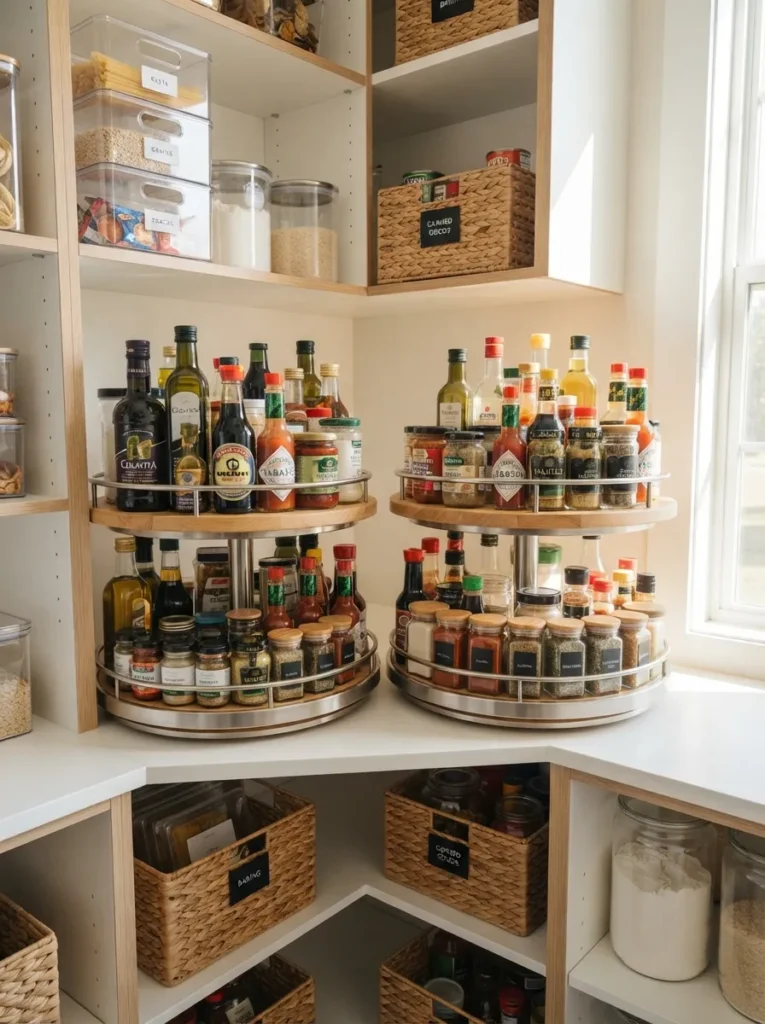
Turntables are perfect for oils, sauces, and small jars that tend to hide behind bigger items. Instead of digging through the back of a shelf, a simple spin brings everything into view. They work especially well in corner cabinets where reaching the back row is nearly impossible by hand.
6. Install Wire or Wood Shelf Risers
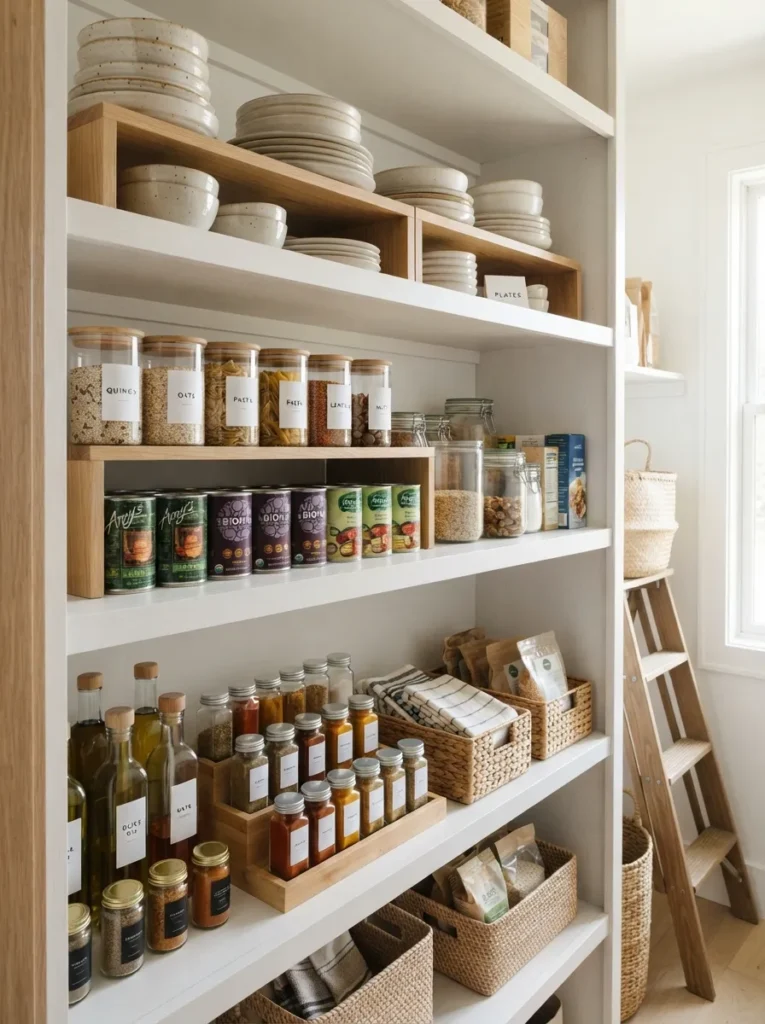
Risers let you stack cans and boxes in two layers instead of one, effectively doubling your usable shelf space without any construction work.
7. Try Stackable Bins for Snacks and Packets
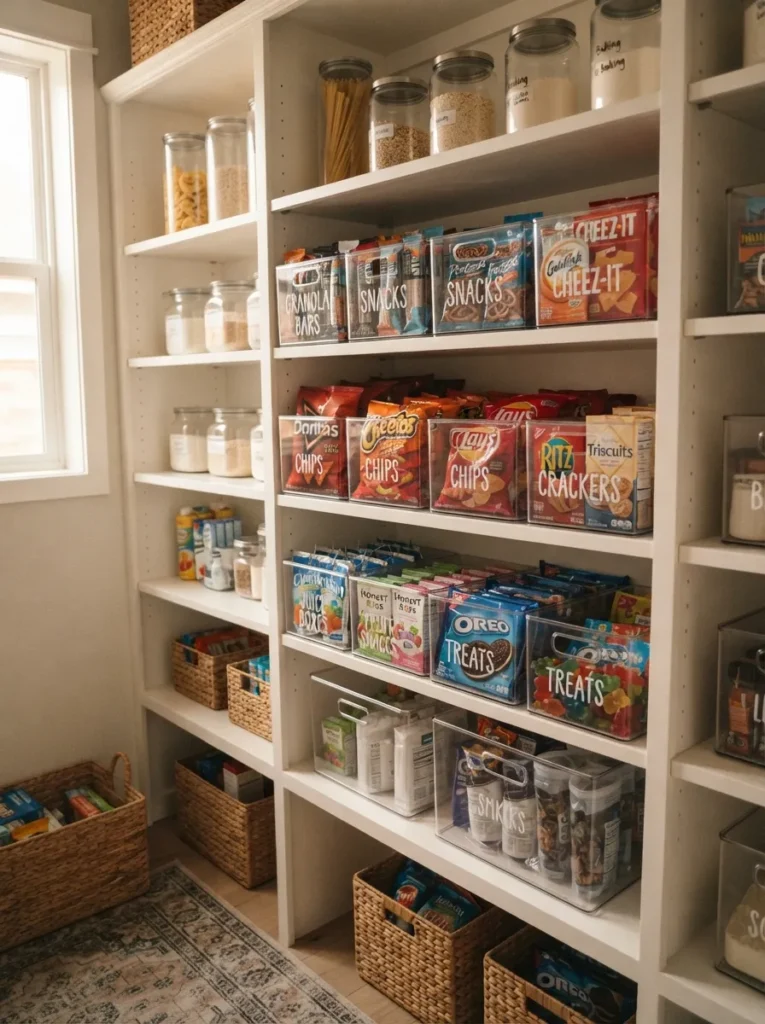
Loose granola bars, chip bags, and sauce packets tend to slide everywhere. Stackable bins keep them upright and contained, and pulling one bin out gives you access without disturbing the rest of the shelf. Over time, this small change alone can cut down on a lot of daily frustration.
8. Use a Door Organizer
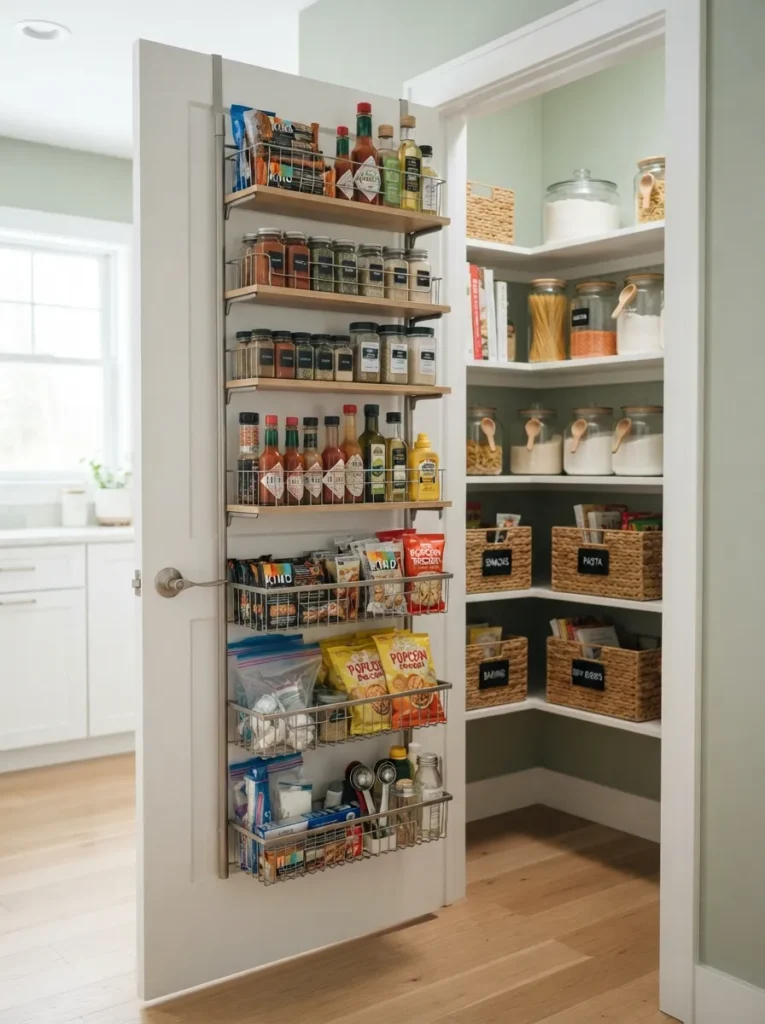
The back of your pantry door is often wasted space. An over the door rack with pockets or hooks is a great spot for:
- Spice packets
- Rolls of foil or plastic wrap
- Small snack bags
- Extra reusable shopping bags
9. Set Up a Drawer for Bags of Chips and Bread
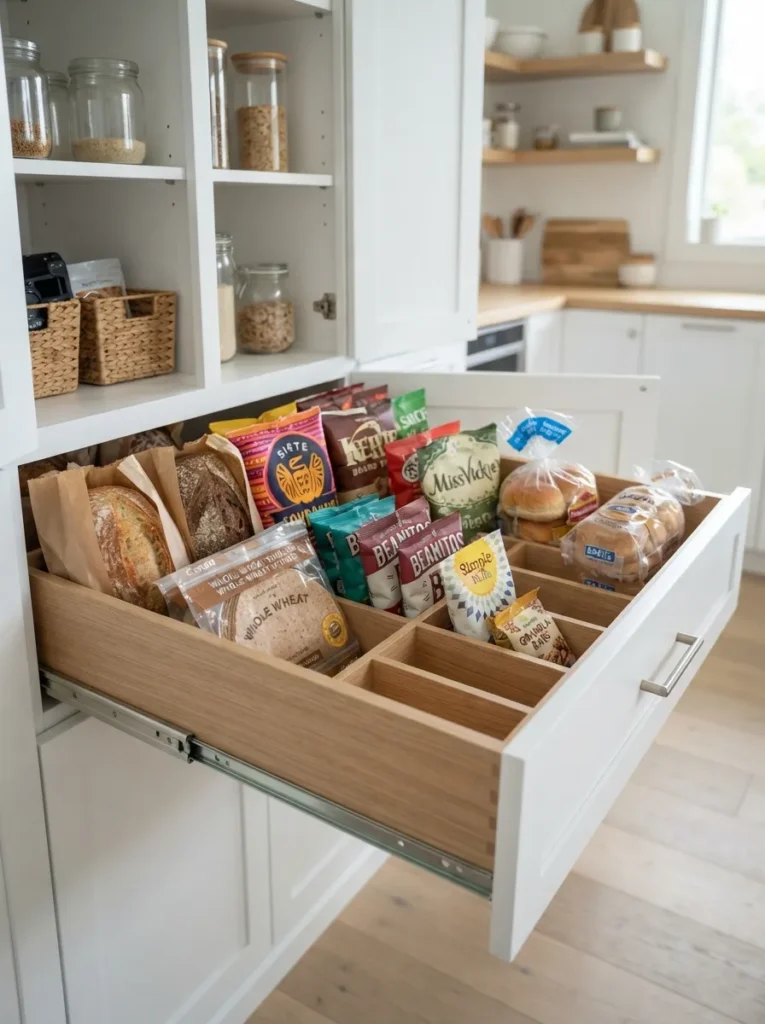
A wide, shallow drawer or basket works well for bulky bagged items like bread, tortillas, and chips, since they tend to fall over on regular shelves.
10. Group Baking Supplies in One Basket
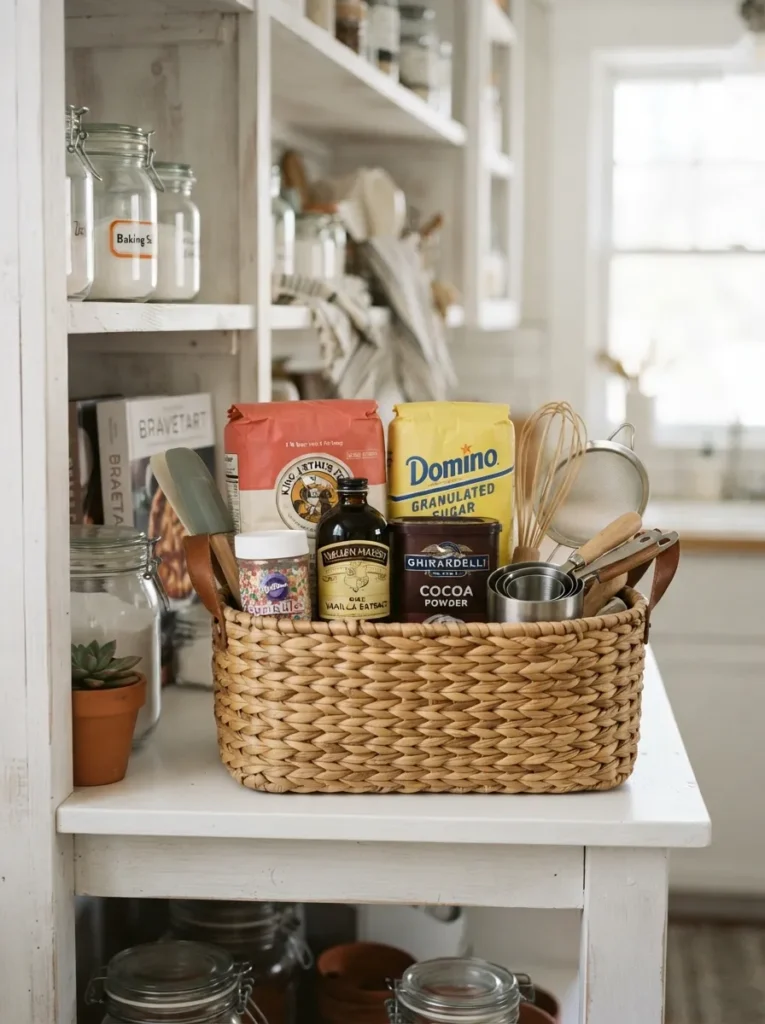
Keep flour, sugar, baking soda, chocolate chips, and sprinkles together in one bin so baking day does not turn into a search party across three shelves. When everything you need for a recipe lives in one place, you are also more likely to actually bake instead of putting it off.
Making the Most of Vertical Space
11. Add Extra Shelving Where You Can
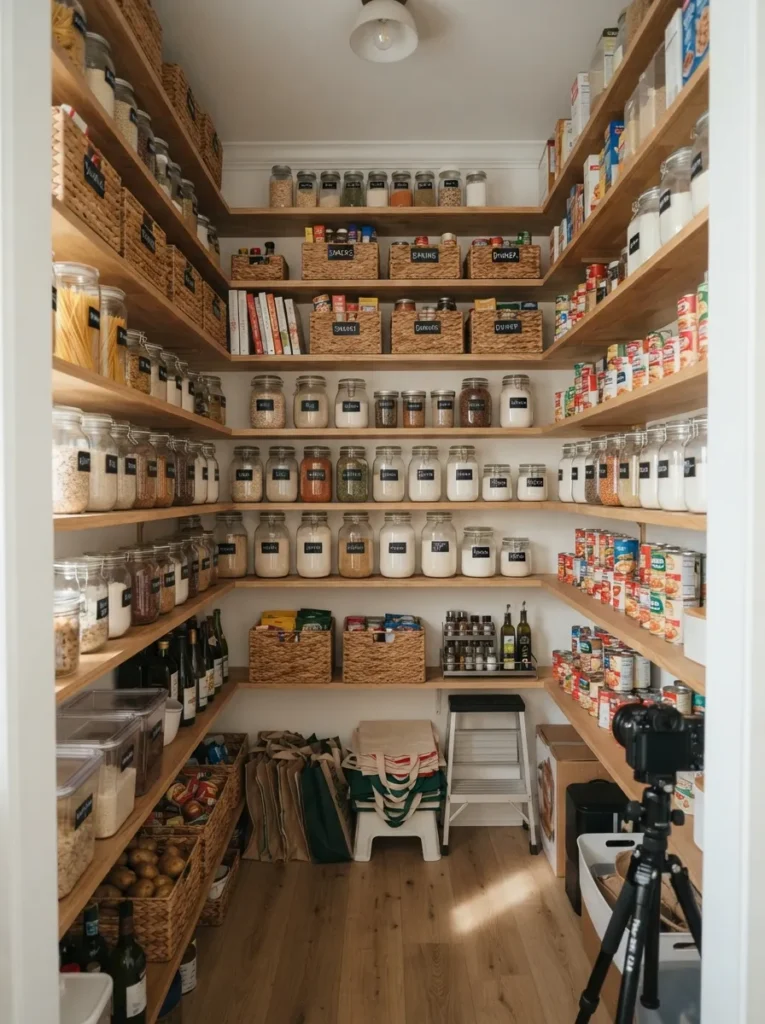
If your pantry has one tall gap with nothing but air above your canned goods, a slim extra shelf or shelf riser can turn that dead space into storage for lightweight items.
12. Hang a Tiered Shelf for Cans
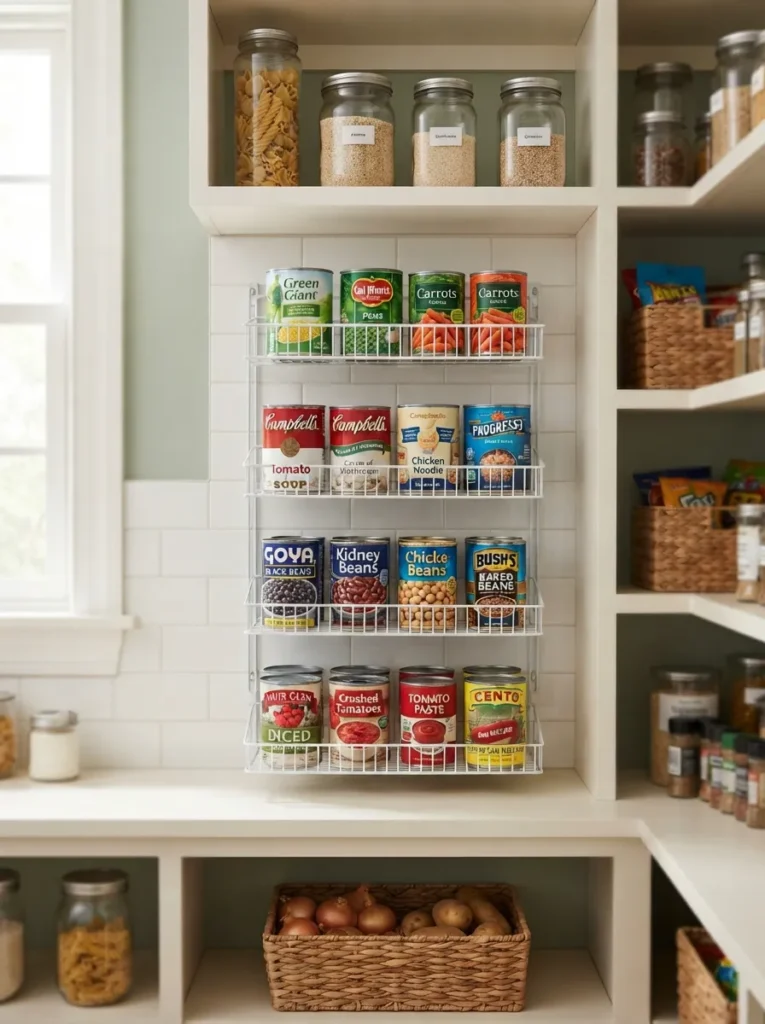
A stepped shelf insert lets you see every can at once instead of stacking them in a pile where the bottom row gets forgotten. This one small tool often solves the mystery of cans that sit untouched for a year.
13. Use Wall Hooks for Aprons and Bags
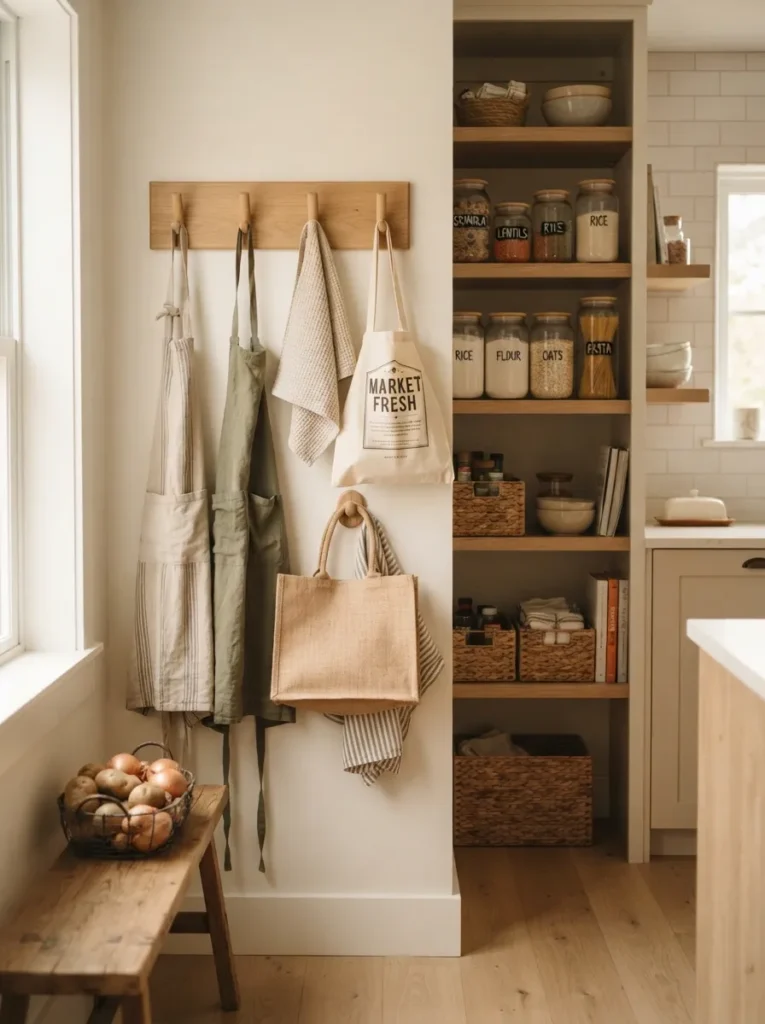
If your pantry is deep enough, hooks on the side wall are a smart spot for reusable grocery bags, aprons, or oven mitts that otherwise clutter a drawer.
14. Store Baskets on the Top Shelf for Items You Rarely Use
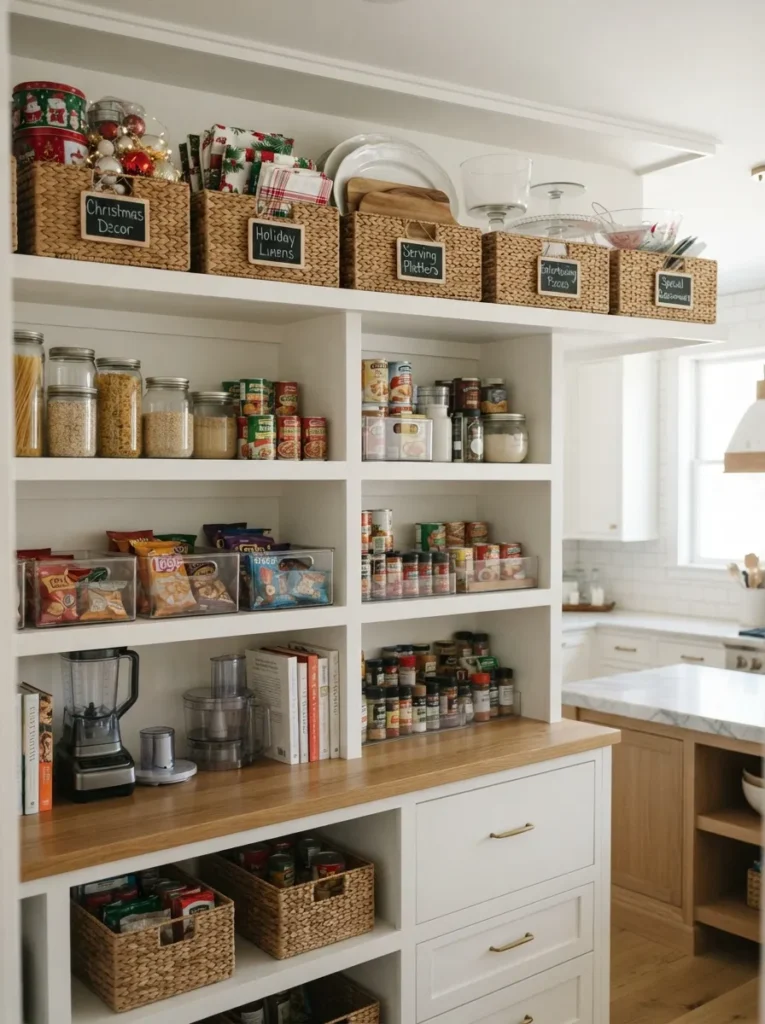
Holiday baking tools, extra appliances, or bulk paper goods can live in a labeled basket up top, out of the way but still accessible with a step stool. Keeping these rarely used items high up frees your middle shelves for the food you reach for every day.
Keeping Everyday Items Within Easy Reach
15. Put Frequently Used Items at Eye Level
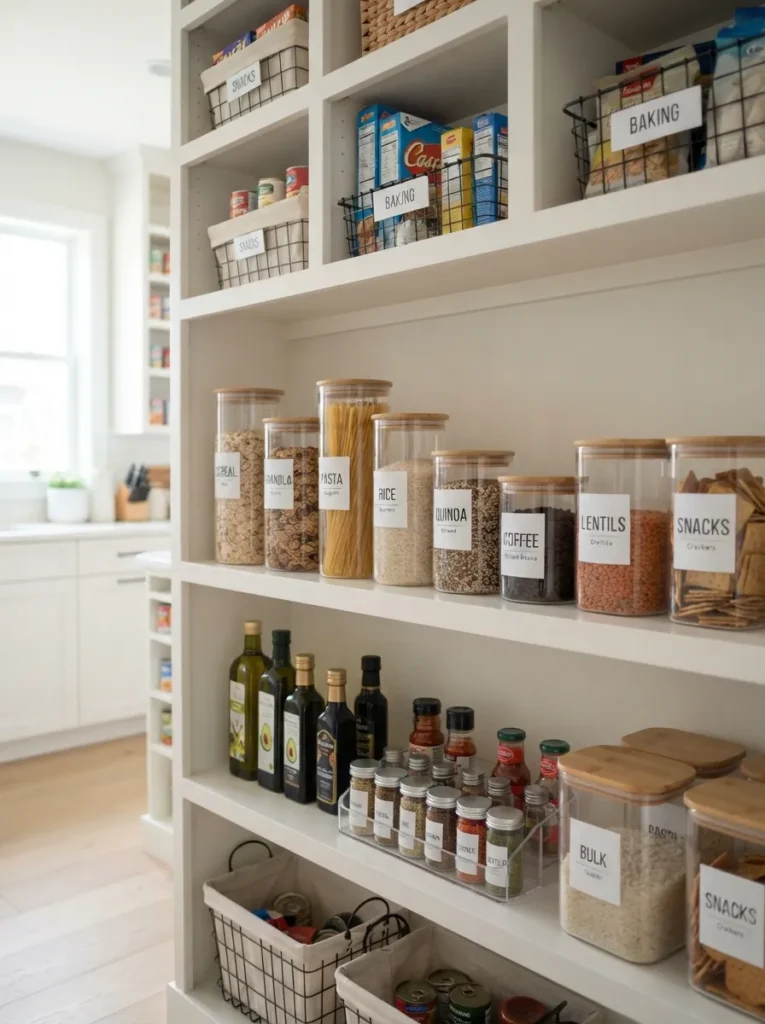
Cooking oils, cereal, coffee, and snacks you reach for daily belong on the middle shelves, right at eye level, so you never have to bend or stretch for the basics.
16. Keep Kids Snacks Low and Accessible
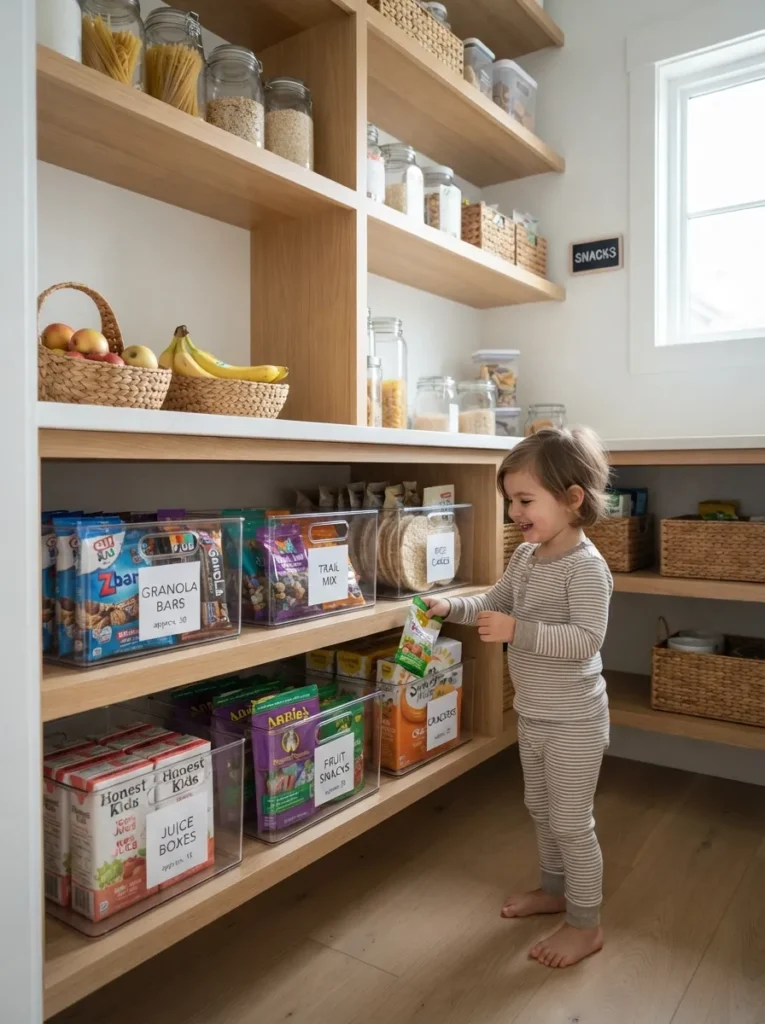
If little ones grab their own snacks, a low bin filled with approved options saves you from constant requests and lets kids build a bit of independence. It also cuts down on the small messes that happen when kids climb or reach for something out of view.
17. Create a Grab and Go Breakfast Bin
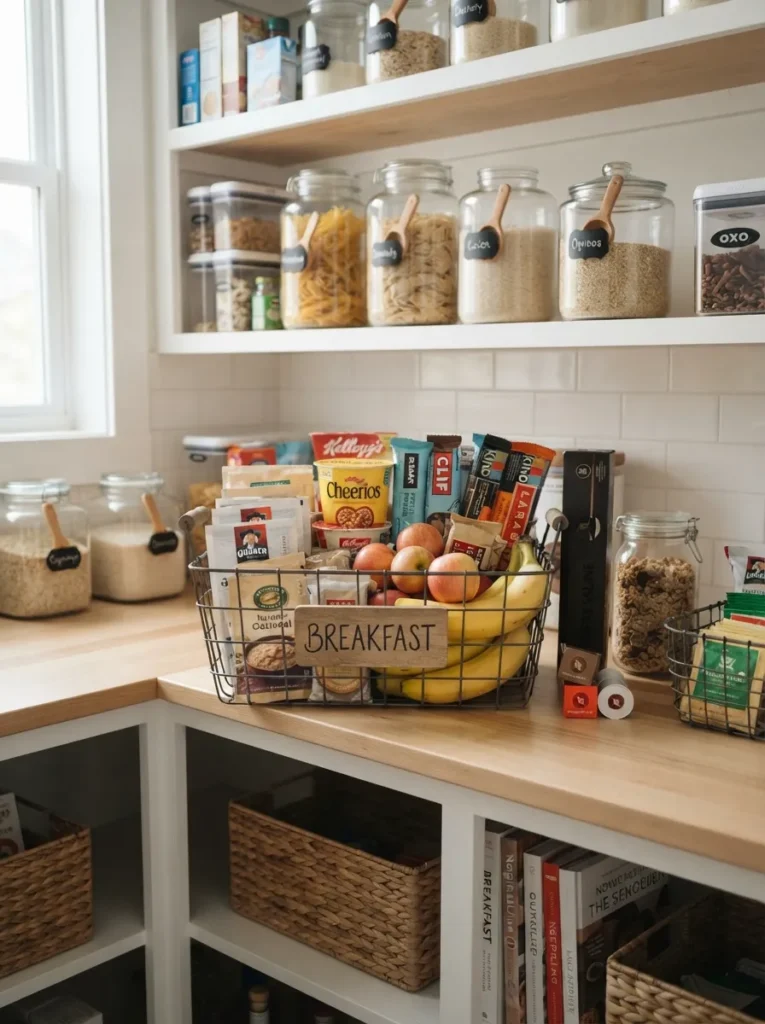
Oatmeal packets, granola bars, and small cereal boxes grouped in one bin near the front make busy mornings faster for the whole family.
18. Reserve a Shelf for Meal Prep Staples
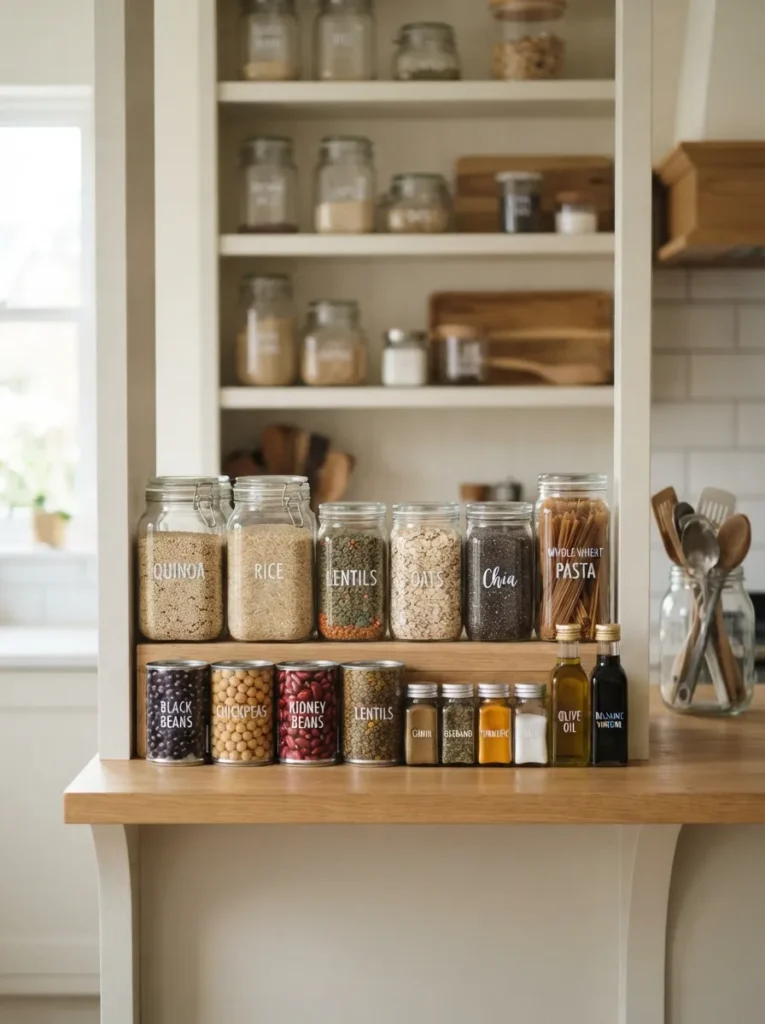
If you cook the same base ingredients often, such as rice, beans, and canned tomatoes, give them a dedicated shelf so meal planning becomes automatic. Over time you will start reaching for that shelf first without even thinking about it.
Organizing Spices and Small Items
19. Use a Spice Rack or Tiered Insert
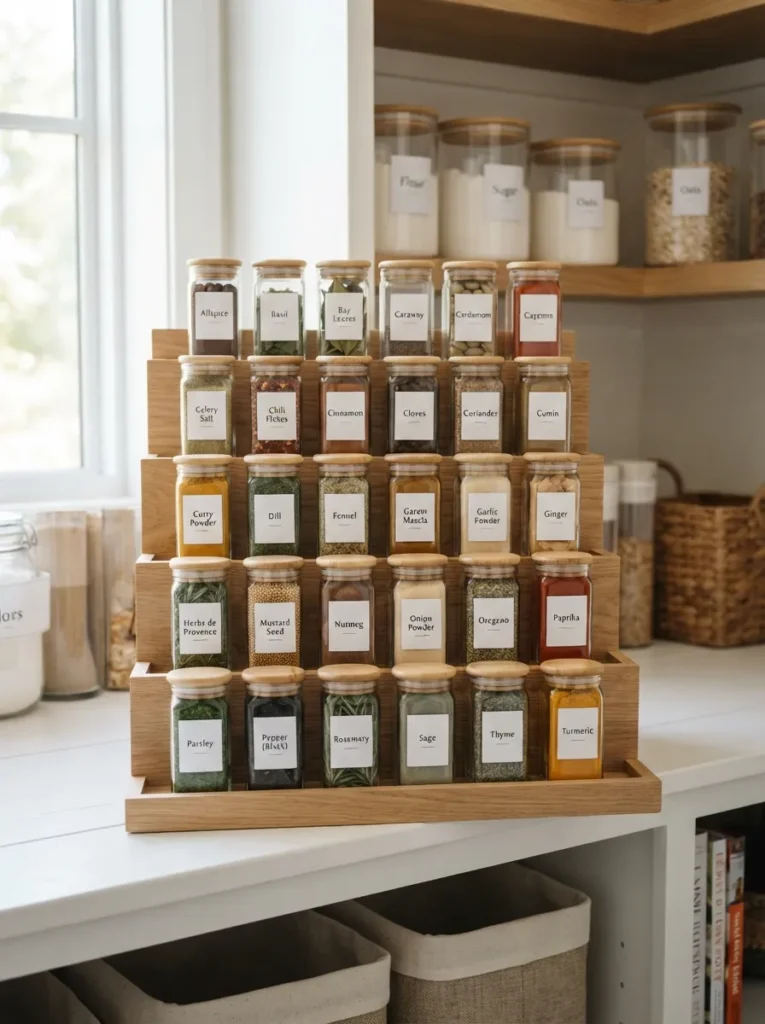
Small tiered shelves made for spice jars let you read every label from above instead of pulling out jars one by one. This tends to be one of the most satisfying upgrades, since spices are often the most disorganized corner of any pantry.
20. Decant Spices Into Matching Jars
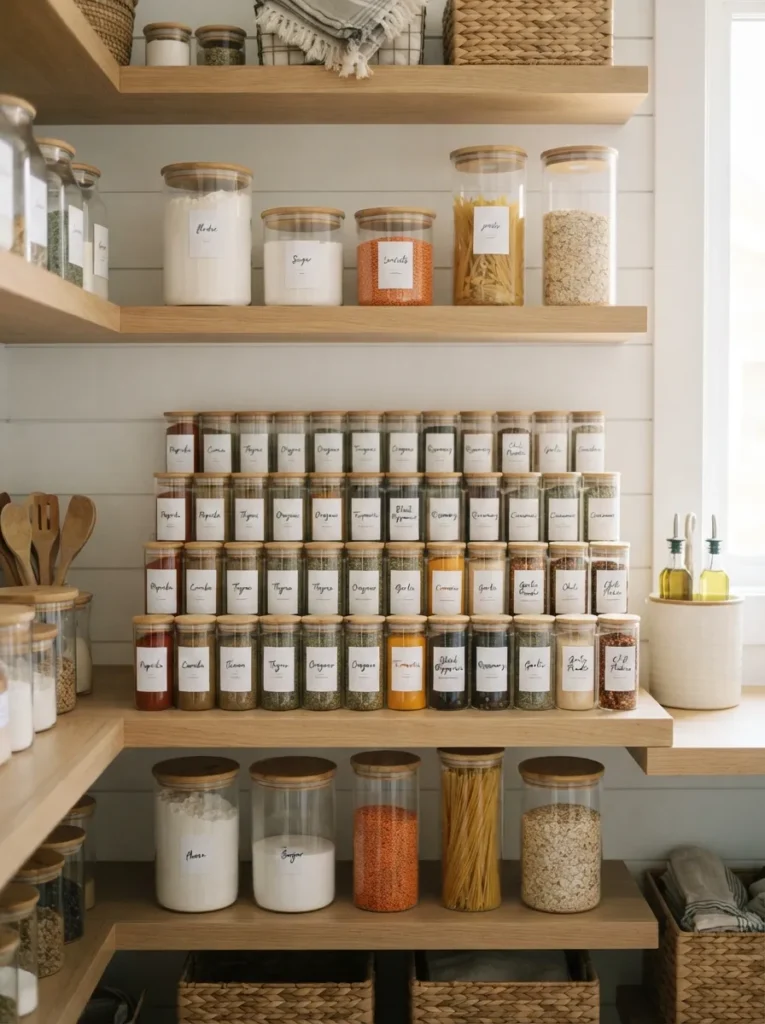
Uniform jars with clear labels not only look tidy but also save space, since bulky store packaging often wastes far more room than needed.
21. Store Small Packets in a Divided Bin
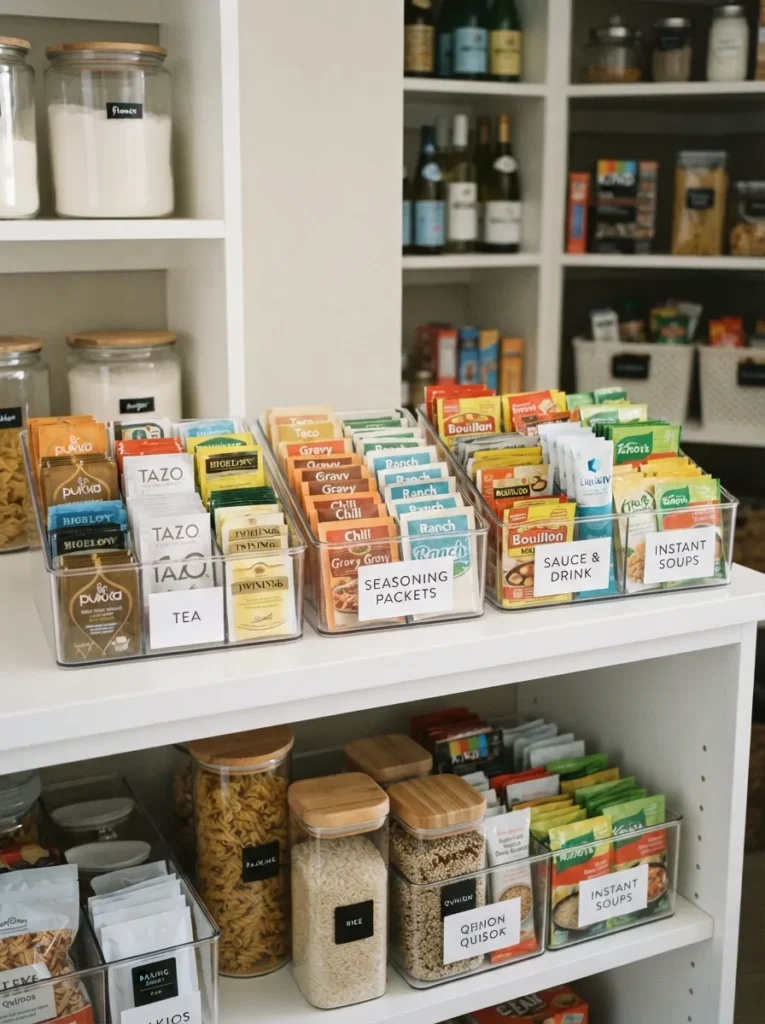
Taco seasoning, gravy mixes, and hot sauce packets tend to scatter everywhere. A small divided caddy keeps them sorted by type, so a taco night does not turn into a search through every corner of the shelf.
Maintaining Your System Long Term
22. Do a Five Minute Reset Each Week
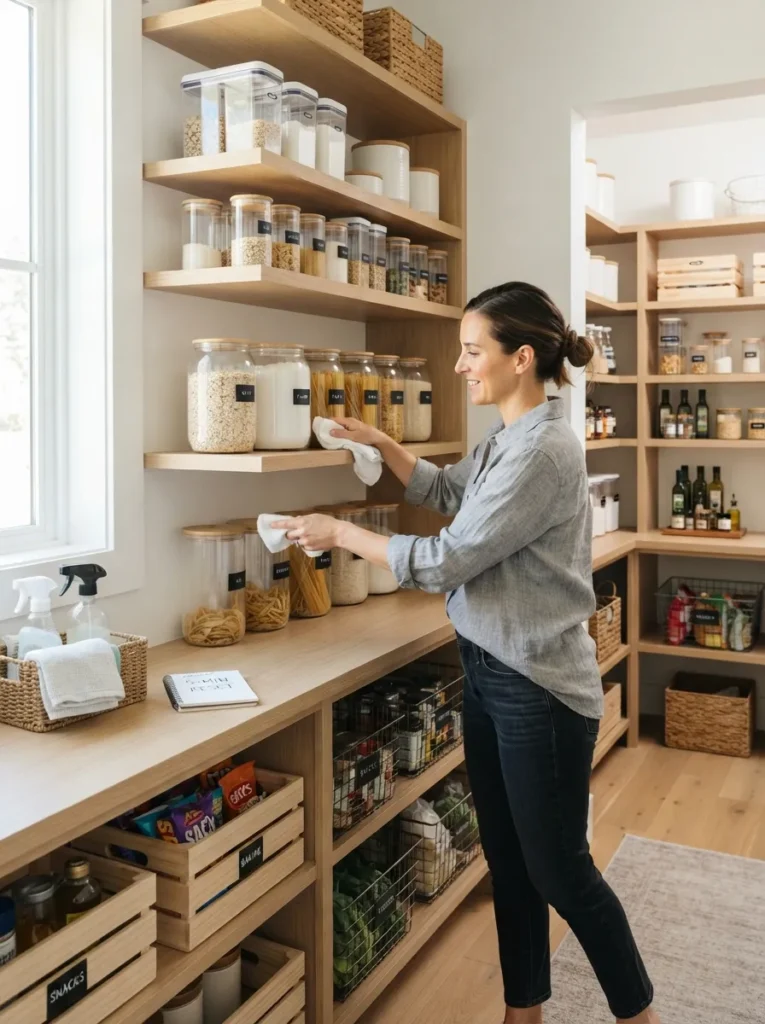
Before your grocery trip, spend five minutes putting stray items back where they belong. This small habit prevents the slow slide back into clutter, and it takes far less effort than a full reorganizing session every few months.
23. Practice First In, First Out
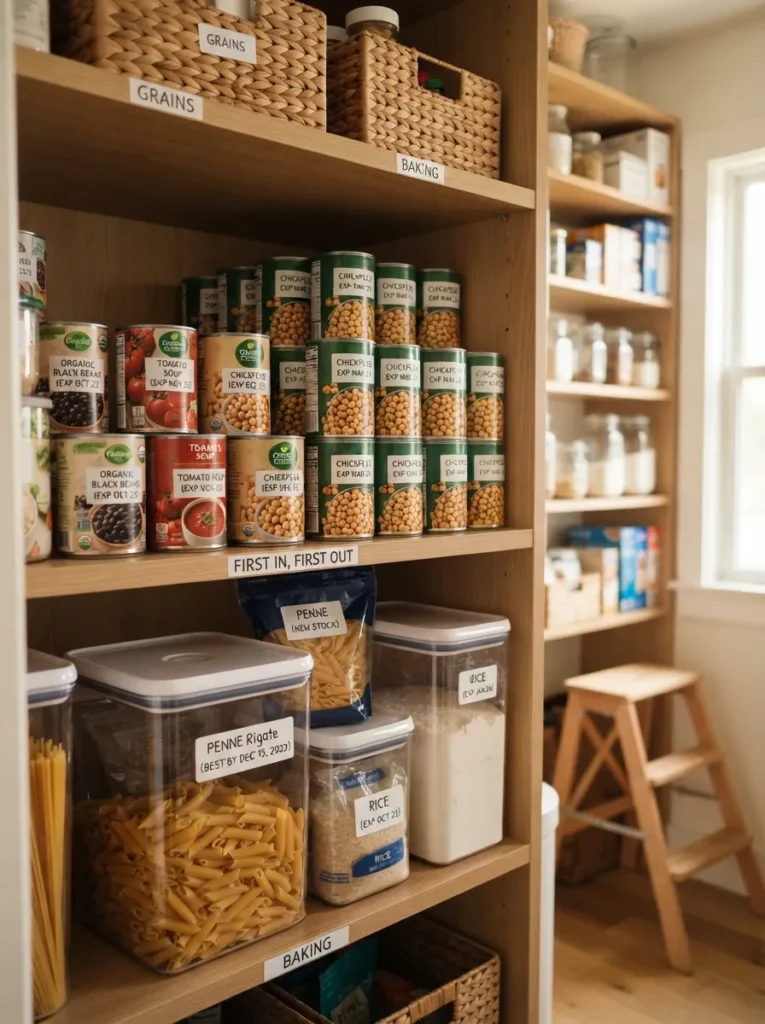
When you restock, move older items to the front and place new purchases behind them. This simple habit helps you use up food before it expires.
24. Keep a Running Grocery List on the Pantry Door
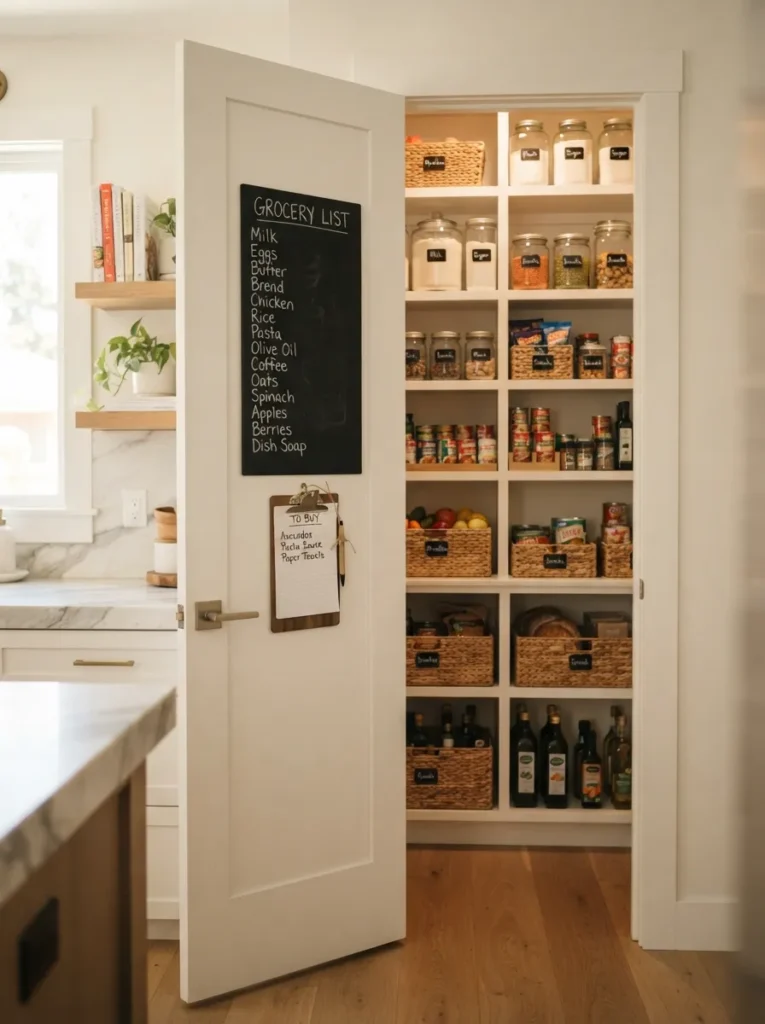
A notepad or whiteboard on the inside of the door lets anyone jot down an item the moment it runs low, so nothing gets forgotten at the store. It also gives the whole household one shared spot to track what is missing, instead of relying on memory alone.
25. Reassess Every Few Months
Your household needs change, and so should your pantry setup. A quick review every few months lets you adjust bins, shelves, and categories to match how your family actually eats and shops. What worked perfectly last year might not fit the way you cook today, and that is completely normal.
Final Thoughts on Building a Clutter Free Pantry
You do not need a magazine worthy pantry to enjoy the benefits of good organization. Even a handful of these ideas, applied consistently, can turn a chaotic cabinet into a space that saves you time, money, and daily frustration.
Start small, pick two or three ideas that solve your biggest pain points right now, and build from there. Once the system is in place, keeping it tidy becomes part of your normal routine rather than a chore, and every trip to grab dinner ingredients gets a little easier.