

A modern dining room has to balance two things that don’t always come naturally together, clean architectural lines and an atmosphere warm enough to actually want to sit and linger in. Too much restraint and the room feels cold, too much decoration and it stops feeling modern at all. These 23 ideas work through that balance in detail, explaining the reasoning behind each choice rather than just listing what to buy.
1. Choose a Table With a Sculptural Base
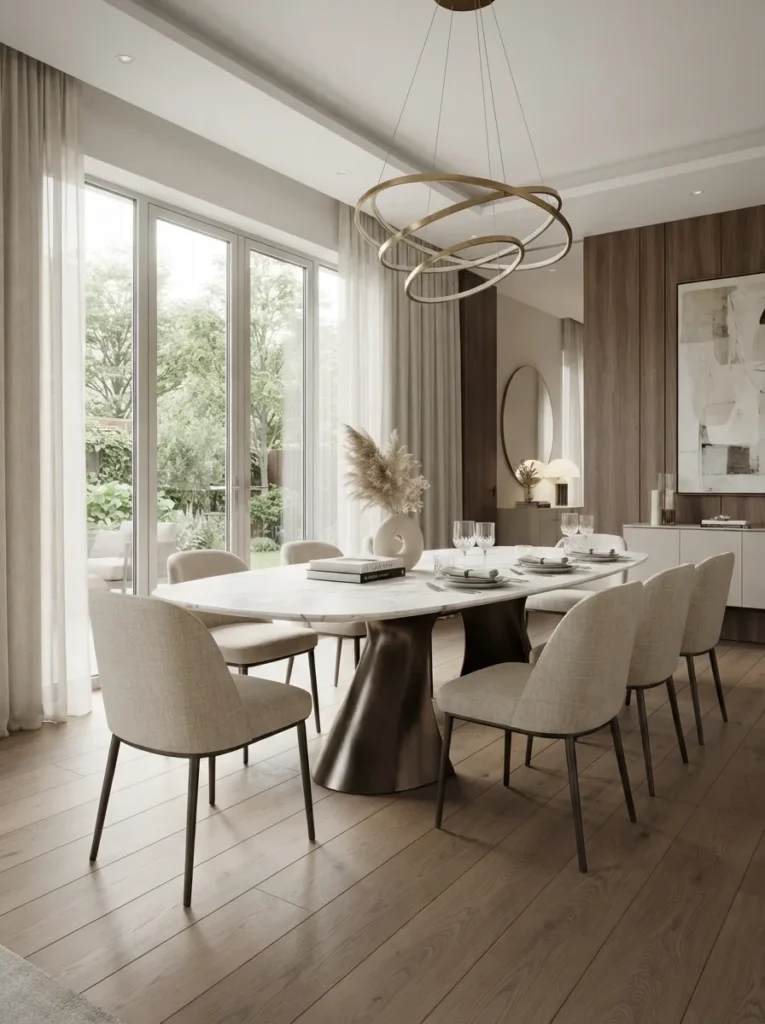
A pedestal, waterfall, or sculptural metal base gives a modern dining table a stronger visual identity than a standard four leg design. This detail also frees up legroom around the table, since there’s no leg positioned at each corner to work around.
Stone or engineered quartz tops paired with a metal base are especially popular right now, since the contrast between the two materials reinforces the sense of intentional, considered design rather than a matched furniture set bought as a single unit.
2. Add a Sculptural Pendant or Linear Chandelier
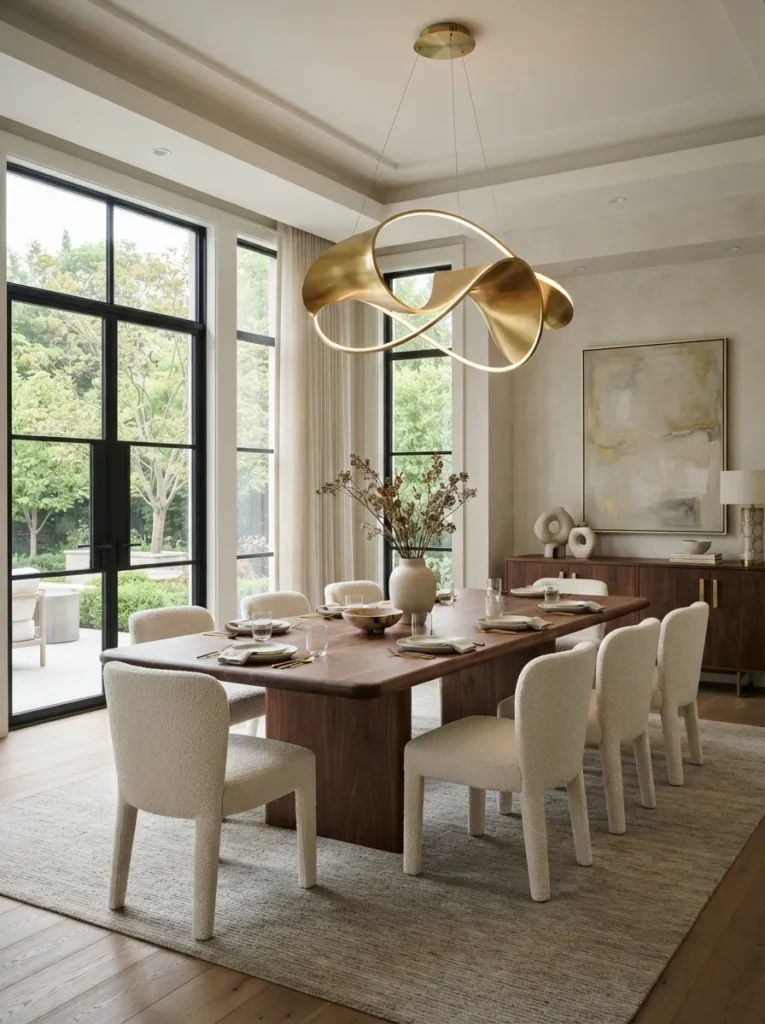
Modern dining rooms favor lighting with a clear architectural shape, a sculptural pendant, a linear chandelier over a rectangular table, or a cluster of smaller fixtures grouped together. Choose something with a strong silhouette rather than anything ornate or heavily detailed.
- A single sculptural pendant over a round table
- A linear fixture spanning most of a rectangular table’s length
- Three smaller pendants grouped evenly overhead
- A dimmable option in every case for flexibility
3. Use a Monochromatic Color Palette
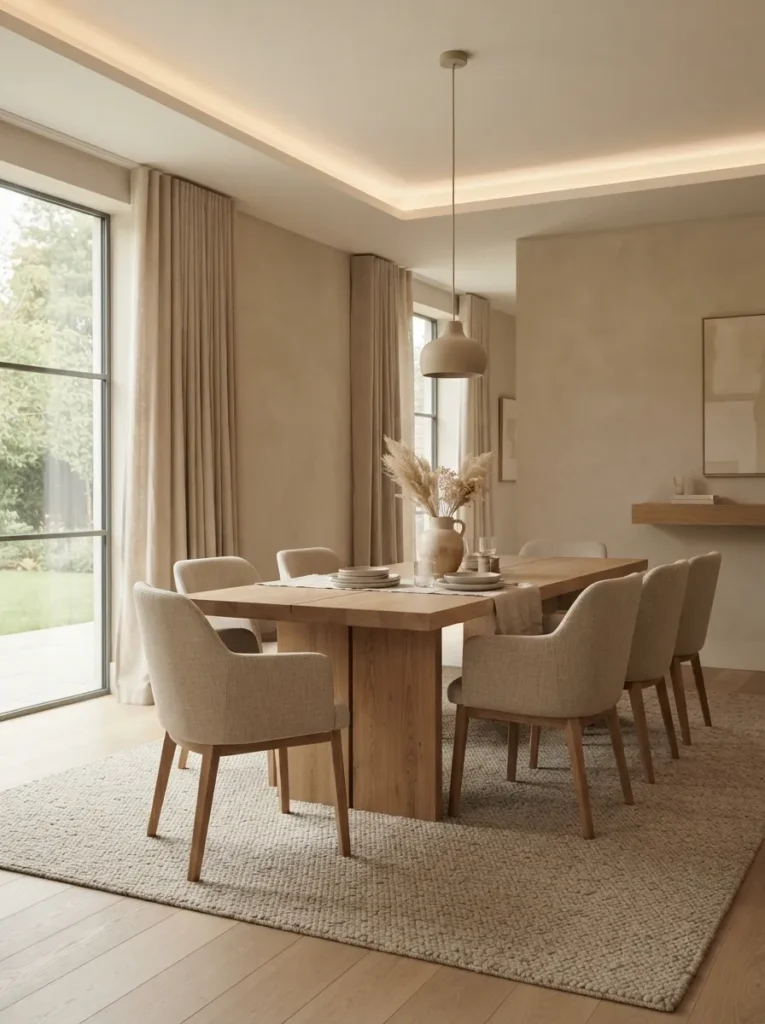
Working within one or two closely related tones across your walls, table, and chairs creates the calm, cohesive look central to modern design. Reserve any bolder color for a single, deliberate accent, like one chair upholstery or a piece of art, rather than spreading it throughout the room.
4. Choose Chairs With Clean, Simple Silhouettes
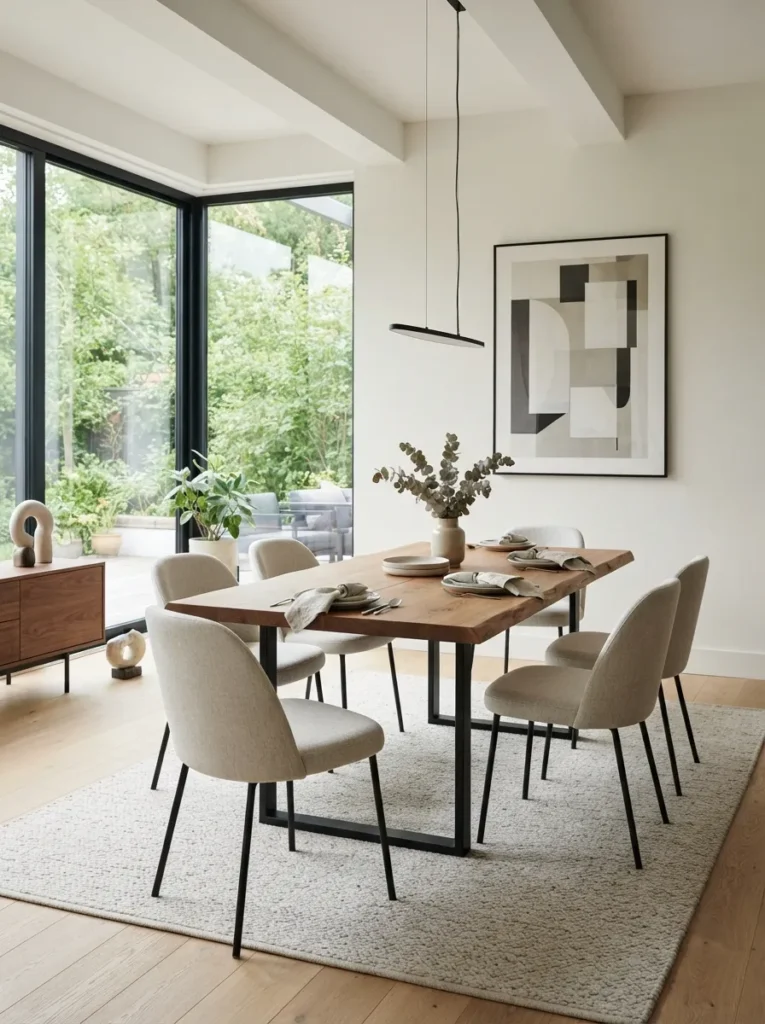
Dining chairs with straight or gently curved lines, minimal detailing, and a single upholstery or wood tone fit modern design far better than anything ornate or heavily carved. A slightly curved backrest can add softness without pulling the chair away from its modern lines.
5. Add Black or Matte Metal Accents
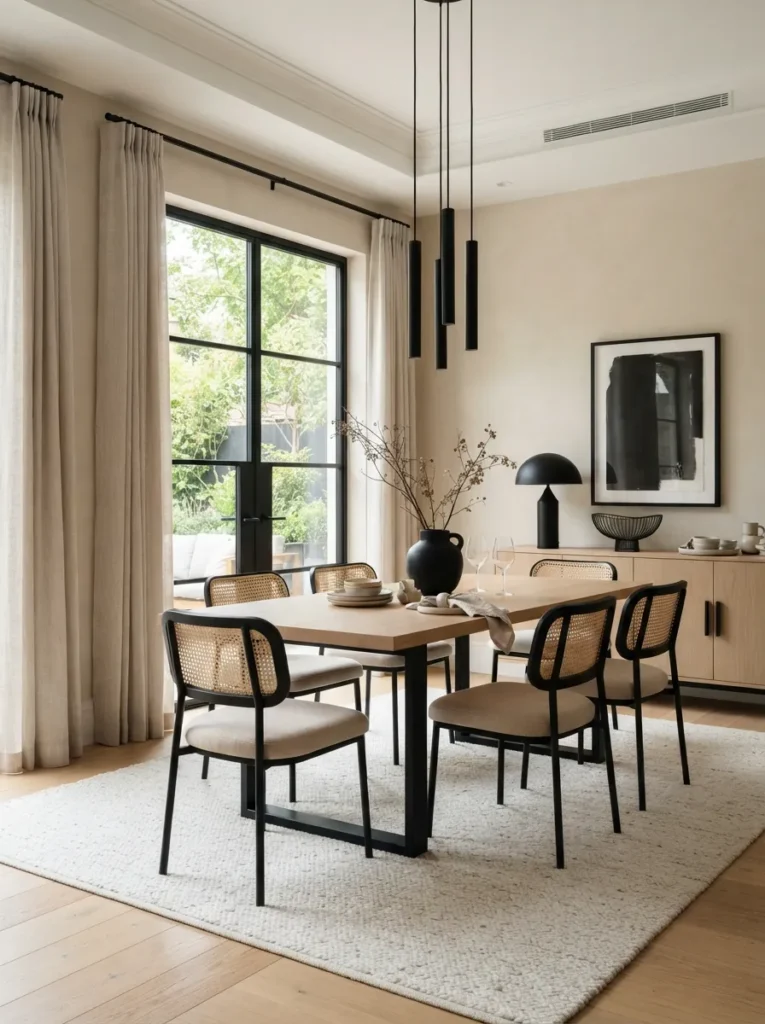
Black window frames, matte black light fixtures, and dark hardware on a nearby sideboard add sharp, graphic contrast against lighter walls and table surfaces. This detail is one of the fastest ways to sharpen a room that might otherwise feel a bit soft or undefined.
6. Use a Statement Rug With a Subtle Pattern
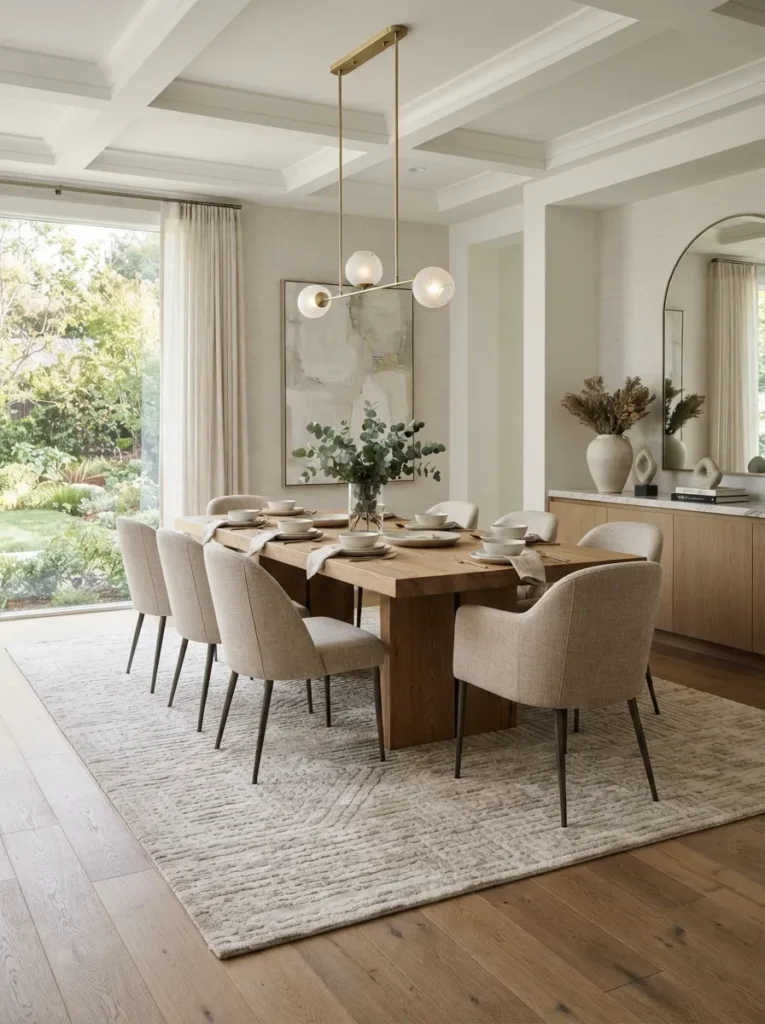
A rug in a low contrast geometric or abstract pattern anchors the table without competing with the room’s other clean lines. Avoid anything with a busy, high contrast print if the rest of the room leans minimal, since the two aesthetics tend to work against each other.
7. Choose an Open Shelving Display Instead of a Full China Cabinet
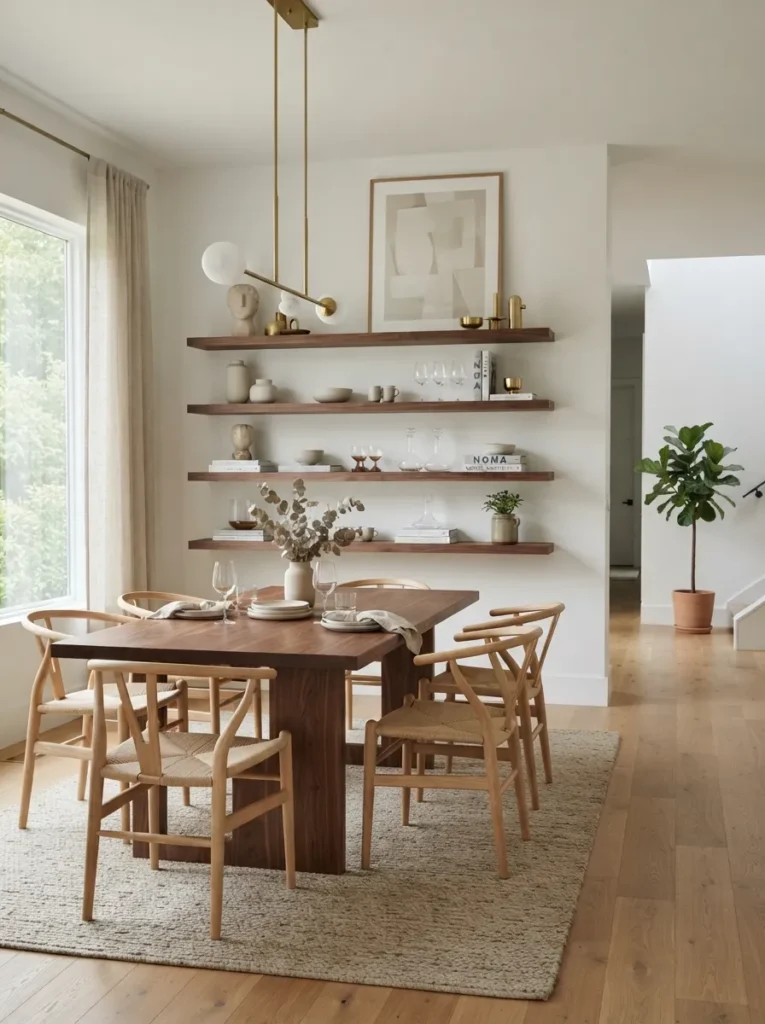
Open shelving for glassware and dishware feels lighter and more modern than an enclosed china cabinet, and it gives you a spot to display a curated, edited collection rather than hiding everything behind cabinet doors.
Keep the styling on these shelves intentionally sparse, since overcrowded open shelving reads as cluttered fast in a room built around restraint. A few pieces with breathing room around them will always look more considered than a shelf packed edge to edge.
8. Add a Long, Low Centerpiece
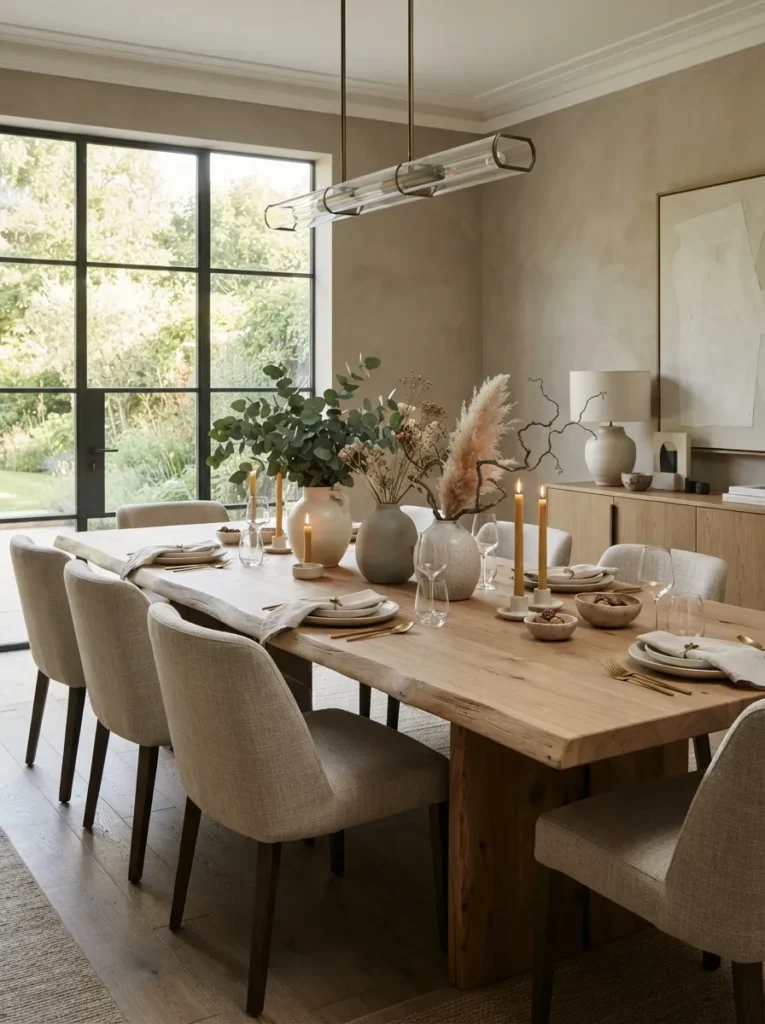
A single low, horizontal centerpiece, whether a shallow bowl, a runner of greenery, or a cluster of low candles, keeps sightlines open across the table while still adding visual interest down its length.
9. Use Floor to Ceiling Curtains in a Solid Tone
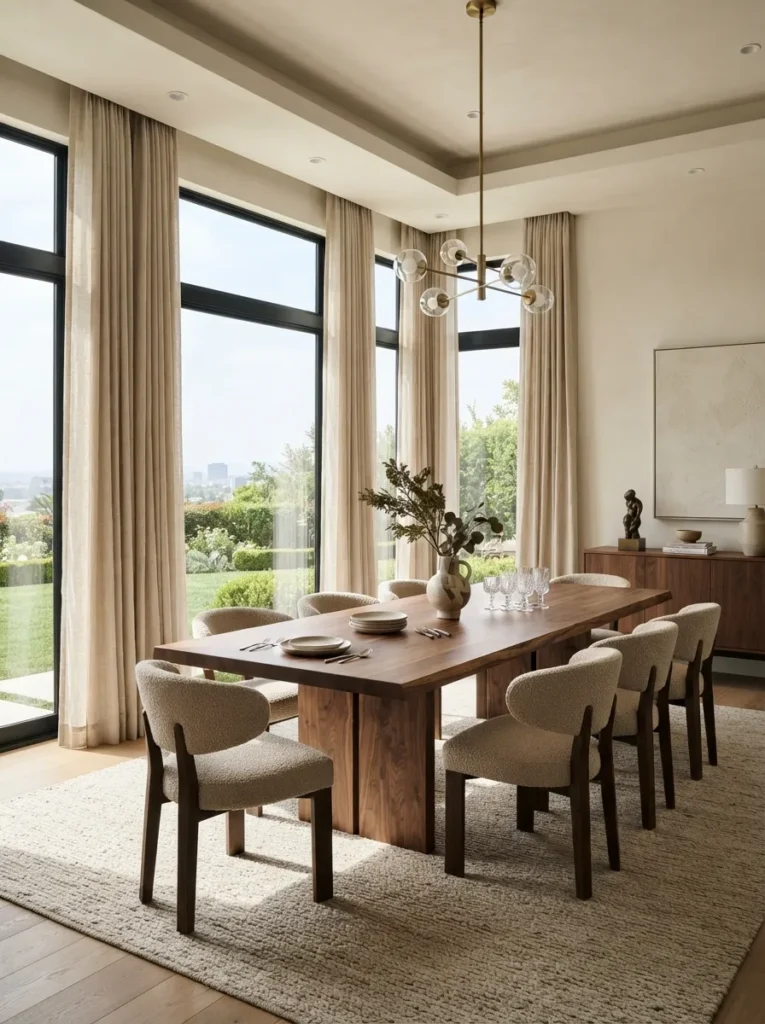
Simple, solid colored curtains hung from ceiling height to the floor add drama and height to a modern dining room without introducing any pattern that would compete with the rest of the space.
10. Choose a Sideboard With Handleless Cabinetry
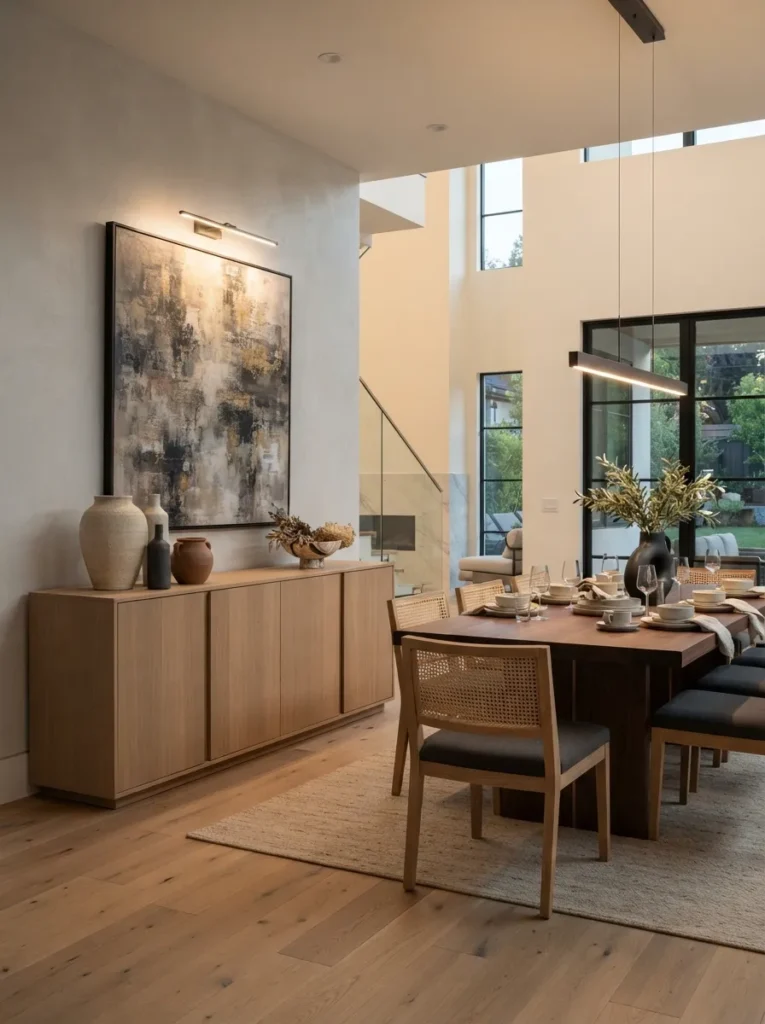
A sideboard with push to open doors or recessed pulls keeps the piece looking sleek and uninterrupted, reinforcing the same clean lines found throughout the rest of a modern dining room.
11. Add a Bold Piece of Abstract Art
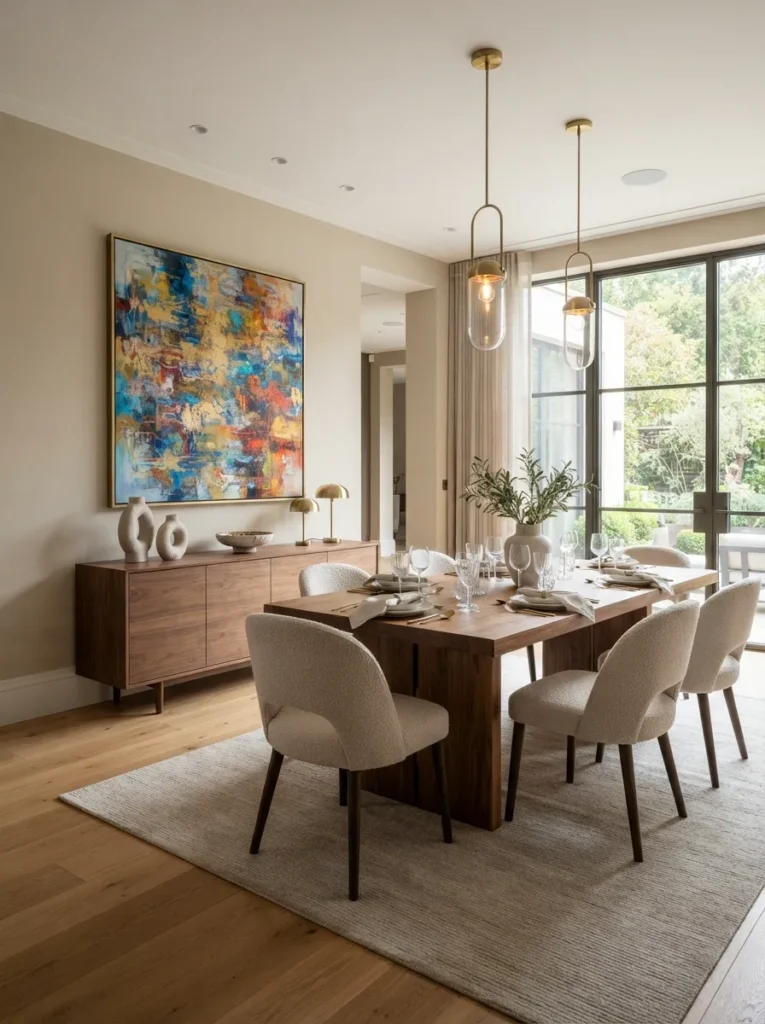
A single large abstract painting or print gives the room a clear focal point beyond the table itself. Choose one piece sized generously for the wall rather than several smaller ones, since modern design generally favors fewer, larger statements.
12. Use Glass or Acrylic Chairs for Visual Lightness
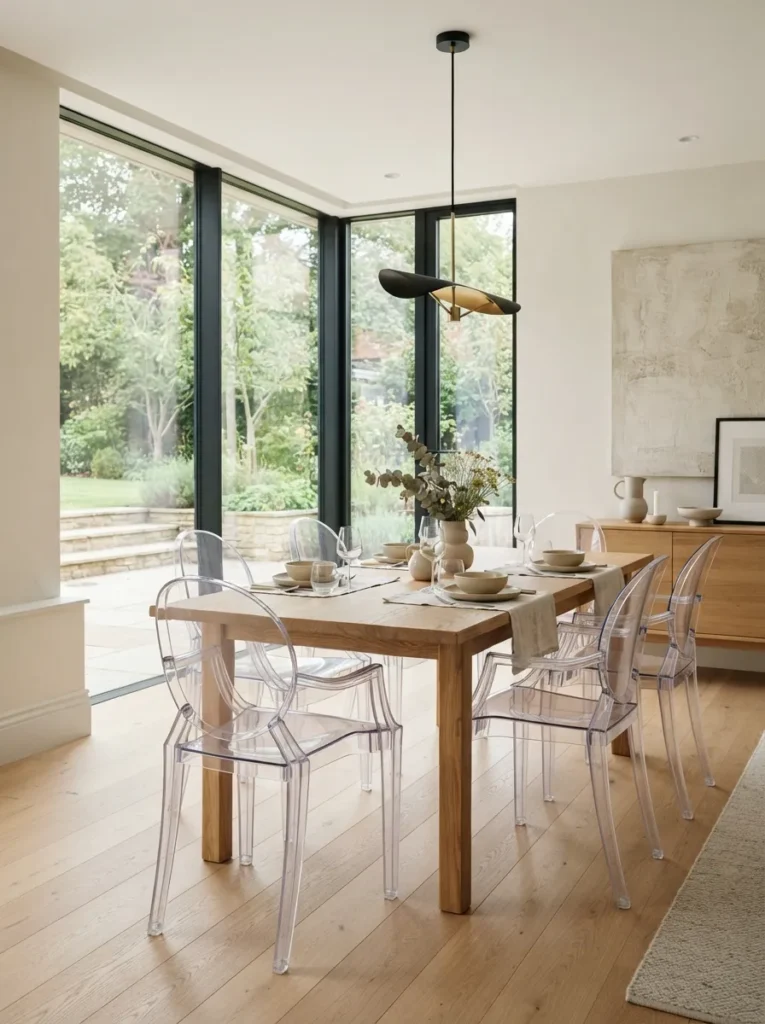
Clear chairs let you see straight through to the floor and walls behind them, which keeps a room with a lot of furniture from feeling visually heavy. This works especially well paired with a solid, sculptural table base for contrast.
13. Choose a Ceiling Detail as an Unexpected Focal Point
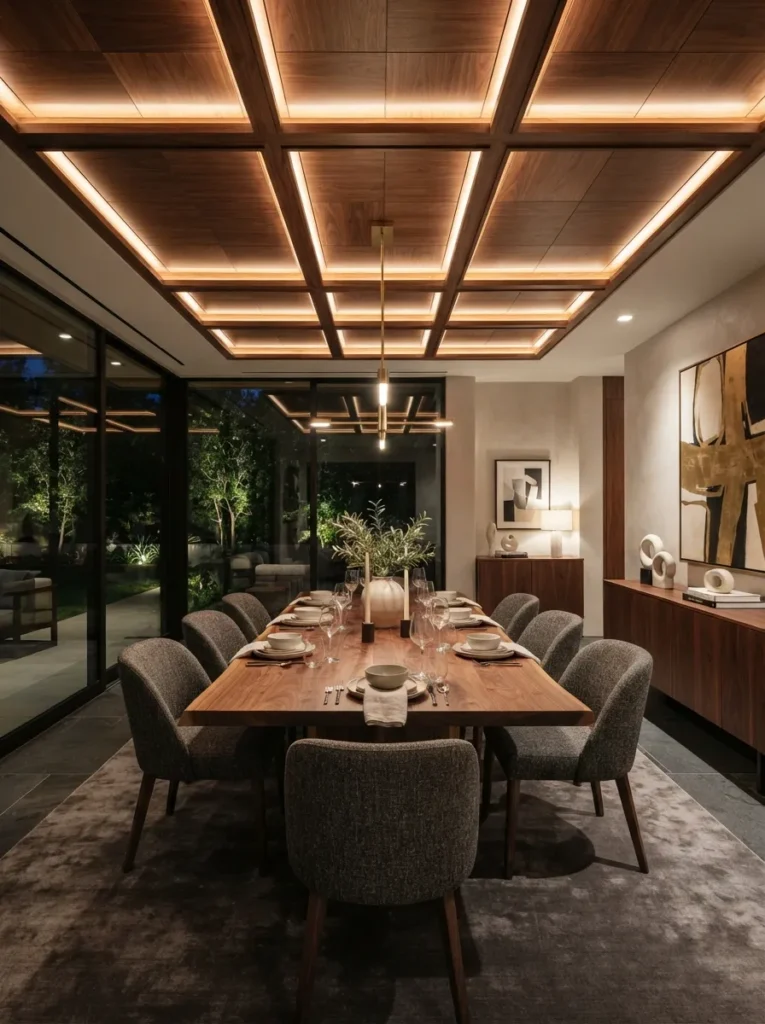
A recessed ceiling detail, a subtle wood slat treatment, or a bold paint color on the ceiling alone adds an architectural layer to a part of the room that’s usually overlooked entirely.
14. Add Symmetry to Your Furniture Layout
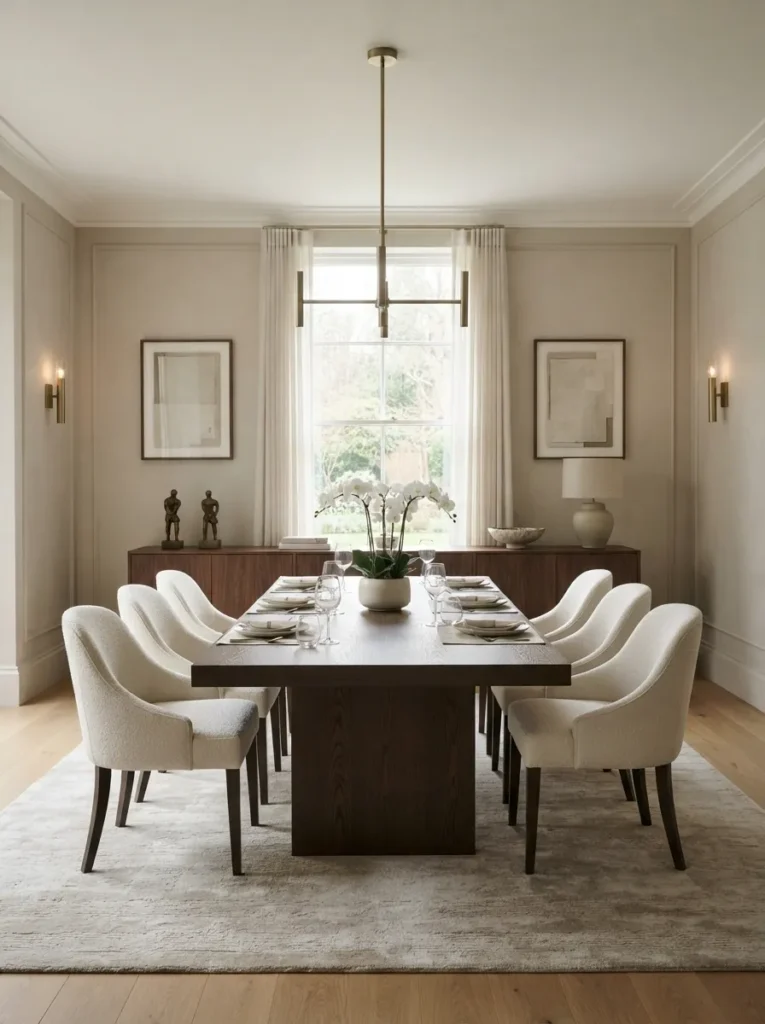
Matching chairs on either side of the table, evenly spaced pendant lights, or a sideboard centered on the opposite wall all reinforce the sense of balance and intention that runs through most modern design.
15. Use Warm Wood Tones to Balance Cooler Materials
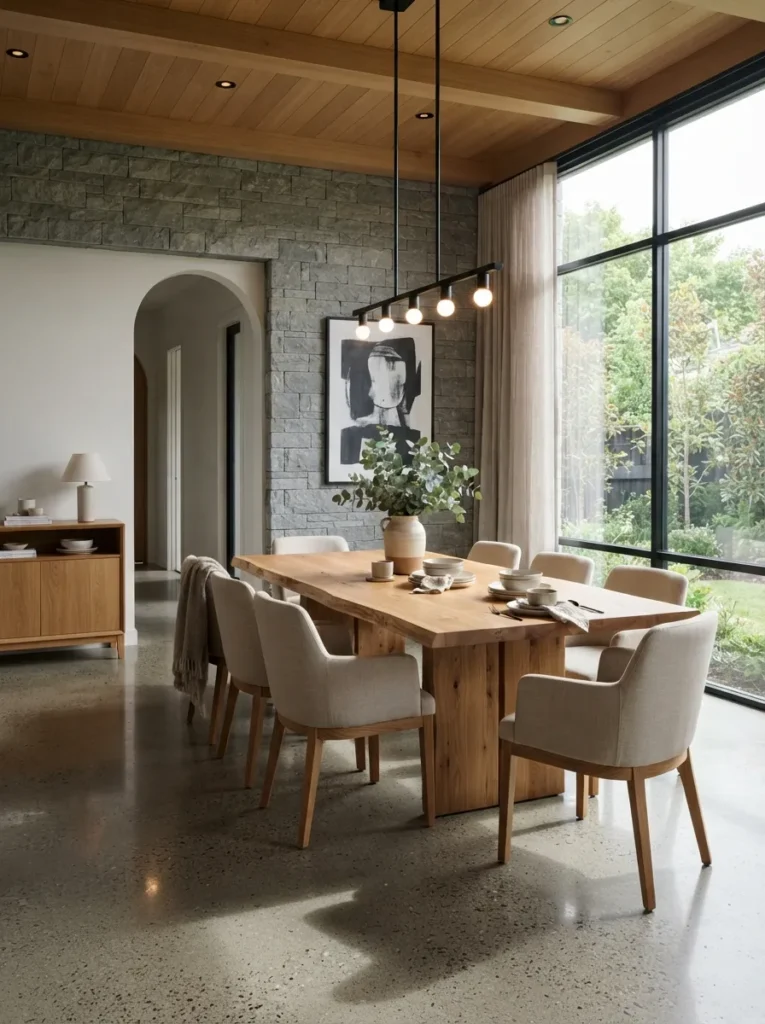
A wood table top or wood framed chairs bring warmth into a room that might otherwise lean too heavily on glass, metal, and stone. Stick to one wood family throughout the room so the warmth reads as consistent rather than mismatched.
16. Choose a Streamlined Window Treatment
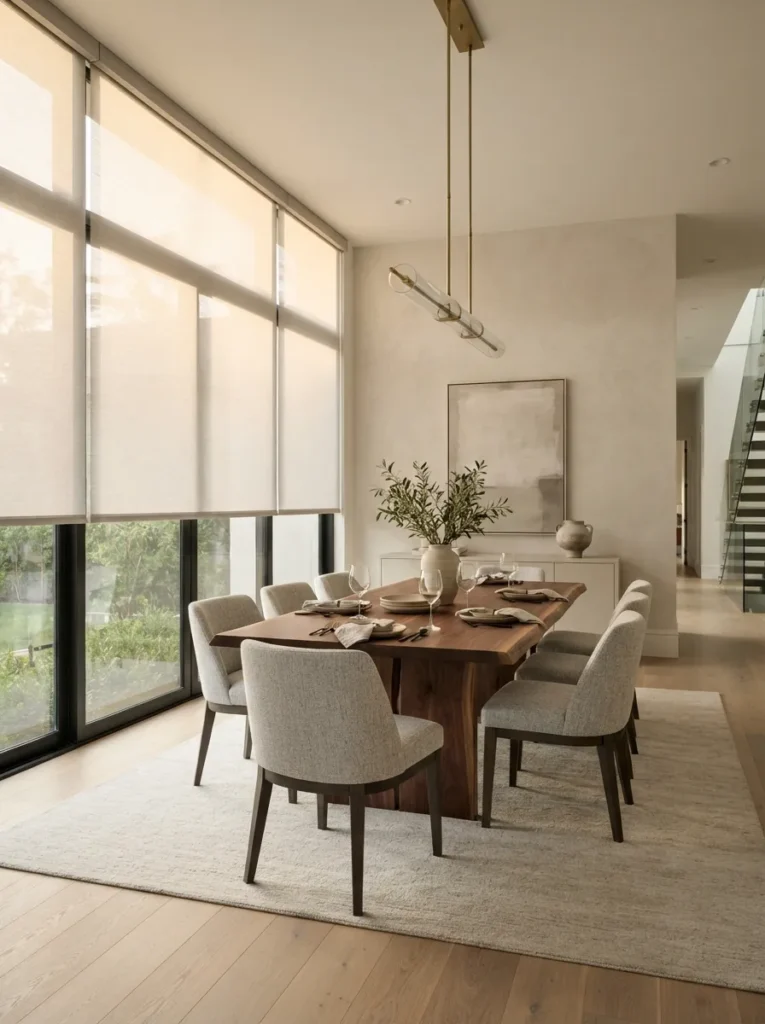
Simple roller shades or no window treatment at all, where privacy allows, keeps the room’s clean lines uninterrupted. Heavy or patterned drapery tends to work against the pared back aesthetic modern dining rooms are generally going for.
17. Add a Sculptural Floor Lamp in a Corner
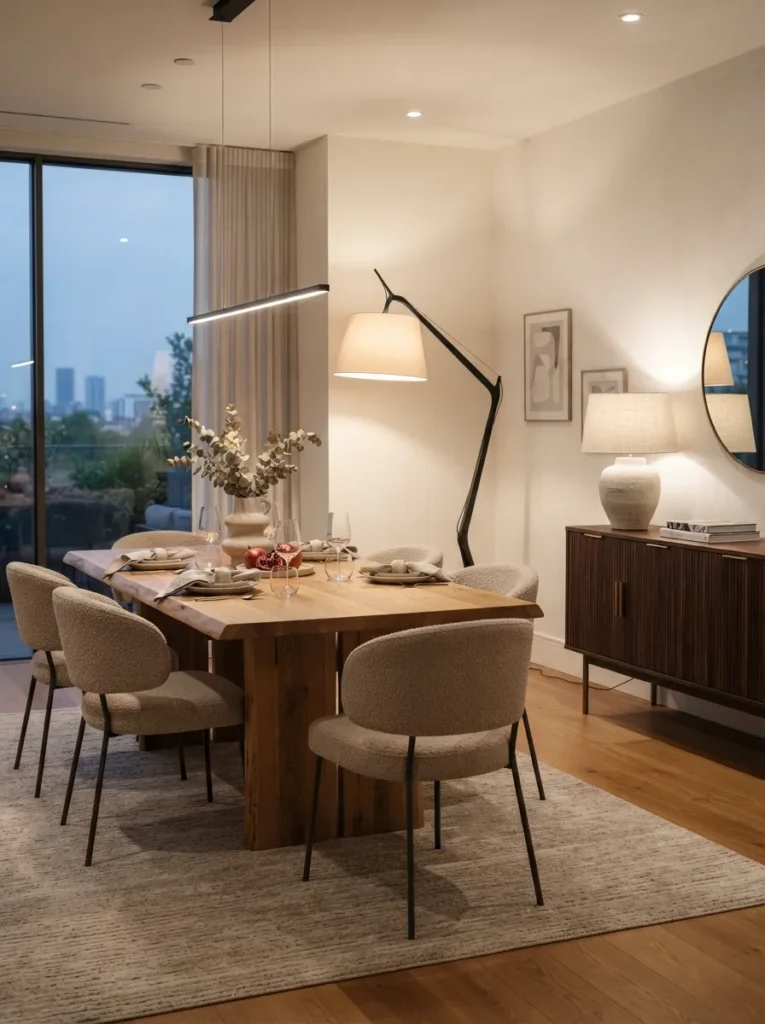
If your dining room includes any extra floor space, a sculptural floor lamp adds ambient lighting and a secondary design element without needing to touch the table setup at all.
18. Use a Textural Table Runner Instead of Patterned Linens
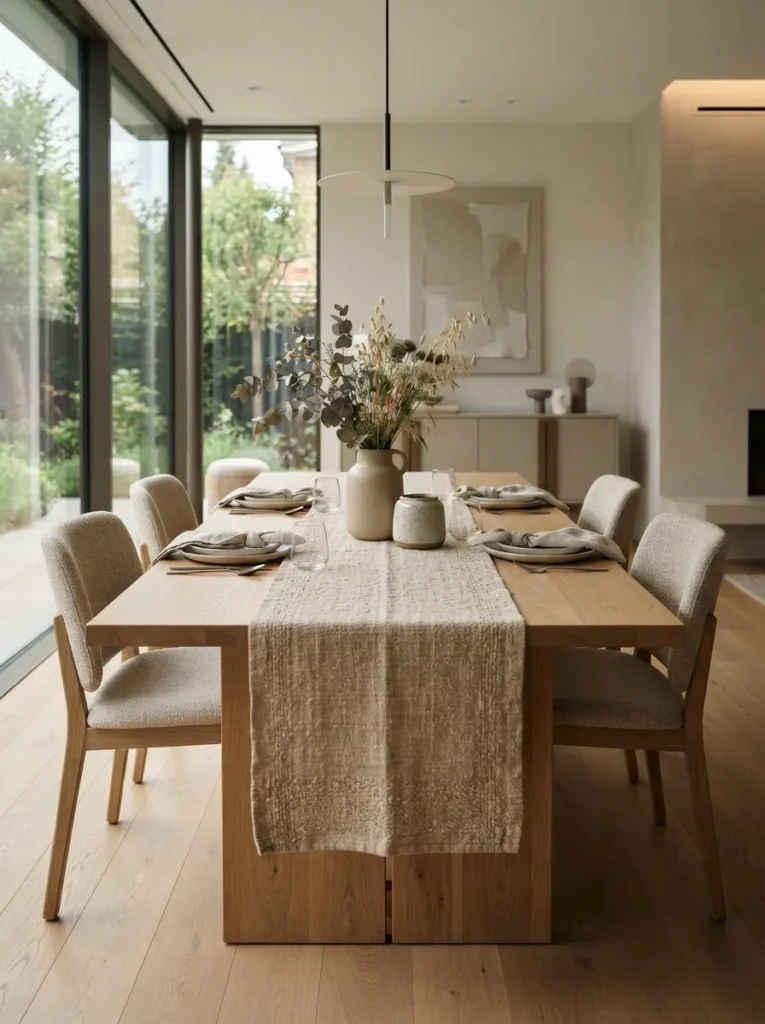
A runner in a natural material like linen or a subtly woven texture adds interest to the table without introducing a busy pattern, keeping the surface in line with the room’s overall restraint.
- A linen runner in a neutral tone
- A woven jute runner for added texture
- A simple solid runner in a deeper accent color
19. Choose Minimalist Tableware
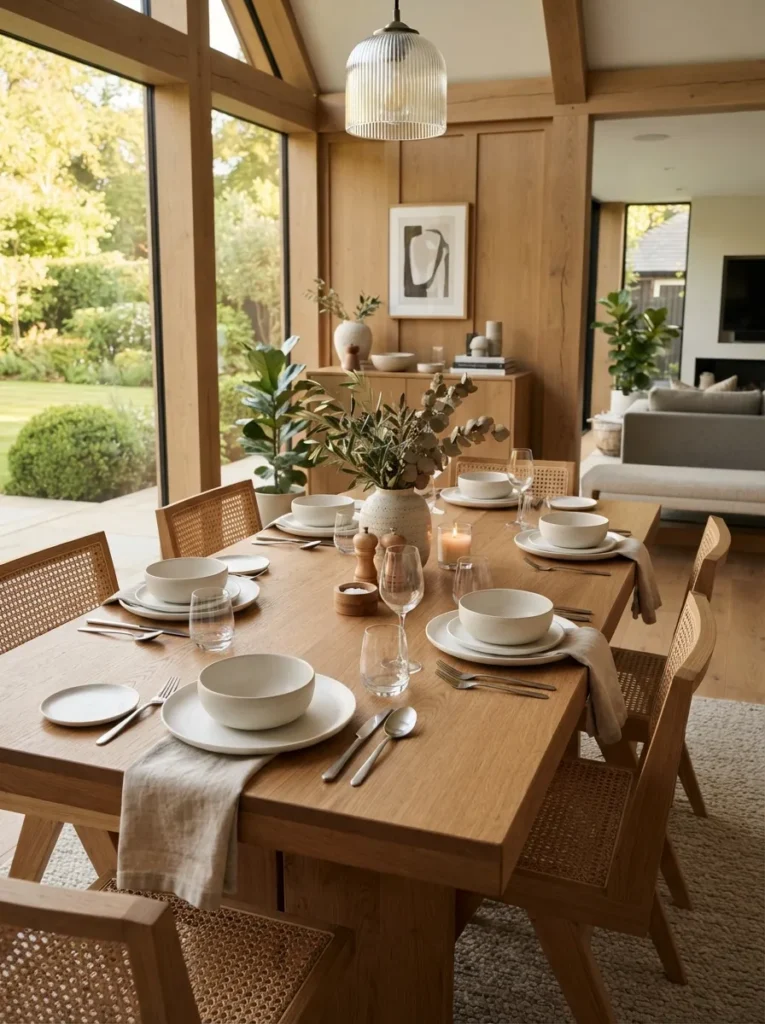
Simple, unadorned dishware in white, black, or a single neutral tone suits modern dining rooms far better than heavily patterned sets, letting the food and the table itself carry more of the visual interest.
20. Add a Statement Wall Behind the Sideboard
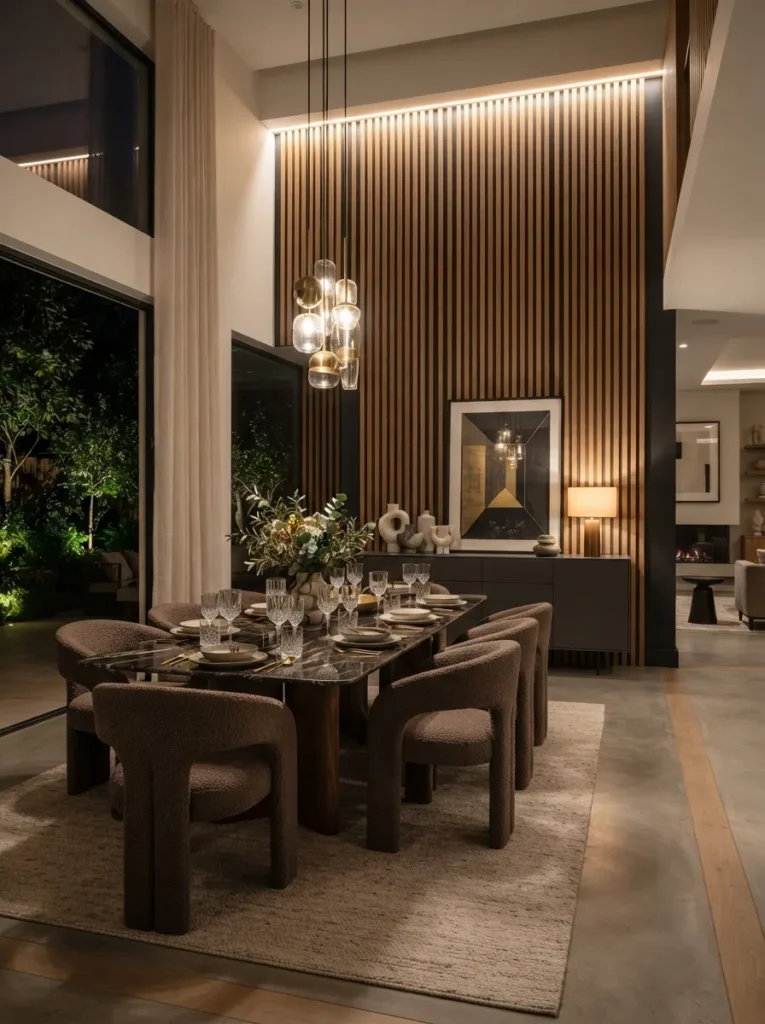
A textured accent wall, whether through wood slats, plaster, or a bold paint color, positioned behind a sideboard rather than the table itself, adds drama to the room without competing directly with the main seating area.
21. Use Negative Space as Part of the Design
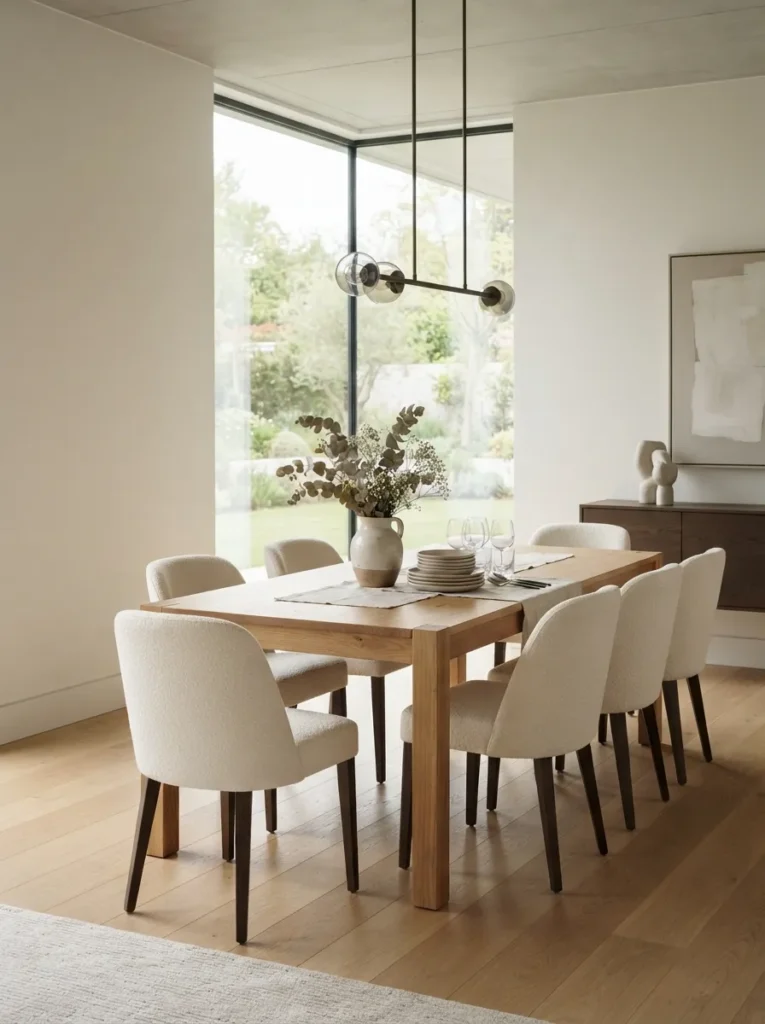
Resist the urge to fill every wall and surface. A modern dining room relies on empty space nearly as much as any single design choice, since that openness is what makes the furniture and lighting read as intentional rather than crowded.
Walking through the finished room and removing at least one item you were tempted to add is often the single best test for whether the space has struck the right balance between styled and overdone.
22. Choose a Consistent Metal Finish Throughout
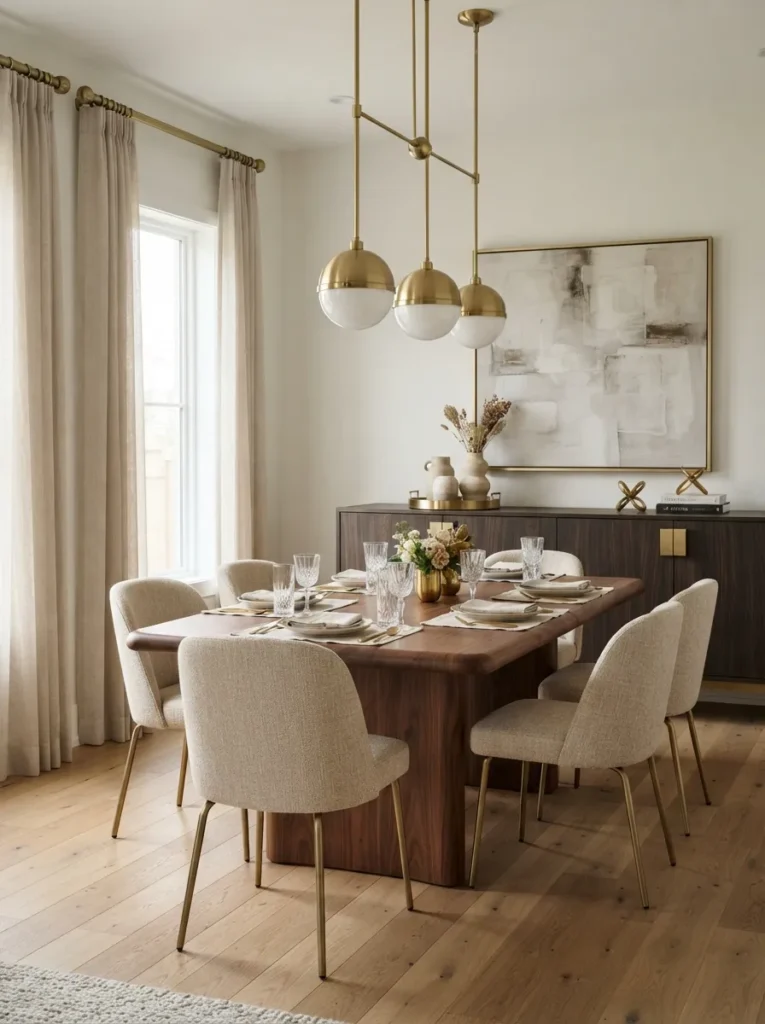
Match your lighting, hardware, and any decorative accents to a single metal finish, whether brushed brass, matte black, or brushed nickel. This consistency is subtle but does a lot of quiet work in making the room feel cohesive.
23. Keep the Table Styled but Functional
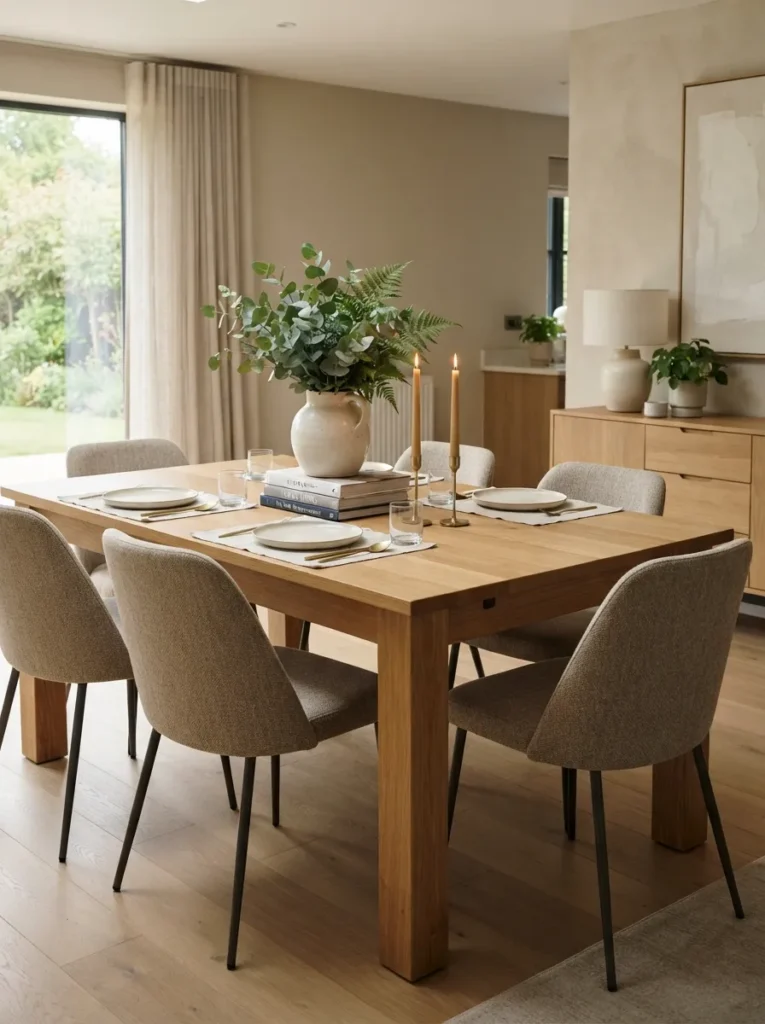
A beautifully set table that never actually gets used defeats the purpose of a well designed dining room. Style it simply enough, a runner, a low centerpiece, minimal tableware, that it still invites an everyday meal rather than staying reserved for photographs alone.
This balance is really the whole point of modern dining room design. A room built entirely around restraint can start to feel unwelcoming if taken too far, so the goal is always a space that looks intentional and also genuinely gets used, not one that only exists to be admired from the doorway.
A modern dining room comes together through consistent, deliberate choices more than any single standout piece. Start with your table and lighting, since those two elements set the tone for the whole room, then build in texture, warmth, and a few restrained personal touches so the space feels sharp without tipping into cold.