

Boho design has a reputation for looking effortless, but the best boho rooms are actually built on a fairly specific set of rules around layering, pattern mixing, and material balance. Skip those rules and a room reads as cluttered instead of collected.
Below are 16 ideas that explain the actual thinking behind the look, not just the surface trends:
1. Start With a Warm Neutral Base, Not White
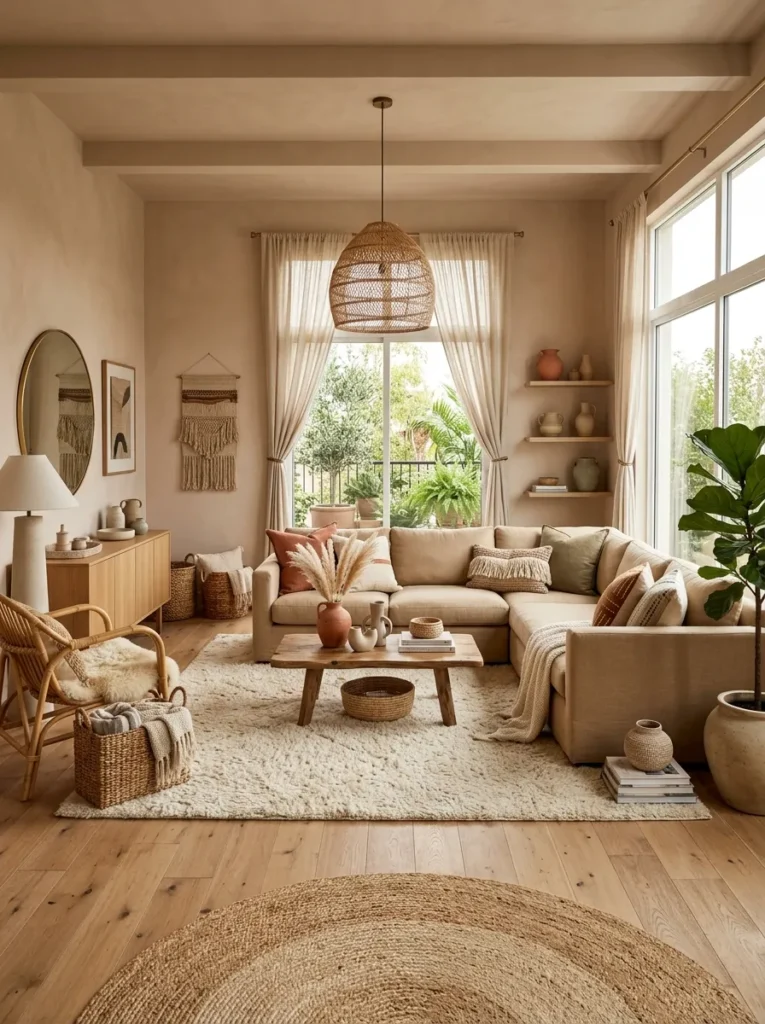
Boho spaces rarely work on top of stark white walls. Warm neutrals like sand, terracotta, clay, or a soft warm gray give patterns and textures something to sit against without competing with them. Pure white tends to make boho layering look scattered rather than intentional, since there’s nothing warm underneath to unify the different elements.
2. Follow the Rule of Three Patterns
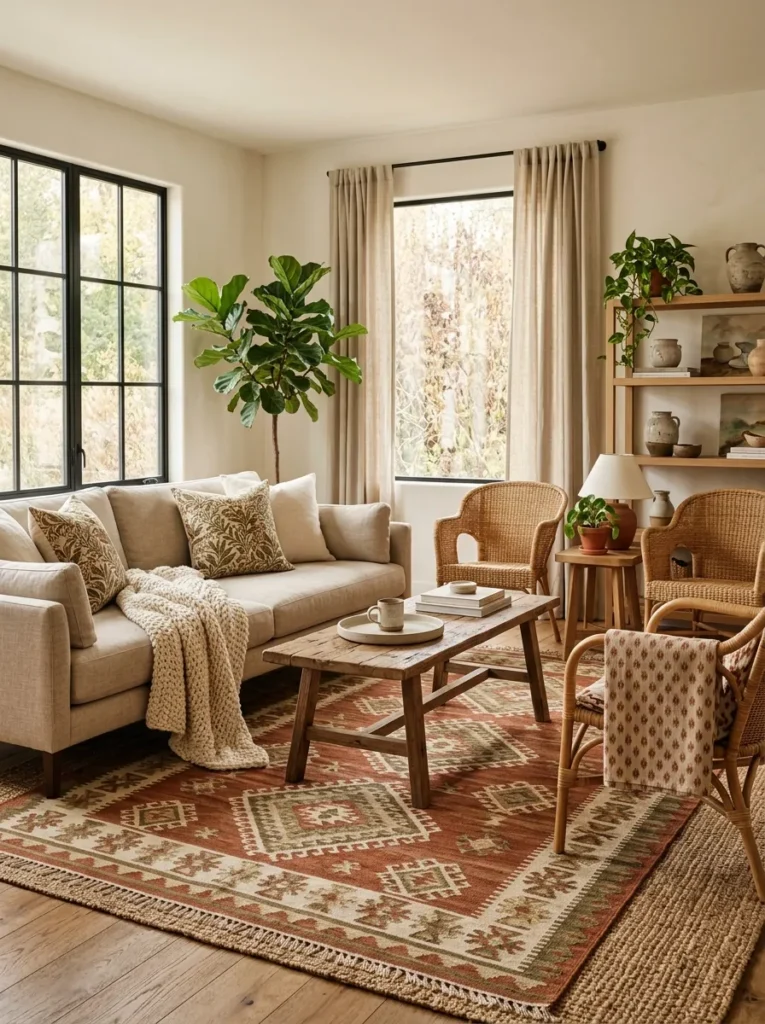
Skilled boho rooms typically use no more than three distinct pattern types at once, usually a geometric, an organic or floral, and a solid textured piece like a chunky knit. Beyond three, the eye stops being able to process the mix and the room starts to feel messy instead of layered.
- Geometric: a diamond patterned kilim rug
- Organic: a botanical print pillow or tapestry
- Textured solid: a nubby wool throw or macrame wall hanging
3. Layer Rugs Instead of Choosing One
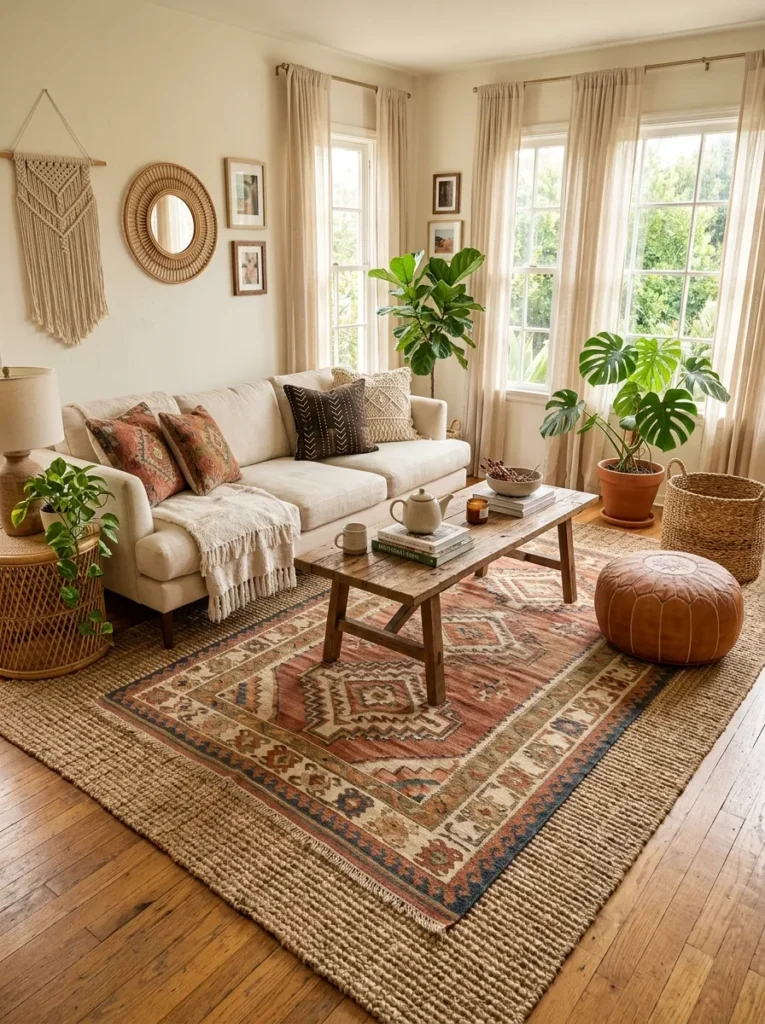
A single rug rarely carries enough visual weight for a boho room on its own. Layering a flat woven kilim over a larger jute or sisal rug adds the textural depth boho design depends on, and it also lets you introduce pattern at floor level without overwhelming the rest of the room.
4. Mix Global Textiles With Intention
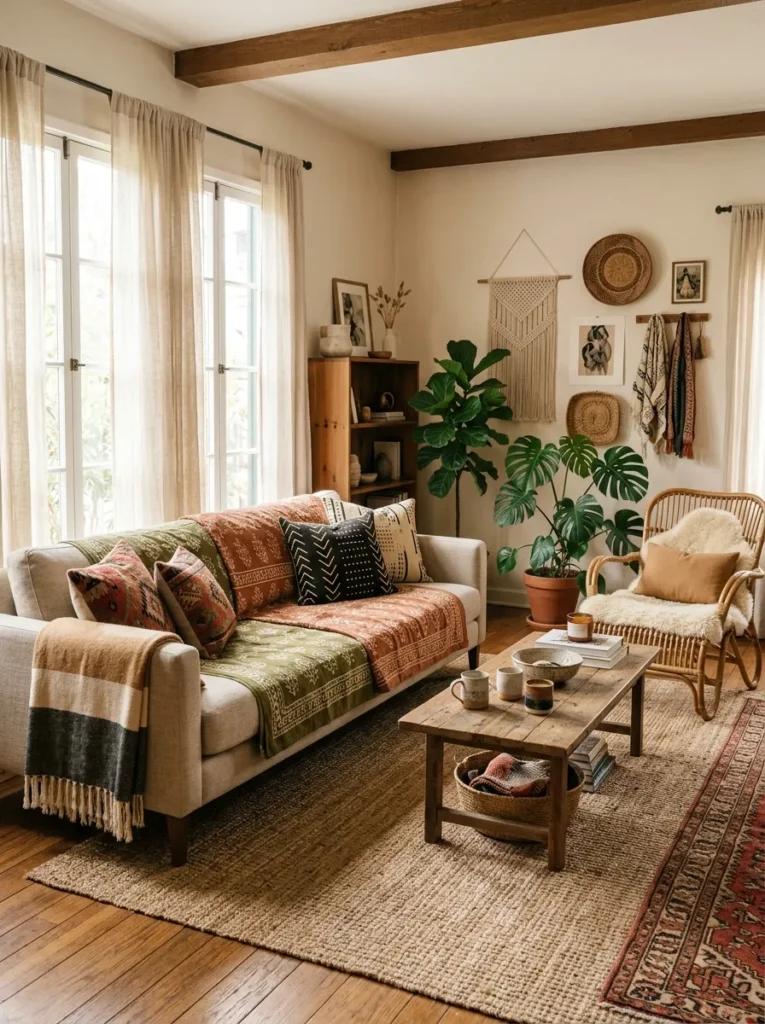
Kilim pillows, Moroccan poufs, Indian block print throws, and African mud cloth pillows are common boho staples, but they read best when chosen with some restraint rather than one of everything. Pick pieces that share a color thread, even if the patterns themselves are quite different, so the room still feels connected rather than like a random collection.
5. Add Macrame or Woven Wall Hangings
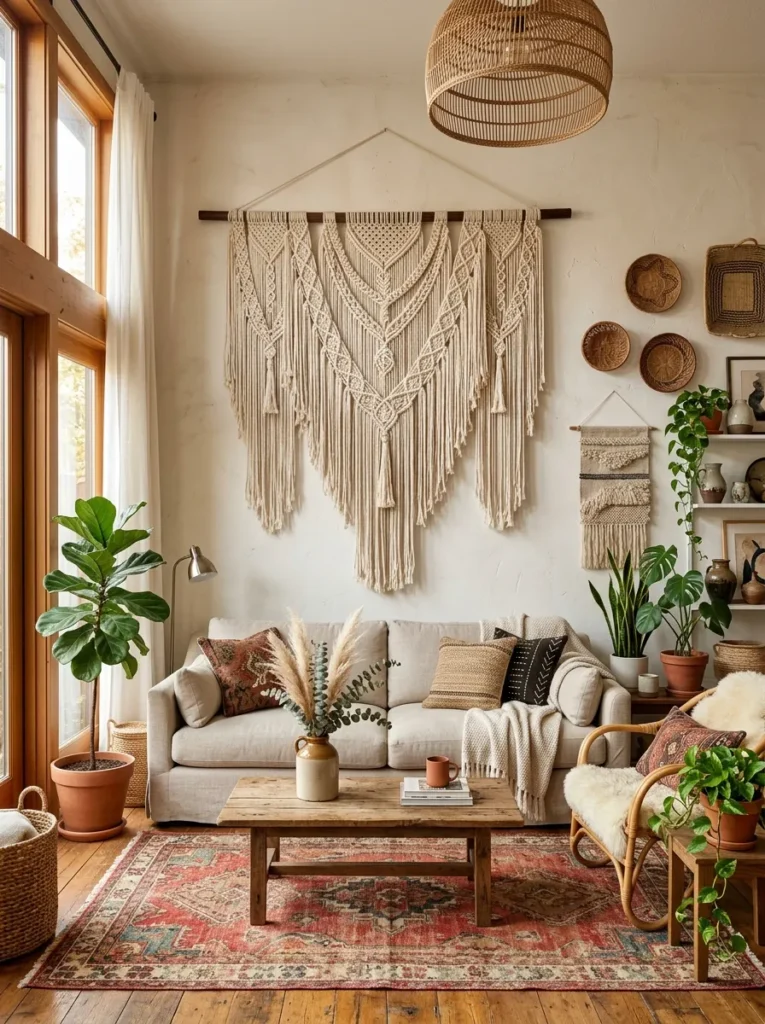
A large macrame wall hanging or a woven tapestry gives a room texture at eye level and above, filling wall space in a softer way than framed art alone. These pieces also introduce a handmade, tactile quality that’s core to the boho aesthetic.
6. Choose Low, Grounded Furniture
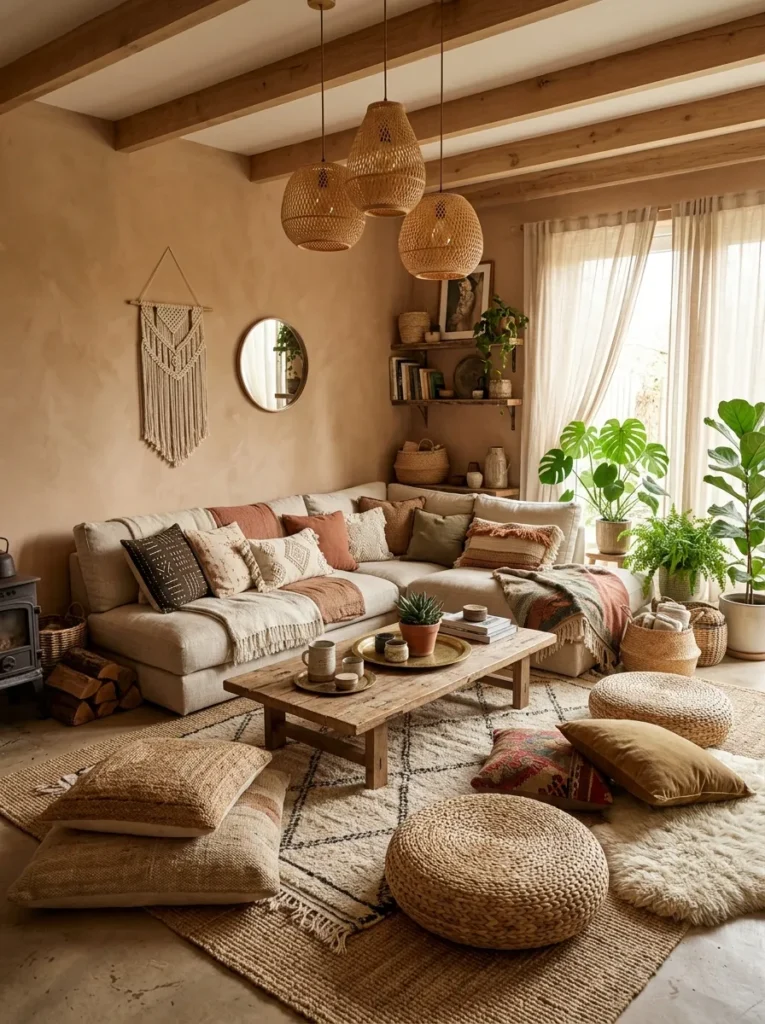
Boho rooms tend to favor furniture that sits closer to the floor, like a low-profile sofa or floor cushions arranged around a low coffee table. This grounded seating style echoes the relaxed, floor-oriented layouts common in the global design traditions boho draws from.
7. Bring In an Abundance of Plants
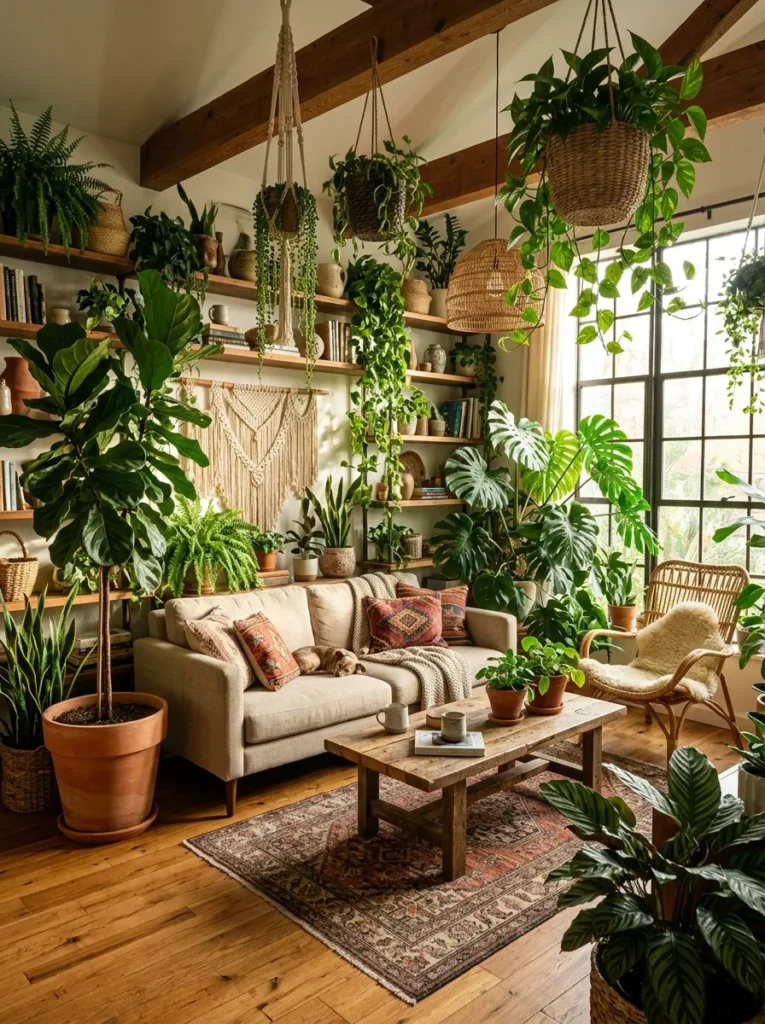
Boho design leans into a genuinely full plant collection rather than one or two token pots. Mix trailing varieties like pothos or string of hearts with larger structural plants like a fiddle leaf fig or a monstera to create the layered, jungle-like feel the style is known for.
Vary your pot styles too; terracotta, woven basket planters, and ceramic in earthy glazes all work together without needing to match exactly.
8. Use Rattan and Wicker for Structure
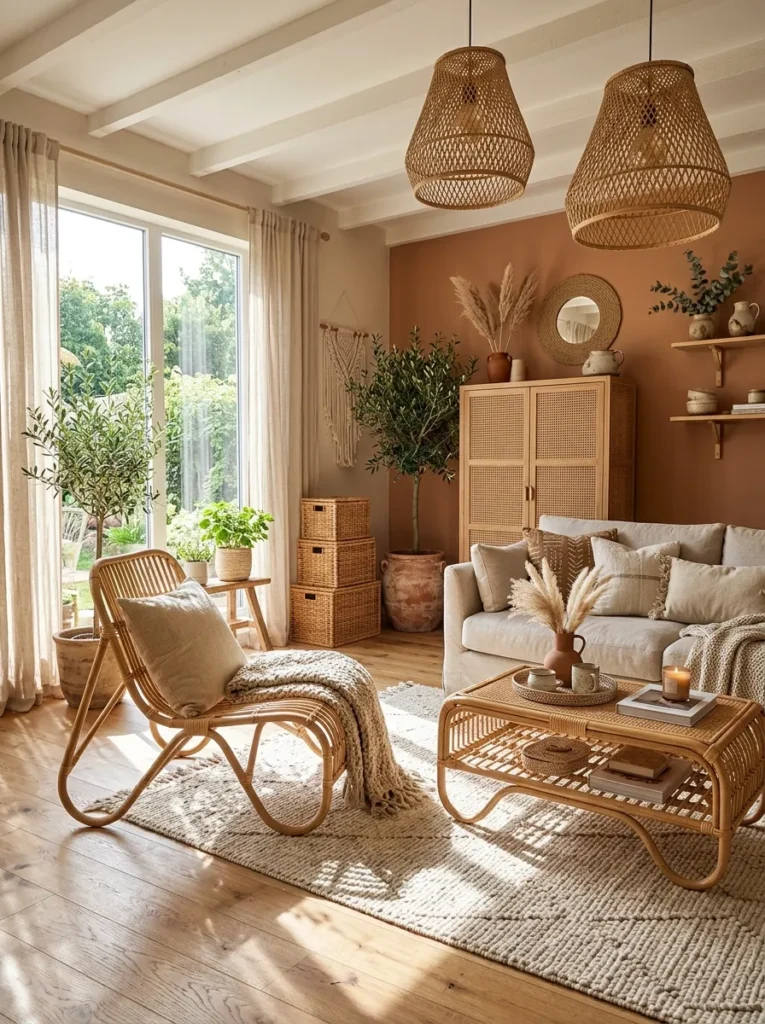
Rattan chairs, wicker baskets, and woven pendant lights bring in the natural, handcrafted materials that anchor a boho room. These pieces also add visual texture through their weave pattern alone, even before you introduce any actual color or fabric pattern into the space.
9. Add a Vintage or Antique Piece
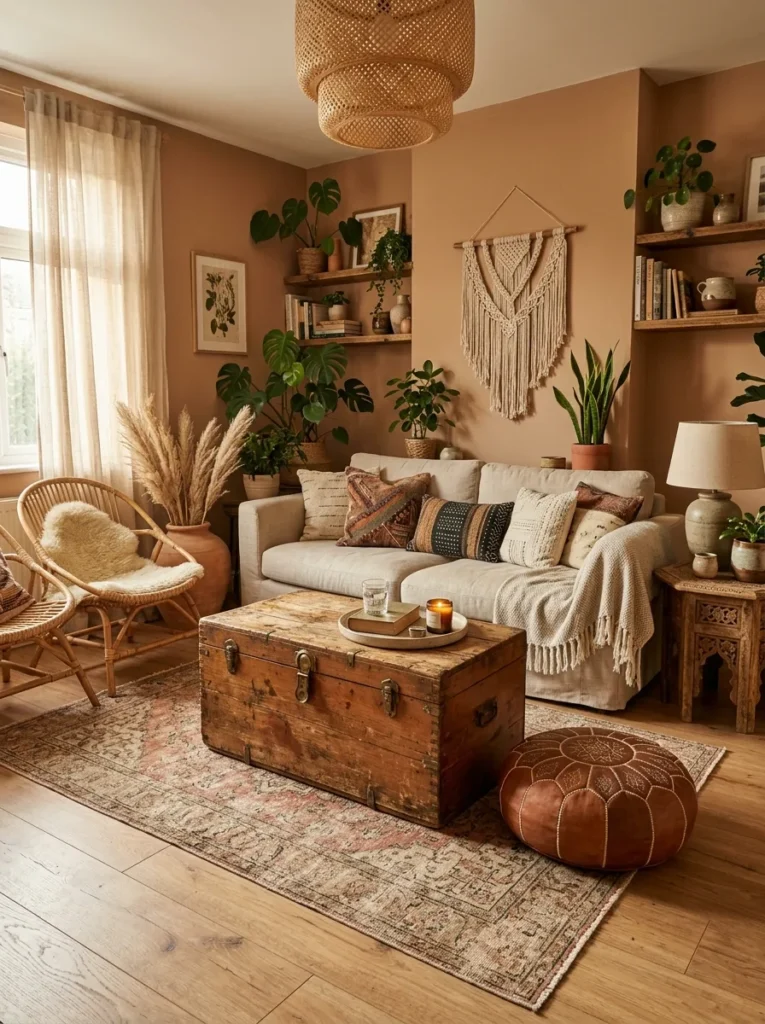
A genuinely old rug, trunk, or side table gives a boho room a sense of history that new furniture alone can’t replicate. Even a single well-chosen vintage find can anchor an entire room and make the newer pieces around it feel more intentional by association.
10. Choose Warm Metallic Accents
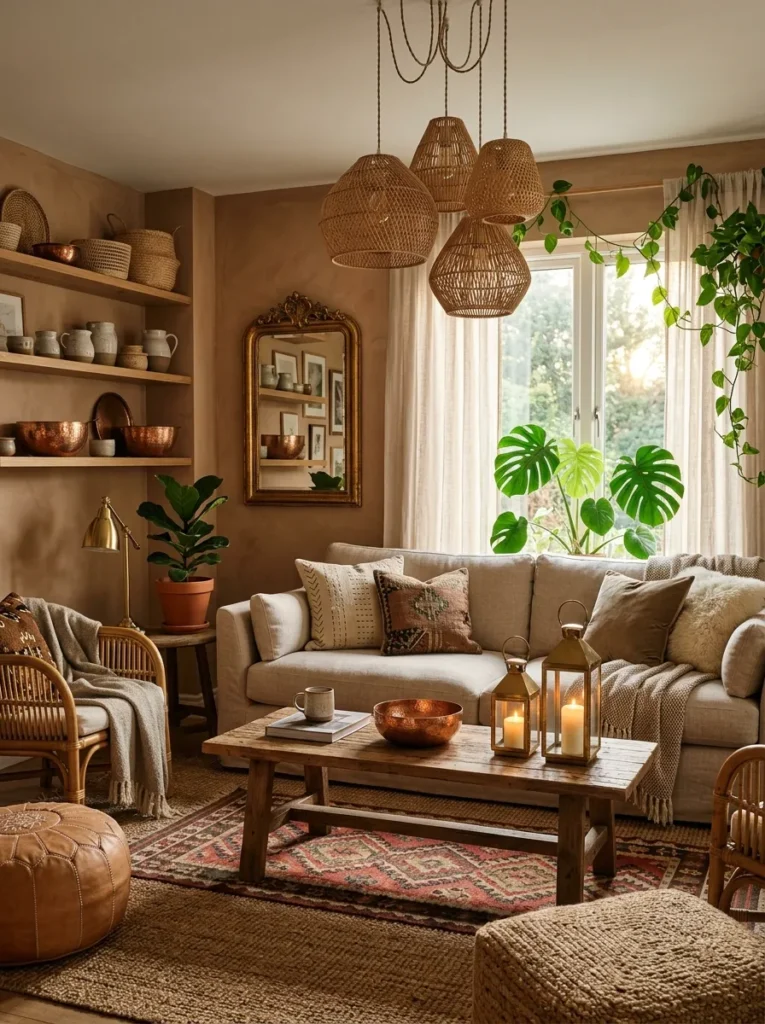
Brass, copper, and aged gold suit boho spaces far better than cool chrome or polished silver. These warmer metals show up in candle holders, lantern-style lighting, and small decorative bowls, adding a bit of shine without pulling the room away from its earthy, organic base.
11. Layer Floor Cushions for Flexible Seating
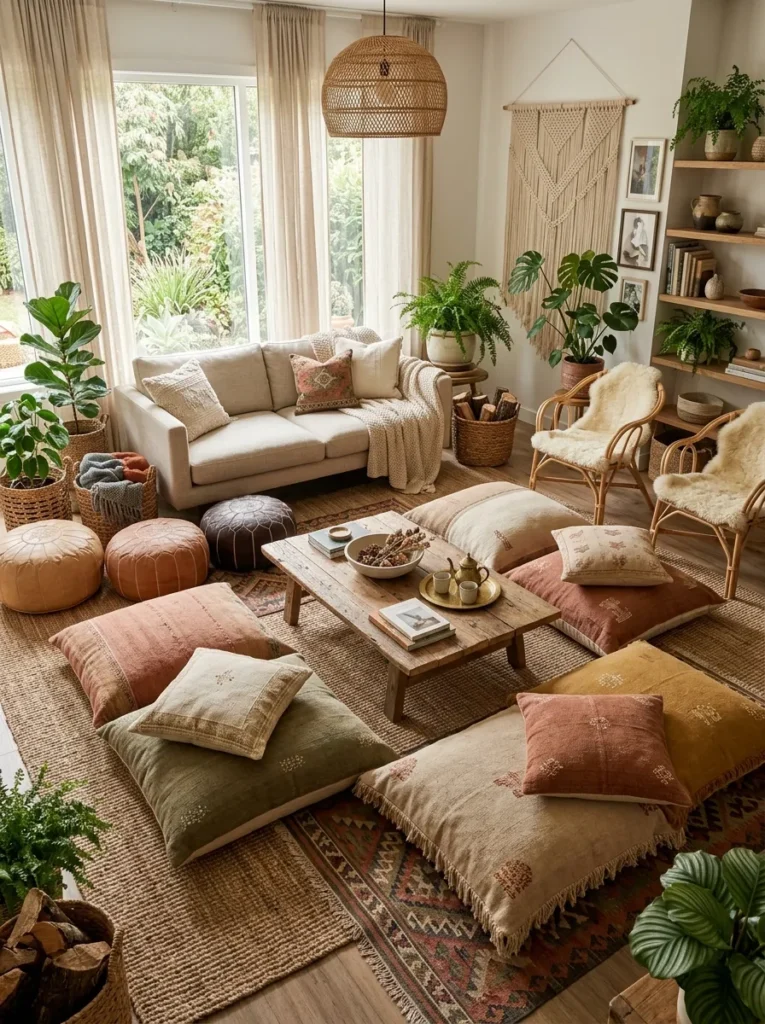
A cluster of floor cushions in mixed textures and patterns near a low coffee table adds casual, flexible seating that fits the relaxed spirit of boho design. They’re also easy to store or rearrange whenever you want to open up the floor for a gathering.
12. Use Fringe and Tassel Details
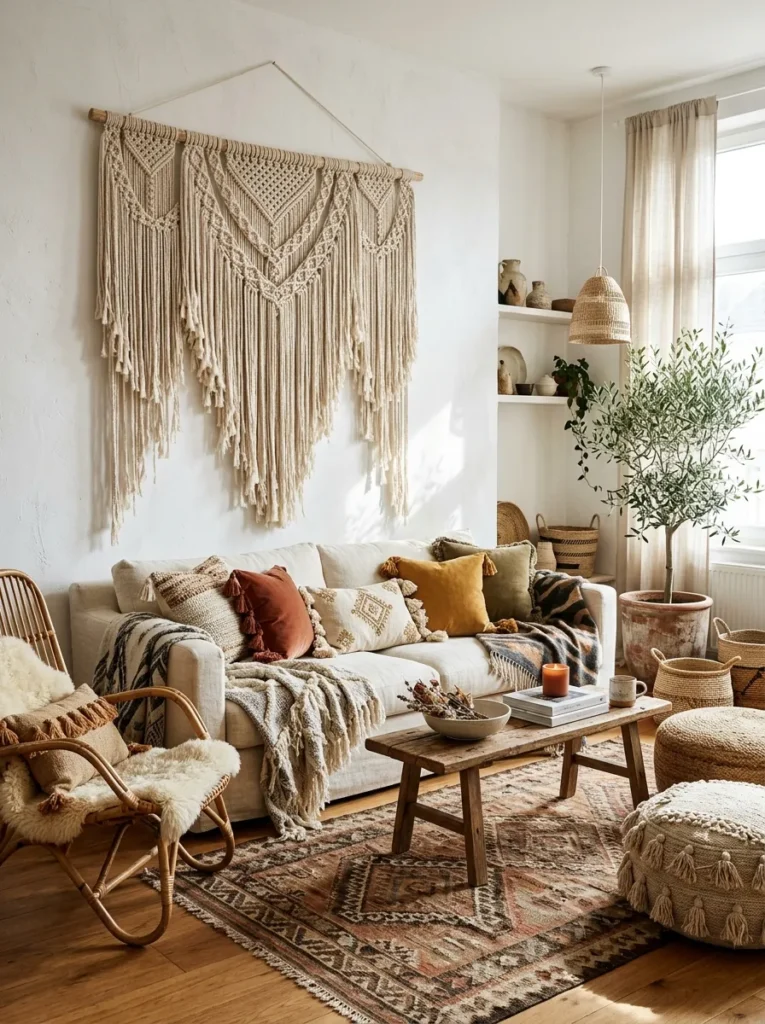
Fringed throw blankets, tasseled pillow trim, and macrame details bring in the handcrafted, slightly imperfect quality that separates boho from other more polished design styles. These small details matter more than people expect, since they add movement and texture even from across the room.
13. Choose Warm, Layered Lighting Over Bright Overhead Light
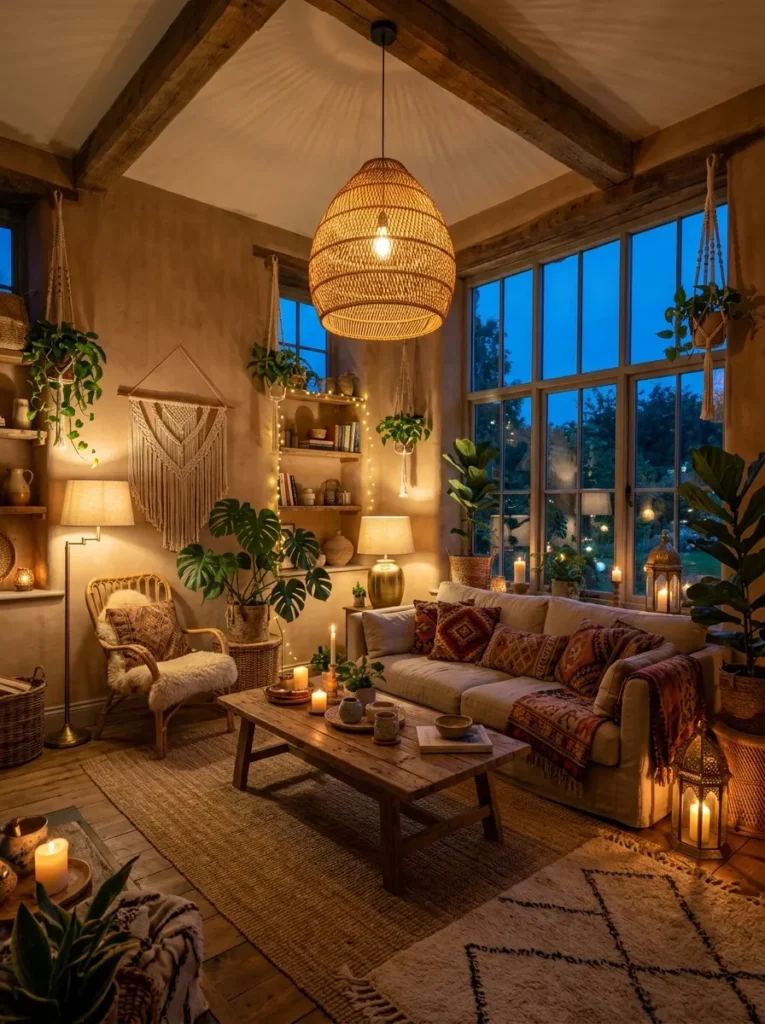
Boho rooms rely heavily on soft, warm lighting from multiple sources rather than one bright overhead fixture. Rattan pendant lights, small table lamps with woven shades, and scattered candles all contribute to the cozy, golden hour glow that defines the aesthetic after dark.
14. Display an Eclectic Gallery Wall
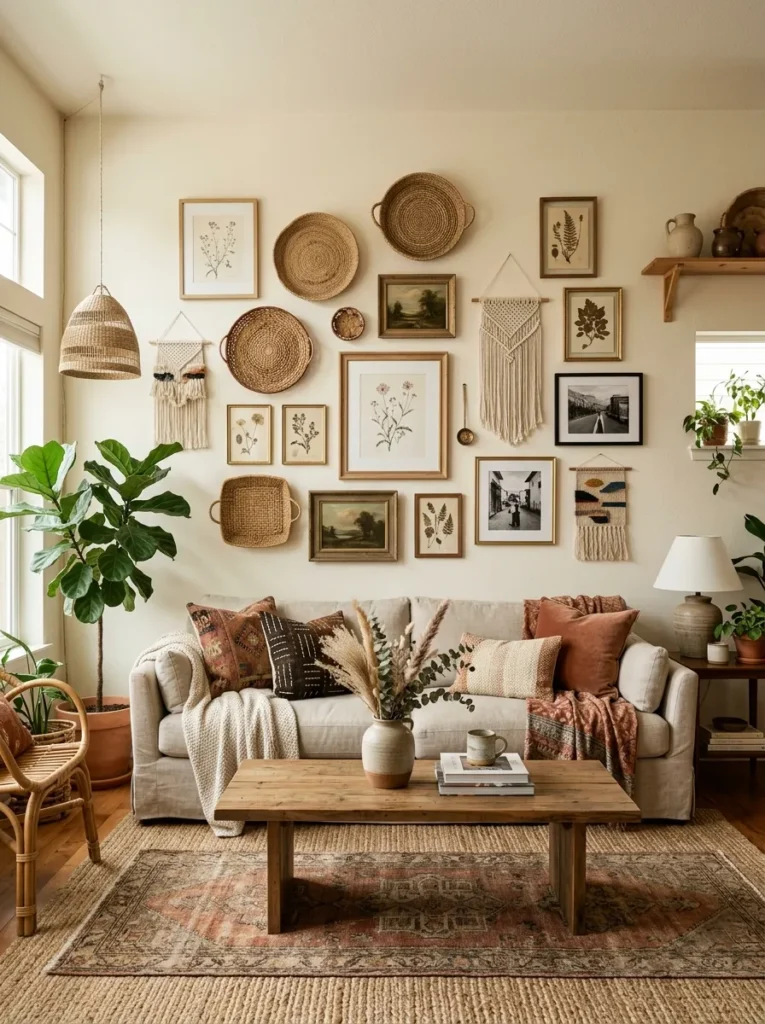
Mix framed botanical prints, small tapestries, woven wall baskets, and personal photography for a gallery wall that feels collected over years rather than bought in a single trip. Vary the frame sizes and hanging heights slightly for a more organic, lived-in arrangement.
15. Balance Pattern With Solid Textured Pieces
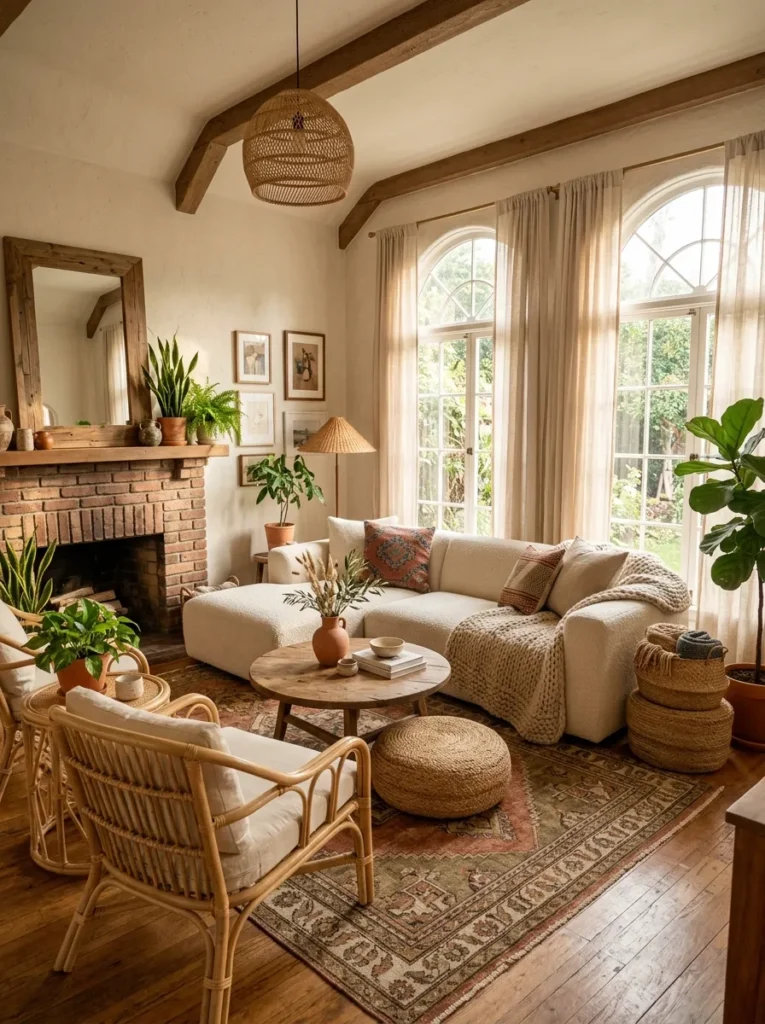
For every one or two patterned items in the room, include at least one solid piece with strong texture, like a chunky knit throw or a nubby linen cushion. This balance keeps the pattern mixing from tipping into visual overload, giving the eye somewhere quiet to rest between busier elements.
16. Add Natural Light Through Sheer or Woven Shades
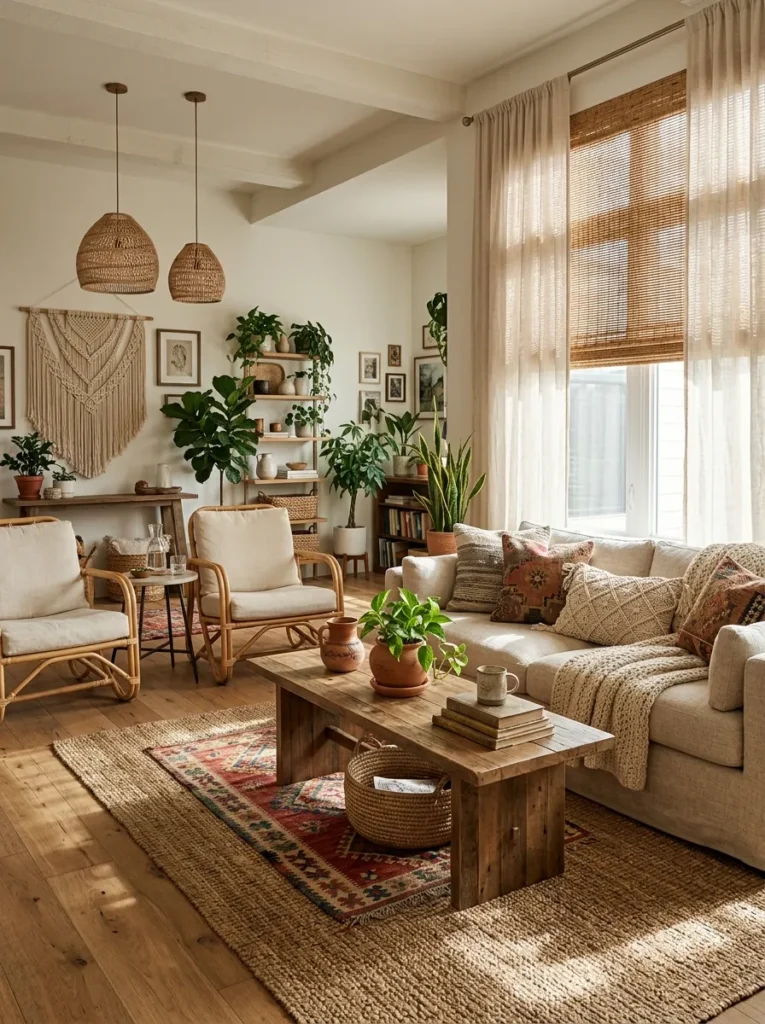
Bamboo roller shades or sheer linen curtains let in soft, filtered light that suits the warm, earthy boho palette far better than heavy blackout drapes. The dappled light these materials create also adds another subtle layer of texture that shifts throughout the day.
The strongest boho rooms come from restraint applied inside an otherwise maximalist style, three patterns instead of six, one vintage anchor piece instead of five, layered texture instead of layered clutter. Get that balance right, and the space reads as thoughtfully collected rather than simply crowded.