

A home office has to solve two problems most other rooms don’t, it needs to look good enough that you actually want to spend hours in it, and it needs to function well enough that it doesn’t quietly work against your focus every single day. Getting both right takes a bit more intention than simply adding a desk to a spare corner. Here are 31 ideas for building a home office that genuinely supports how you work.
1. Choose a Desk Sized for Your Actual Workflow
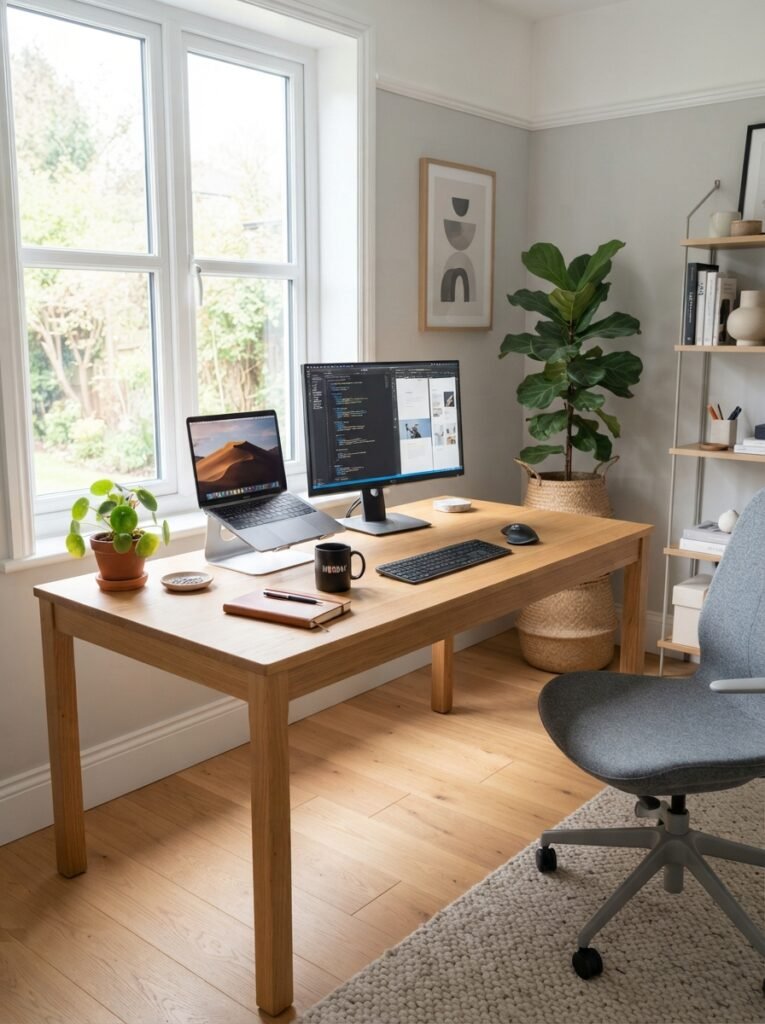
Before buying a desk, think through what you actually need surface space for, a laptop and notebook, or multiple monitors and paperwork spread out. A desk that’s too small forces constant shuffling, while one that’s too large can overwhelm a smaller room.
Measure your available wall space and leave enough clearance behind the chair to push back and stand comfortably, since a desk that technically fits but leaves no room to move will feel cramped every time you sit down to work.
2. Invest in a Genuinely Comfortable Chair
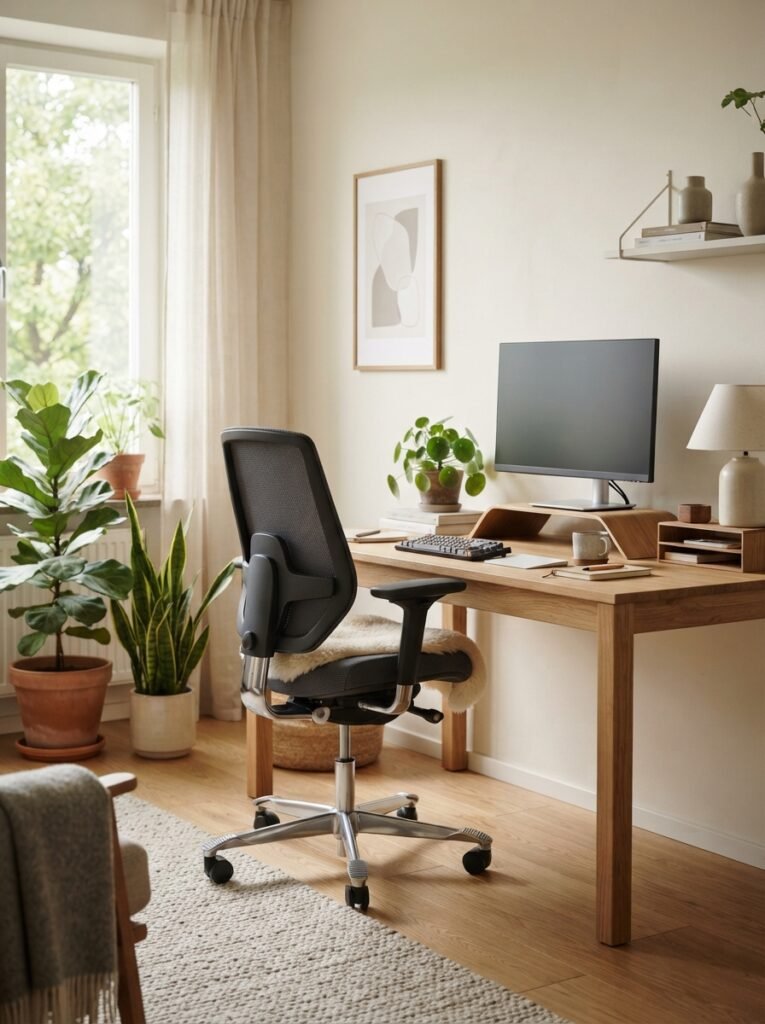
Your chair affects both comfort and focus more than almost any other single piece of furniture in the room. A chair with real lumbar support and adjustable height is worth prioritizing even if it means spending less on other decor.
3. Add Layered Lighting for Different Tasks
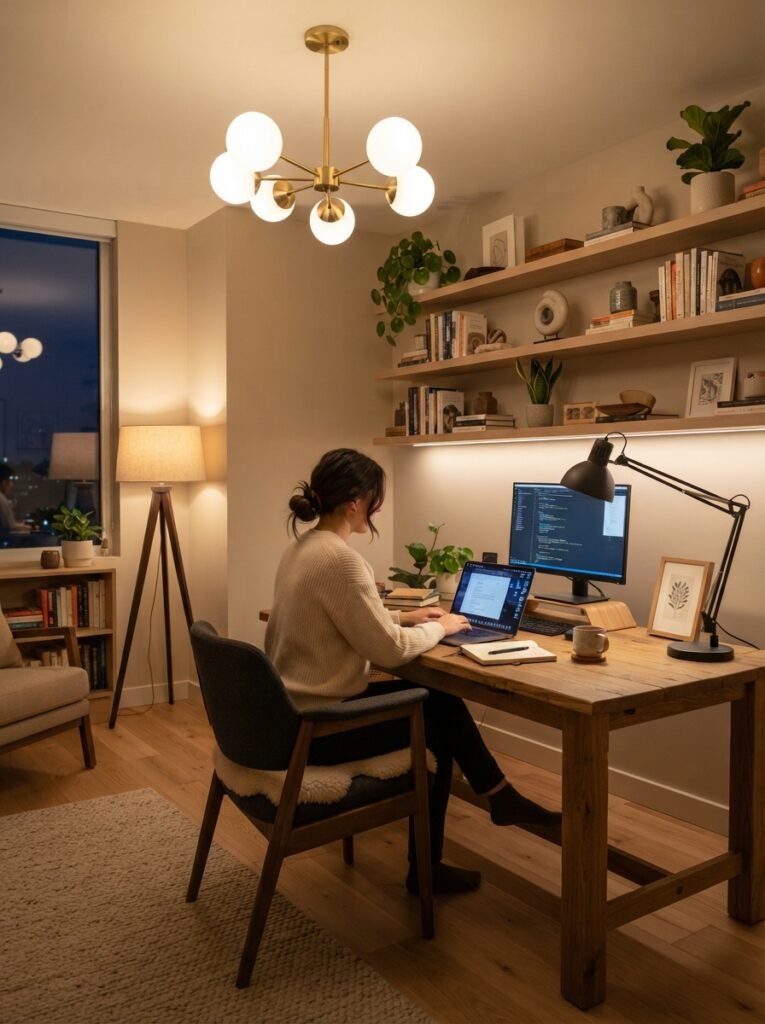
A single overhead light rarely covers everything a home office actually needs. Combine ambient light, task lighting for close work, and a bit of accent lighting for evenings or video calls.
- Ambient overhead light for general brightness
- A desk lamp for focused reading or writing
- A ring light or softer lamp for video calls
- Dimmable options wherever possible
4. Choose a Color Palette That Supports Focus

Soft blues, greens, and muted neutrals tend to feel calming and support sustained concentration, while overly bright or high energy colors can become tiring in a space you’re in for hours at a stretch.
5. Add a Bulletin or Vision Board
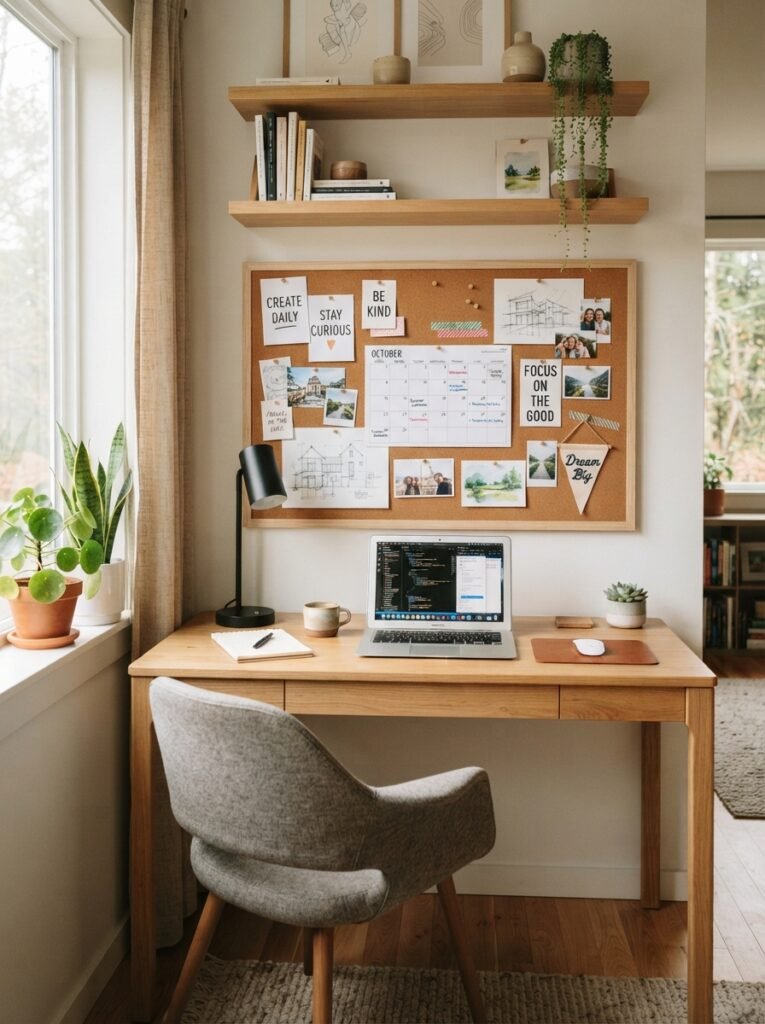
A cork or fabric board gives you a spot for notes, deadlines, and reminders that stays visible without cluttering your actual desk surface, keeping important information in view without it competing for space with your daily work materials.
6. Use Cable Management Solutions
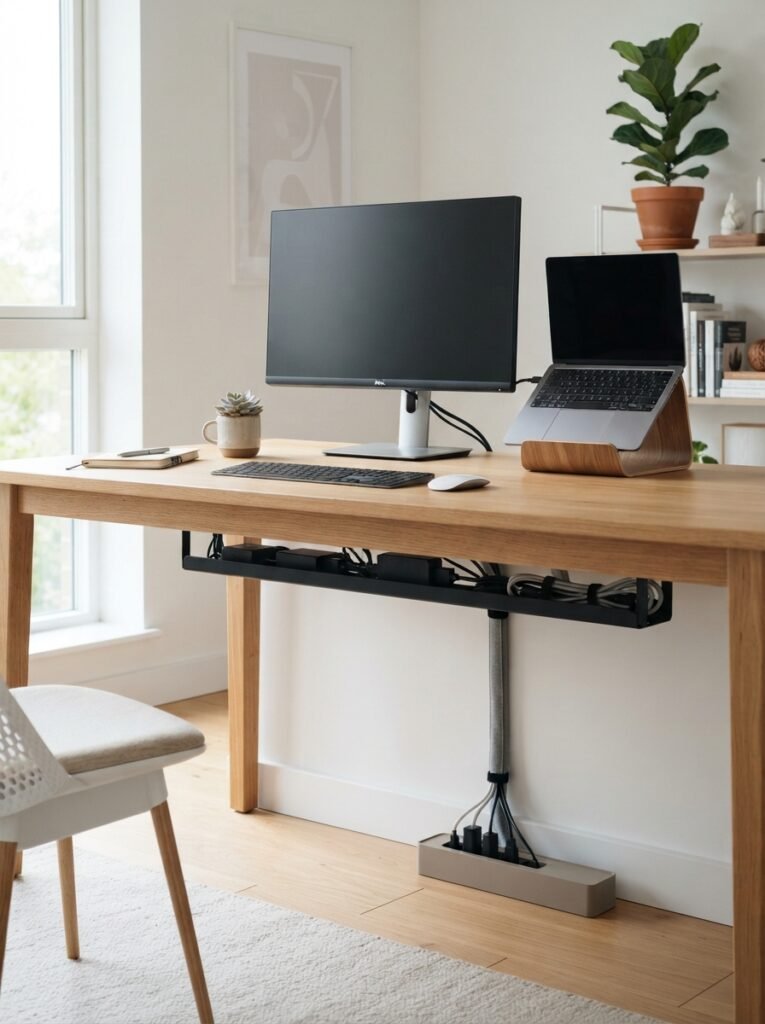
Visible tangled cords undercut even a beautifully decorated office. Cable trays, clips, or a simple box to hide a power strip keep the space looking considerably more put together and reduce a surprisingly common source of daily visual clutter.
Running a single cable channel along the back edge of the desk, rather than letting cords hang loose in multiple directions, makes a noticeable difference in how organized the whole setup feels, even before anything else in the room is styled.
7. Add Plants for a Calmer Atmosphere
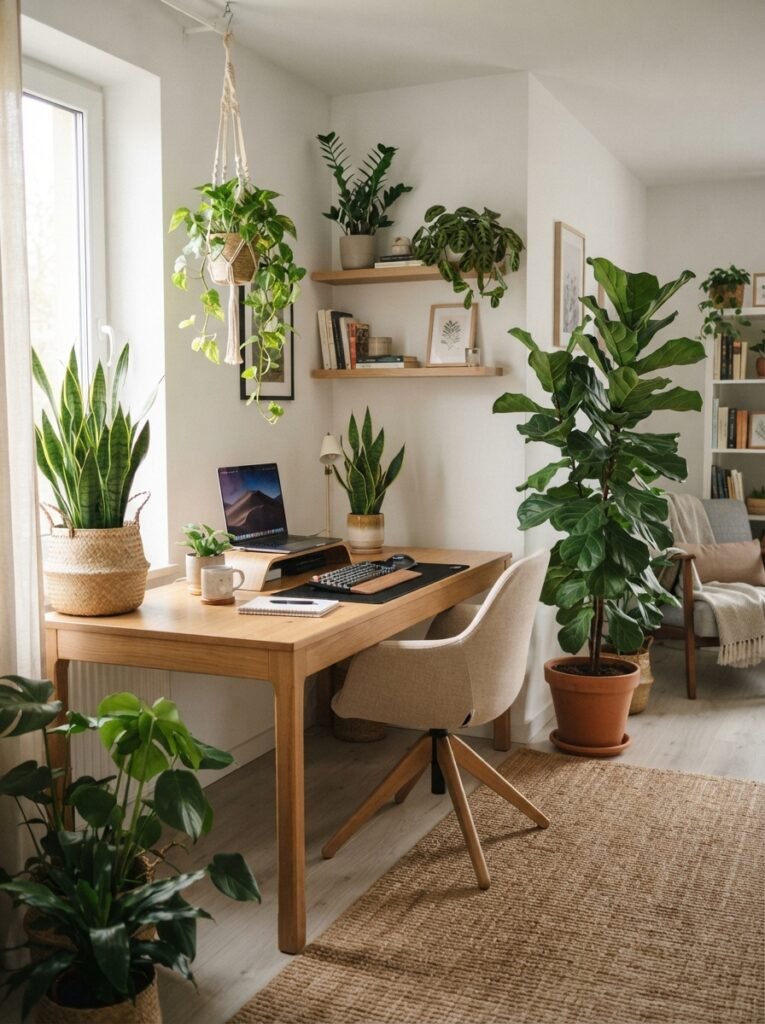
A few well placed plants bring life into the room and have been shown to support a calmer, more focused work environment. Choose low maintenance varieties like pothos or snake plants if you don’t have much time for upkeep.
8. Choose Art That Inspires Rather Than Distracts
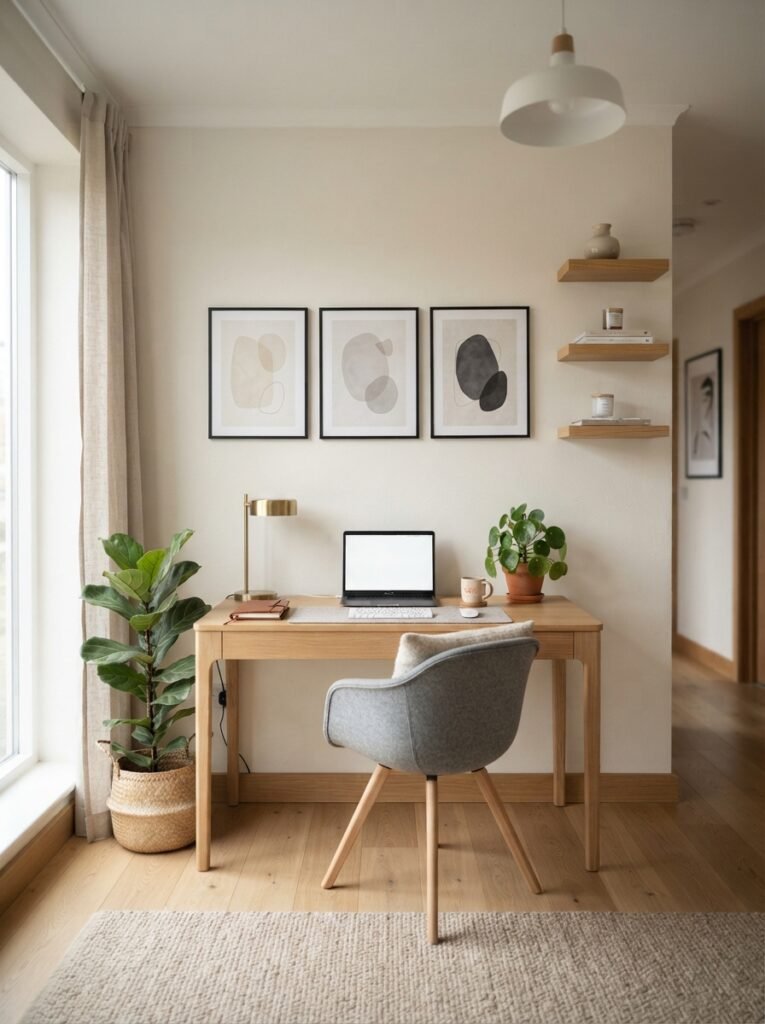
Art in a home office should add to the atmosphere without becoming a constant visual distraction during focused work. Calming landscapes, abstract pieces, or meaningful personal photography tend to work better here than anything too busy or visually loud.
9. Add a Rug to Define the Work Zone
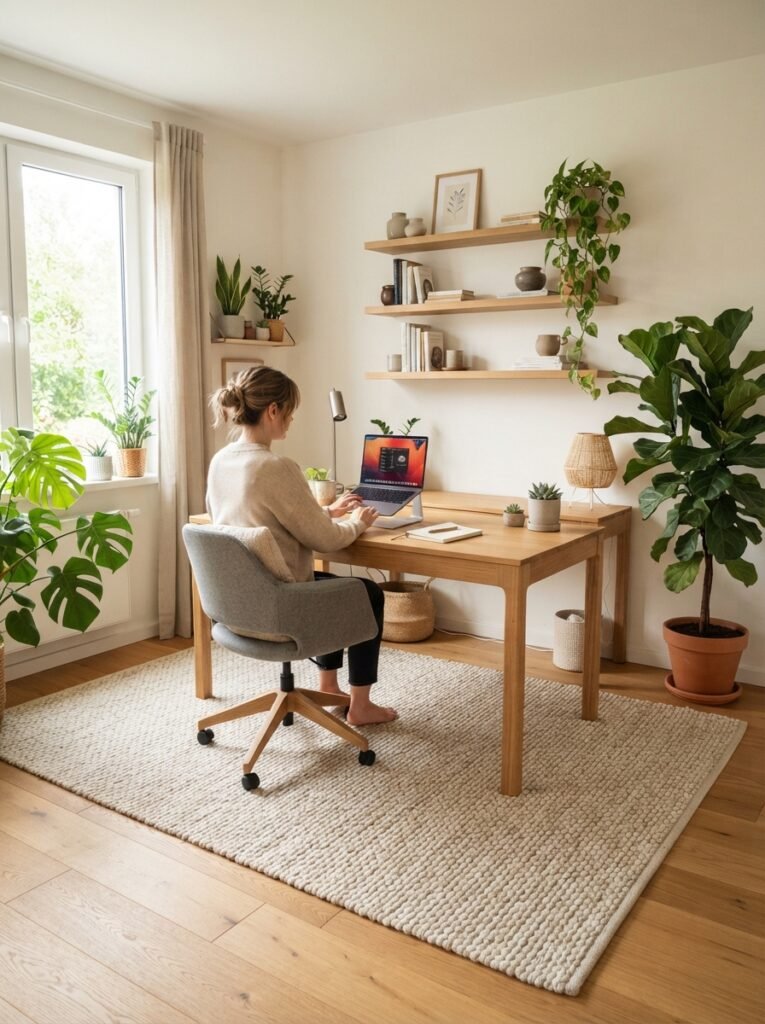
If your office shares space with another room, a rug helps visually separate the work area from the rest of the space, which can genuinely help mentally separate work mode from everything else happening in the room.
10. Use Floating Shelves for Books and Display
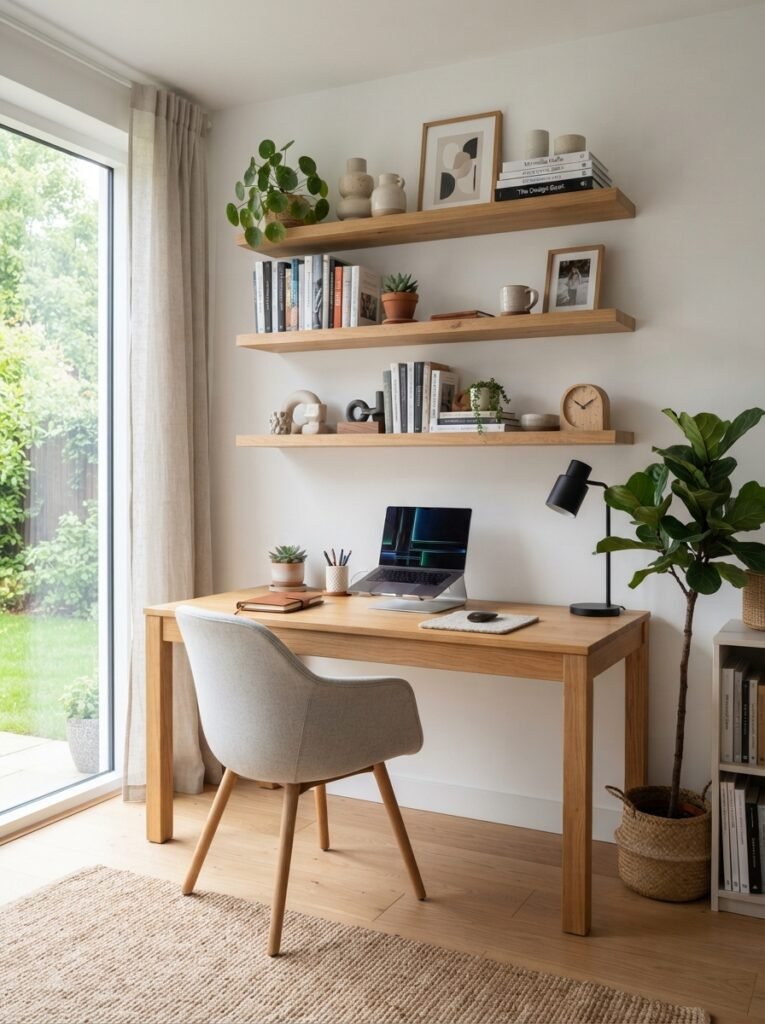
Floating shelves keep books and decor off the desk surface while adding personality to the walls. Style them with a mix of books, small plants, and a few meaningful objects rather than filling every inch.
Leaving some visible negative space between items on these shelves keeps the display from feeling cluttered, and it also gives the eye somewhere to briefly rest during longer stretches of screen focused work.
11. Add a Standing Desk Converter
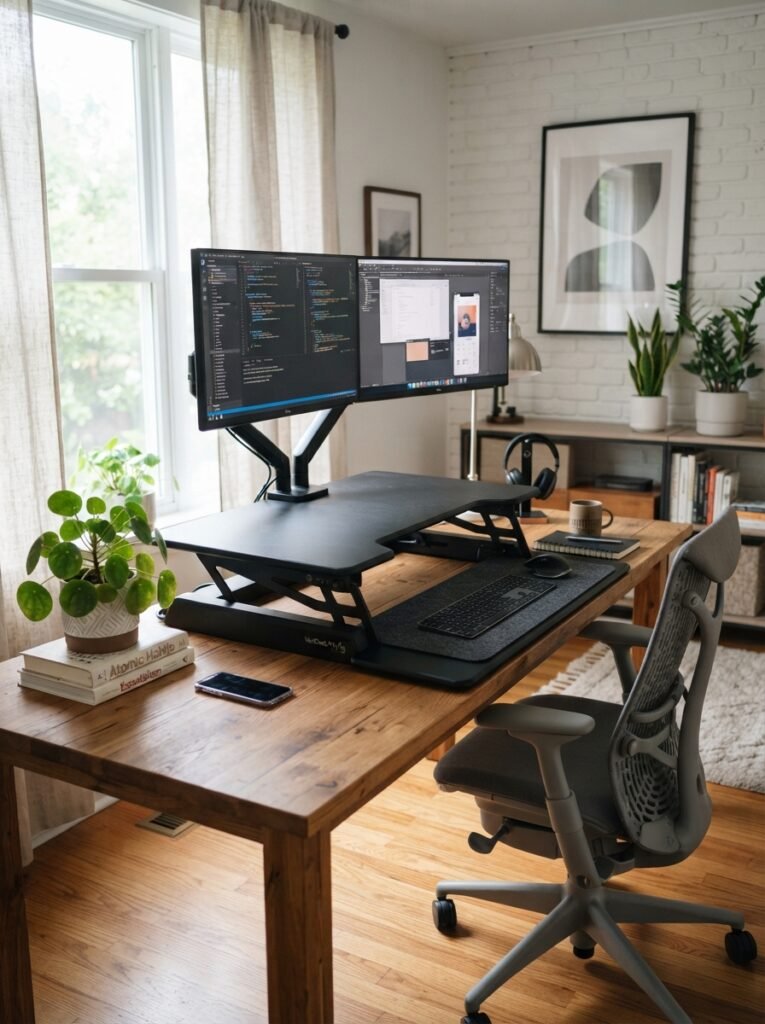
If a full standing desk isn’t in the budget, a converter that sits on top of your existing desk gives you the option to switch between sitting and standing throughout the day, which supports both comfort and focus during longer work sessions.
12. Choose Window Treatments That Control Glare
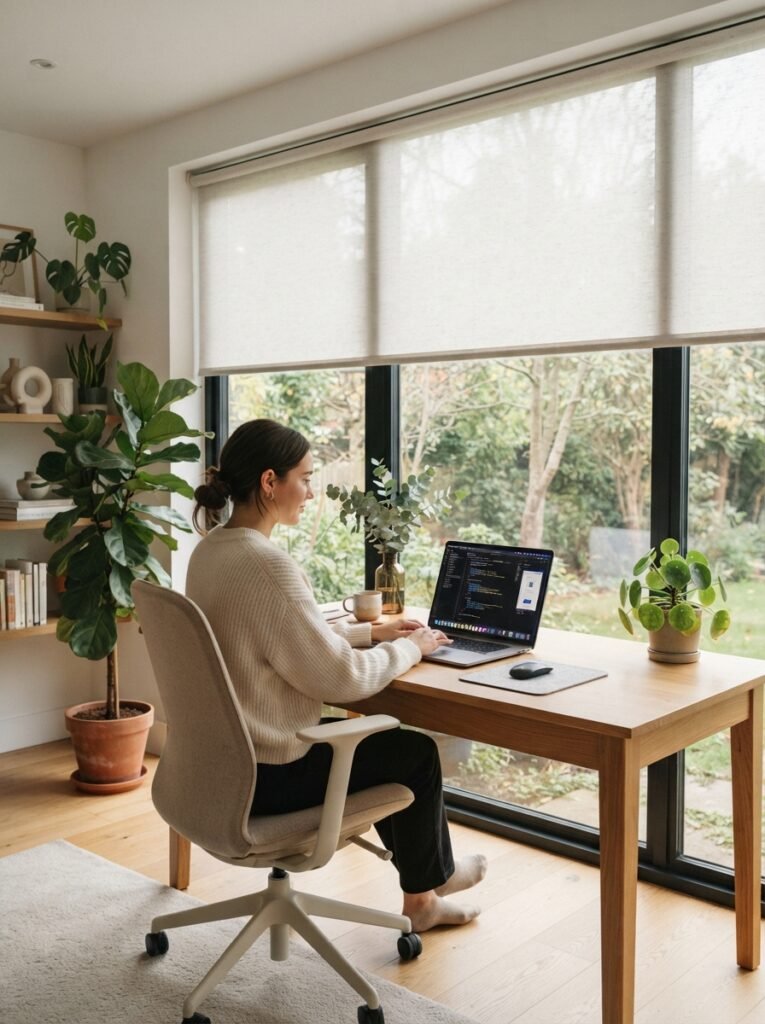
Sheer curtains or adjustable blinds let you manage screen glare throughout the day without sacrificing natural light entirely, which matters more in an office than almost any other room in the house.
13. Add a Comfortable Reading Chair for a Change of Scenery
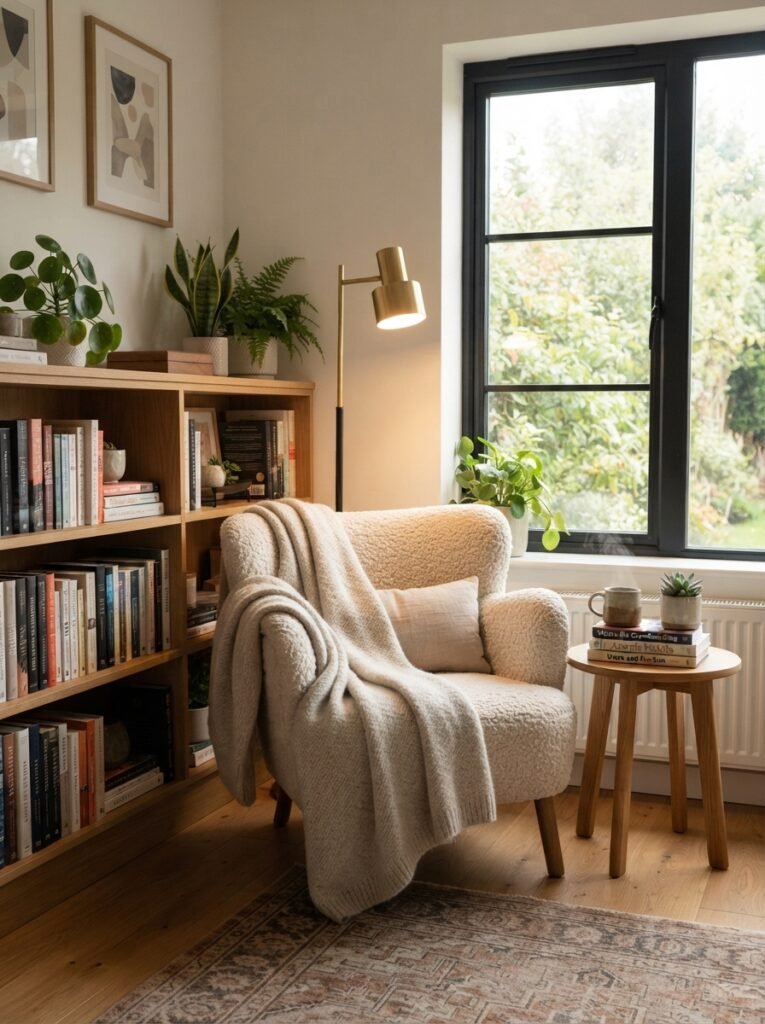
A small chair in the corner gives you a spot to read or take calls away from the desk, offering a change of physical position that can genuinely help with focus during a long work day.
14. Use a Filing System That’s Both Functional and Attractive
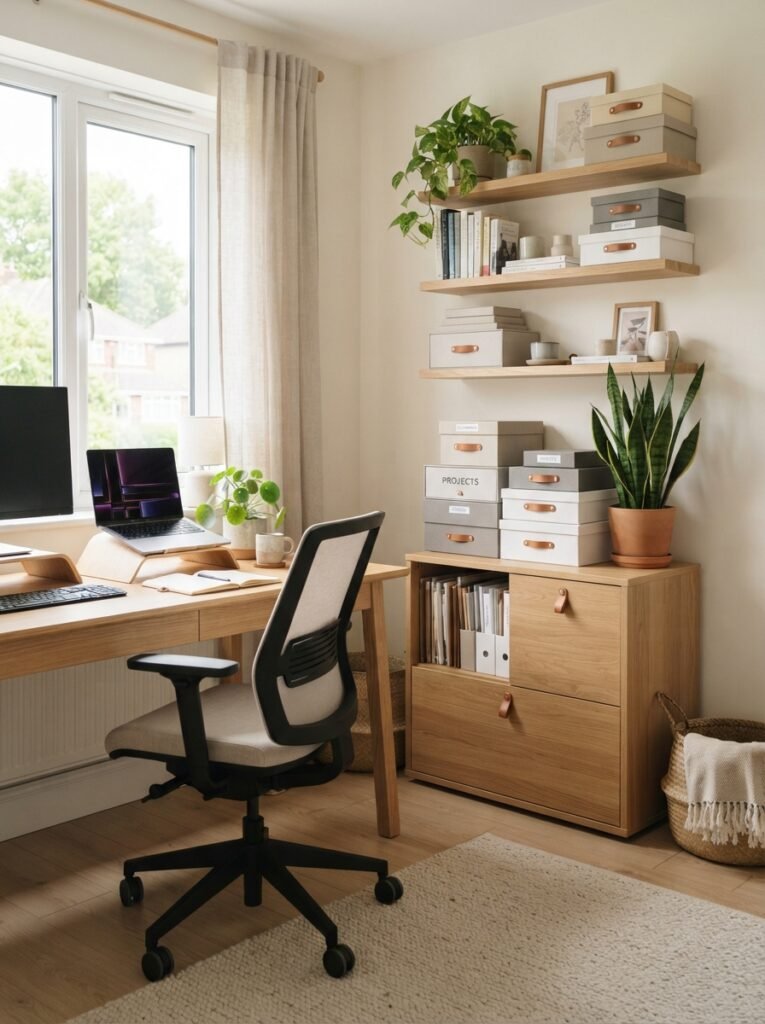
Stylish file boxes or a filing cabinet in a finish that matches your desk keep paperwork organized without looking purely utilitarian, blending function into the room’s overall design rather than working against it.
15. Add a Whiteboard for Brainstorming
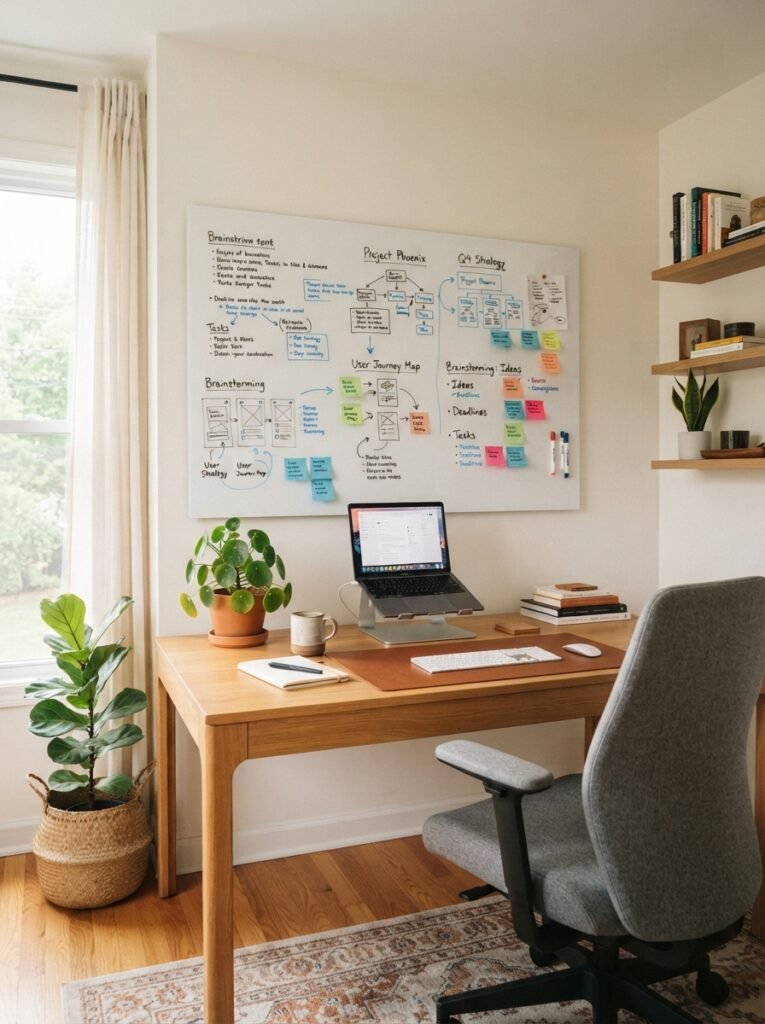
A wall mounted whiteboard gives you a spot for sketching ideas, tracking projects, or working through problems visually, which some tasks genuinely benefit from more than a screen or notebook can offer.
16. Choose a Desk With Built In Storage
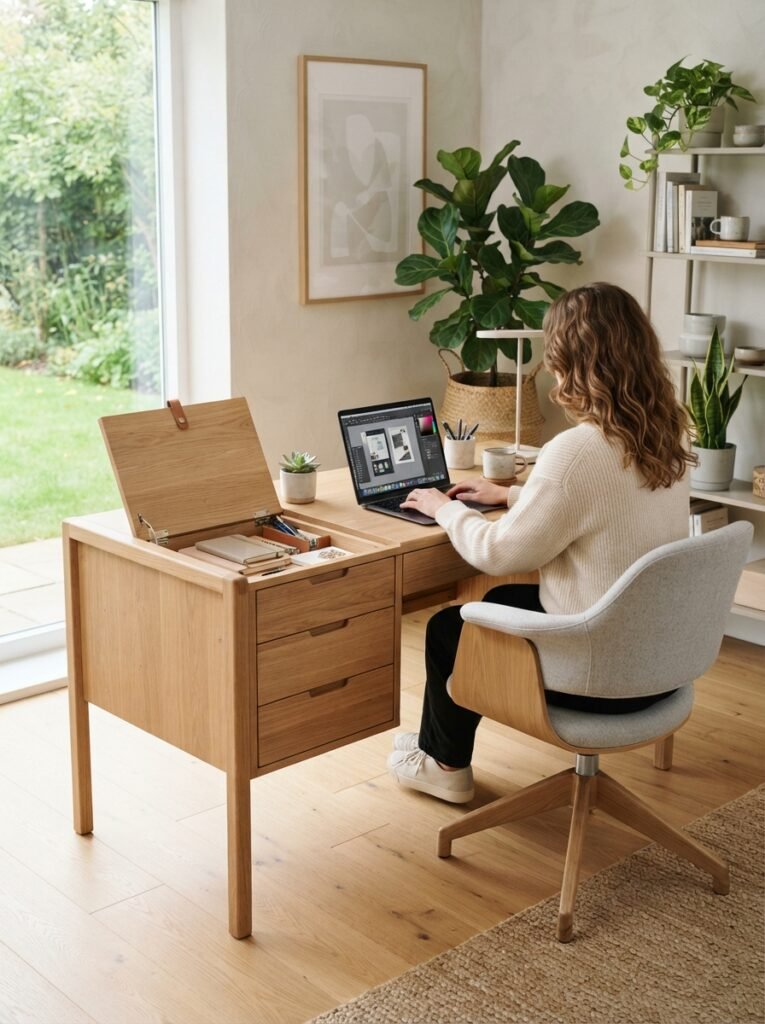
A desk with drawers keeps daily supplies within reach while keeping the surface itself clear, which supports both a cleaner look and better focus during actual work.
17. Add Personal Touches Without Overdoing It
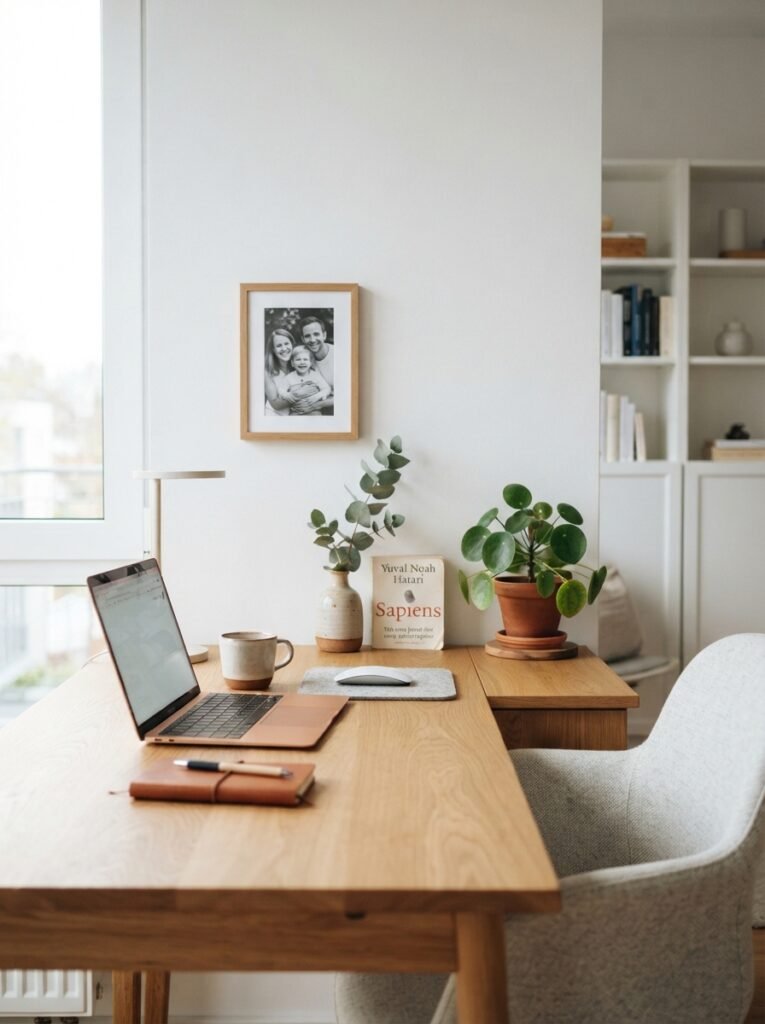
A few meaningful photos, awards, or personal objects make the space feel like yours, but keep the count reasonable so the room still supports focus rather than becoming a distraction of its own.
18. Use a Second Monitor Arm to Free Up Desk Space
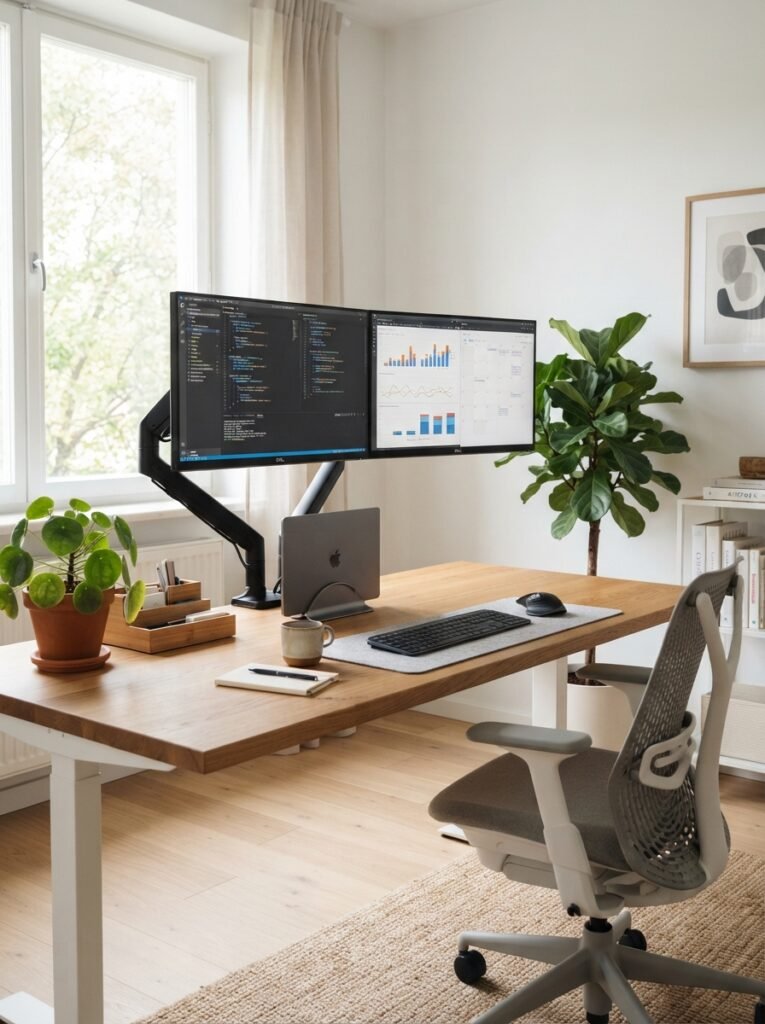
A monitor arm lifts your screen off the desk surface entirely, freeing up real workspace underneath and allowing more flexible positioning than a fixed stand typically offers.
19. Add Soundproofing Elements if Needed
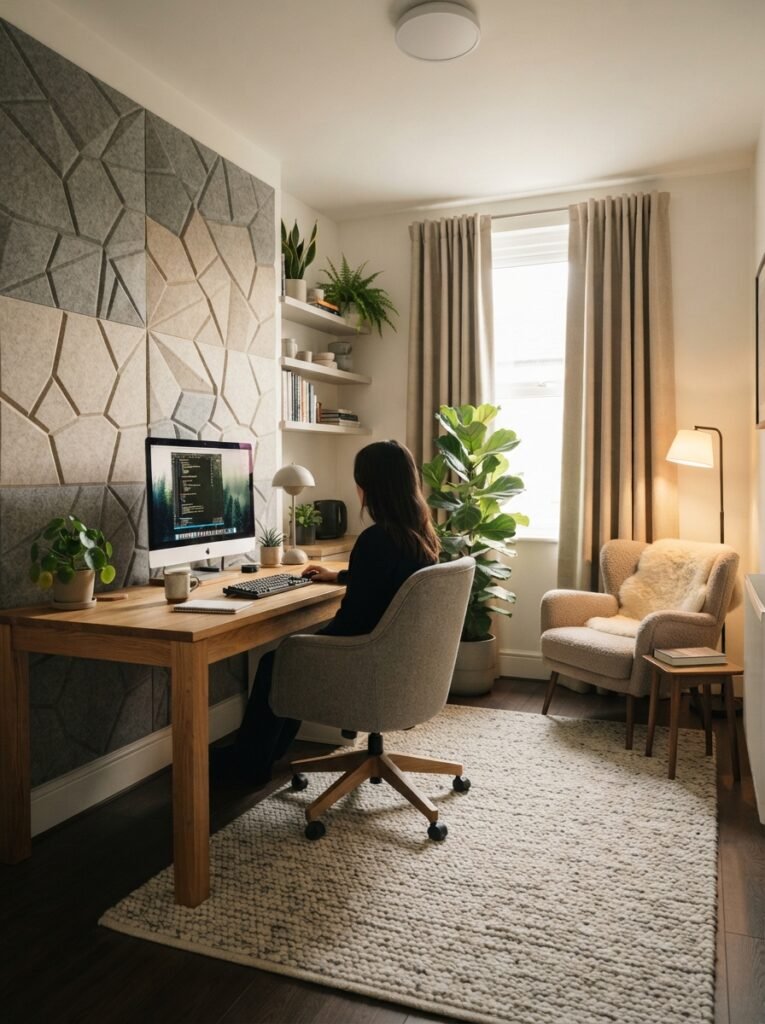
Rugs, curtains, or acoustic panels can meaningfully reduce echo and outside noise in a home office, particularly useful if your work involves frequent video calls or requires deep, uninterrupted focus.
- A thick area rug to absorb sound
- Heavier curtains for both noise and light control
- Acoustic panels on one wall if noise is a significant issue
- A door draft stopper to reduce hallway noise bleeding in
20. Choose a Desk Facing a Window if Possible
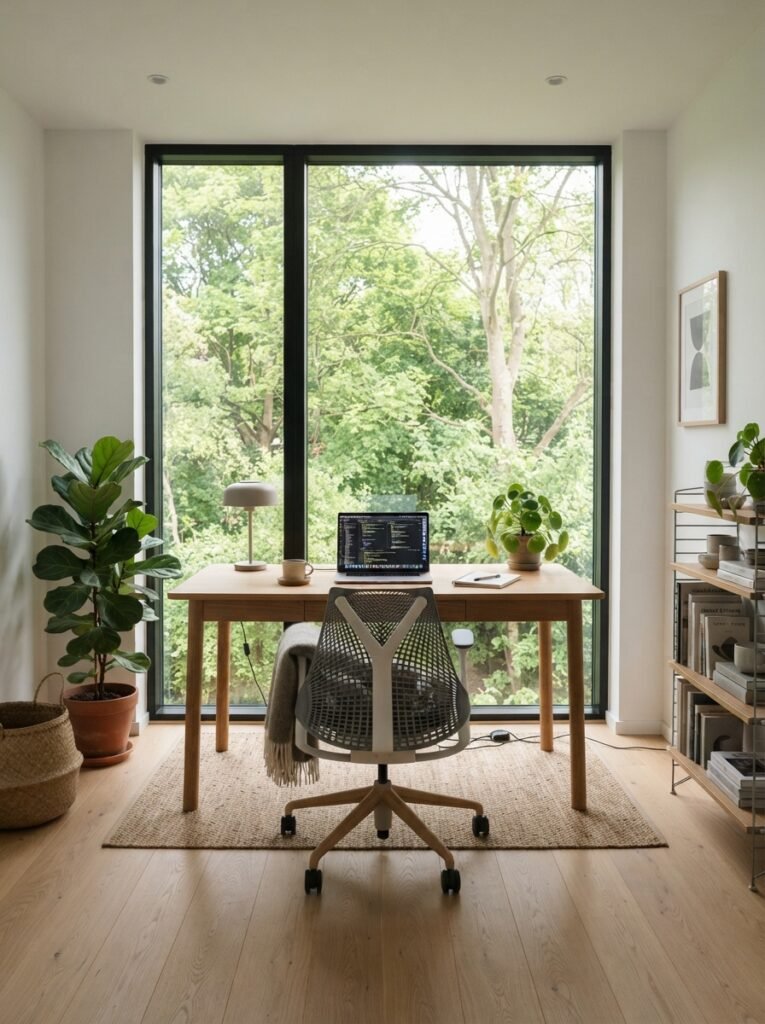
Natural light and a view can meaningfully improve mood and focus throughout the day. If glare on a screen is a concern, position the desk perpendicular to the window rather than directly facing it.
21. Add a Small Coffee or Tea Station
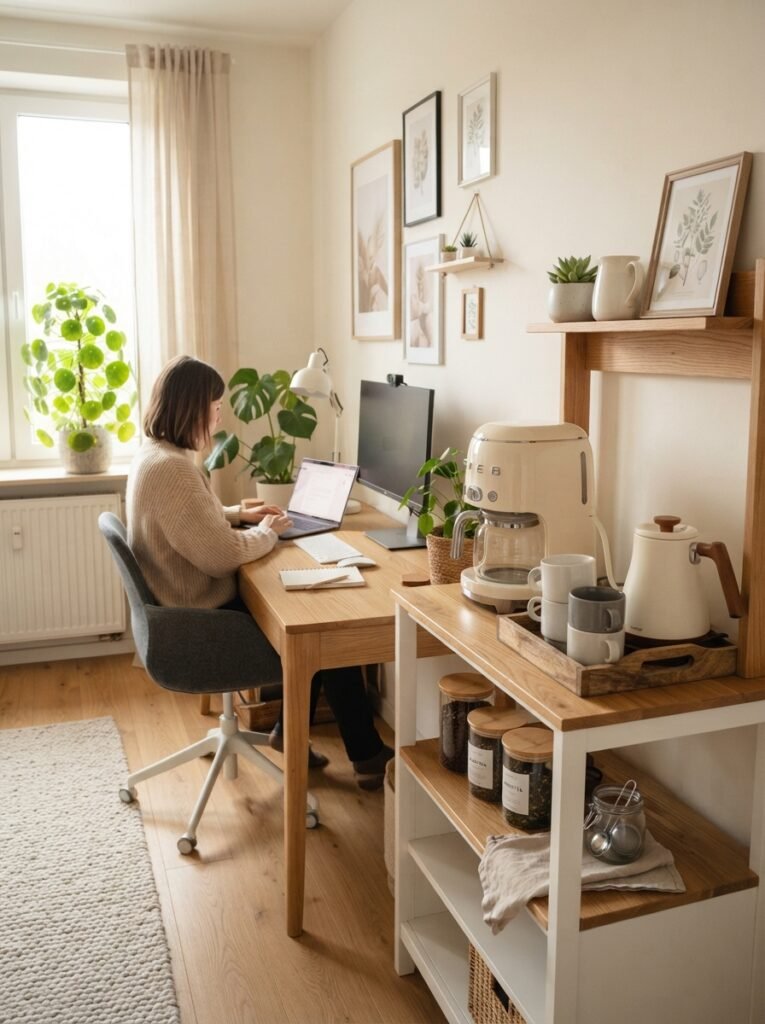
A compact station with a kettle or coffee maker nearby reduces the need to leave the office repeatedly throughout the day, helping maintain focus during longer work stretches.
22. Use Baskets or Bins for Loose Supplies
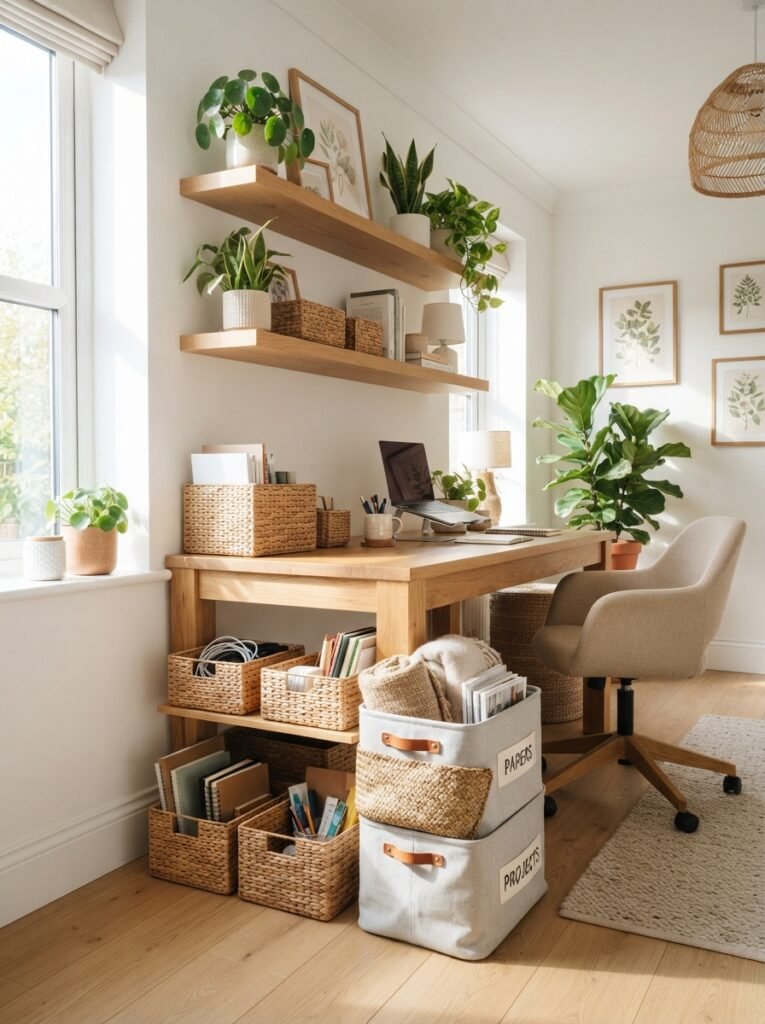
A few baskets on shelves or under the desk corral loose supplies like cables, notebooks, or office materials, keeping surfaces clear without needing a full cabinet system.
23. Add a Clock Within Easy View
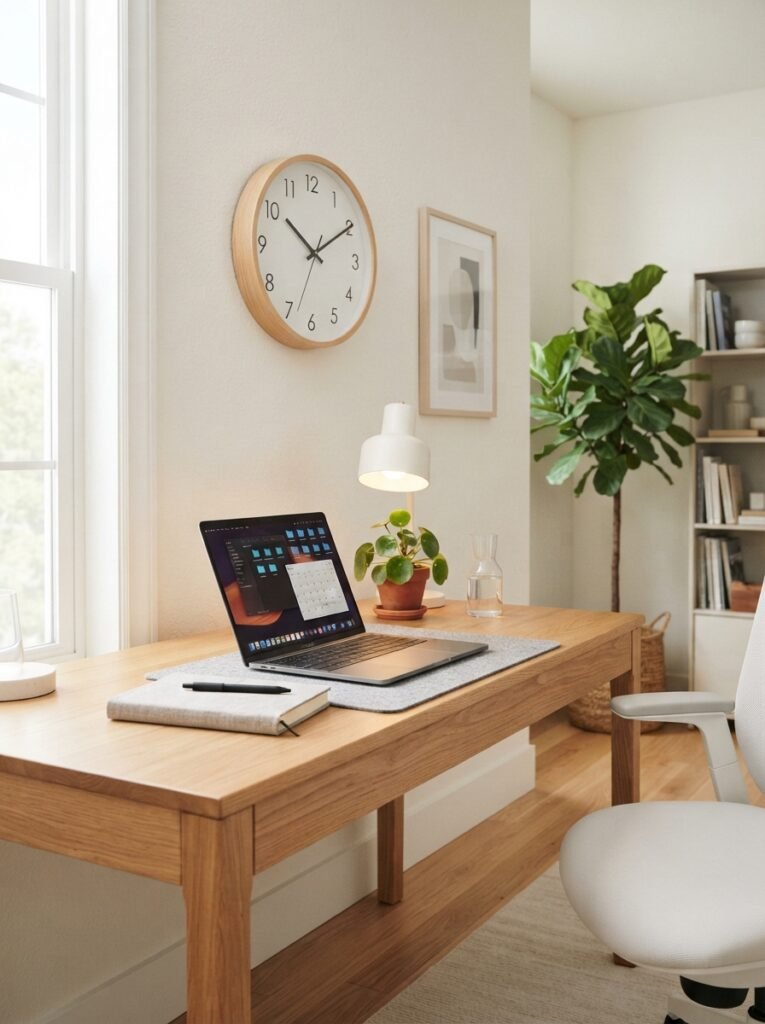
A simple, well designed clock helps with time awareness throughout the day without needing to constantly check a phone or computer, which can also reduce the temptation to get pulled into other notifications.
24. Choose Ergonomic Accessories
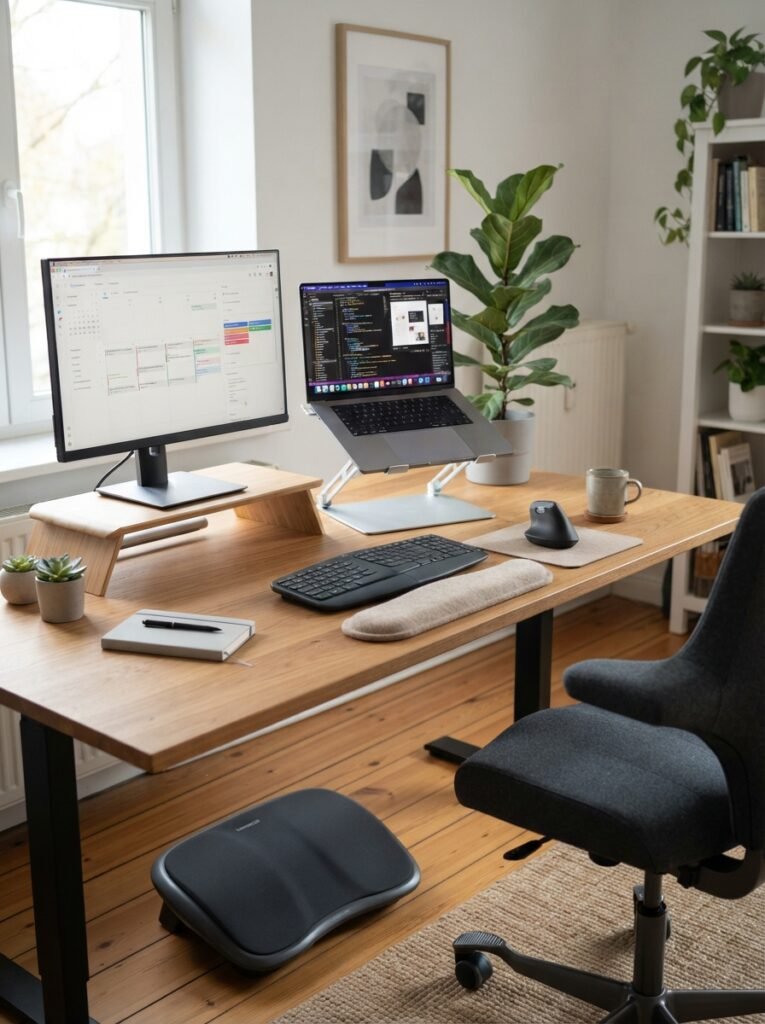
A supportive wrist rest, an adjustable laptop stand, or a footrest all contribute to physical comfort during long work sessions, which directly supports sustained focus over the course of a full day.
25. Add a Statement Light Fixture Overhead
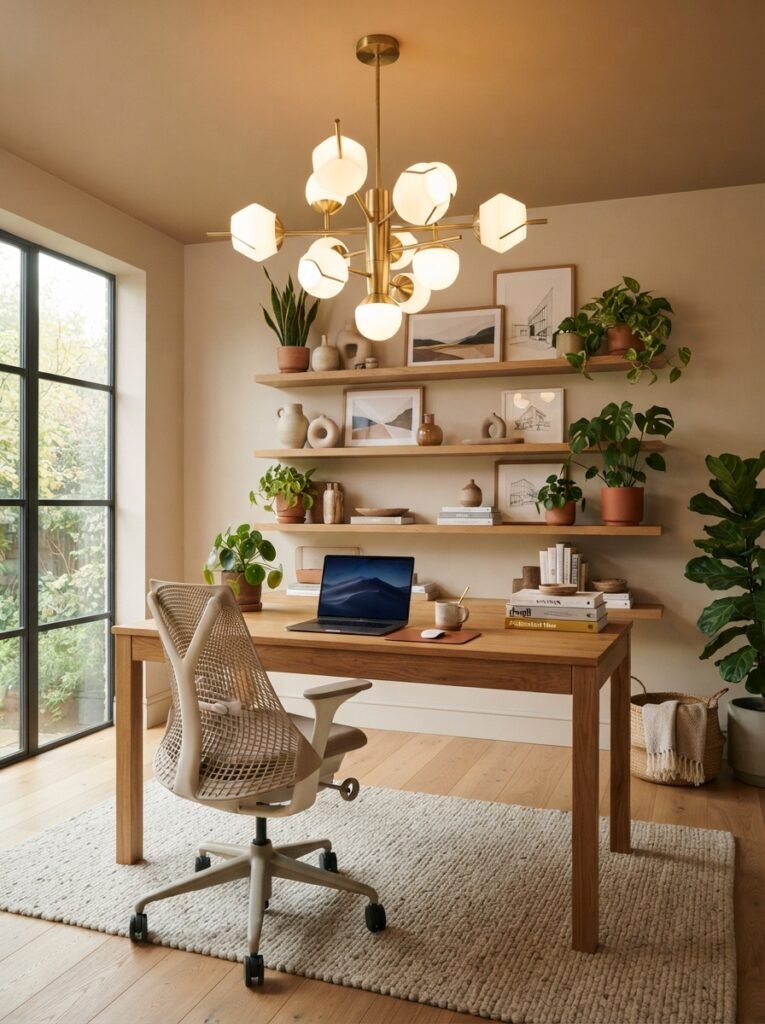
A sculptural pendant or an interesting ceiling fixture gives the room a design focal point beyond the desk itself, adding personality to a space that can otherwise feel purely functional.
26. Use a Room Divider for Shared Spaces
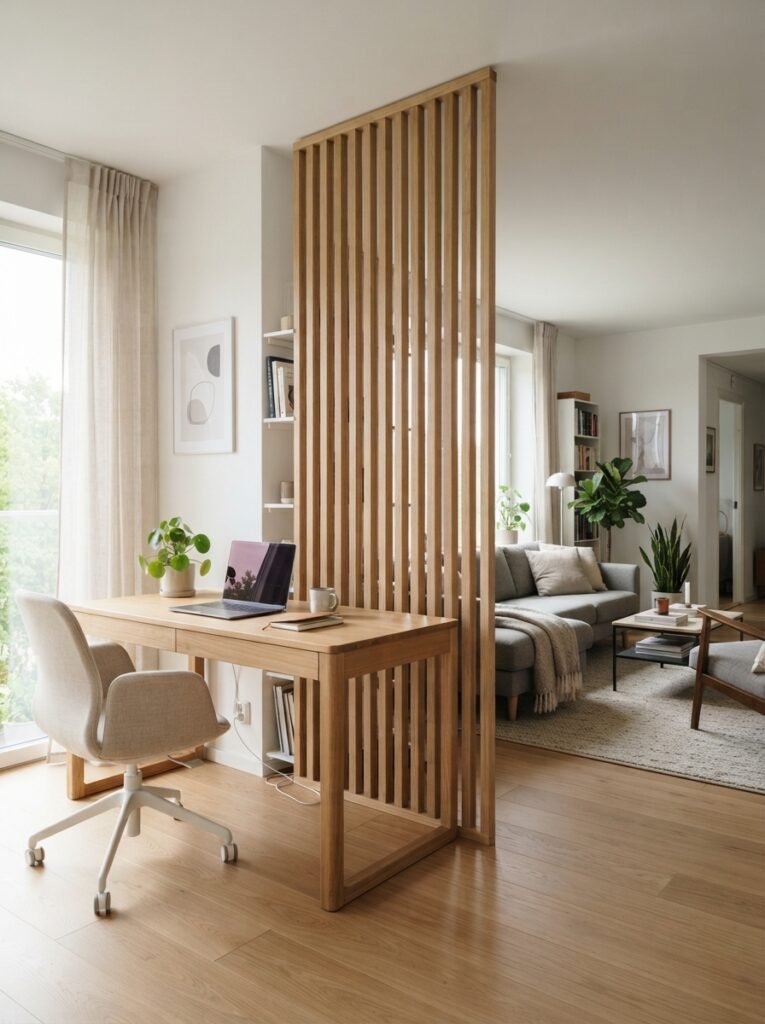
If your office shares a room with another function, a folding screen or open backed shelf helps define the work area visually, supporting the mental separation between work time and everything else happening in that shared space.
27. Add Textured Elements for Warmth
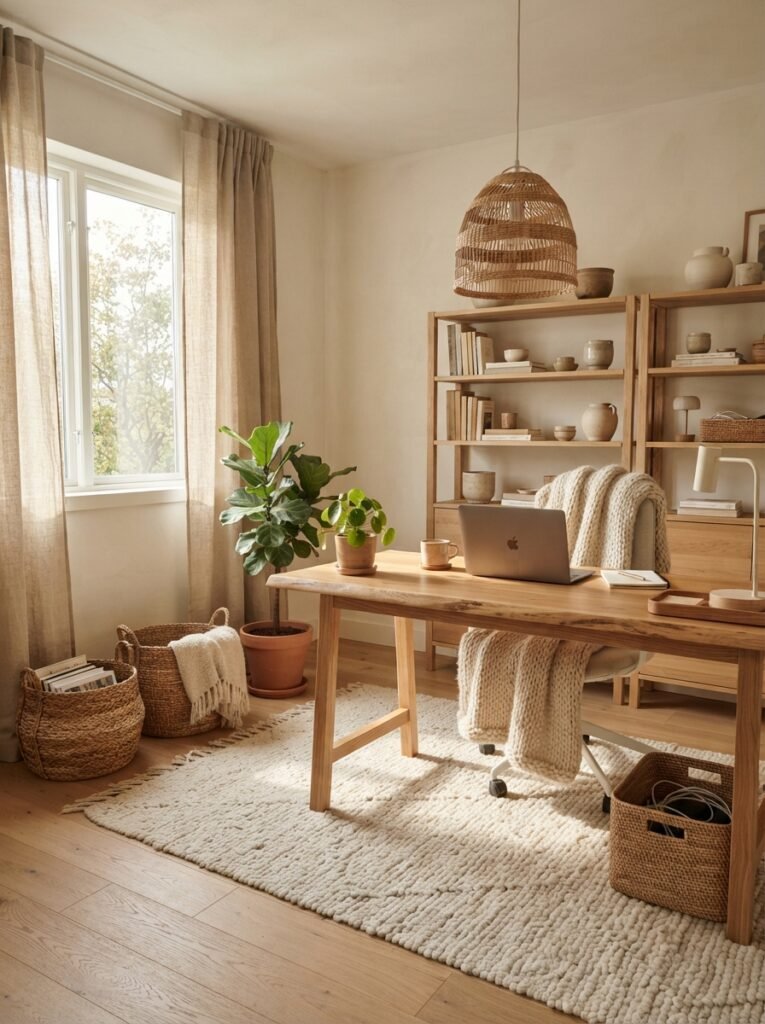
A woven basket, a soft throw on a nearby chair, or a textured rug keep a home office from feeling too sterile or purely functional, adding warmth without compromising the room’s ability to support focused work.
28. Choose a Desk Pad for Comfort and Style
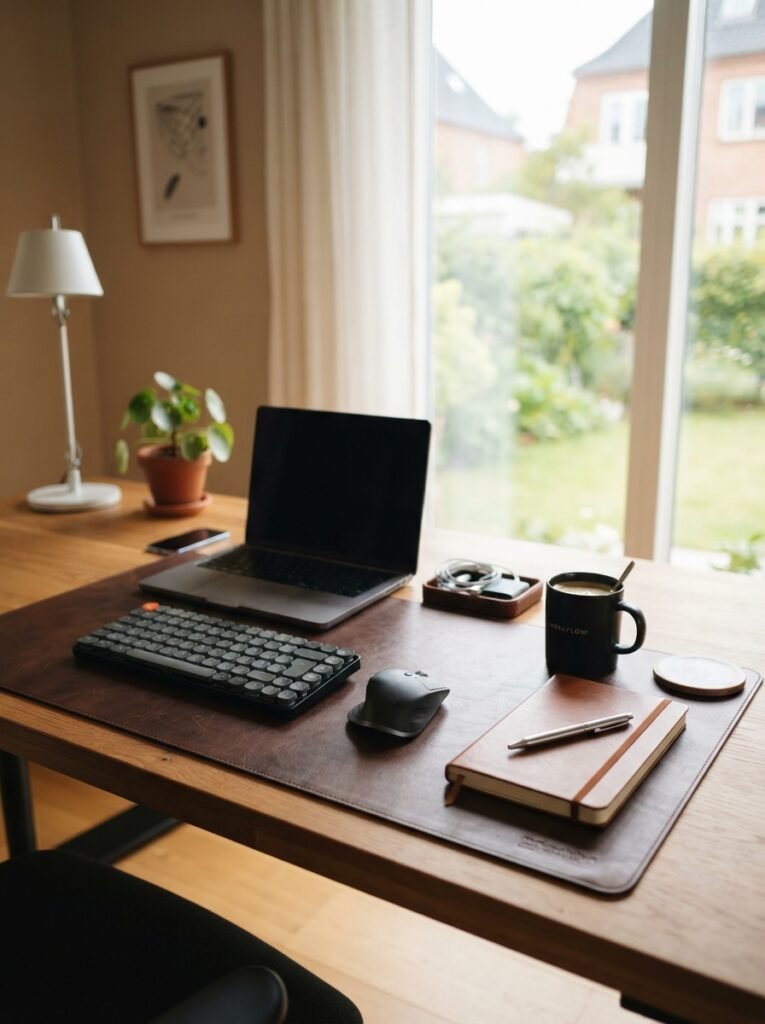
A large desk pad protects your desk surface while adding a cohesive design element that ties your keyboard, mouse, and other desk accessories together visually.
29. Add Motivational or Meaningful Quotes Thoughtfully
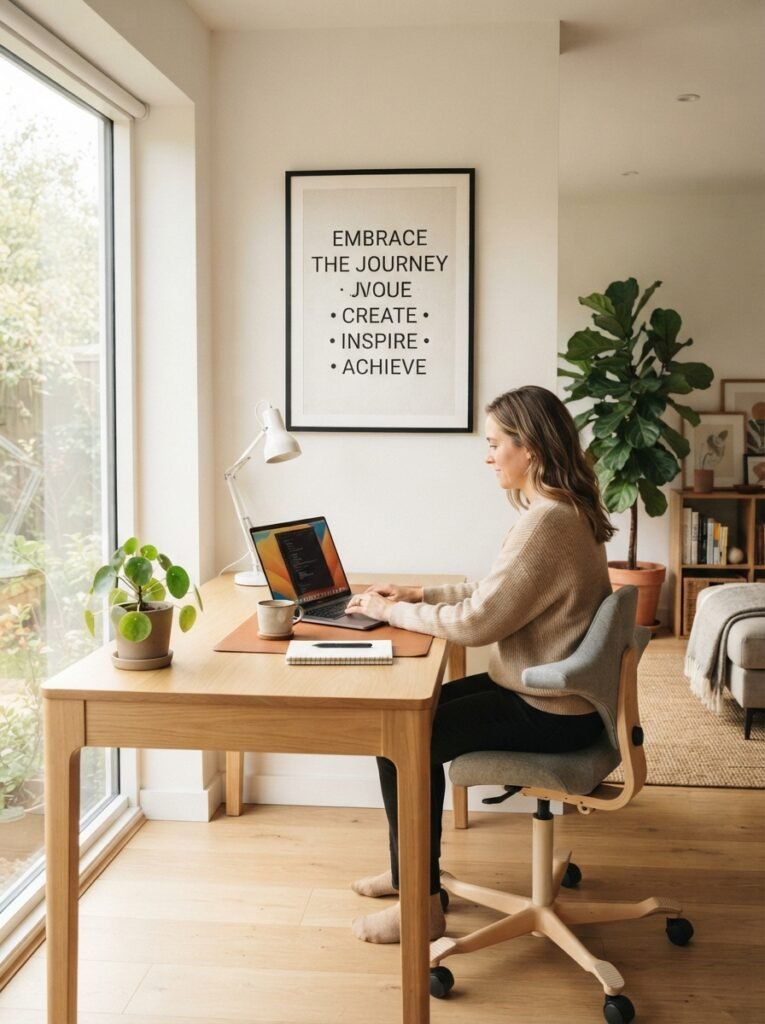
A single piece of art or a small framed quote that genuinely resonates with you can add a bit of daily inspiration, though it’s worth choosing just one or two rather than covering the walls with them.
30. Use a Charging Station to Reduce Clutter
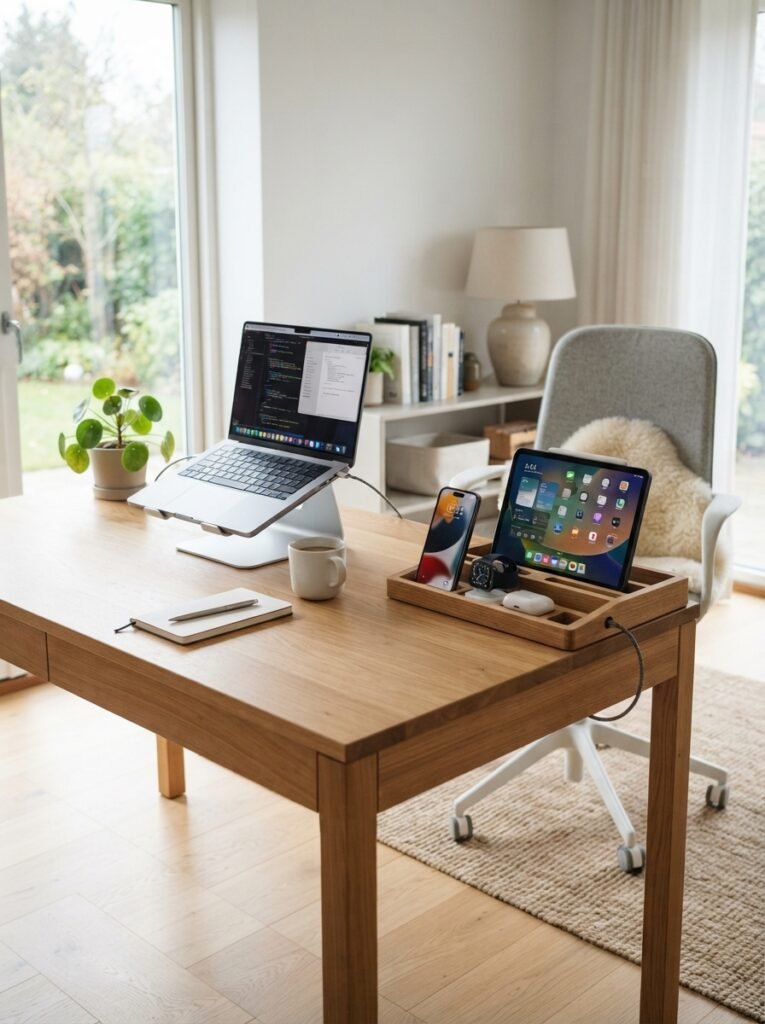
A dedicated charging hub for phones and other devices keeps cords and chargers contained in one spot rather than scattered across the desk, supporting both a cleaner look and easier daily use.
31. Keep the Desk Surface Genuinely Clear
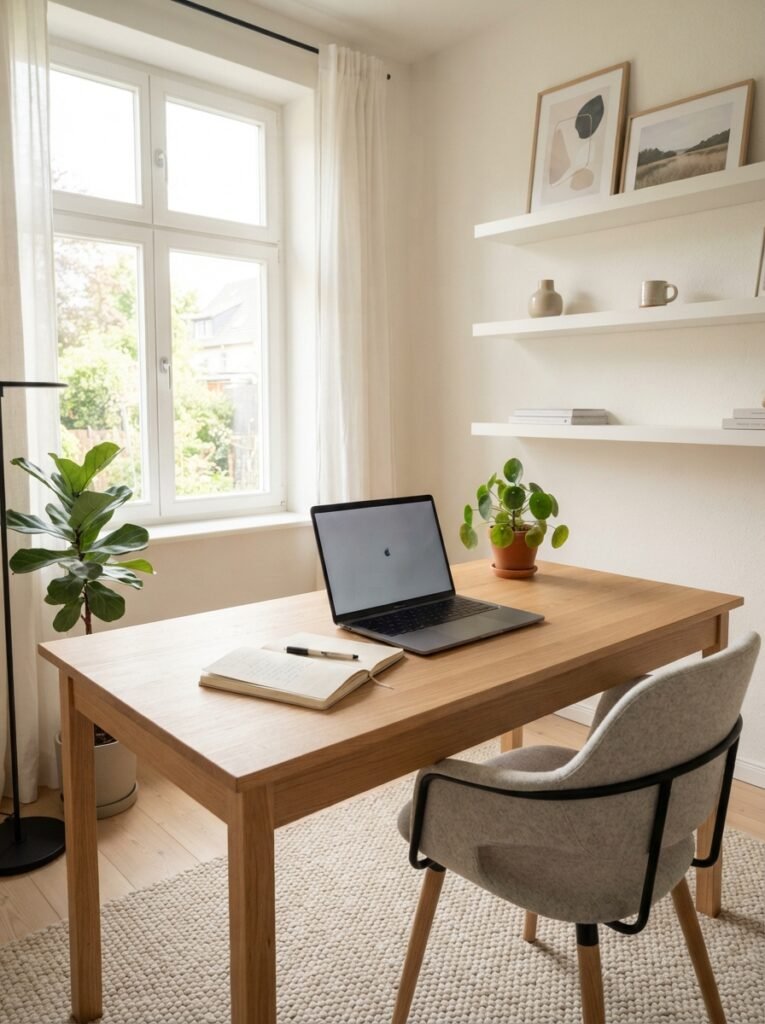
Beyond any single decor choice, an uncluttered desk surface supports focus more directly than almost anything else on this list. Keep only what you’re actively using out, and store everything else in drawers, shelves, or bins nearby.
This final habit matters more than any individual piece of decor in the room. A beautifully designed office with a desk buried under loose papers and old coffee cups will still feel chaotic day to day, so ongoing upkeep is genuinely part of the design itself, not a separate afterthought from the styling.
A home office comes together best when style and function are treated as equally important from the start, not decor layered on top of a purely practical setup. Start with your desk, chair, and lighting, since those affect daily comfort and focus the most, then build in the smaller personal and decorative touches once that functional foundation feels right.